

Climate-Resilient Farming in India: What to Change Before the 2027 Seasons
The monsoon has not become weaker; it has become less predictable. Fewer rainy days, heavier bursts, longer dry spells inside the season and heat spikes at flowering. Resilience is no longer a research topic — it is a set of concrete decisions for the next sowing.
Quick answer
The change to plan for is variability, not simple scarcity: fewer rainy days, heavier bursts, longer dry spells inside the season and heat spikes at flowering. Build buffers rather than chasing a single fix — organic carbon so the soil holds water, stored water you control, shorter-duration and tolerant varieties, sowing on soil moisture rather than the calendar, diversification so one weather event cannot take everything, and acting on forecasts instead of only reading them.
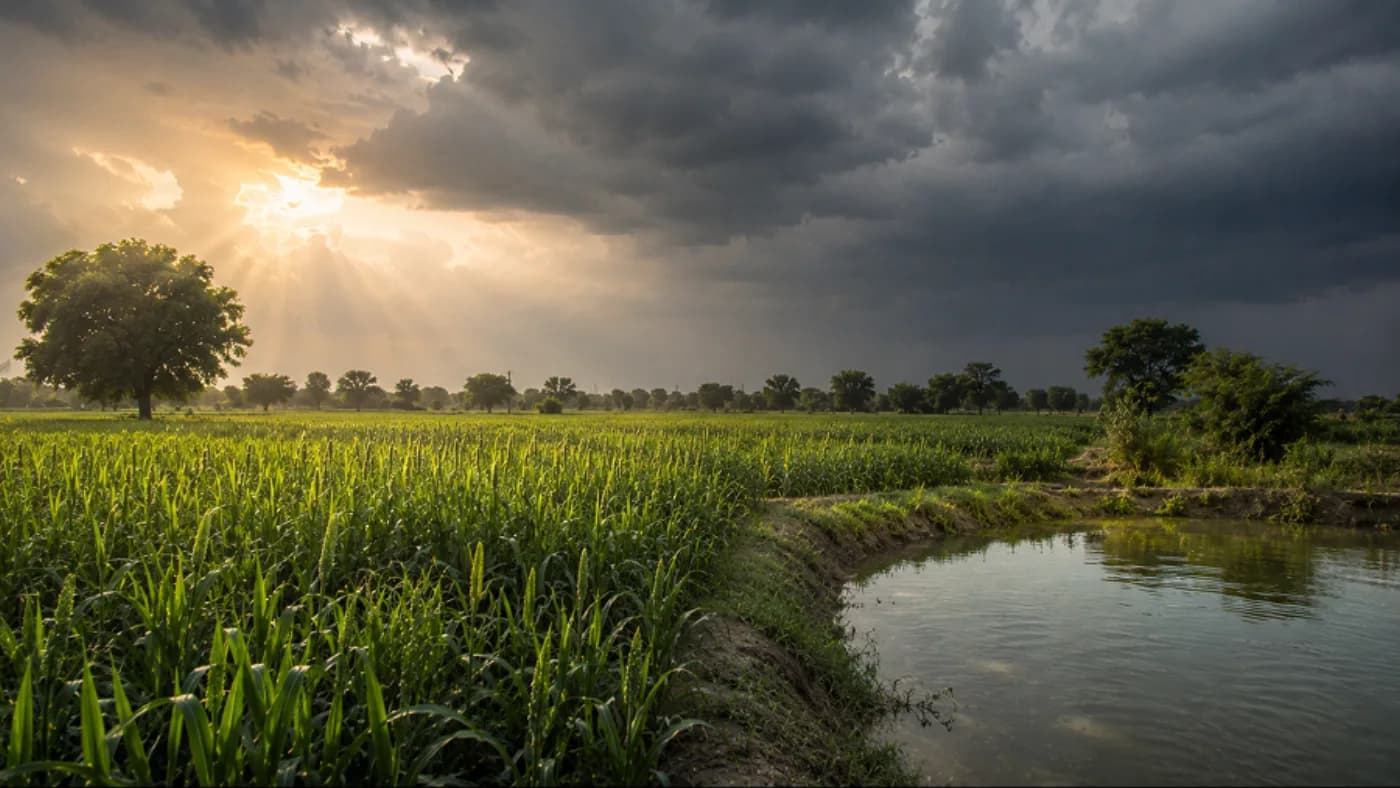
Ask any farmer over fifty and they will describe the same change: the rain still comes, but it comes differently. Fewer rainy days carrying the same or more total water, which means heavier bursts and longer gaps between them. That single shift — variability rather than absolute scarcity — is what most Indian farming systems are poorly built for, and it is what the changes in this guide are designed to absorb.
The problem is variability, not just less rain
It matters to be precise about this, because the wrong diagnosis produces the wrong investment. In many districts, annual rainfall totals have not collapsed. What has changed is distribution: rain arrives in fewer, heavier events, dry spells inside the monsoon have lengthened, and the onset date has become less reliable. Add heat spikes that now regularly land during flowering and grain filling, when crops are most vulnerable, and you have a system where the average looks fine and every individual season is difficult.
A farm designed for a reliable average fails under variability. A farm designed for variability — with buffers in water, soil and cropping — absorbs both a two-week dry spell and a 100mm downpour. Almost everything below is about building buffers.
Buffer one: soil organic carbon
This is the highest-return resilience investment available to an Indian farmer, and it is not a purchase. Soil organic matter holds water — every increment of organic carbon raises the amount of rain your field retains rather than loses to runoff, and extends how long a crop survives a dry spell. It also improves infiltration, so a heavy burst soaks in instead of sheeting off and taking your topsoil with it.
The practices are unglamorous and well established: return crop residue instead of burning it, apply farmyard manure or compost every season, grow a green manure crop in the gap and incorporate it before flowering, reduce tillage passes, and keep the soil covered rather than bare through the hottest months. Progress is measured in years, which is exactly why it needs to start now rather than in the season you need it. Check where you stand with a soil test — how to read a soil health card explains the organic carbon reading, and improving soil health naturally covers the practices in detail.
Buffer two: water you control
Under variability, the value of stored water rises sharply, because the difference between a good and a ruined season is often a single irrigation during a two-week dry spell at flowering. Farm ponds, recharge structures, bunding and check dams all convert an unusable downpour into water available when the crop actually needs it.
On the application side, drip and sprinkler systems matter less for total water saved than for control — they let you deliver a small, precise amount at a critical moment, which flood irrigation cannot do. Subsidy support for micro-irrigation is available in most states; in Gujarat, applications run through the iKhedut portal during its annual window. Read how drip irrigation saves water and increases yield and water management tips for small farmers before applying, so you install for the right reason.
- Field bunding to slow runoff and hold water where it falls.
- A farm pond sized to your worst dry spell, not your average one.
- Recharge pits or a recharge borewell so heavy bursts refill your aquifer instead of running off.
- Mulching, which cuts evaporation loss substantially and moderates soil temperature.
- Drip or sprinkler for precise application at critical growth stages.
Buffer three: variety and sowing-window strategy
ICAR's National Innovation on Climate Resilient Agriculture (NICRA) programme has developed and demonstrated climate-resilient crop cultivars in vulnerable districts across India, alongside soil carbon improvement, agroforestry and water-saving agronomic practices. The practical output for you is that shorter-duration, drought-tolerant and heat-tolerant varieties now exist for most major crops — and using them is the cheapest single adaptation available.
A shorter-duration variety is a genuine hedge: it reduces the number of days your crop is exposed, and it lets you finish before a late-season dry spell or an early heat spike. Ask your Krishi Vigyan Kendra which released varieties are recommended for your district specifically, rather than buying on a dealer's recommendation alone.
On timing, the rule that has served farmers for decades — sow on a fixed date — works poorly when onset is unreliable. Sow on soil moisture and confirmed onset rather than the calendar, and stagger your sowing across a window instead of putting everything in on one day. Staggering costs you a little convenience and buys you real protection: if one sowing meets a dry spell at flowering, the other may not.
Buffer four: diversification
A single crop across the whole holding concentrates weather risk to a single point. Intercropping, mixed cropping and keeping part of the land under a different maturity group spread that exposure. This is old wisdom that intensification quietly displaced, and variability is making it valuable again.
Perennials deserve particular attention. Trees on boundaries and in agroforestry systems have deeper roots, survive dry spells that kill annuals, moderate field temperature, reduce wind damage, and produce fodder, fuel or fruit as an income buffer. Our guides on shelterbelt planting for crop protection and disease-resistant perennial crops cover the design. Livestock plays the same role financially — an income stream that does not fail in the same year as the crop.
Buffer five: information, used at the right moment
Under variability, timing is worth more than it used to be, because the windows are shorter. Knowing three days ahead that a dry spell is coming lets you irrigate before it rather than during it. Knowing a heavy burst is due lets you delay a fertiliser application that would otherwise wash away. Data-driven approaches are projected to cut water use in Indian agriculture meaningfully, and more than 70 per cent of Indian farmers are expected to be using digital decision tools — but only the ones who act on the forecast rather than merely reading it capture the benefit.
The other half is record-keeping. Farmers who write down sowing date, rainfall, inputs and yield build, over three or four seasons, a personal dataset far more relevant to their field than any regional advisory. That record is what tells you whether the shorter-duration variety actually performed better on your soil.
Khetiyaar's kheti app combines the season plan, weather-based irrigation and spray timing, and season records in Gujarati, Hindi and English, and the AI farming chatbot will talk through a mid-season decision when the weather turns. Use whatever tool you like — but use one, and act on it.
What to do before the next sowing
Cost each of these before committing. The farming cost and profit calculator will tell you what a pond or a micro-irrigation system needs to return to justify itself, and several of these changes — residue return, staggered sowing, intercropping — cost nothing but a decision.
- Get a current soil test and note the organic carbon reading as your baseline.
- Commit to returning residue this season instead of burning it.
- Ask your KVK for the shortest-duration, drought-tolerant released variety recommended for your district.
- Plan to sow on confirmed onset and soil moisture, staggered across a window, not on a fixed date.
- Cost one water-storage or recharge structure and check which subsidy covers it.
- Put one intercrop or a boundary planting into the plan.
- Start a season record — date, rainfall, inputs, yield. Three seasons from now it will be the most useful document you own.
Frequently asked
What is climate-resilient agriculture?+
Farming designed to absorb weather variability rather than assume a reliable average: soil with enough organic carbon to hold water through dry spells, stored water you control, shorter-duration and drought or heat tolerant varieties, sowing based on confirmed onset and soil moisture, diversified cropping, and decisions timed on forecasts. ICAR's NICRA programme develops and demonstrates these technologies in vulnerable districts.
What is NICRA?+
The National Innovation on Climate Resilient Agriculture, an ICAR programme involving major research institutes, aimed at developing climate-resilient technologies and demonstrating them on farmers' fields in vulnerable districts. Its outputs include climate-resilient crop cultivars, soil carbon improvement and carbon sequestration through agroforestry, and water-saving agronomic practices.
Which single change gives the most climate resilience?+
Raising soil organic carbon. Organic matter holds water, so every increment extends how long your crop survives a dry spell and improves infiltration so heavy rain soaks in instead of running off with your topsoil. It costs no purchase — residue return, farmyard manure, green manure, reduced tillage and soil cover — but it takes years, which is why it should start now.
Should I still sow on my usual date?+
Fixed-date sowing works poorly when monsoon onset is unreliable. Sow on confirmed onset and adequate soil moisture instead, and stagger sowing across a window rather than putting everything in on one day. Staggering costs a little convenience and buys real protection, because a dry spell at flowering will not hit both sowings equally.
Are drought-tolerant varieties actually available for Indian crops?+
Yes. Shorter-duration, drought-tolerant and heat-tolerant released varieties now exist for most major Indian crops, many developed and demonstrated through ICAR's NICRA work. Ask your Krishi Vigyan Kendra which released varieties are recommended for your district specifically, rather than relying on a dealer's recommendation alone.
Where to go next
Want this as daily tasks for your farm?
Khetiyaar turns guides like this into a day-by-day plan — in your language, free to start.

Related guides
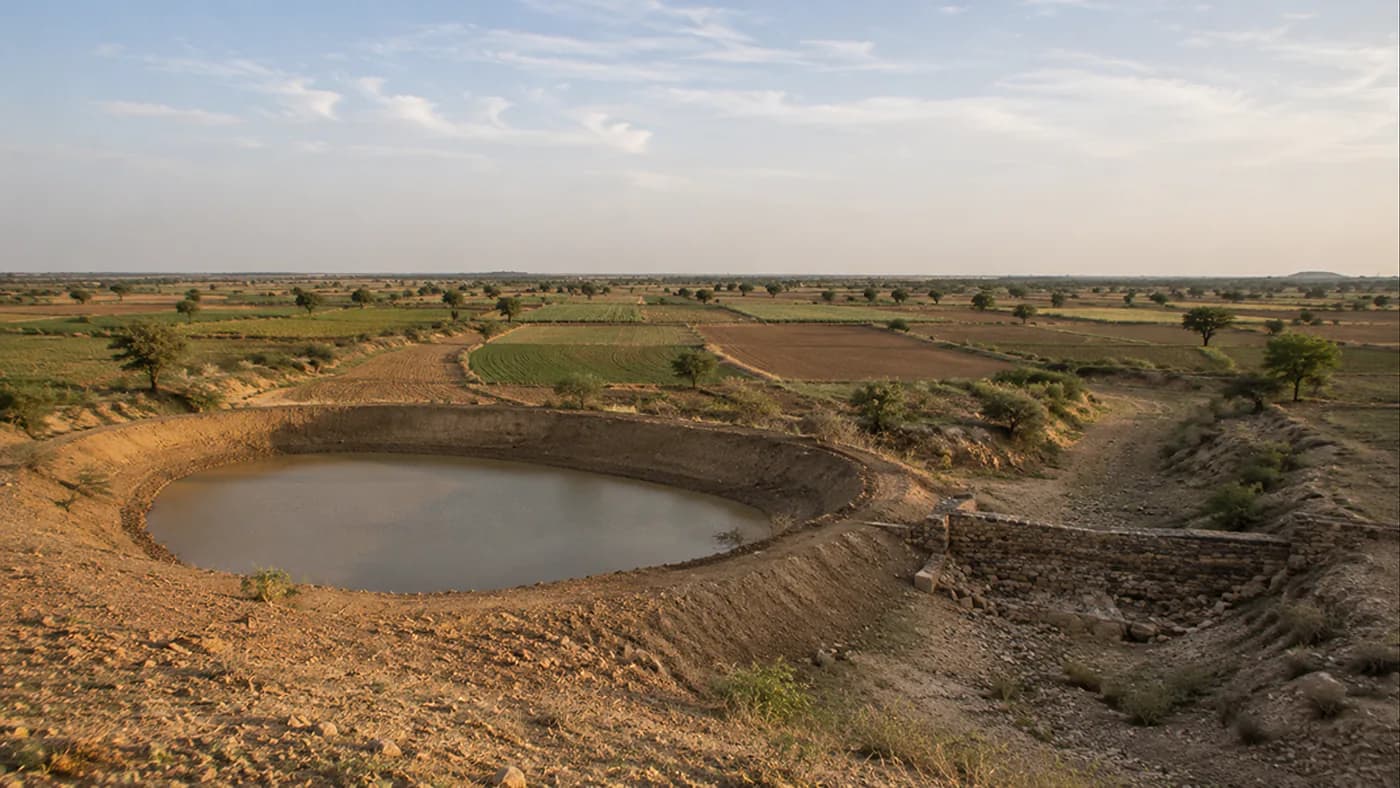
The Same Monsoon, Different Problems: Rainfall Risk by Region
Advice written for Punjab is close to useless in Marathwada. The monsoon is one system but it fails differently in each part of India, and the coping strategy has to match the failure.
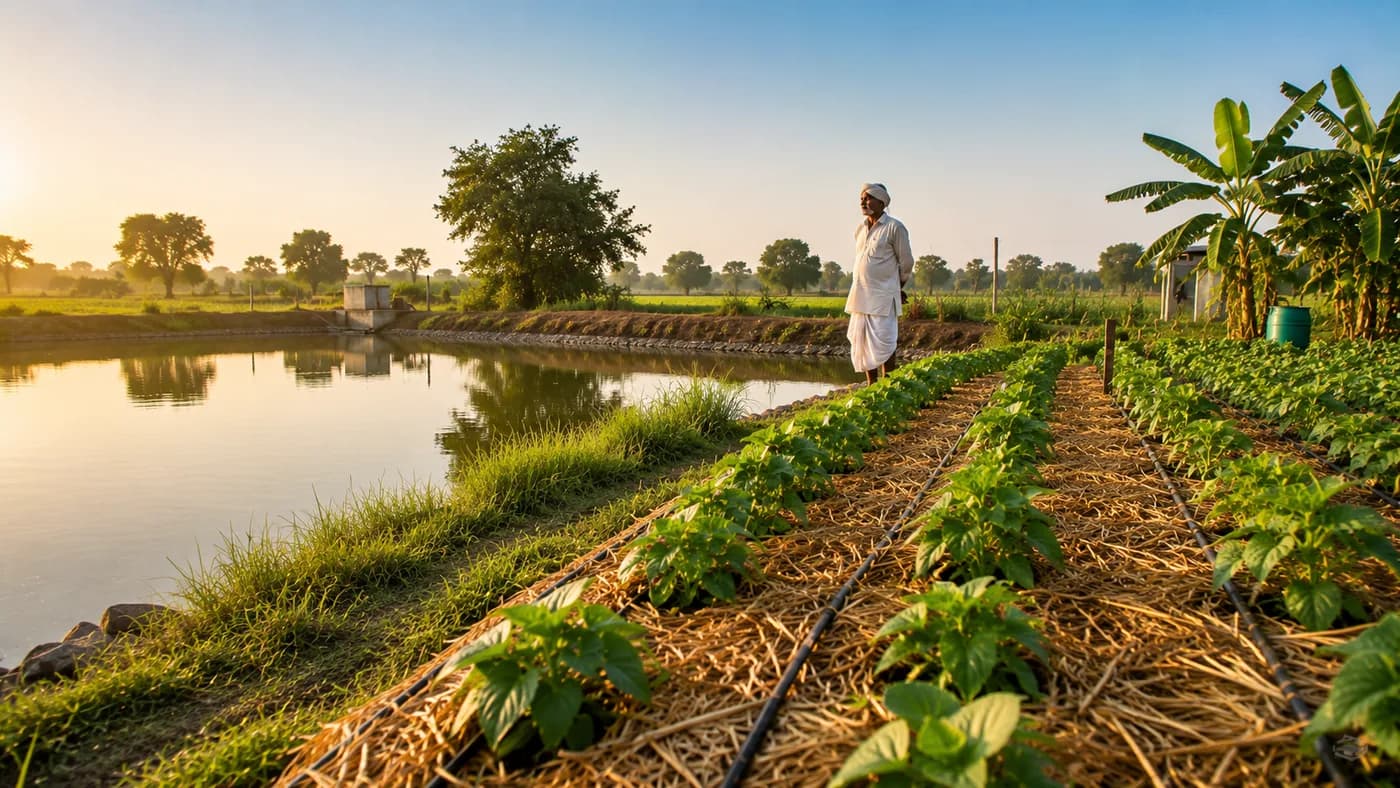
Water Management Tips for Small Farmers
No farmer controls the rain, but every farmer controls how much of the available water actually reaches the crop. Low-cost habits make the difference.
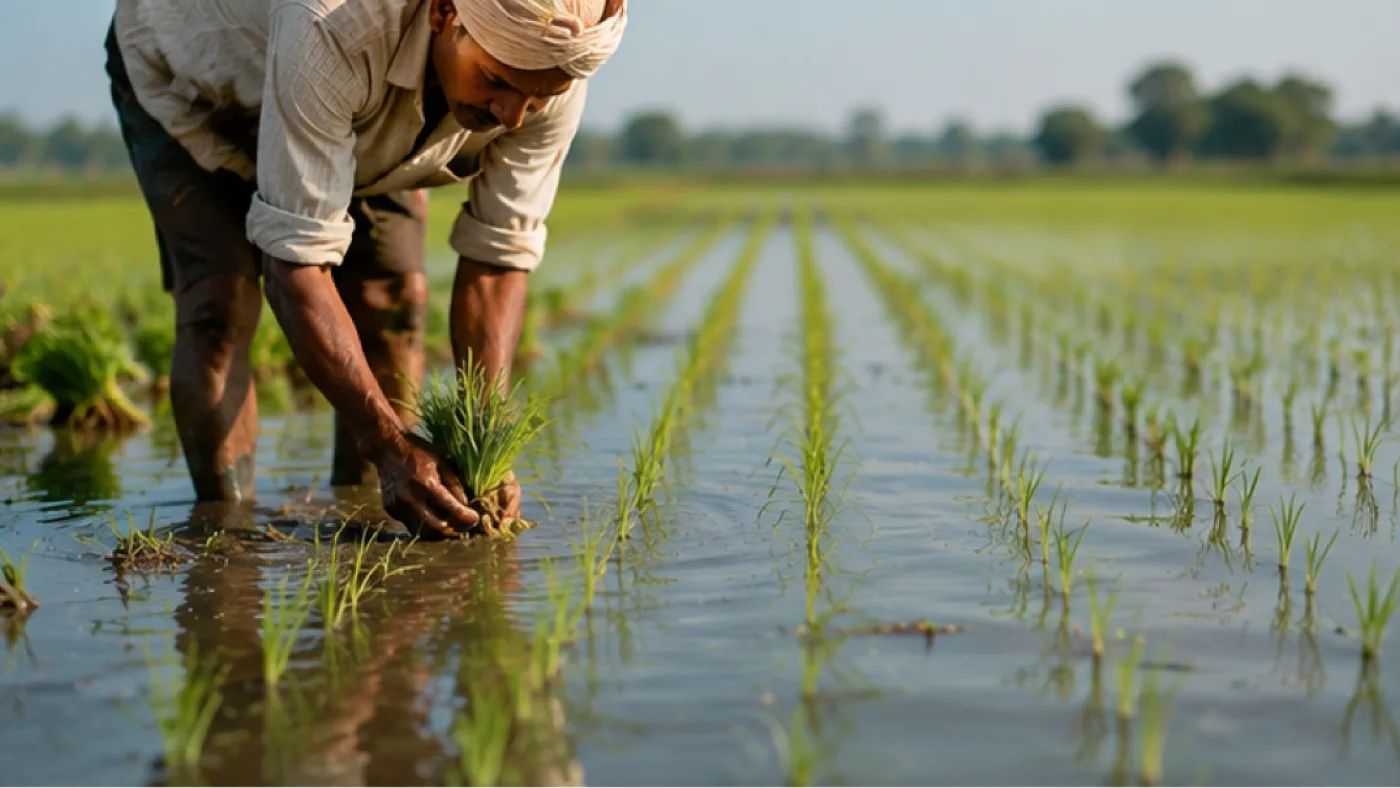
Rice (Paddy) Cultivation: The Complete Guide From Nursery to Harvest
From raising a healthy nursery to knowing exactly when to drain the field before harvest, this is a full season-by-season guide to growing paddy well — with the water-saving trick that can cut your irrigation bill without cutting your yield.