

Know the rate before you sell
Check today's mandi prices for your crop, see which nearby mandi pays more, and decide where to sell — with honest numbers, not guesses. Powered by official AGMARKNET government data.

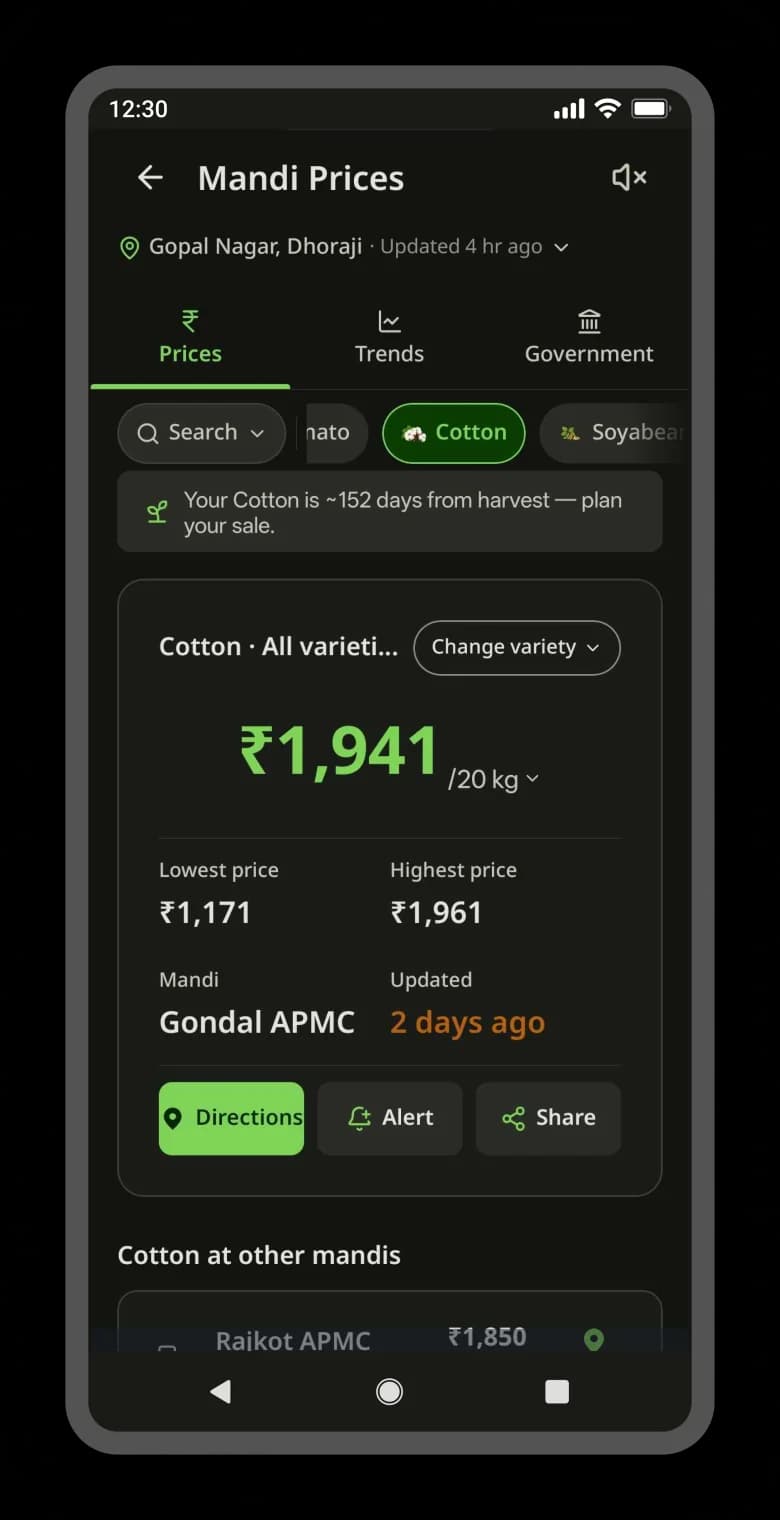
What Mandi Bhav does
Live prices for your crops
Today's rates from real mandis. Khetiyaar suggests the crops from your own plans and garden, or search any commodity.
Compare nearby mandis
See the markets around you with their latest reported price, so you spot the better rate before loading the truck.
Honest, dated prices
Every price shows when the mandi reported it — today, yesterday or a few days ago — so you always know how fresh the number is.
Is the trip worth it?
Estimates your travel cost at your own per-km rate and shows the net price at a farther mandi, so distance is a decision, not a gamble.
Price alerts
Set an alert for your crop and get notified when the rate moves, so a good day does not pass unnoticed.
MSP & procurement
Government Minimum Support Price shown alongside market rates, so you know the floor price for your crop.
Built on honesty
- Prices come from AGMARKNET, the Government of India's official market data, via data.gov.in under the GODL-India licence.
- Distances to mandis are approximate — district-level — and always shown with a “~”.
- Travel cost and net-price figures are clearly marked as estimates you can adjust, never quotations or guarantees.
- No invented “live” numbers and no fake price history. Until there is real history for your crop, the trend honestly says it is still collecting data.
- Khetiyaar does not buy, sell or broker produce. Confirm the actual rate at the mandi before you travel.
Related guides
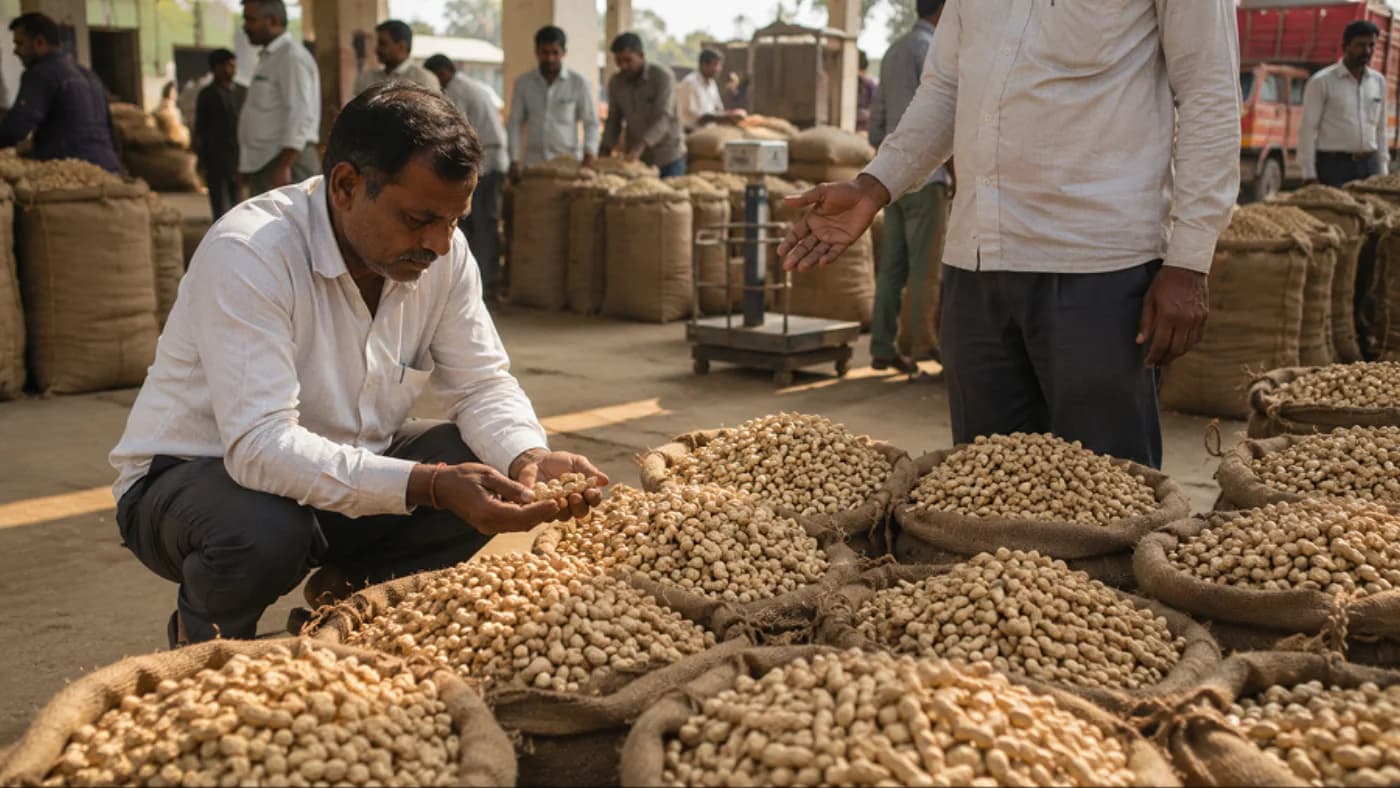
MSP 2026-27 and Mandi Bhav: What the Announced Rate Really Means at the Gate
Groundnut MSP for 2026-27 is ₹7,517 a quintal and long-staple cotton ₹8,667. Very few farmers actually receive those numbers. This guide explains the gap between the announced MSP and your gate price — and the four levers that close it.
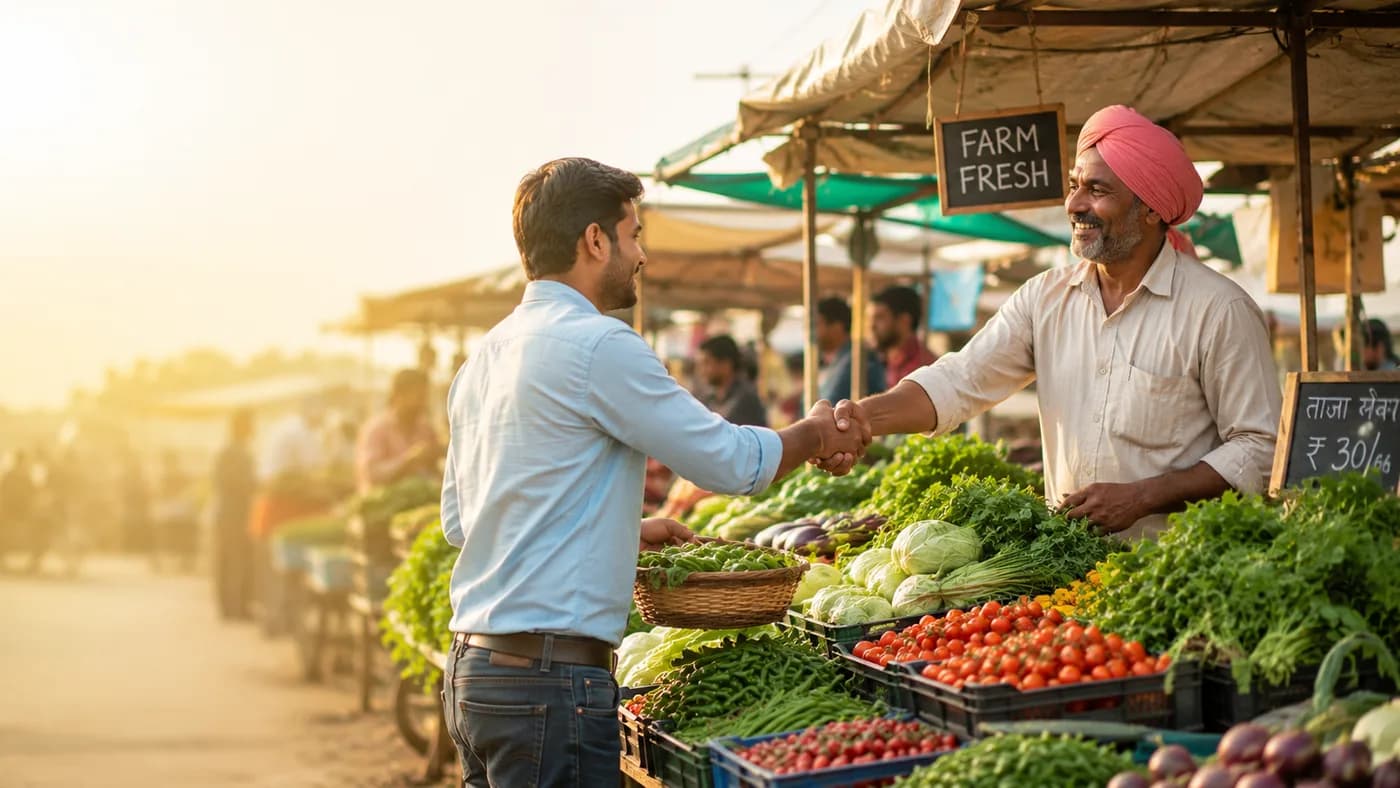
How to Sell Your Farm Produce and Get a Better Price
The difference between a good year and a poor one is often not how much you grow, but the price you get. Selling smarter adds more than any input.
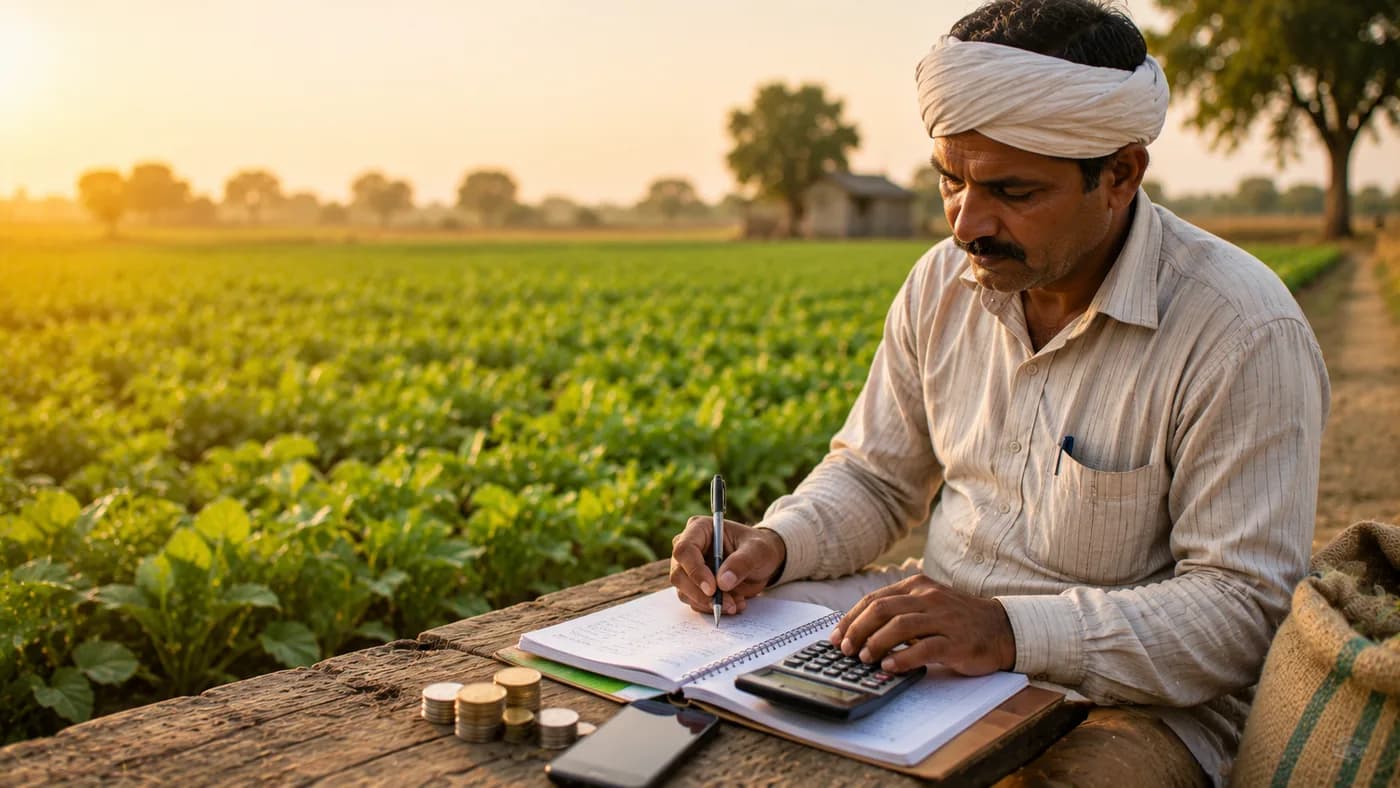
How to Calculate Farming Cost and Profit
Many farmers know their yield but not their profit — a costly blind spot. Track costs, find your break-even price, and farming becomes a business.
Questions farmers ask us first.
How do I check today's mandi bhav for my crop?
Open Mandi Bhav in Khetiyaar and pick your crop — the app already suggests the crops from your plans and garden, or you can search any commodity. You will see the latest reported rate from mandis around you, each stamped with the day the mandi reported it.
Where does the mandi price data come from?
From AGMARKNET, the Government of India's official agricultural market information system, accessed through the Open Government Data Platform (data.gov.in) under the GODL-India licence. We do not invent or estimate prices.
Why does a price say “yesterday” instead of today?
Because that is when the market committee actually reported it. Mandis report with delays, revisions and occasional gaps, so Khetiyaar shows the report date rather than dressing an older number up as live. Always confirm at the mandi before you travel or sell.
Can Mandi Bhav tell me whether a farther mandi is worth the trip?
It estimates it. Set your own per-km cost and Khetiyaar shows what you could net at a farther mandi after travel. Distances are approximate district-level figures shown with a “~”, so treat the result as an honest estimate to weigh, not a promise.
Does Khetiyaar show MSP as well as market prices?
Yes. Government Minimum Support Price information appears alongside market rates so you can see the floor price for your crop. Khetiyaar is independent of any government body and never registers you or files anything on your behalf.
Is Mandi Bhav available in Gujarati and Hindi?
Yes — crop names, mandi names, units and numbers all appear in Gujarati, Hindi or English, with optional voice guidance that reads the page aloud.
Want this as daily tasks for your farm?
Khetiyaar turns guides like this into a day-by-day plan — in your language, free to start.