

iKhedut Portal 2026: Yojana List, Documents and How to Apply Without Getting Rejected
Gujarat's iKhedut portal carries subsidies for tractors, drip irrigation, godowns, tar fencing and well over a hundred other schemes. Most rejections are avoidable paperwork mistakes. Here is the full 2026 process, the documents that actually matter, and how to check your status.
Quick answer
Apply on ikhedut.gujarat.gov.in during the scheme's open window, with Aadhaar, a recent 7/12 and 8-A, a bank passbook and an OTP-linked mobile ready before you start. Most rejections are paperwork, not eligibility — usually a name mismatch across documents, an outdated extract, or an application submitted but never confirmed.
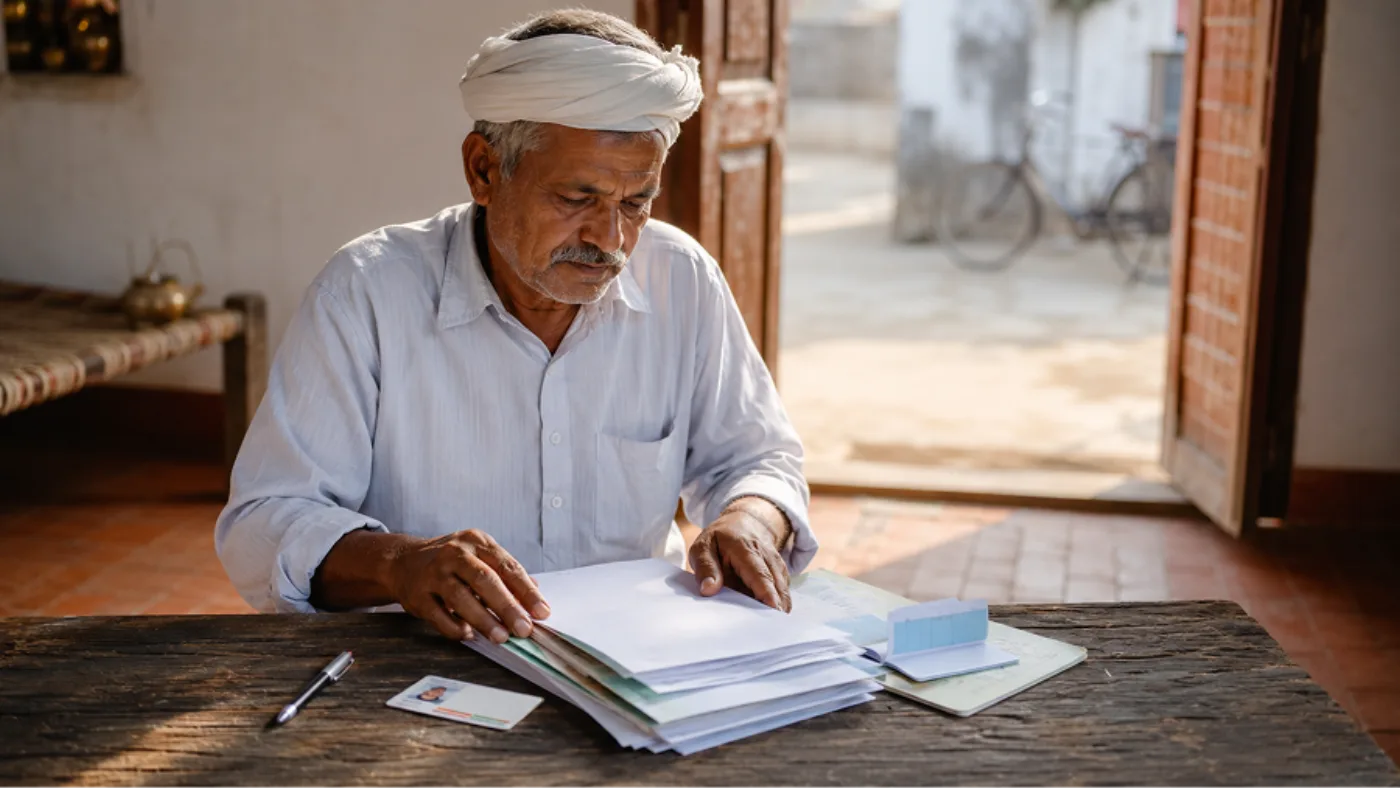
iKhedut is the single most important website a Gujarati farmer will ever use, and also the one that causes the most frustration. The schemes are real and the money is real — but every season, a large share of applications fail on paperwork rather than eligibility. This guide walks through what iKhedut covers in 2026, exactly which documents you need ready before you open the site, and the specific mistakes that quietly get applications rejected.
What iKhedut actually is
iKhedut (ikhedut.gujarat.gov.in) is the Government of Gujarat's single-window portal for farmer subsidy schemes. Rather than visiting separate offices for agriculture, horticulture, animal husbandry and fisheries, you apply for all of them in one place with one identity. The current version is widely referred to as iKhedut 2.0, with Aadhaar-based login and a cleaner application flow.
The scale is worth understanding: the portal has carried well over a hundred distinct schemes — reported at more than 148 in recent cycles — spanning farm machinery, tractors, drip and sprinkler irrigation, godown construction, tar fencing, horticulture planting material, cattle sheds and more. Subsidy rates differ by scheme, by land holding, and often by category, with higher rates for SC/ST applicants and, in several schemes, for women farmers.
The application window — the part most farmers get wrong
iKhedut does not accept applications year-round. Each scheme opens for a defined window, and when the window closes, it closes — there is no late submission and no appeal for having missed it. In the 2026 cycle, the main window ran roughly from late March to late April. Windows shift year to year and some schemes open separately, so treat any date you read online, including this one, as indicative and confirm on the portal itself.
The practical consequence is that preparation, not speed, decides whether you get in. Farmers who assemble their documents in February apply calmly on day one. Farmers who start assembling documents after the window opens spend three weeks chasing a talati for an updated 7/12 and miss the deadline. Set a reminder for early March and get your papers in order before the portal opens.
Documents you need ready before you start
Nearly every avoidable rejection traces back to this list. Collect all of it first, as clear scans or sharp photographs, and check that names match across documents — a name spelled differently on your Aadhaar and your bank passbook is one of the most common reasons an otherwise valid application fails verification.
- Aadhaar card — mandatory, and the basis of login on iKhedut 2.0.
- Recent 7/12 and 8-A land record extracts (utara). "Recent" matters; old extracts are frequently rejected.
- Bank passbook front page or a cancelled cheque, showing account number and IFSC clearly.
- An active mobile number linked for OTP — you cannot complete the process without receiving OTPs.
- Ration card copy.
- Caste certificate — only if you are applying under an SC/ST category for a higher subsidy rate.
- Scheme-specific extras where applicable: quotations for machinery, bore/well documents for irrigation schemes, or a share certificate for co-operative applications.
Step by step: applying on iKhedut in 2026
The flow itself is short once your papers are ready. Work on a laptop or a decent phone browser, on a stable connection, and do not abandon the form halfway — partially filled applications are a common source of duplicate, conflicting entries.
- Open ikhedut.gujarat.gov.in and choose your department: Agriculture (ખેતીવાડી), Horticulture (બાગાયતી), Animal Husbandry (પશુપાલન) or Fisheries (મત્સ્ય).
- Browse the yojana list for that department and open the scheme you want. Read the eligibility and subsidy rate before applying, not after.
- Indicate whether you are a registered applicant. New applicants complete a fresh registration; returning applicants log in.
- Complete the form using details exactly as they appear on your documents — survey number, area, village, bank details.
- Upload the documents, then review the entire form once before submitting. Corrections after submission are difficult.
- Submit, then confirm the application. An unconfirmed application is not a submitted application — this trips up a great many farmers.
- Save and photograph your application number. You cannot check status without it.
- Print the confirmed application and submit it with attested copies to the relevant office if the scheme requires a physical copy.
How to check your iKhedut application status
Return to the portal and open the application status section. You will need your application number, your registered mobile number and the captcha shown on screen. The status will show whether the application is pending, verified, approved (pre-sanction), or rejected.
If it shows rejected, find out why rather than immediately reapplying — the reason is usually a specific document mismatch, and reapplying with the same paperwork produces the same result. Your village-level extension officer or the taluka agriculture office can tell you what failed. If it shows approved as a pre-sanction, note carefully that in most schemes you must not purchase the item before you receive the sanction order. Buying early is one of the most expensive mistakes on this portal, because it usually disqualifies the claim entirely.
The mistakes that cause most rejections
- Name mismatch across Aadhaar, bank passbook and land record — fix this before applying, not after.
- Outdated 7/12 or 8-A extracts.
- Submitting but never confirming the application.
- Buying the machinery or material before the sanction order arrives.
- Bank account inactive, or IFSC changed after a bank merger — verify the account still receives credits.
- Applying under a category without holding the corresponding certificate.
- Blurred document photographs where the survey number or account number cannot be read.
Plan what you apply for, not just how
A subsidy is only worth taking if the underlying investment makes sense on your land. A drip system on a plot with an unreliable water source, or a godown you will use for one month a year, can leave you worse off even at half price. Before you apply, run the numbers: total cost, subsidy share, your share, and what the investment changes about your yield or your selling position.
Our farming cost and profit calculator does that arithmetic in a few minutes, and the land unit converter helps when a scheme specifies limits in hectares while your records are in vigha. If you are weighing a drip application specifically, read how drip irrigation saves water and increases yield first so you know what return to expect.
Beyond iKhedut: the central schemes worth pairing
iKhedut is a state portal, so it sits alongside central schemes rather than replacing them. PM-KISAN income support, PMFBY crop insurance, the Kisan Credit Card and soil health cards are administered separately, and many farmers are eligible for several at once without realising it. Our guide to government schemes for Indian farmers maps the main ones, and the PM-KISAN 2026 instalment and e-KYC guide covers the one most farmers ask about.
If you would rather not track deadlines and paperwork by memory, Khetiyaar's kheti app keeps scheme information, your crop plan and your season tasks in one place in Gujarati, and its AI farming chatbot will answer scheme questions in the language you actually speak.
Frequently asked
What is the iKhedut Portal 2026 yojana list?+
iKhedut carries well over a hundred schemes — reported at more than 148 in recent cycles — across four departments: Agriculture, Horticulture, Animal Husbandry and Fisheries. They include farm machinery and tractors, drip and sprinkler irrigation, godown construction, tar fencing, horticulture planting material and cattle sheds. The live list for your department is published on ikhedut.gujarat.gov.in when the window opens.
Which documents are required for iKhedut registration?+
Aadhaar card, recent 7/12 and 8-A land record extracts, bank passbook front page or a cancelled cheque, an active mobile number for OTP, and a ration card copy. A caste certificate is needed only if you apply under an SC/ST category for a higher subsidy rate. Some schemes ask for extras such as machinery quotations.
How do I check my iKhedut application status?+
Open the application status section on ikhedut.gujarat.gov.in and enter your application number, your registered mobile number and the captcha. If you have lost the application number you will need to contact your taluka agriculture office, so photograph it as soon as you apply.
When does the iKhedut portal open for applications?+
Each scheme opens for a defined window rather than year-round. In the 2026 cycle the main window ran roughly from late March to late April. Dates shift every year and some schemes open separately, so confirm on the portal itself and prepare your documents in advance rather than relying on any published date.
Why was my iKhedut application rejected?+
The most common causes are a name mismatch between Aadhaar, bank passbook and land records, outdated 7/12 or 8-A extracts, submitting without confirming the application, an inactive bank account, or purchasing the subsidised item before the sanction order was issued. Find the specific reason from your taluka agriculture office before reapplying, because resubmitting the same paperwork gives the same result.
Can I apply on iKhedut without land in my own name?+
Land records in the applicant's name are central to most iKhedut schemes, so applications generally require 7/12 and 8-A extracts showing your holding. Where land is jointly held or inherited but not yet mutated, farmers usually need to complete the mutation or provide the consent documentation the scheme specifies. Confirm the exact requirement for your scheme with the taluka office before applying.
Where to go next
- Farming cost & profit calculatorWork out cost per acre, break-even yield and expected profit before you sow.
- Today's mandi bhavOfficial AGMARKNET rates for your crop, nearby mandis compared, and the net price after travel.
- Agri Bazar marketplaceBuy and sell animals, crops, equipment and dairy near you — and see what buyers want today.
Want this as daily tasks for your farm?
Khetiyaar turns guides like this into a day-by-day plan — in your language, free to start.

Related guides
Government Schemes Every Indian Farmer Should Know
Income support, cheap credit, crop insurance, free soil testing and irrigation subsidies — real value that often goes unused simply for lack of awareness.
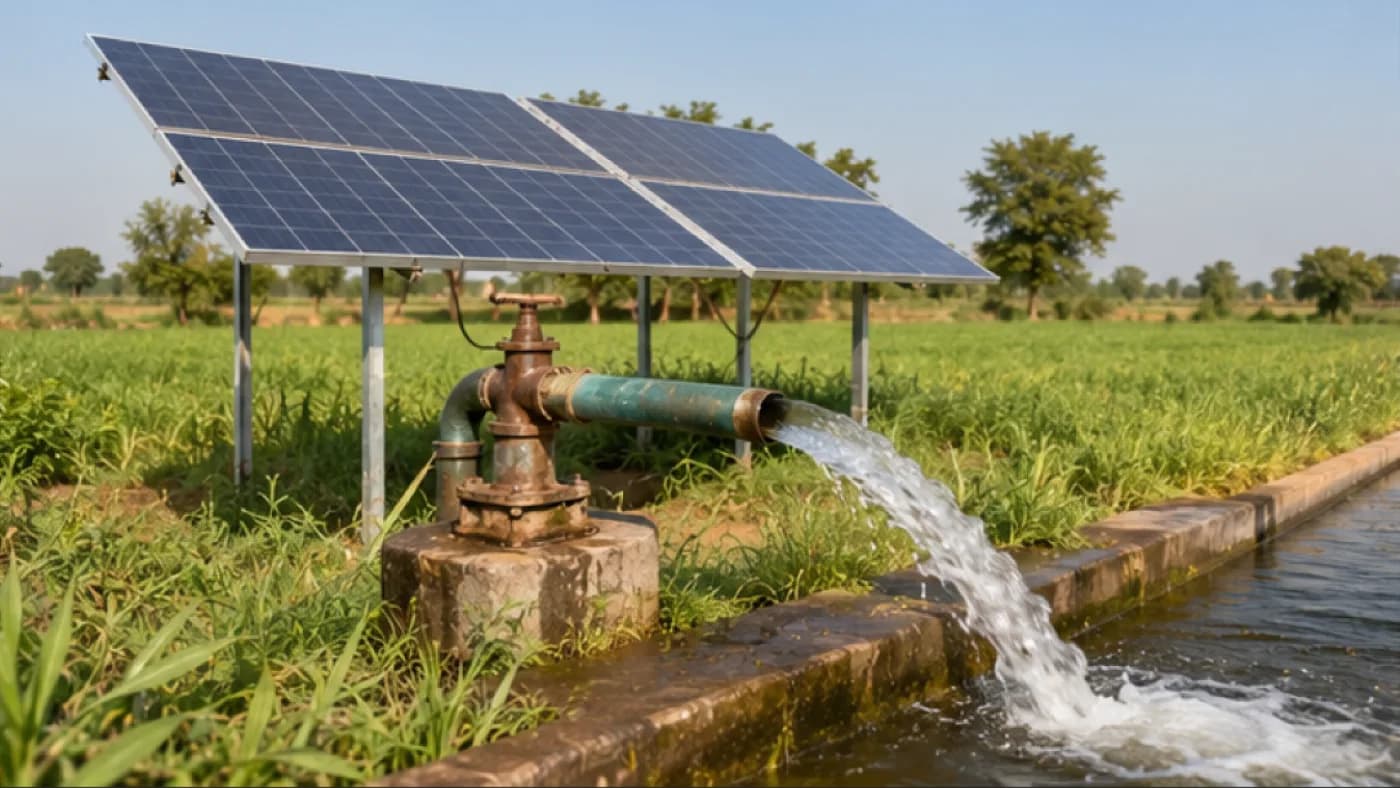
PM-KUSUM Solar Pump Subsidy: The Three Components Explained
Diesel pumps are expensive to run and getting more expensive every season. PM-KUSUM subsidizes solar irrigation in three different ways depending on your situation — here's which component applies to you and how to apply.
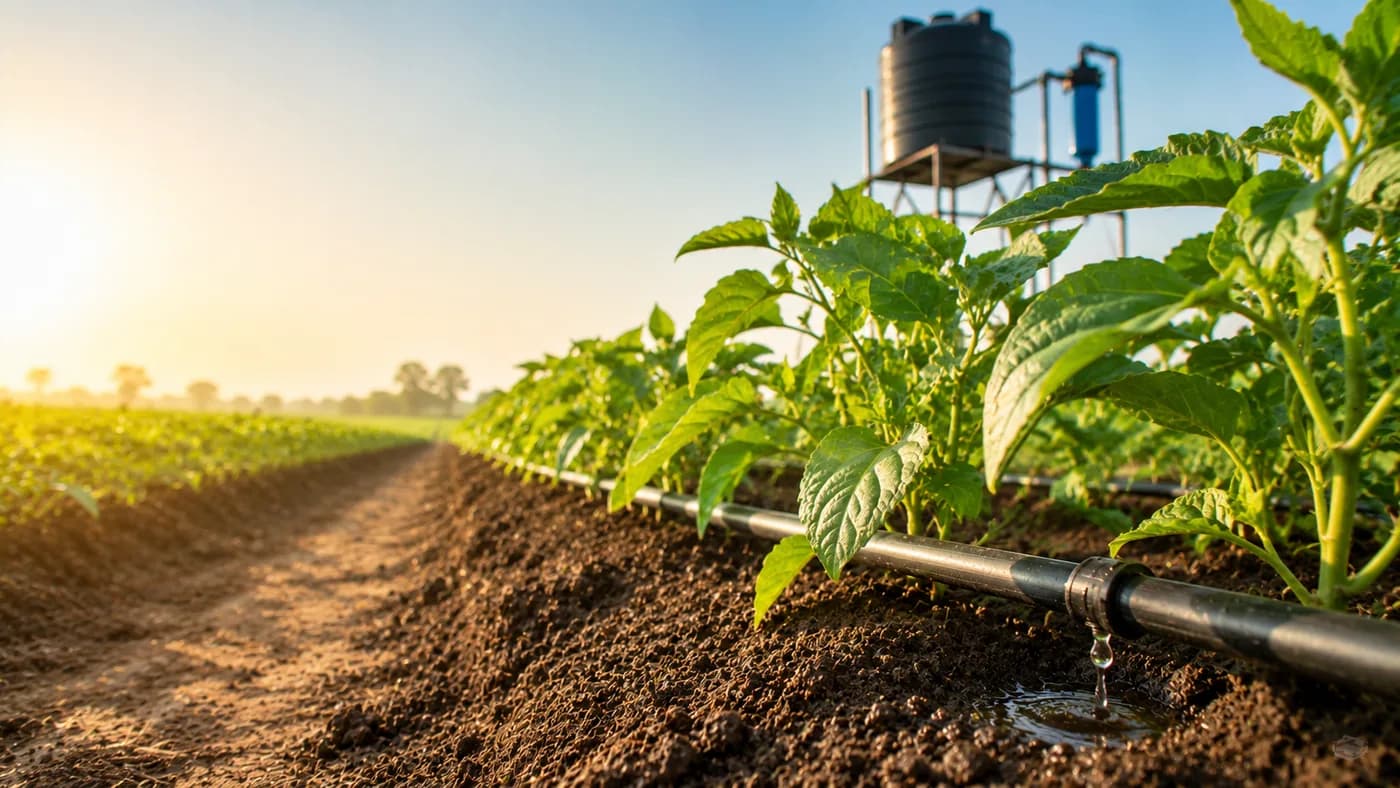
Drip Irrigation: Save Water and Increase Yield
Drip delivers water directly to the roots, drop by drop — saving a large share of your water while lifting yield and cutting weeds.