

How to Read Your Soil Health Card: All 12 Parameters Explained in Plain Language
Most farmers receive a soil health card, glance at it, and file it away. It is the cheapest agronomic advice you will ever get — twelve numbers that tell you exactly what your land is short of and what you are wasting money on. Here is how to read every one.
Quick answer
Read the three soil properties before the nine nutrients: pH decides what the plant can absorb, EC tells you whether salinity is the real problem, and organic carbon determines whether anything you apply will work. The most common saving is high phosphorus — if your card shows it, cut the DAP.
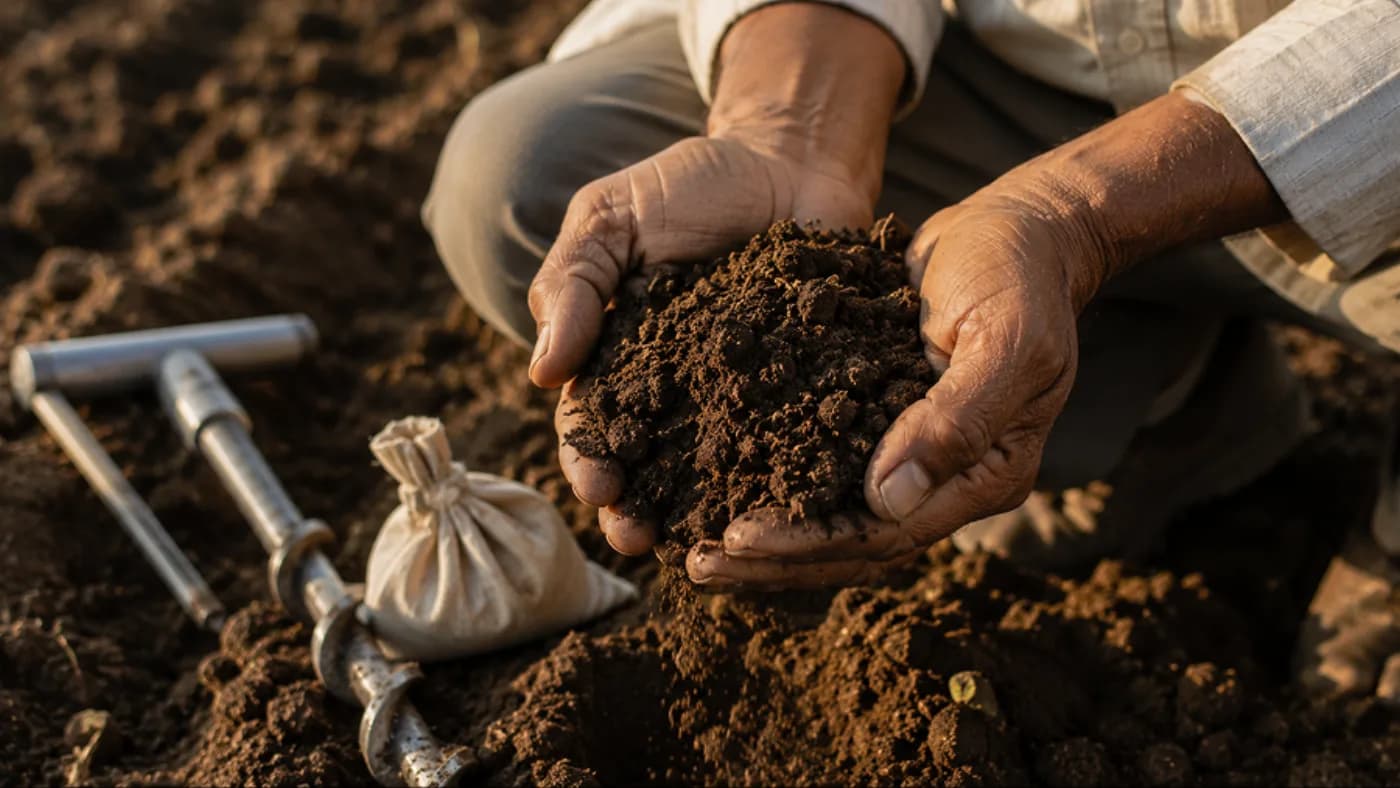
A soil health card is a laboratory report on your own land, produced at negligible cost to you. Farmers who read it properly routinely cut fertiliser spend while raising yield, because most Indian fields are simultaneously overdosed on one nutrient and starved of another. This guide walks through all twelve parameters, what a bad number actually means in the field, and what to do about it.
What the card contains
The soil health card reports twelve parameters, grouped in a way that becomes obvious once you know the logic. Three are the primary macronutrients — nitrogen, phosphorus and potassium. One is a secondary nutrient, sulphur. Five are micronutrients — zinc, iron, copper, manganese and boron. The remaining three are not nutrients at all but soil properties that govern whether the nutrients are available: pH, electrical conductivity and organic carbon.
Those last three matter most and get read least. You can apply a perfect fertiliser dose onto soil with the wrong pH and the plant will still not get it. Read the properties first, then the nutrients.
The three that decide everything: pH, EC and organic carbon
pH measures acidity and alkalinity. Most crops perform best in the roughly neutral band, around 6.5 to 7.5. Below that, in acidic soil, phosphorus gets locked up and aluminium can become toxic; the standard correction is lime. Above it, in alkaline soil — very common across large parts of Gujarat, Rajasthan and the Deccan — iron and zinc become unavailable, which is why crops show yellowing on new leaves even when the soil test says iron is adequate. Gypsum and organic matter are the usual corrections, alongside using chelated micronutrients that stay available at high pH.
EC, electrical conductivity, measures salinity. A high EC means salts are accumulating, usually from irrigation water quality or poor drainage, and salt-affected roots cannot draw water even when the field looks wet. If your EC is rising across successive cards, the problem is your water and drainage, not your fertiliser — and no amount of nutrient application will fix it.
Organic carbon is the single most important number on the card and the one most Indian soils fail. It is the measure of living, decomposed organic matter, which holds water, holds nutrients, feeds soil biology and gives soil its structure. A very large share of Indian fields test low. Raising it is slow — measured in years, not seasons — but it is also the change that makes every other input work better.
Nitrogen, phosphorus and potassium
Nitrogen is almost always reported low, because it is mobile — it leaches with irrigation and volatilises into the air — and because most soils genuinely are deficient. This is why nitrogen is applied in split doses through the season rather than all at sowing: a single large basal dose largely washes away before the crop can use it.
Phosphorus is the opposite problem. It is immobile and accumulates, and many farmers who have applied DAP every season for years now test high or very high in phosphorus while still buying more of it. If your card shows high phosphorus, reducing or skipping the phosphatic fertiliser for a season is usually free money — this is the single most common saving a soil health card reveals. Note also that phosphorus availability is strongly pH-dependent, so a high reading in very acidic or very alkaline soil may still not reach the plant.
Potassium is often reported as adequate in Indian soils, and is often genuinely under-applied anyway for high-demand crops like banana, potato and sugarcane. It governs water regulation and disease resistance, and deficiency shows as scorching along leaf margins.
Sulphur and the five micronutrients
Sulphur deficiency has become widespread as farmers moved from older fertilisers that contained sulphur incidentally to concentrated formulations that do not. It matters especially for oilseeds — groundnut, mustard, sesame — where it directly affects oil content, and for pulses. Deficiency looks like nitrogen deficiency but appears on new leaves instead of old ones, which is the distinguishing test.
Among micronutrients, zinc is the most commonly deficient across India, particularly in rice and wheat systems, and iron deficiency is extremely common in alkaline soils. Boron matters disproportionately for fruit and seed set — deficiency shows up as poor filling rather than poor growth, so it is often missed entirely. Micronutrients are needed in very small quantities, which cuts both ways: a deficiency is cheap to correct, and an overdose is genuinely toxic. Never apply micronutrients by guesswork, and never exceed the recommended rate on the assumption that more is better.
Reading the fertiliser recommendation
The card gives crop-wise fertiliser recommendations, and the important thing to understand is that these are stated in terms of nutrients, not in terms of bags. If it recommends a quantity of nitrogen per hectare, you need to convert that into the actual product you buy — urea, DAP, MOP or a complex — accounting for the nutrient percentage each contains. Applying the recommended number as though it were bags of urea is a real and common error.
Check the unit as well. Recommendations are typically per hectare while most farmers think in acres, bigha or vigha. Getting this conversion wrong by a factor of two and a half is one of the most expensive arithmetic mistakes in Indian farming — our land unit converter handles bigha, vigha, guntha, acre and hectare so you do not have to guess.
What to actually do with a low organic carbon reading
Our guides on composting at home and on the farm and improving soil health naturally cover the practical steps, and organic manure vs chemical fertiliser explains how to combine both sensibly rather than treating it as a choice between them.
- Return crop residue to the field instead of burning it. Burning destroys in an afternoon what takes years to build.
- Apply well-decomposed farmyard manure or compost every season, not occasionally.
- Grow a green manure crop such as dhaincha or sunhemp in the gap between main crops and incorporate it before flowering.
- Reduce tillage intensity — every pass oxidises organic matter and speeds its loss.
- Keep the soil covered. Bare soil in peak summer loses carbon fast.
- Include a legume in the rotation, which adds nitrogen and root biomass together.
Get a card, and get the sampling right
If you do not have a current card, apply through your taluka agriculture office or nearest soil testing laboratory; the scheme operates nationally and cards are issued in a periodic cycle. A card older than two years is worth refreshing, because organic carbon and pH shift with management.
The sample determines whether the report means anything. Take multiple sub-samples from across the field in a zigzag pattern, at plough depth, mix them thoroughly and take a composite from that mixture. Do not sample immediately after fertiliser application, near a bund, near a manure heap or in a waterlogged patch. Why soil testing is important covers correct sampling in detail — an unrepresentative sample produces a confidently wrong report, which is worse than no report at all.
Once you have the numbers, turn them into a season plan rather than a filed document. Khetiyaar's crop planning app converts a crop, an area and a sowing date into dated fertiliser and irrigation tasks, and the AI farming chatbot will explain any parameter on your card in Gujarati, Hindi or English if a line of it does not make sense.
Frequently asked
What are the 12 parameters on a soil health card?+
Three macronutrients (nitrogen, phosphorus, potassium), one secondary nutrient (sulphur), five micronutrients (zinc, iron, copper, manganese, boron) and three soil properties (pH, electrical conductivity and organic carbon). The three properties matter most because they determine whether the nutrients are actually available to the plant.
What is a good organic carbon level in soil?+
Organic carbon is reported in bands from low to high, and a very large share of Indian soils test low. It is the most important number on the card because organic matter holds water and nutrients, feeds soil biology and gives soil its structure. Raising it takes years rather than seasons, through residue return, farmyard manure, green manure, reduced tillage and keeping the soil covered.
My soil health card shows high phosphorus. Should I still apply DAP?+
Generally no, or much less. Phosphorus is immobile and accumulates in soil, so farmers who have applied DAP every season for years frequently test high while continuing to buy more. Reducing or skipping phosphatic fertiliser for a season is usually the single largest saving a soil health card reveals. Confirm with your local agriculture officer for your specific crop.
How often should I get a soil test done?+
Every two years is a reasonable cycle for most farms, and sooner if you have changed cropping system, started a new management practice, or seen unexplained yield decline. pH and organic carbon shift with management, so an old card can be actively misleading.
How do I collect a soil sample correctly?+
Take multiple sub-samples from across the field in a zigzag pattern at plough depth, mix them thoroughly, and take one composite sample from that mixture. Avoid sampling right after fertiliser application, near bunds, near manure heaps or in waterlogged patches. A poor sample produces a confidently wrong report.
Where to go next
- Organic farming appPlan a chemical-free season with organic inputs and natural pest control.
- Agri Bazar marketplaceBuy and sell animals, crops, equipment and dairy near you — and see what buyers want today.
- Farming cost & profit calculatorWork out cost per acre, break-even yield and expected profit before you sow.
Want this as daily tasks for your farm?
Khetiyaar turns guides like this into a day-by-day plan — in your language, free to start.

Related guides
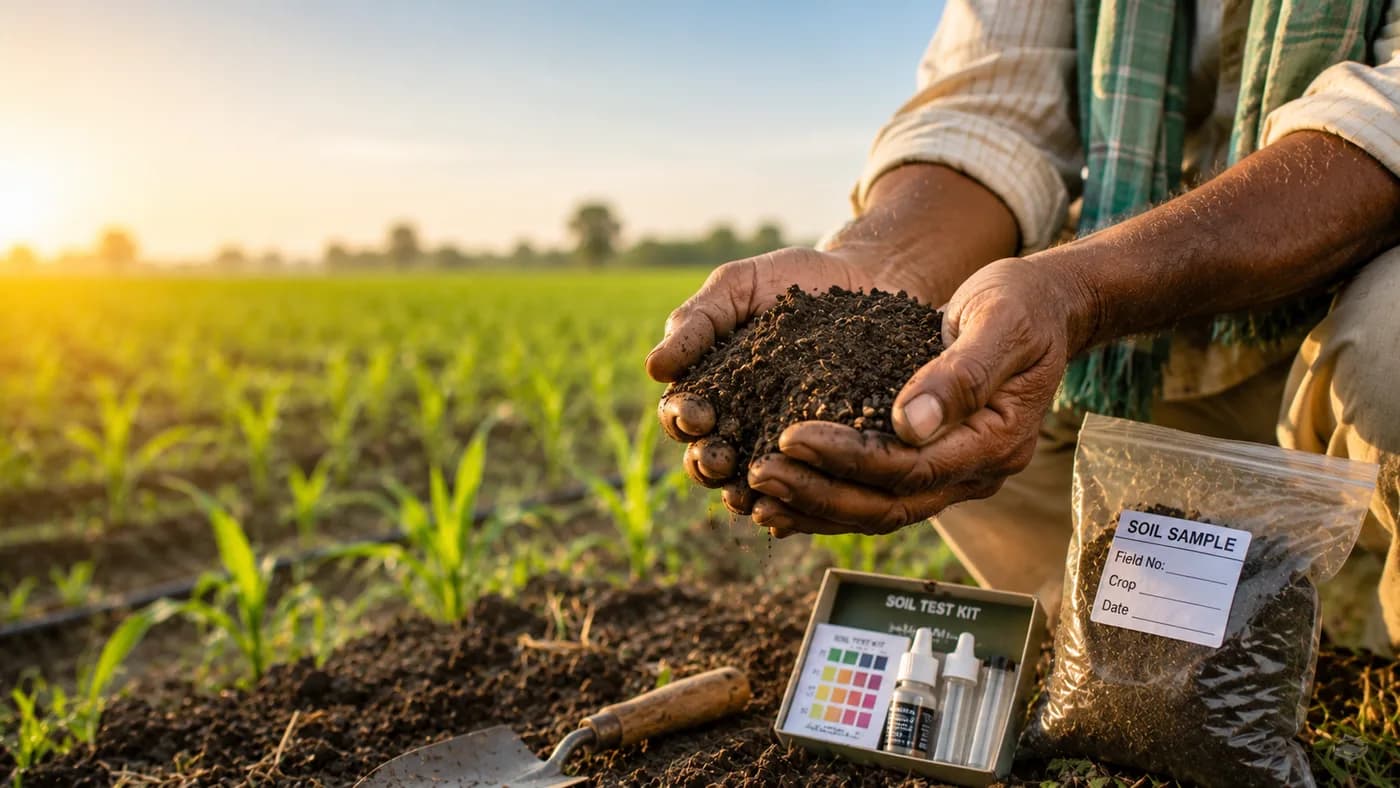
Soil Testing for Farmers: Why It Matters and How to Do It
Guessing fertiliser doses wastes a large part of one of your biggest costs. A soil test tells you exactly what your land has and what it lacks.
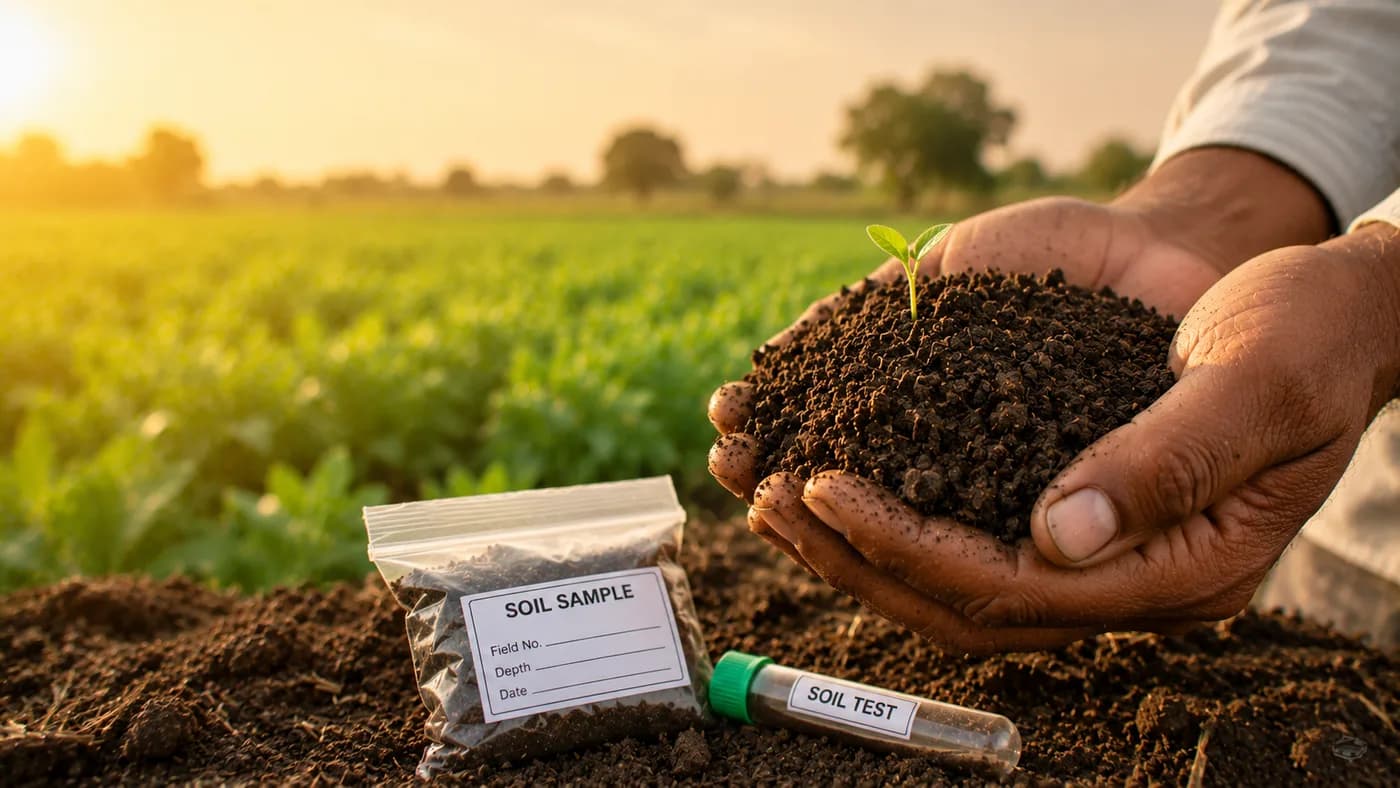
Why Soil Testing Is Important: The Smartest Decision a Farmer Can Make
Soil quietly sets the ceiling on your yield every season. Testing it is one of the cheapest decisions on the farm — and one of the highest-returning.
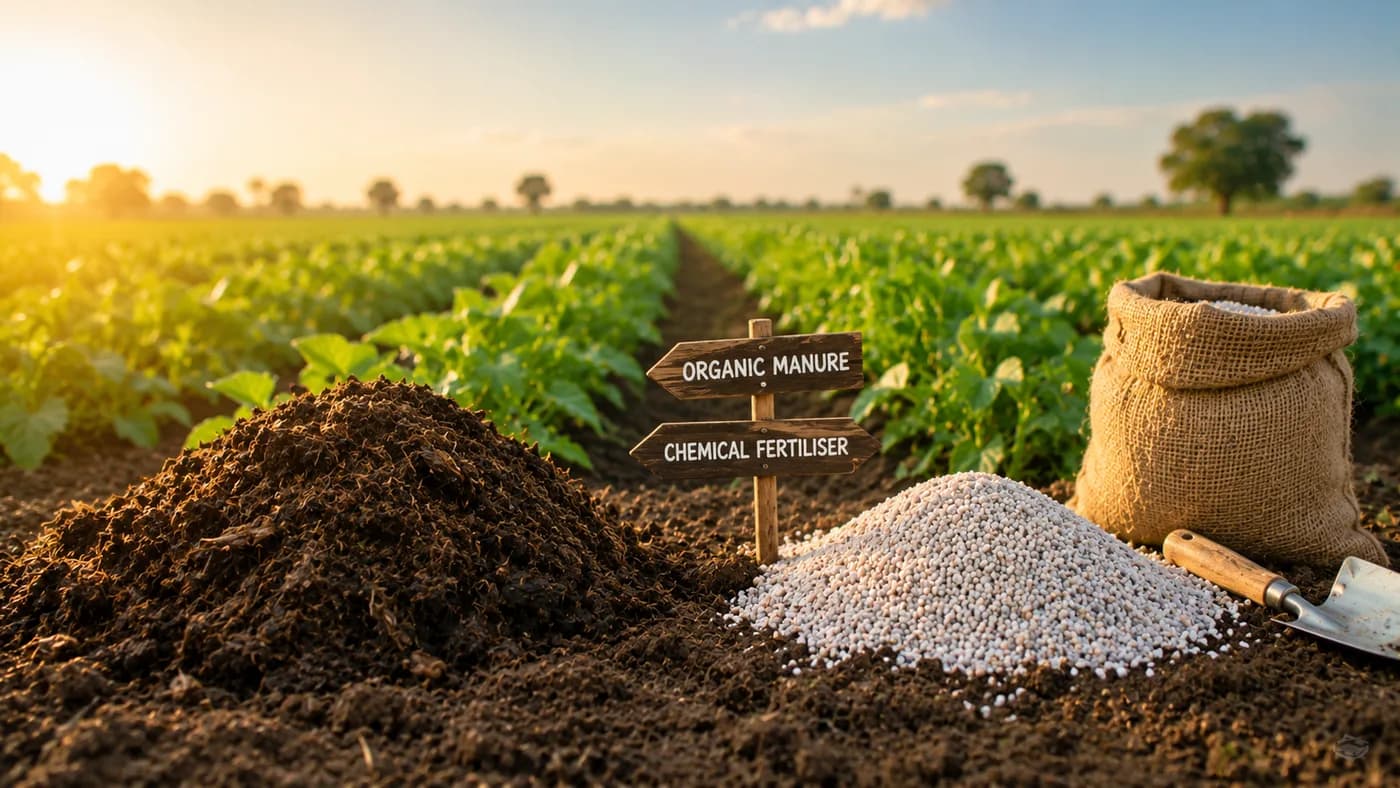
Organic Manure vs Chemical Fertiliser: What's Best for Your Farm
It's not a choice between the two — the smartest farmers use both wisely. Organic matter builds the soil; chemical fertiliser tops up precisely.