

Rice (Paddy) Cultivation: The Complete Guide From Nursery to Harvest
From raising a healthy nursery to knowing exactly when to drain the field before harvest, this is a full season-by-season guide to growing paddy well — with the water-saving trick that can cut your irrigation bill without cutting your yield.
Quick answer
Paddy yield is won in small, well-timed decisions more than in any single expensive input: a properly raised nursery, correct transplanting spacing, water held tight only when the crop genuinely needs it (with AWD saving real water the rest of the time), a nitrogen dose split across the season instead of dumped at once, and early scouting for stem borer and blast. Get the timing right on each of these, and the crop does most of the rest of the work itself.
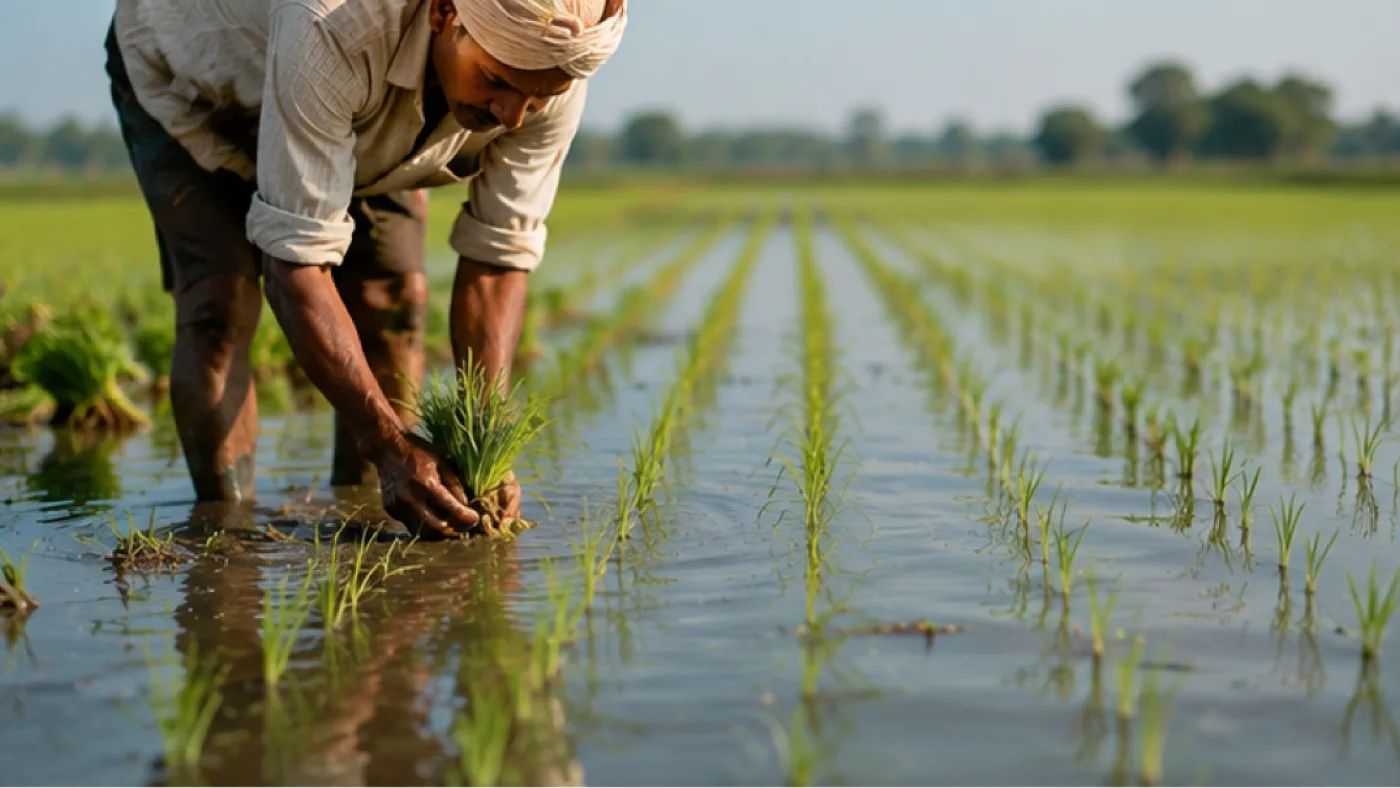
Rice feeds more Indian families than any other crop, and it is grown from Punjab's canal-fed plains to Kerala's backwaters — yet the difference between an average paddy yield and a genuinely good one usually comes down to a handful of decisions made long before the grain fills: how the nursery was raised, how the seedlings were spaced, and how water was managed at the two or three moments in the season when the crop cannot afford to go thirsty. This guide walks through the whole cycle, nursery to harvest, so you can see where the real yield is won or lost.
Raising a healthy nursery
Good paddy starts in the nursery bed, not the main field. For transplanted rice, sow pre-germinated, treated seed on a raised, well-puddled nursery bed — a small area, typically only 1/10 to 1/20 the size of the main field it will supply — at roughly 15-20 kg of seed per acre of main field for conventional (inbred) varieties, or as little as 8-10 kg per acre for hybrids, which tiller more and need fewer seedlings to fill the same area. That's enough seedlings to transplant the main field at normal spacing with some margin for gap-filling. Keep the nursery bed shallow-flooded (2-3 cm) once seedlings establish, and apply a light starter dose of nitrogen if the seedlings look pale before pulling.
Seedlings are usually ready to transplant at 20-25 days old for short-duration varieties, or up to 30-35 days for longer-duration ones. Pulling seedlings that are too old or too young both hurt establishment — old seedlings recover slowly after transplanting shock, while very young ones are fragile and easily damaged during pulling and planting.
Transplanting: spacing that pays for itself
The most common recommended spacing for transplanted paddy is about 20 cm between rows and 15 cm between plants (20×15 cm), giving a healthy plant population without overcrowding. Wider spacing lets in more light and air, which reduces disease pressure and makes it easier to spot pests early; spacing that is too tight competes for nutrients and encourages fungal problems in the humid microclimate under a dense canopy.
Plant 2-3 seedlings per hill for most transplanted varieties — enough to guarantee establishment without wasting seedlings. Straight, evenly spaced rows also make manual weeding and later mechanical weeding far easier, which matters more than it seems in a crop where weed competition in the first 30-40 days can cost a significant share of potential yield.
Water management by growth stage — and the AWD water-saving method
Rice does not need to stand in water every single day of its life, and treating it that way wastes a large amount of irrigation water and, on tubewell-irrigated farms, real money. The crop is genuinely water-sensitive at two windows: panicle initiation (when the young panicle is forming inside the stem, roughly 30-35 days before flowering) and flowering itself — a moisture stress at either point can sharply cut grain number and grain fill. Outside those windows, and especially as the crop approaches maturity, the field can be allowed to dry down periodically without hurting yield.
This is the basis of Alternate Wetting and Drying (AWD): instead of keeping the field continuously flooded, you let the standing water recede until it drops about 15 cm below the soil surface (checked with a simple perforated pipe stuck into the field), then re-irrigate to a shallow flood again — except during the two sensitive windows above, when you keep continuous shallow flooding. Farmers who adopt AWD properly typically report meaningfully lower irrigation water use with little or no yield penalty, because rice roots are perfectly capable of drawing on saturated soil moisture even when there is no standing water visible on the surface.
In the final 7-10 days before harvest, drain the field completely. This firms up the soil for harvesting (by hand or machine), reduces lodging risk, and helps the crop mature and dry evenly.
Feeding the crop: a practical N-P-K schedule
Rice is a heavy nitrogen feeder, but nitrogen is best given in split doses rather than all at once, since a single large dose either leaches away in standing water or pushes excessive vegetative growth that increases lodging and disease risk. A common practical split is: roughly 50% of total nitrogen as a basal dose at transplanting, 25% at active tillering (about 20-25 days after transplanting), and the remaining 25% at panicle initiation. Phosphorus is generally best applied fully as a basal dose, since it moves slowly in the soil and roots need it early to establish well. Potassium is often split between basal and panicle-initiation stages, since it plays a real role in grain filling and disease resistance in the second half of the season.
Always adjust this general schedule to what a soil test actually shows for your field rather than following it blindly — a field that has been growing rice for many seasons often carries different nutrient reserves than a field new to the crop.
Watching for yellow stem borer and rice blast
Yellow stem borer is one of the most damaging insect pests of rice, boring into the stem itself rather than feeding externally — you'll rarely see the caterpillar, but you will see its two signature symptoms: a 'dead heart' (the central shoot of a young plant dries and pulls out easily) during the vegetative stage, or a 'white ear' (an infested panicle turns white with no grain) at the reproductive stage. Check tillers regularly from early growth onward, since catching an infestation as dead hearts is far less costly than losing panicles to white ear later. (See our full identification guide, Good Insects vs Bad Insects, for a photo and detailed description of this pest.)
Rice blast, caused by a fungus, shows as diamond or spindle-shaped lesions with a grey centre and brown border on the leaves, and can be devastating if it reaches the neck of the panicle ('neck blast'), where the stem turns black, breaks, and the grain above never fills. Blast is worse under high humidity, dense planting, and excess nitrogen — all reasons the spacing and fertilizer advice above matters for disease control, not just yield. (Also covered with a photo in our identification guide.)
Weed control in the first 40 days
Weeds compete hardest with rice in the first 30-40 days after transplanting, before the crop canopy closes and shades them out on its own. A combination of correct water management (a shallow standing flood suppresses many weed seeds from germinating), timely hand weeding or mechanical weeding at around 20 and 40 days after transplanting, and clean, weed-free seed and nursery beds keeps weed pressure manageable without heavy reliance on herbicide.
Reading the crop as harvest approaches
Rice is ready to harvest when roughly 80-85% of the grains on the panicle have turned straw-golden and hard, while the rest are just past the milky stage. Harvesting too early gives a higher share of immature, chalky grains and lower milling recovery; harvesting too late increases shattering losses (grains falling off the panicle before or during harvest) and the risk of lodging from wind or rain damaging a fully mature, top-heavy crop.
Grain moisture at harvest is typically around 20-25%, and needs to be brought down to about 12-14% for safe storage — through sun-drying on a clean threshing floor or mechanical drying — before the paddy is bagged or milled. Grain stored above 14% moisture is at real risk of fungal spoilage and insect infestation.
A season at a glance
Putting it together: raise a 20-25 day nursery with treated seed at 15-20 kg/acre for conventional varieties (8-10 kg/acre for hybrids), transplant 2-3 seedlings per hill at 20×15 cm spacing, keep the field flooded through the sensitive panicle-initiation and flowering windows while using AWD drying cycles the rest of the season, split your nitrogen into three doses, scout weekly for stem borer and blast symptoms, weed hard in the first 40 days, drain the field 7-10 days before harvest, and cut when 80-85% of grains have turned golden. None of these steps is expensive on its own — the yield difference comes from doing all of them, at the right time, every season.
Terms explained in this guide
Frequently asked
What is the ideal spacing for transplanting rice?+
About 20 cm between rows and 15 cm between plants (20×15 cm) is the most common recommendation, with 2-3 seedlings per hill — close enough for a good plant population, open enough to limit disease pressure.
What is AWD (Alternate Wetting and Drying) in rice?+
A water-saving irrigation method where you let the field dry down until standing water drops about 15 cm below the soil surface before re-flooding, except during the panicle-initiation and flowering stages when continuous shallow flooding is kept. It can meaningfully cut irrigation water use with little yield penalty when the sensitive stages are protected.
How much seed do I need per acre for a rice nursery?+
Roughly 15-20 kg of seed per acre of main field is standard for conventional (inbred) transplanted rice varieties; hybrids need less, around 8-10 kg per acre, since they tiller more.
When should I stop irrigating rice before harvest?+
Drain the field completely about 7-10 days before harvest. This firms the soil for harvesting, reduces lodging, and helps the crop dry and mature evenly.
How do I know when rice is ready to harvest?+
When about 80-85% of the grains on the panicle have turned straw-golden and hard. Harvesting earlier increases chalky, immature grains; harvesting later increases shattering losses.
Where to go next
Want this as daily tasks for your farm?
Khetiyaar turns guides like this into a day-by-day plan — in your language, free to start.

Related guides
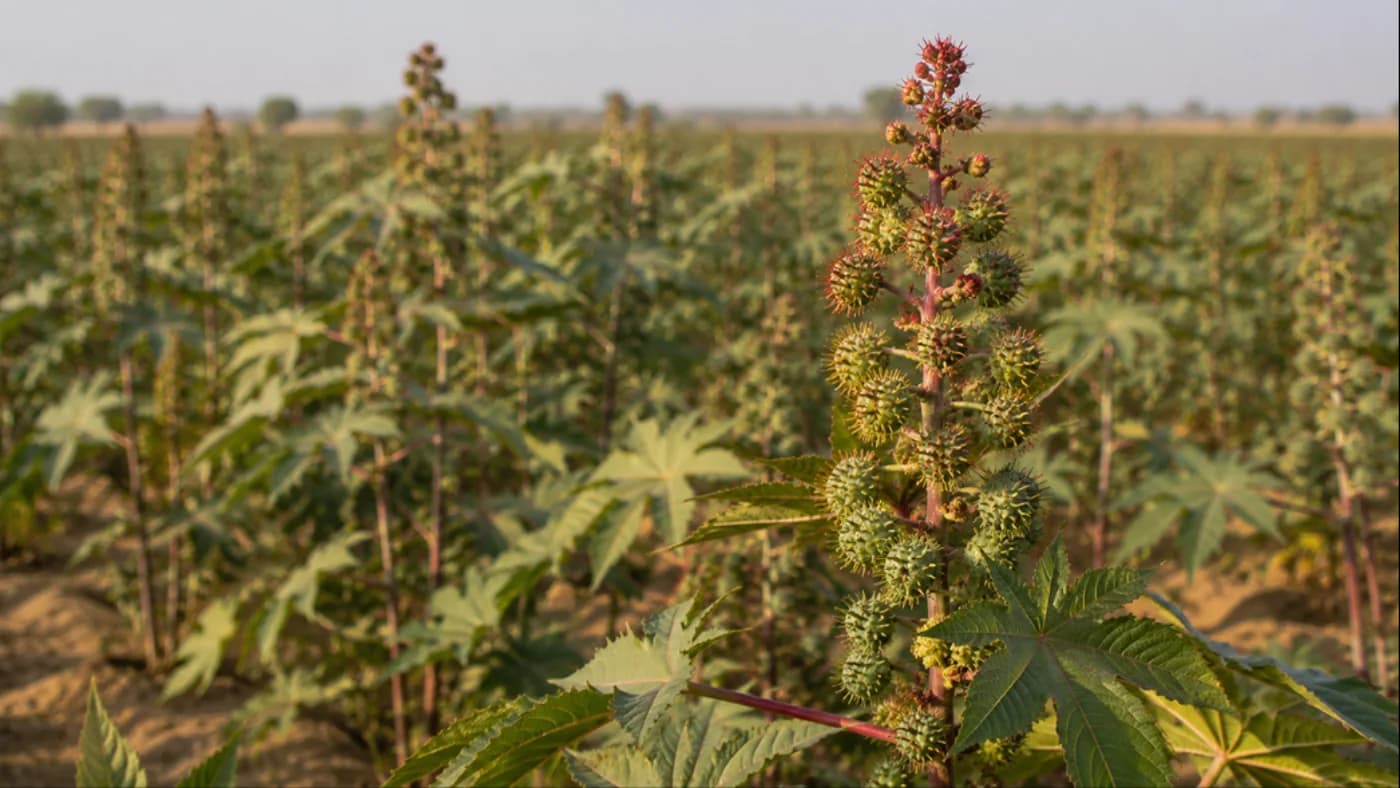
Castor Farming in Gujarat: Erandi from Sowing to the Last Picking
Gujarat grows most of India's castor, and India supplies most of the world's. A deep-rooted crop for light land that pays across several pickings — and one you must never treat as food or fodder.
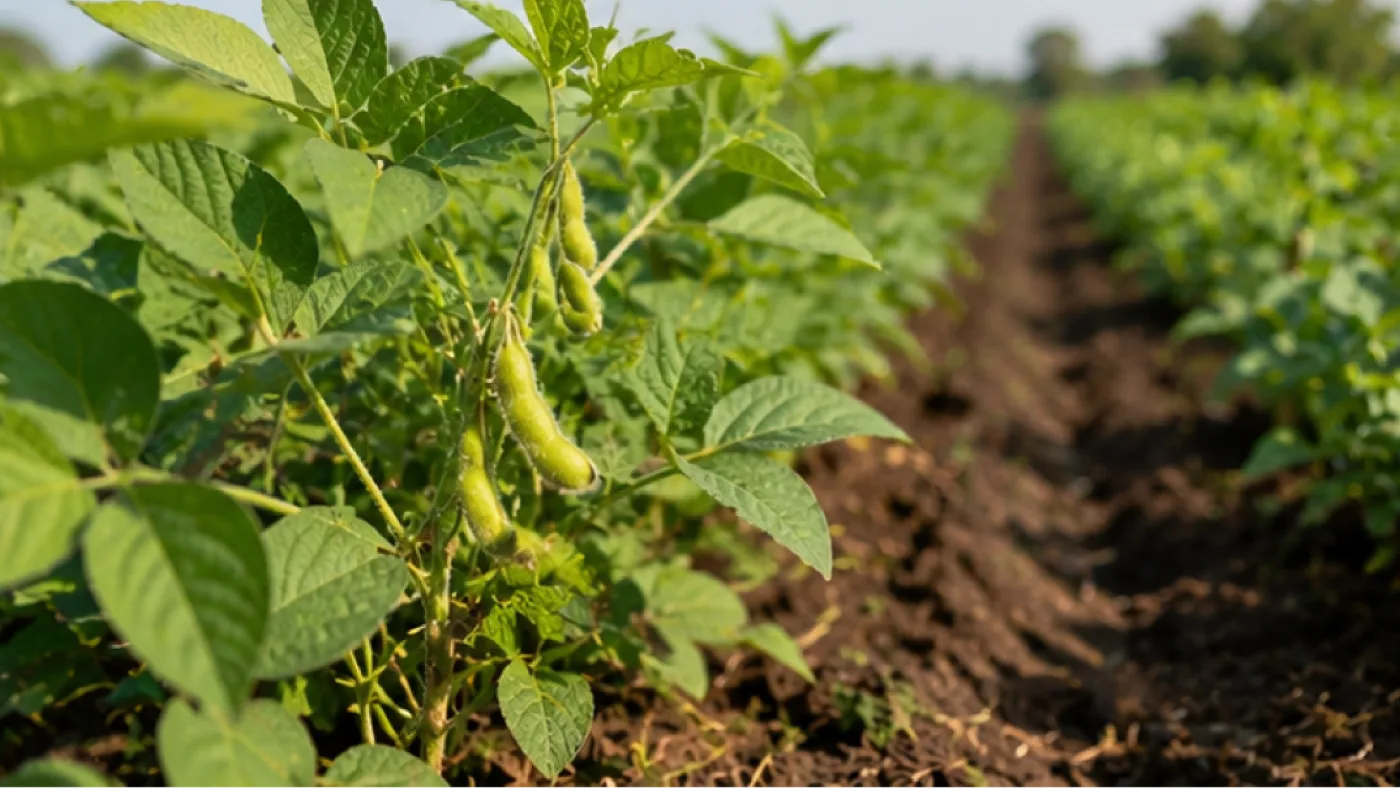
Soybean Farming in India: A Practical Guide to Better Yield
Soybean rewards good basics more than almost any other kharif crop — the right seed treatment, sowing window, and spacing routinely make a bigger difference than anything sprayed on afterward. Here's what actually moves the yield needle.
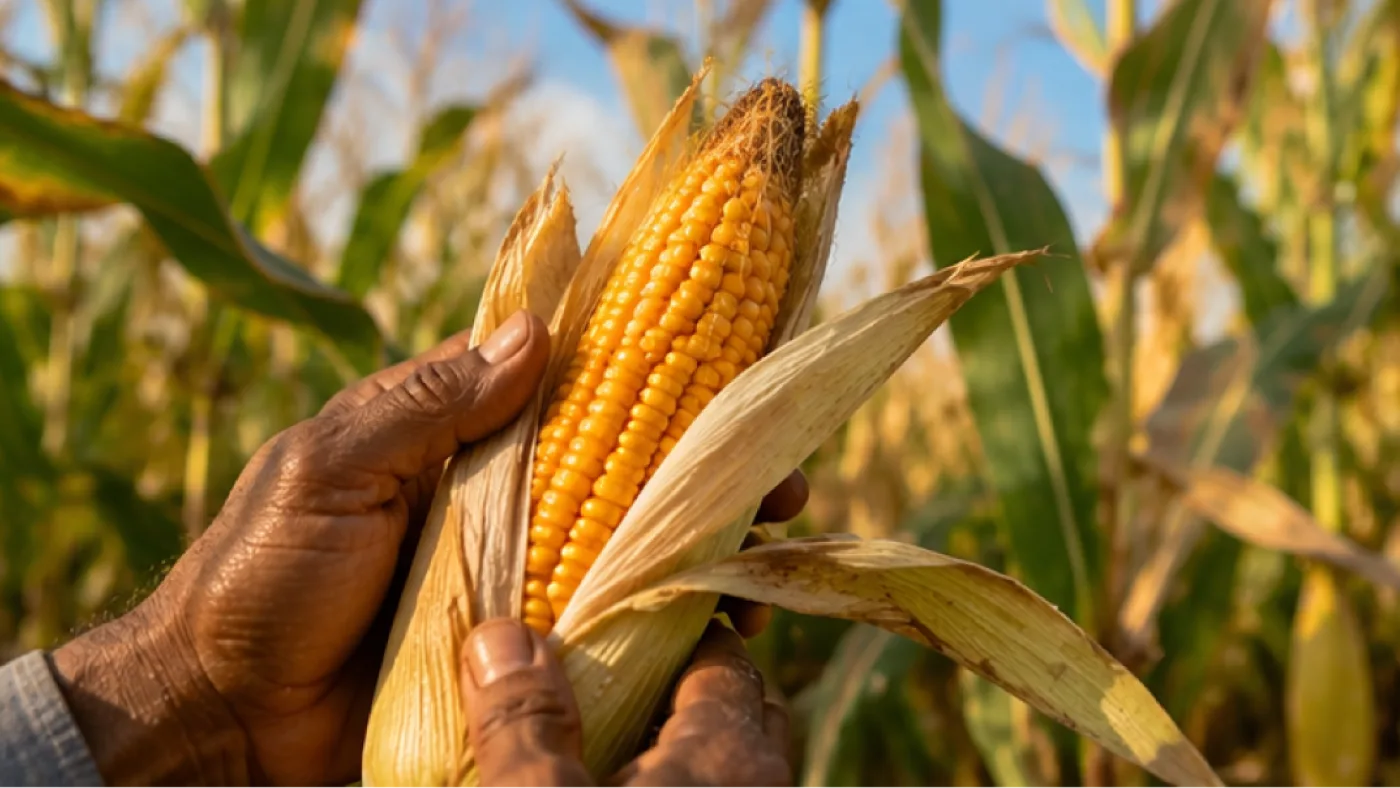
Maize (Makka) Farming Guide: Kharif and Rabi, Grain and Feed
Maize is grown almost year-round in India, as both a kharif rainfed crop and a rabi irrigated one — and the two seasons ask for genuinely different decisions. Here's a practical guide to both, plus what to watch for now that fall armyworm has become a serious threat.