

Shelterbelts: Plant a Living Windbreak That Protects Your Yield
A strong, dry wind can strip a huge share of your soil's moisture in a single afternoon. A well-designed row of trees along your field boundary slows that wind and measurably lifts yield.
Quick answer
A shelterbelt is a long-term investment — it takes roughly five to ten years to become fully effective — but the return is measurable: less soil moisture lost to wind, steadier yields, and often a genuine harvest of fuelwood, fodder or timber along the way. Get the height and porosity right, mix species suited to your actual region and soil, protect young saplings while they establish, and the payoff compounds every year the belt matures.
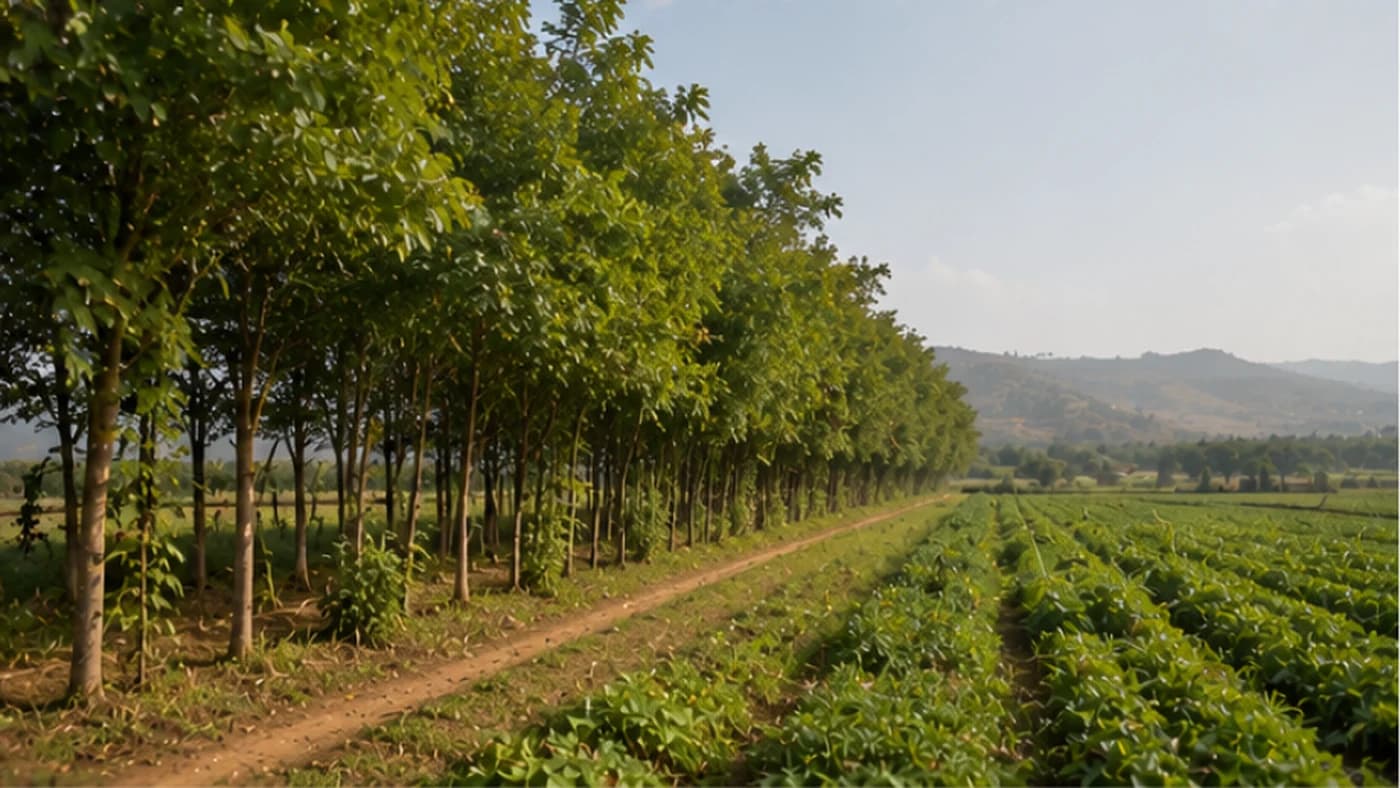
Wind does more than ruffle a field — it acts like a giant hair dryer, pulling moisture out of soil and crops through evapotranspiration, battering young seedlings, and carrying away topsoil and nutrients you worked hard to build. Farmers across India have long used living rows of trees along field boundaries for exactly this reason — Rajasthan's traditional khejri-based field systems, the poplar-based agroforestry belts common across Punjab and western Uttar Pradesh, and the casuarina windbreaks that protect coastal farms in Tamil Nadu and Andhra Pradesh are all working examples of the same idea: a living wall that earns its place through soil health and steadier yield.
What a shelterbelt actually does
A shelterbelt is a planted row (or several rows) of trees and shrubs designed to slow wind and create a calmer, more humid microclimate on its sheltered side. It works through friction: as wind hits the row, some is forced up and over the canopy while some filters through the branches — and this partial filtering matters, because a completely solid wall (like a compound wall) forces air to tumble over the top and creates rough turbulence just behind it, which can do more damage than no barrier at all.
A well-designed shelterbelt instead slows the air gradually, creating a calm zone that can extend for a distance of up to about 20 times the height of its tallest trees. Beyond protecting crops, tall shelterbelts also work as informal snow or dust fences in some regions, and in many parts of India they double as a source of fuelwood, fodder or timber over their lifetime.
The two design rules that matter most
The first is the height rule: your zone of real protection scales with the height (H) of your tallest row. A shelterbelt of about 9 metres will give strong wind reduction out to roughly 90 metres (10H) and some measurable benefit out to about 180 metres (20H) — so for the best return, keep your main crops within about 2H to 10H of the belt, where wind speed can be cut by roughly 50–70%.
The second is the porosity rule, and it's the mistake most first-time planters make: building a completely dense, solid barrier. Air hitting a 100%-solid wall tumbles over the top like water over a dam, creating a high-pressure, turbulent zone right behind it. An effective shelterbelt should be roughly 40–60% porous — meaning some air passes through the branches — which keeps the airflow smooth and extends the protected zone much further than a solid barrier does.
Laying it out on your own field
Start by identifying your prevailing damaging wind direction for your region and season — hot, drying winds in summer or strong winds ahead of a storm, for instance — and orient your shelterbelt roughly perpendicular to it. A three-to-five-row system, mixing species and heights, works far better than a single row, since it lets you layer a fast-growing nurse species with a slower, longer-lived anchor species. Space rows roughly 3–4.5 metres apart to leave room for maintenance access, with individual trees spaced closer within each row — tighter for smaller shrubs, wider for larger canopy trees.
The measurable benefits
The most immediate gain is reduced soil moisture loss — slower wind means less evaporation from both soil and leaf surfaces, so you can often water less frequently and crops are less likely to wilt during a heatwave. Agricultural research (including trials from institutions studying agroforestry in India) has repeatedly found that sheltered crops outperform those in fully open fields — cereals, pulses and especially small fruits and vegetables tend to show the largest gains, partly from reduced physical damage and partly from better pollination in calmer air.
Shelterbelts also moderate the microclimate: during the day, sheltered air holds slightly more warmth because it isn't being stripped away by wind, and at night the trees help trap some ground heat — together this can extend your effective growing window by days to weeks at either end of the season, allowing earlier sowing or a later harvest.
Common mistakes
The most damaging error is the wind-tunnel effect: a gap in the row — a dead tree, an ungated driveway, a missing section — lets wind funnel through at higher speed than the open wind itself, sometimes causing worse damage than having no shelterbelt at all. If you need a gate or access road through your belt, angle it or stagger the planting so there's no direct line of sight through the gap.
Root competition is a second issue: in the first several years, shelterbelt trees compete with the nearest crop row for water and nutrients, so many growers root-prune (cutting the lateral roots with a sharp spade every couple of years along the boundary) to limit encroachment into the cropping area. Species mismatch is a third mistake — a tree suited to waterlogged soil will struggle in a dry, sandy field and vice versa, so match species to your actual soil type and regional climate rather than copying a neighbouring farm in a different agro-climatic zone.
Terms explained in this guide
Frequently asked
How far from my shelterbelt should I plant my main crop?+
For the best wind reduction, keep crops within roughly 2 to 10 times the height of your tallest shelterbelt row — a 9-metre-tall belt gives strong protection out to about 90 metres.
Why shouldn't I plant a completely solid, dense hedge as a windbreak?+
A fully solid barrier forces wind to tumble over the top and create rough turbulence just behind it. An effective shelterbelt should be about 40–60% porous, letting some air filter through the branches for smoother, longer-lasting protection.
Which species work well for shelterbelts in different parts of India?+
Poplar-based systems are well established across Punjab and western Uttar Pradesh, khejri is the traditional choice in Rajasthan's arid zones, and casuarina is widely used along the coasts of Tamil Nadu and Andhra Pradesh — match your choice to your region's soil and climate.
How long before a shelterbelt actually starts protecting my crop?+
Generally five to ten years to become fully effective, though a fast-growing nurse species mixed with slower anchor trees can start providing partial wind protection within just a few seasons.
How do I stop shelterbelt roots from competing with my crops?+
Root-prune along the boundary every couple of years by cutting the lateral roots with a sharp spade, which limits how far tree roots encroach into the cropping area without harming the trees themselves.
Where to go next
Want this as daily tasks for your farm?
Khetiyaar turns guides like this into a day-by-day plan — in your language, free to start.

Related guides
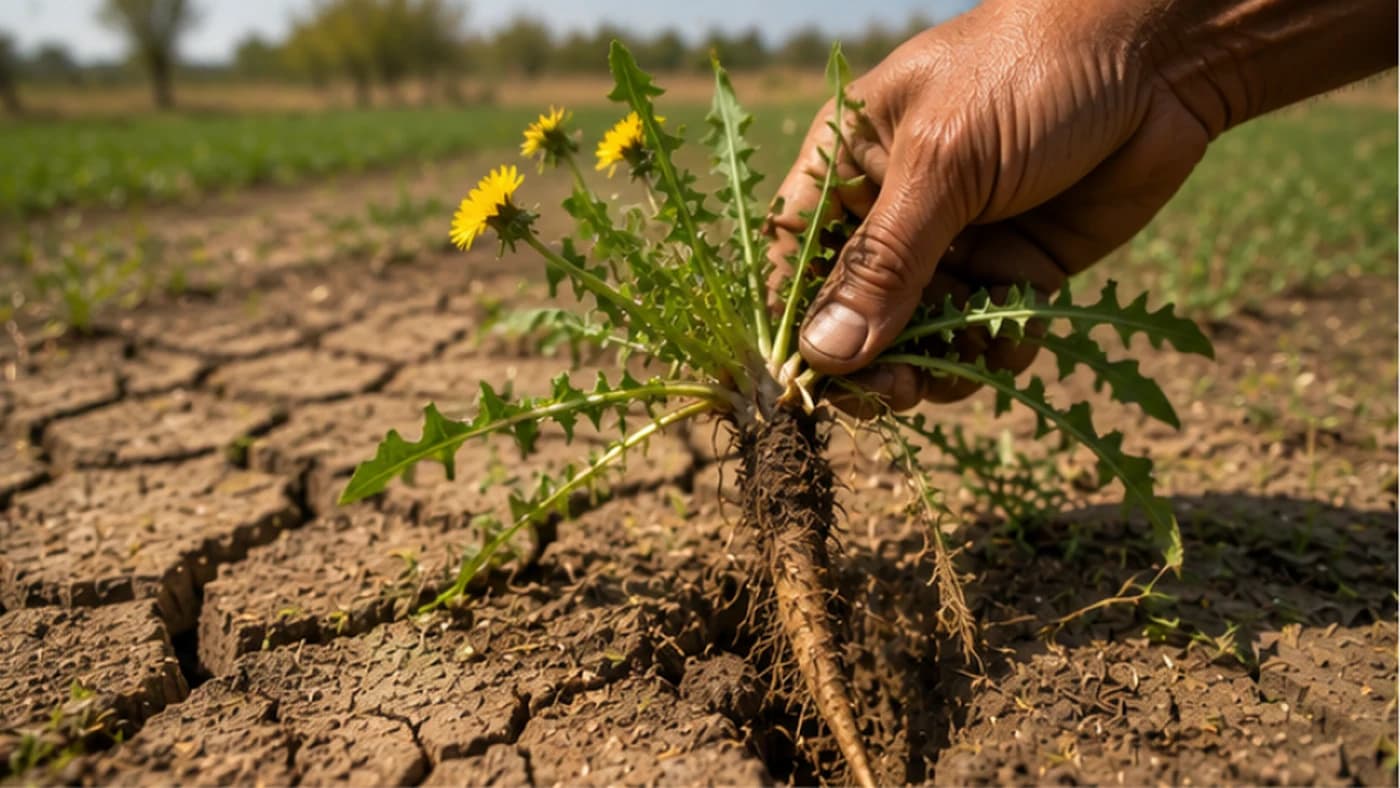
Deep-Rooted Weeds and Cover Crops That Fix Compacted Soil for Free
A weed with a long taproot pushing through hardpan isn't a sign your land has failed — it's the soil trying to repair itself. Here's how deep-rooted plants act as free biological drills, and which ones actually make sense on Indian farms.
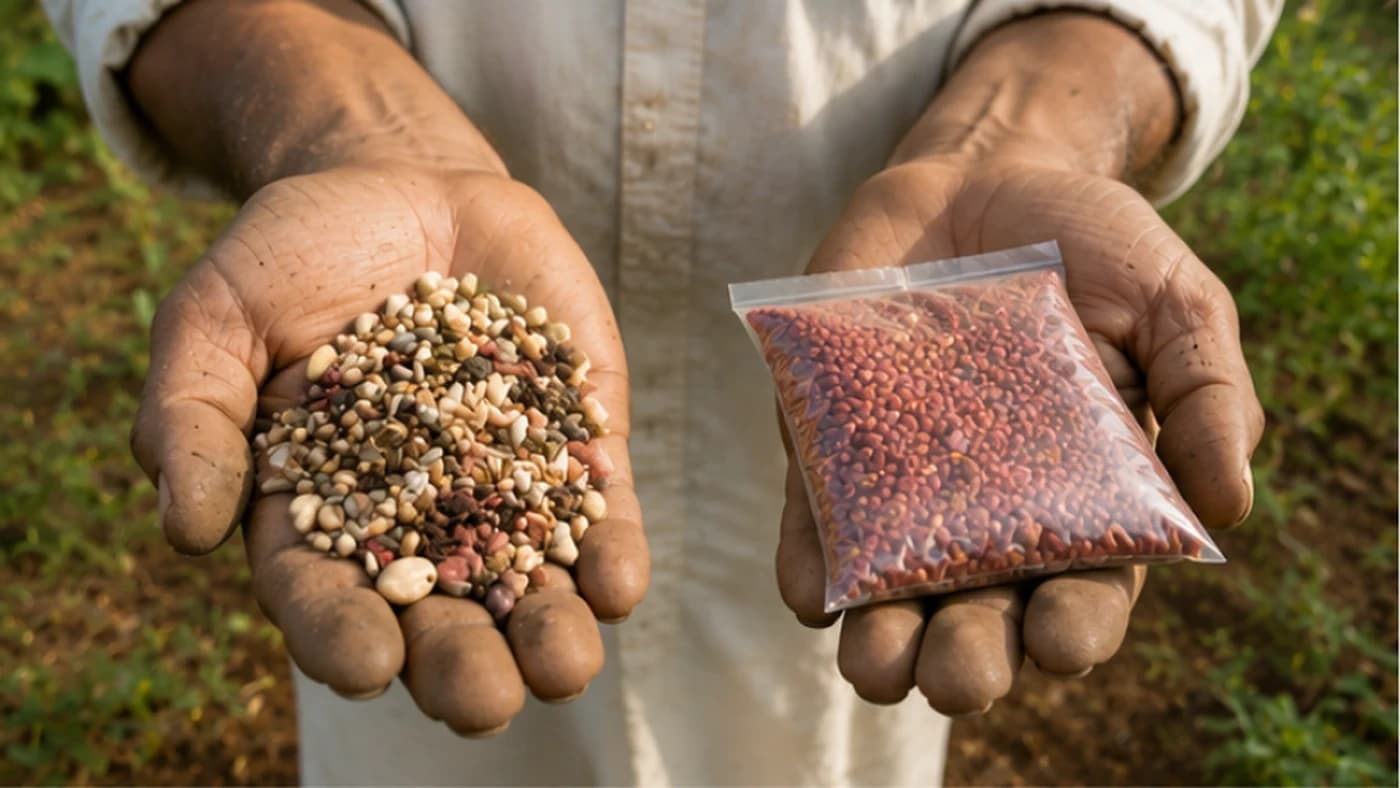
Seed Patents, Seed Rights and Seed Saving: What Every Indian Farmer Should Know
Patented hybrid and GM seed built the Green Revolution's yield gains — but it also changed what a farmer can legally do with their own harvest. Here's what Indian law actually protects, and how to keep seed-saving alive alongside modern seed.
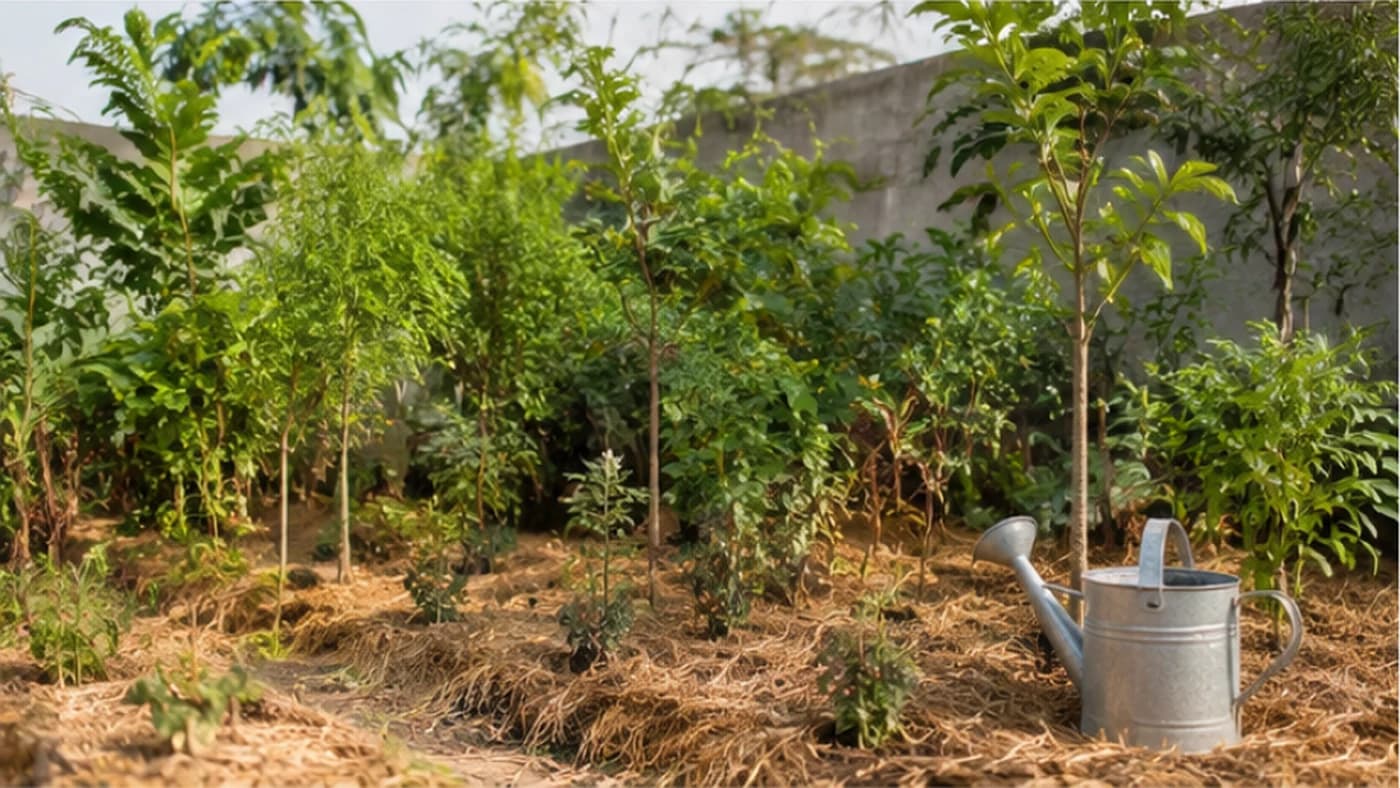
How to Plant a Miyawaki Forest in Your Backyard
You don't need a hundred acres to grow a forest — just the right density. The Miyawaki method packs native saplings so tightly that they race each other into a mature, self-sustaining forest in three years instead of thirty.