

Water Management Tips for Small Farmers
No farmer controls the rain, but every farmer controls how much of the available water actually reaches the crop. Low-cost habits make the difference.
Quick answer
Save water by mulching, watering at the right time and stage, harvesting rainwater, adopting drip where possible, and building healthy soil that holds moisture. Together these low-cost practices help small farmers grow more with less water and survive dry years far better.
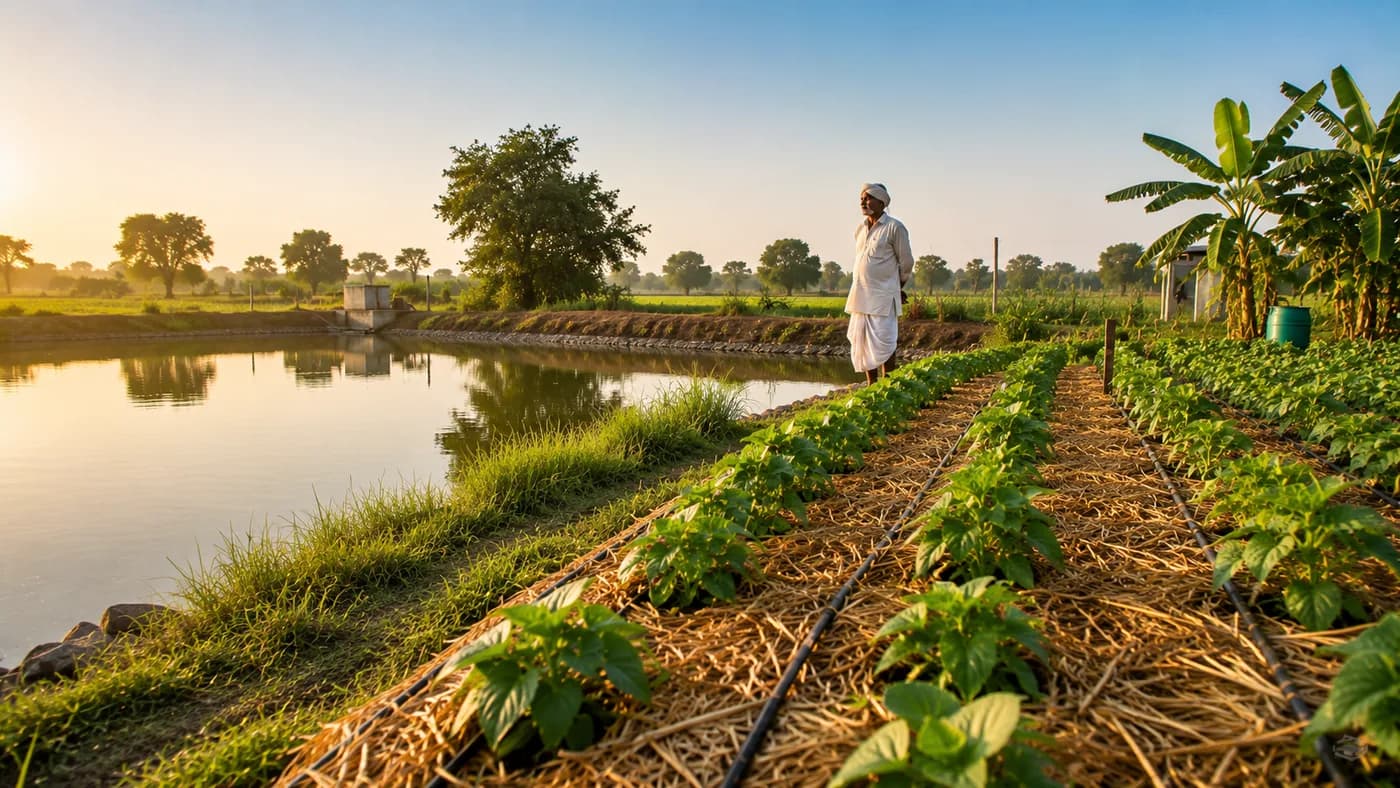
No farmer can control the rain, but every farmer can control how much of the available water actually reaches and benefits the crop. For small farmers especially, a few low-cost water-management habits can mean the difference between a failed and a successful season.
Mulch to hold moisture
Covering the soil with a layer of straw, dry leaves or plastic mulch is one of the cheapest and most effective ways to save water. Mulch cuts evaporation, keeps the roots cool, and suppresses weeds that would otherwise steal moisture. It is a small effort with a big return.
Water at the right time and stage
Irrigating in the early morning or evening, rather than the midday heat, reduces how much water evaporates before the crop can use it. Even more important is watering at the crop's critical stages — flowering, fruiting and grain-filling — rather than on a fixed calendar, so the water is used when it matters most.
Harvest rainwater
Capturing monsoon water for the dry months is one of the smartest long-term investments a farmer can make. Farm ponds, check dams and field bunds store water that can save the crop during a dry spell. Even small storage makes a real difference at a critical stage.
Switch to drip or sprinkler where possible
Micro-irrigation is the single biggest water saver available. Where you can invest, often with the help of a subsidy, it dramatically reduces water use while improving yield.
Build moisture-holding soil
Soil rich in organic matter holds far more water than poor soil, so improving your soil is also a form of water management. Compost, mulch and crop residue all increase how much rain your land can store for the crop.
Terms explained in this guide
Frequently asked
How can small farmers save water?+
Mulch the soil, water at the right time and stage, harvest rainwater, use drip where possible, and build moisture-holding soil.
Does mulching really save water?+
Yes — it significantly reduces evaporation and keeps soil moisture and temperature steady.
What is rainwater harvesting on a farm?+
Capturing and storing monsoon water in ponds, bunds or check dams for use during dry periods.
Where to go next
Want this as daily tasks for your farm?
Khetiyaar turns guides like this into a day-by-day plan — in your language, free to start.

Related guides
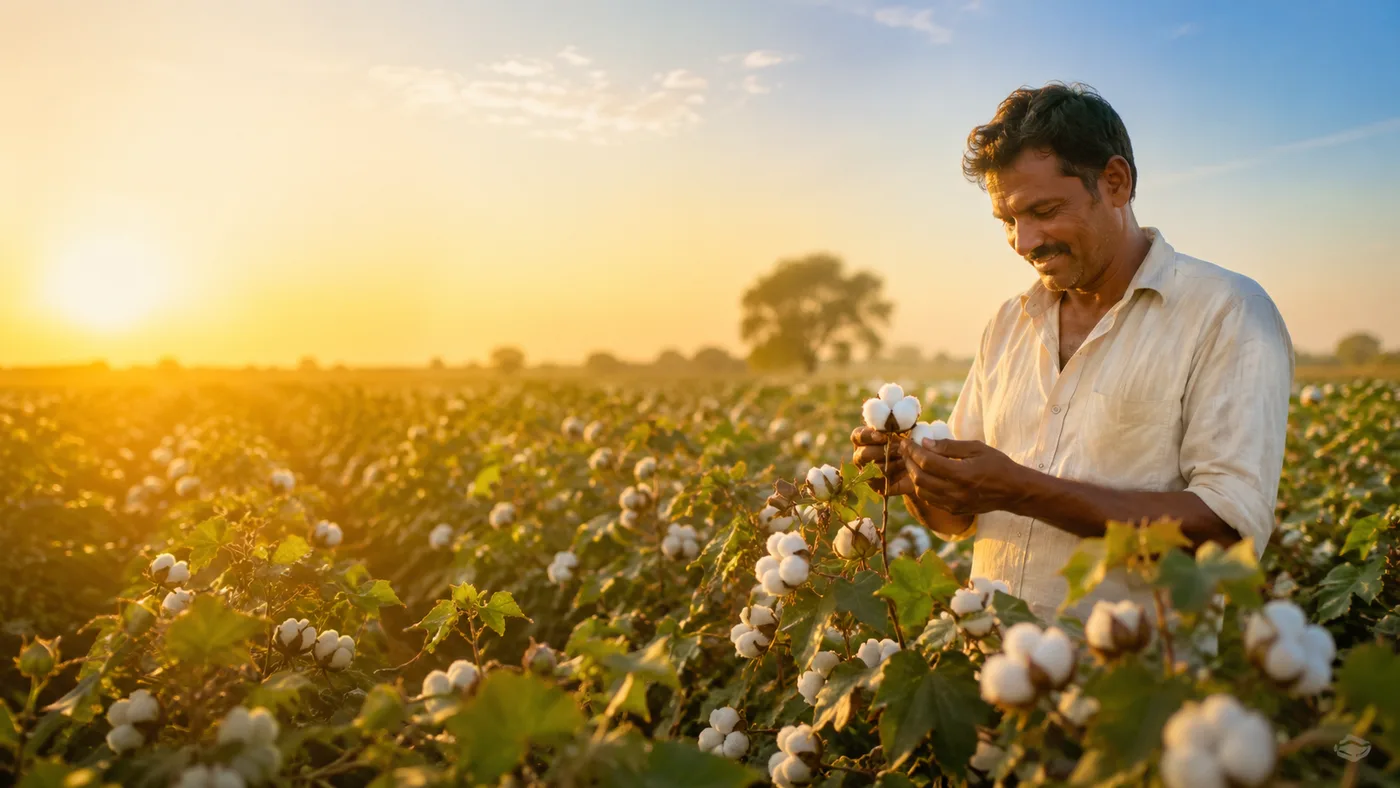
How to Increase Cotton Yield Per Acre in India
Yields differ hugely between fields in the same village — and it's rarely luck. Good seed, correct spacing, timely water and weekly scouting lift cotton yield without a fortune in inputs.
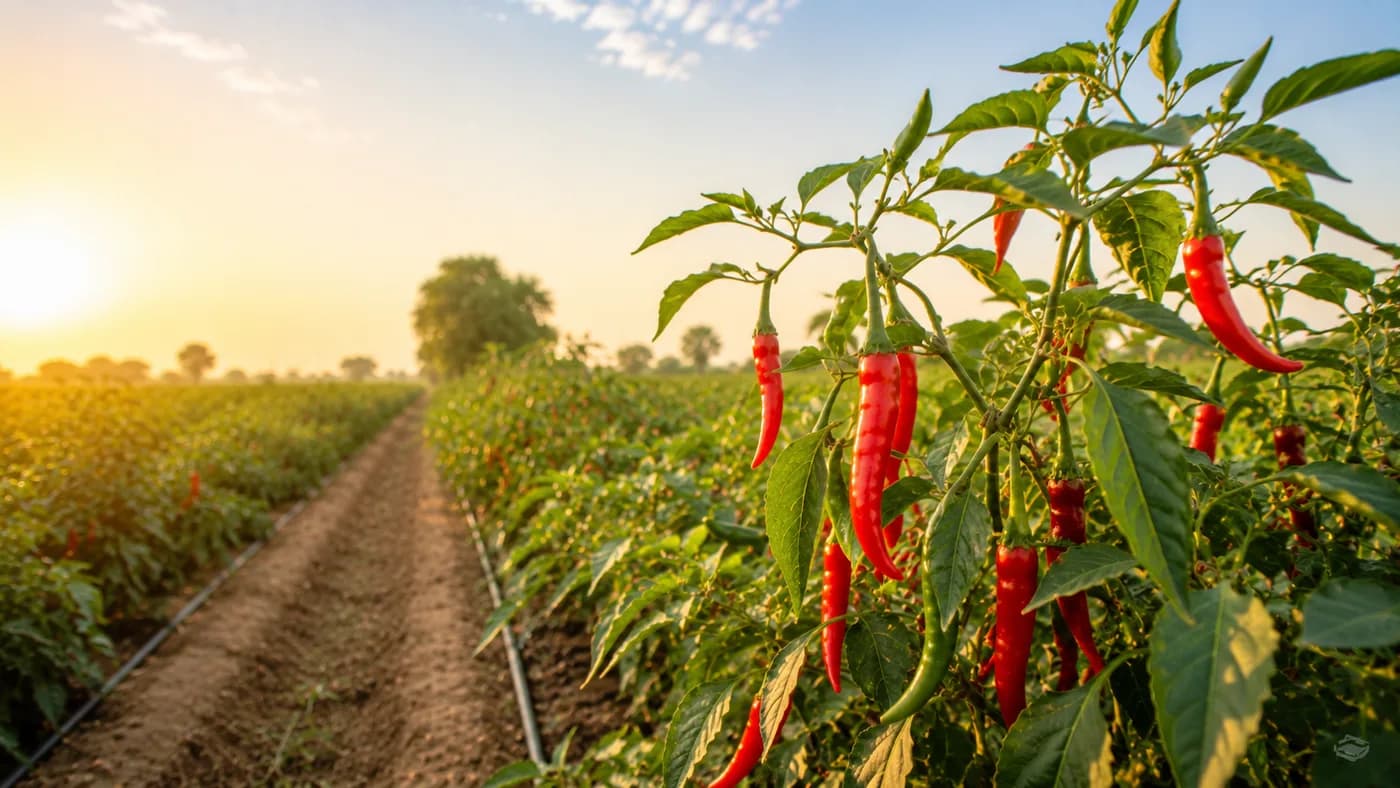
Chilli Farming Guide: Higher Yield and Disease Control
Chilli is profitable but disease-prone. Winning the daily battle against thrips, leaf curl and fruit rot is the theme of good chilli farming.
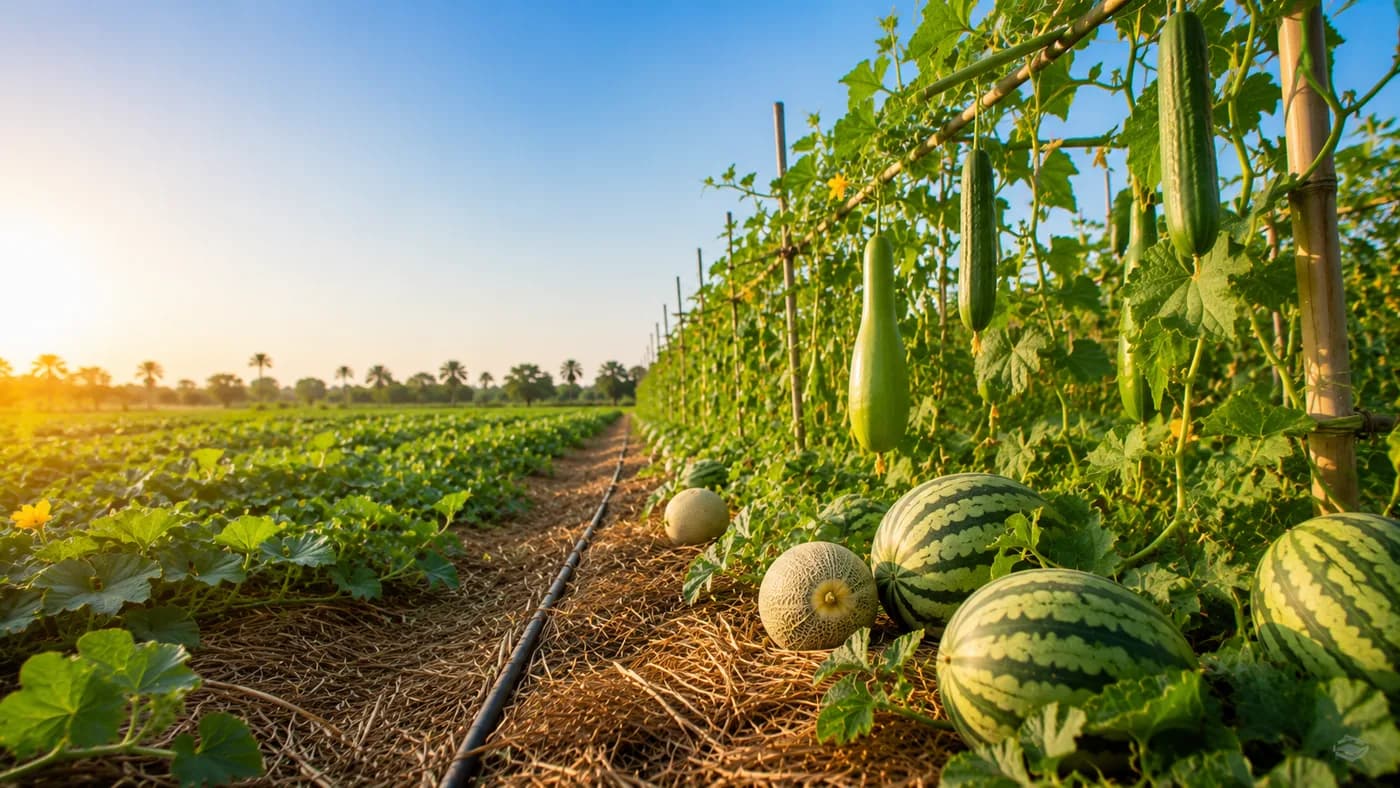
Summer Crop Planning: Best Vegetables to Grow in Summer
With the right crops and smart water use, the hot months between Rabi harvest and the monsoon can be genuinely profitable rather than a season to sit out.