

The Same Monsoon, Different Problems: Rainfall Risk by Region
Advice written for Punjab is close to useless in Marathwada. The monsoon is one system but it fails differently in each part of India, and the coping strategy has to match the failure.
Quick answer
The monsoon is one system, but it fails differently by region. Marathwada and Vidarbha are defined by mid-season breaks; Saurashtra and west Rajasthan by erratic, unreliable rain; Konkan and Kerala by excess rather than shortage; Bihar and eastern UP by flood and drought in the same season; Punjab and Haryana by groundwater rather than rainfall. Each demands a different response.
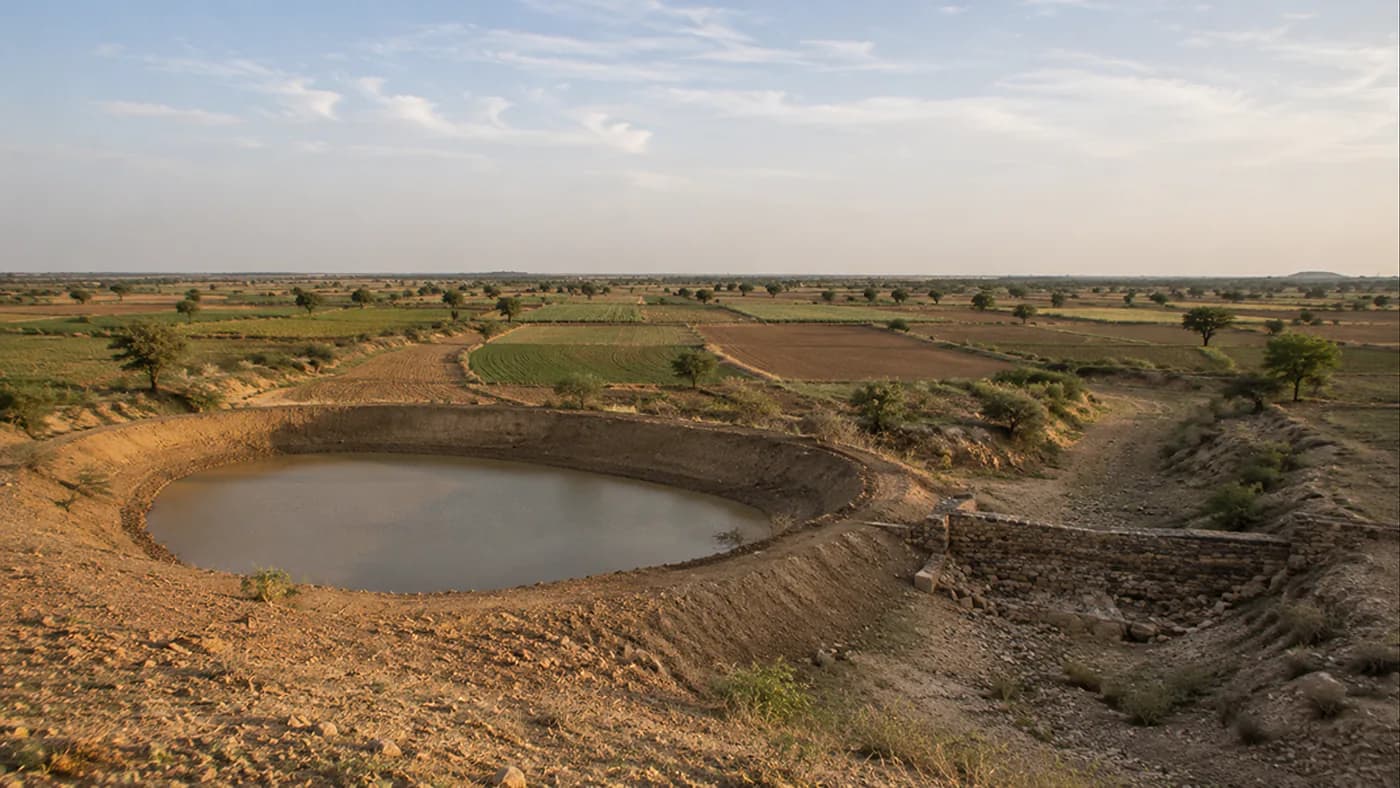
There is a great deal of generic monsoon advice in circulation, and most of it is written as though Indian farmers face one problem. They do not. A farmer in the Konkan is trying to get water off the field; a farmer in west Rajasthan is trying to hold onto every drop; a farmer in Marathwada has enough seasonal rainfall on paper and loses the crop to a gap in August. Understanding which of these situations you are actually in is the difference between advice that helps and advice that sounds sensible and does nothing.
Why the same season produces different problems
Three things vary across the country and between them they explain most of the difference. The first is how much rain arrives and how reliably — reliability matters more than the average, because a region receiving a moderate amount every year can be farmed with confidence while a region receiving the same average through wild swings cannot.
The second is soil. Black cotton soils hold a great deal of water and release it slowly, which is why central India can carry a crop through a dry spell that would kill the same crop on the light sandy soils of Saurashtra or west Rajasthan. The same fortnight without rain is a different event depending on what is under your feet.
The third is irrigation, and it changes the problem rather than solving it. Where canals and tubewells cover most of the land, monsoon variability stops being the binding constraint — and groundwater decline becomes the new one. That is not a smaller problem, just a slower and less visible one.
How the risk differs by region
The table below is a broad regional picture rather than a district-level one, and rainfall varies within every region listed. Use it to identify which kind of problem you are dealing with, then get the specifics from your KVK, who work at the scale that actually matters.
| Region | The defining risk | What the response looks like |
|---|---|---|
| Marathwada and Vidarbha | Mid-season breaks. Seasonal totals often look adequate while a long August gap takes the crop | Staggered sowing, protective irrigation held for flowering, farm ponds, short-duration varieties |
| Saurashtra and Kutch | Erratic, unreliable rain on light soils that hold little moisture | Drought-tolerant and deep-rooted crops — groundnut, castor, bajra — plus water harvesting and check dams |
| North Gujarat | Limited rainfall; the rabi crop depends on residual moisture and groundwater | Low-water rabi crops such as cumin and isabgol; careful groundwater use |
| West Rajasthan | The lowest and most variable rainfall in the country | Short-duration crops, mixed cropping to spread risk, traditional water harvesting |
| Madhya Pradesh and the soybean belt | Relatively assured rain, but early excess damages soybean and waterlogs black soil | Drainage and ridge-furrow work, timely sowing, attention to standing water |
| Punjab, Haryana, western UP | Not rainfall. Canal and tubewell irrigation buffers the monsoon; groundwater decline is the real constraint | Water-saving methods, crop diversification away from paddy, laser levelling |
| Bihar, eastern UP, north Bengal | Flood and drought in the same season — waterlogging in one month, moisture stress in another | Flood-tolerant varieties, raised beds and drainage, plus contingency plans for both |
| Telangana, Rayalaseema, interior Karnataka | Rain-shadow conditions with long dry spells and high year-to-year variability | Millets and pulses, farm ponds, borewell management, drought-contingency cropping |
| Konkan, coastal Kerala, Western Ghats | Excess, not shortage. Very heavy rain, leaching and waterlogging | Drainage first, raised beds, crops that tolerate wet feet, nutrient management against leaching |
| Odisha and coastal Andhra | Late-season cyclones arriving at harvest, on top of ordinary variability | Early-maturing varieties, harvest readiness, drying and storage capacity |
The two mistakes this table is meant to prevent
The first is importing advice across regions. Techniques that transform yields in one part of India can be neutral or harmful in another. Drainage work is essential in the Konkan and largely irrelevant in west Rajasthan. Moisture conservation is the whole game in Saurashtra and secondary in Kerala. When you read farming advice, the first question is which region it was written for, and a great deal of what circulates online does not say.
The second is assuming your region's average describes your farm. Rainfall varies enormously within a district, and light soil on a slope behaves nothing like heavy soil in a depression a kilometre away. The regional pattern tells you what kind of risk to prepare for; only your own records tell you how your specific field behaves within it.
That is why the most valuable thing in this whole area is unglamorous: a written record of what your own land did each season. Nobody else has it, nobody else can produce it, and after a few years it beats every regional generalisation including this one.
What applies everywhere
- Get your district Agriculture Contingency Plan. ICAR prepared these with the state agricultural universities for every district, covering delayed monsoon, mid-season drought and terminal drought, with the alternative crops and short-duration varieties that suit your area specifically. Your KVK and the State Department of Agriculture hold them.
- Build soil organic matter regardless of region. It improves water holding on light soils and structure and drainage on heavy ones, which means it helps whichever failure mode you face — improving soil health naturally covers it.
- Stagger sowing so your whole farm does not reach its critical stage in the same fortnight. This is the cheapest insurance against a badly timed break and it costs nothing but planning.
- Understand the break mechanism, because it operates everywhere even though it bites hardest in central India — why the monsoon comes in bursts explains it.
- Know the pattern that does most damage and how to handle it: heavy rain early, then nothing applies from Saurashtra to Telangana.
- Keep dated records per plot. This is the one thing that converts general regional knowledge into something specific to your land.
Where Khetiyaar helps, and where it does not
The app is built in Gujarat and its weather, mandi and crop-planning features work across India, but the honest note is that the guides on this site lean towards Gujarat and western India, because that is where we know the ground. On regional specifics your KVK is a better source than we are, and we would rather say that than pretend to district-level expertise everywhere.
What travels well is the record. Hyperlocal weather with soil moisture, sowing dates and costs per plot are useful regardless of which of the risks above you face, because in every one of them the decision comes down to knowing what your own field is doing.
What we cannot do is tell you your region's rainfall will behave a particular way this year, or substitute for the contingency plan your district already has. That document is more specific than anything we could write, it is free, and hardly anyone asks for it.
Frequently asked
Which parts of India are most affected by monsoon dry spells?+
Marathwada and Vidarbha in Maharashtra are the classic case — seasonal rainfall totals often look adequate while a long mid-season break takes the crop. Interior Karnataka, Telangana and Rayalaseema face similar rain-shadow conditions with long gaps, and Saurashtra and west Rajasthan combine unreliable rain with light soils that store very little moisture.
Why does the same amount of rain fail a crop in one state and not another?+
Mostly soil and timing. Black cotton soils hold a great deal of water and release it slowly, so central India can carry a crop through a gap that would kill it on the light sandy soils of Saurashtra or west Rajasthan. And rainfall arriving in two heavy spells behaves completely differently from the same amount spread evenly.
Is monsoon variability a problem in Punjab and Haryana?+
Less than elsewhere, because canal and tubewell irrigation buffers it. But the problem has been converted rather than solved — groundwater decline is now the binding constraint in much of the region, and it is a slower and less visible risk than a failed monsoon.
What is the district Agriculture Contingency Plan?+
A document prepared by ICAR with the state agricultural universities for every district in India, setting out what to do if the monsoon is delayed or fails mid-season — which alternative crops and short-duration varieties suit your specific area at each stage of delay. It is held by your KVK and the State Department of Agriculture, it is free, and it is far more specific than any general article.
Where to go next
Want this as daily tasks for your farm?
Khetiyaar turns guides like this into a day-by-day plan — in your language, free to start.

Related guides
Why the Monsoon Comes in Bursts: Active Spells and Breaks
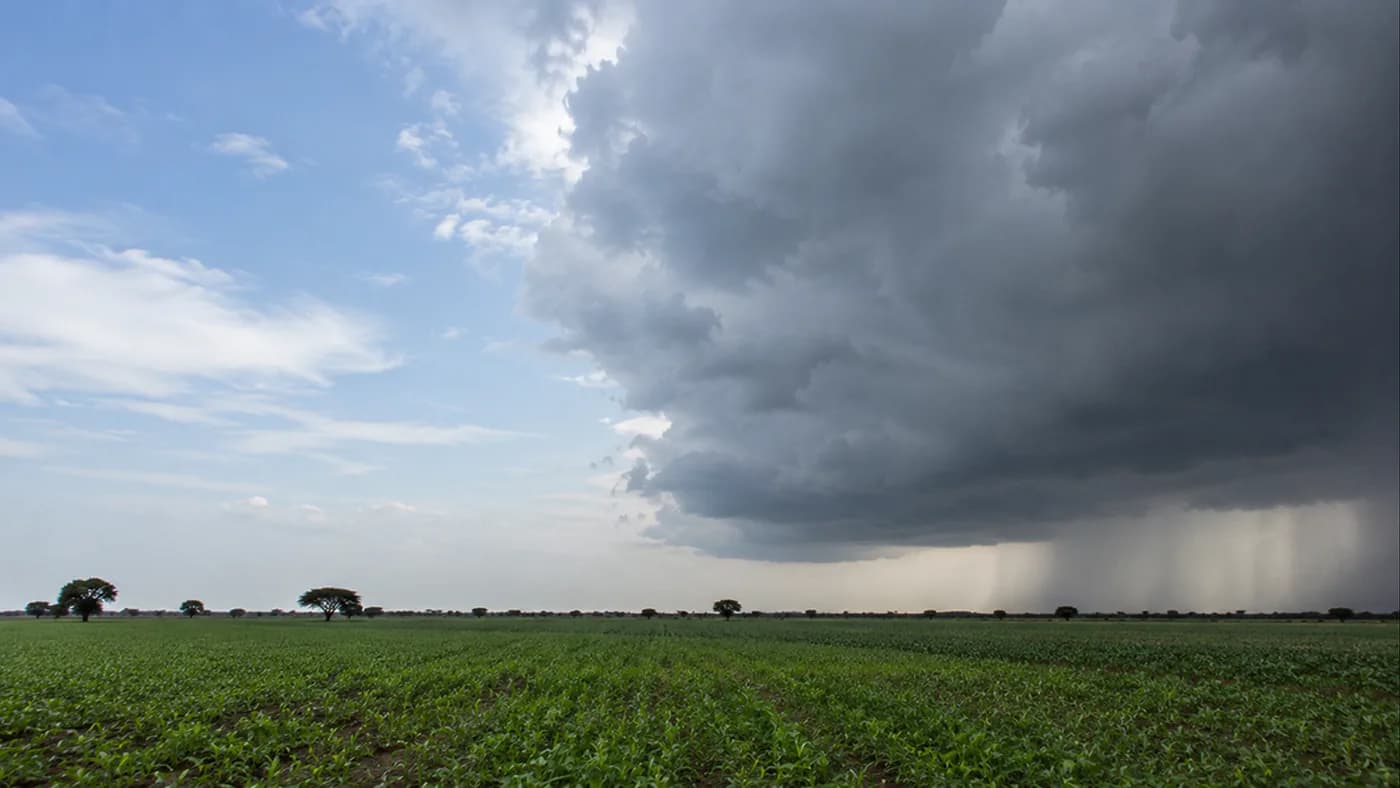
The monsoon is not four months of rain. It is a sequence of heavy spells and dry breaks, and the pattern matters more to your crop than the total. Here is what causes it.
The Nakshatra Sowing Calendar, Without the Astrology
The nakshatra system is a solar calendar, which is why it tracks the seasons well. It has also drifted about three weeks from the seasons it was calibrated against — and you can verify that yourself.
Bhadli Vakya: Gujarat's Monsoon Sayings, Examined Honestly
A thousand-year-old body of weather couplets that Gujarati farmers still use. Some of it is careful observation with a real mechanism. Some of it is not. Both deserve to be said out loud.