

Disease-Resistant Perennial Crops: Plant Once, Harvest for Decades
Modern hybrid vegetables often need a constant spray schedule just to survive one season. Perennial crops — from a 50-year-old moringa tree to a native mango grown from seed — build their own defences and get stronger every year.
Quick answer
Disease-resistant perennials trade a slower start for decades of low-spray, low-input harvests — deep roots, a mycorrhizal partnership and years of accumulated plant chemistry do the defensive work that hybrid annuals need sprays for. A mature moringa, curry leaf shrub, or a native mango or jackfruit grown from good local seed is proof of this: choose the right site once, be patient through the first two to three years, and the plant does most of the rest of the work itself.
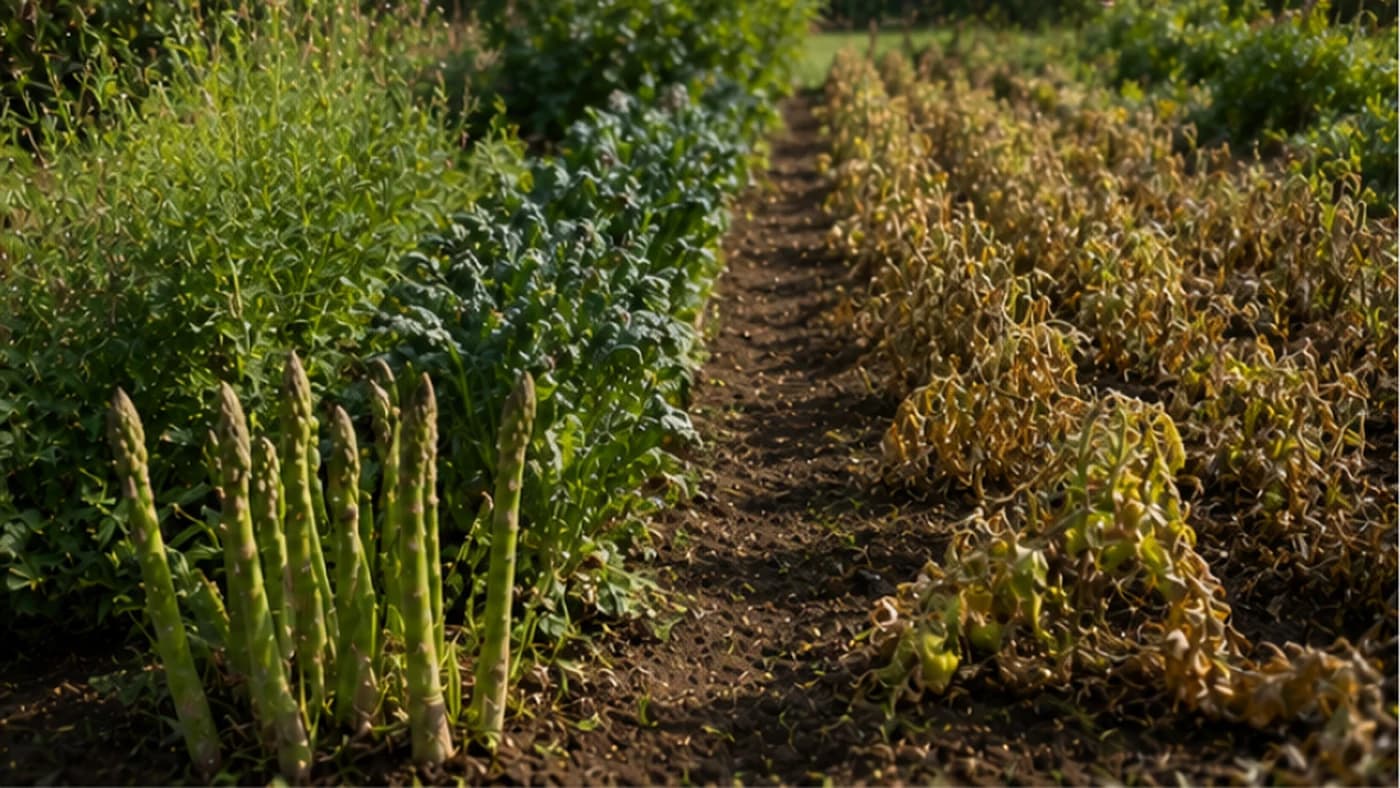
Modern hybrid vegetables have been bred for size and speed, often at the cost of their own immune system — many need a steady spray schedule just to finish one season. Perennial crops take a different path: instead of putting everything into one big harvest and dying, they invest in a deep root system and a chemical defence suite that gets stronger every year they survive. A 15-year-old moringa tree or a curry leaf shrub that's been cropping for a decade rarely needs the babying a new hybrid tomato does — that's not luck, it's biology, and it's worth understanding before you plan your next planting season.
Why perennials are naturally tougher
An annual plant behaves like a gambler: it puts almost all its energy into producing seed fast, with little left over for defence, because it only has one season to reproduce. A perennial behaves like an investor: it spends years building a large root system and a chemical defence arsenal, trading a slower start for the ability to survive a bad year and come back stronger the next.
Deep roots are the most visible advantage — while a vegetable's roots might reach a few centimetres down, an established tree crop can send roots several metres into the earth, reaching minerals and moisture that shallow-rooted annuals never touch. That deep water access matters directly for disease resistance too, since many fungal pathogens strike hardest when a plant is already stressed by drought; a well-hydrated, deep-rooted plant simply has stronger defences running.
The mycorrhizal shield and the plant's own chemistry
Perennials live long enough to build a lasting partnership with arbuscular mycorrhizal fungi, threads that weave into the roots and effectively multiply the root's surface area many times over. In exchange for a little sugar, the fungi bring back phosphorus and other hard-to-reach nutrients — and their physical presence around the roots also crowds out disease-causing fungi, while triggering the plant's own induced systemic resistance, essentially keeping its immune system on alert.
Established perennials are also chemists: over years they build up secondary metabolites — compounds like salicylic acid (an immune-signalling hormone) and various polyphenols that make leaves bitter or unpalatable to pests. Modern breeding for sweetness and size often accidentally breeds these defensive, slightly bitter compounds out, so heirloom and traditional desi varieties frequently carry more of this natural chemical protection than modern hybrids.
The real, practical benefits
Labour drops sharply once a perennial is established — instead of tilling, sowing, weeding and spraying every year, you're mostly pruning and mulching. The financial case is just as strong: a perennial costs more upfront but is a one-time investment, with far less ongoing spend on seed, fungicide and fertiliser — over a decade, an established moringa or curry-leaf planting is dramatically cheaper than replanting vegetables every season.
There's an ecological payoff too: because the soil around perennials is never tilled, carbon stays locked in the ground and the soil microbiome stays undisturbed, while the root network reduces erosion and gives beneficial insects and birds a stable home that helps keep pest numbers down naturally.
Common mistakes when planting perennials
The biggest mistake is managing a perennial like an annual and giving up too soon — most perennial crops go through a 'sleep, creep, leap' pattern: the first year they focus on roots (sleep), the second year growth is slow (creep), and only from the third year onward do they take off (leap). Patience through that early phase matters more than any input.
Site selection matters far more with a perennial, since you can't rotate it to a new bed next year — check the plant's eventual size and the soil's long-term drainage before planting, not after. And 'low maintenance' is not 'no maintenance': skipping mulching or pruning lets old, diseased wood and competing weeds build up, and inconsistent watering in the first one to two years is the single biggest cause of perennial failure.
Frequently asked
Why are perennial crops more disease-resistant than annuals?+
Perennials invest years of energy into deep roots, a mycorrhizal fungal partnership, and accumulated defence chemicals like polyphenols — annuals put nearly all their energy into fast seed production and have little left for defence.
What are good disease-resistant perennial crops for an Indian garden or farm?+
Moringa (drumstick), curry leaf, amla, jackfruit, and native/desi mango grown from seed or hardy rootstock are all long-lived, low-spray perennials well suited to Indian conditions.
How long does it take a perennial crop to become productive?+
Most follow a 'sleep, creep, leap' pattern — roots establish in year one, growth is slow in year two, and full production typically starts from year three onward.
Do perennial crops need any spraying at all?+
Far less than hybrid annuals, but they're not maintenance-free — regular mulching, pruning of old or diseased wood, and consistent watering in the establishment years are still essential.
Why do heirloom or desi varieties often resist disease better than modern hybrids?+
Breeding for sweetness and size in modern hybrids often reduces the natural bitter defence compounds (polyphenols) that traditional varieties still carry, so local, resilient stock is often a better disease-resistance bet than a big-brand hybrid.
Where to go next
Want this as daily tasks for your farm?
Khetiyaar turns guides like this into a day-by-day plan — in your language, free to start.

Related guides
Heating a Greenhouse With Mud and Straw: The Free Thermal Mass Bench
No electricity, no diesel heater, no gas cylinder — just clay, sand, straw and the sun. A thermal mass bench keeps a polyhouse or low tunnel warm through winter nights for free.
Soil Microbiome Benefits: Why Feeding Your Soil Beats Feeding Your Plants
A single teaspoon of healthy soil holds more living organisms than there are people on Earth. Learn how that hidden workforce feeds your plants, fights disease, and can cut your fertiliser bill for good.

Monsoon Farming Tips: Protect Your Crops in the Rainy Season
The same rain that grows the Kharif crop also brings waterlogging, disease and losses. A little preparation protects your season and your income.