

Drip Irrigation: Save Water and Increase Yield
Drip delivers water directly to the roots, drop by drop — saving a large share of your water while lifting yield and cutting weeds.
Quick answer
Drip irrigation saves water, reduces weeds, allows precise fertigation, and delivers higher, more stable yields. It suits most row and spaced crops, works on difficult land, and is often subsidised. For most farmers facing water shortages, it is one of the best investments available.
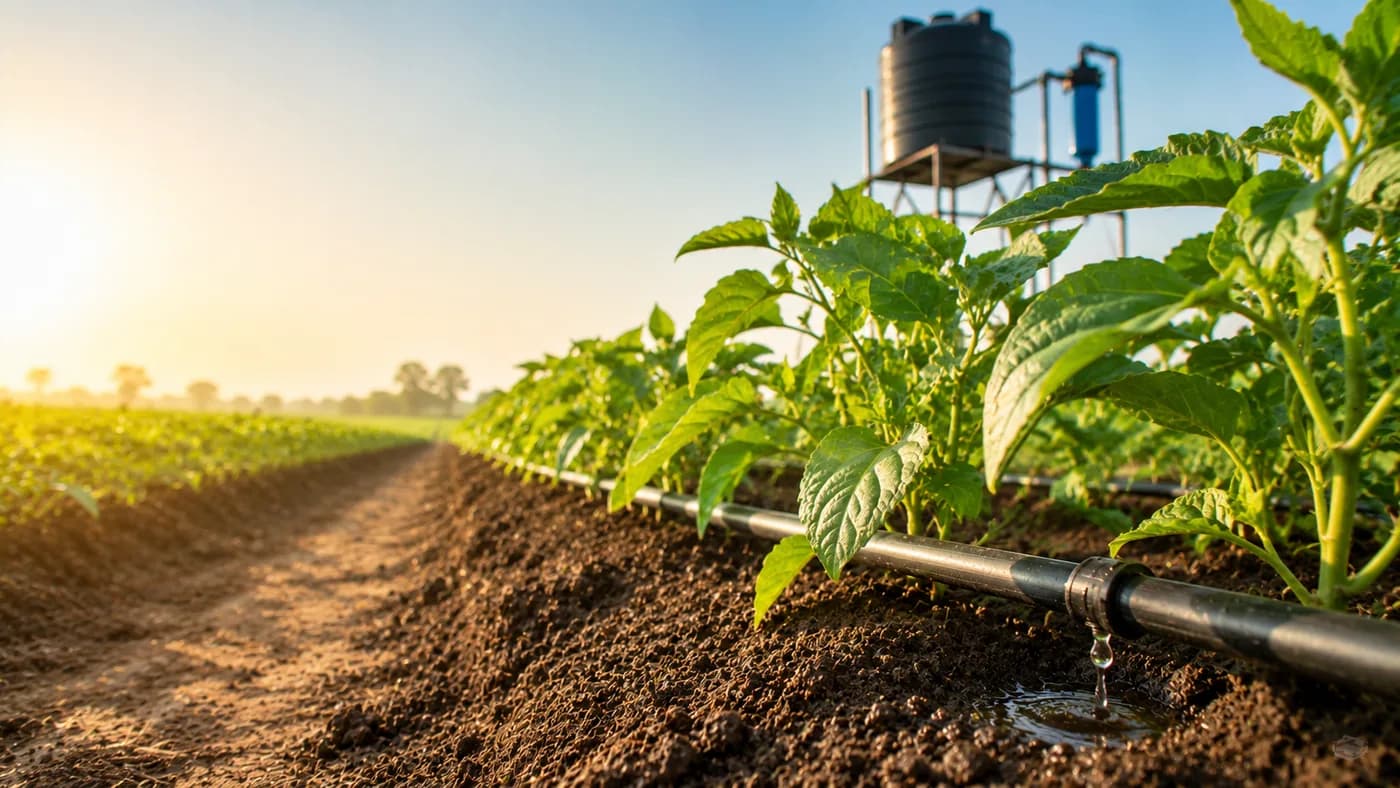
Water is becoming scarcer and more expensive every year, which makes how you irrigate one of the most important decisions on the farm. Drip irrigation delivers water directly to the plant's roots, drop by drop, and it can transform both your water use and your yield.
Why drip beats flood irrigation
In flood irrigation, much of the water is lost to evaporation, runoff and weeds. Drip delivers water straight to the root zone, saving a large share of your water. Because the crop never suffers water stress at critical stages, yields are higher and steadier. The dry spaces between plants also mean fewer weeds. And you can apply fertiliser through the drip system — a practice called fertigation — which places nutrients precisely where the roots can use them, evenly across the field.
Which crops benefit most
Drip is ideal for row and widely spaced crops. Cotton, sugarcane and orchard fruit trees respond very well, as do vegetables like tomato, chilli and brinjal, and most summer crops. Even on sloped or difficult land where flooding fails, drip works well.
Getting started
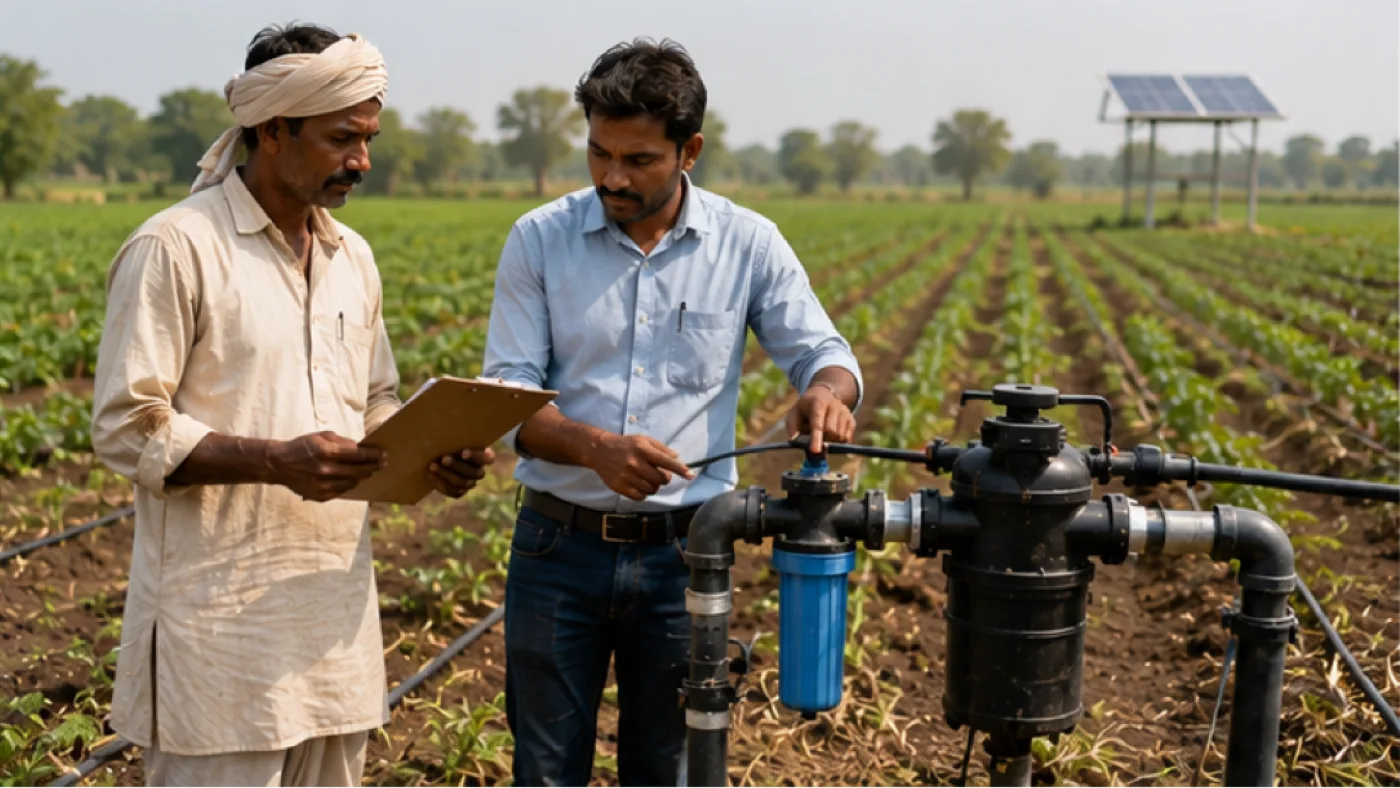
Plan the layout to match your crop's spacing. Use a filter to stop the fine emitters from clogging, which is the most common problem farmers face. Flush the lines regularly and check for leaks or blockages so every plant gets its share.
Support through subsidies
Micro-irrigation is supported by government subsidy schemes, which can significantly reduce the upfront cost of installing a drip system. Check what your state currently offers before you buy, as this can make the investment far more affordable.
Terms explained in this guide
Frequently asked
How much water does drip irrigation save?+
Typically a large share compared with flood irrigation, because water goes directly to the root zone rather than being lost to evaporation and runoff.
Is there a subsidy for drip irrigation in India?+
Yes — micro-irrigation is supported under government schemes; check your state's current scheme and eligibility.
Which crops are best for drip irrigation?+
Row and spaced crops like cotton, vegetables, sugarcane and fruit orchards benefit most.
Where to go next
Want this as daily tasks for your farm?
Khetiyaar turns guides like this into a day-by-day plan — in your language, free to start.

Related guides

Drip vs Sprinkler vs Flood Irrigation: Which One Actually Fits Your Field?
Every farmer already irrigates somehow. The real question is whether the method you inherited is the one your crop, your soil and your water source actually call for — and what you gain or give up by switching.
PMKSY Drip Irrigation Subsidy Guide: How the Micro-Irrigation Scheme Actually Works
Drip irrigation pays for itself over time, but the upfront cost of pipes, emitters and a filtration unit stops many smallholders before they start. This guide focuses on the subsidy and application side — the part that decides whether you can actually afford to install it.

Government Schemes Every Indian Farmer Should Know
Income support, cheap credit, crop insurance, free soil testing and irrigation subsidies — real value that often goes unused simply for lack of awareness.