

Buying and Selling Cattle Online: What to Check Before You Pay
A milch animal is often the largest single purchase a small farm makes, and the easiest to be cheated on. Listings make discovery far easier — they do not make verification optional. Here is exactly what to check, in what order, and the red flags that should end a deal.
Quick answer
Milk the animal yourself before agreeing anything, ideally across two milkings twelve hours apart, and check all four quarters give milk. Read the teeth rather than the stated age, watch it walk, and pay a vet for anything significant. Never send an advance to someone you have not met.
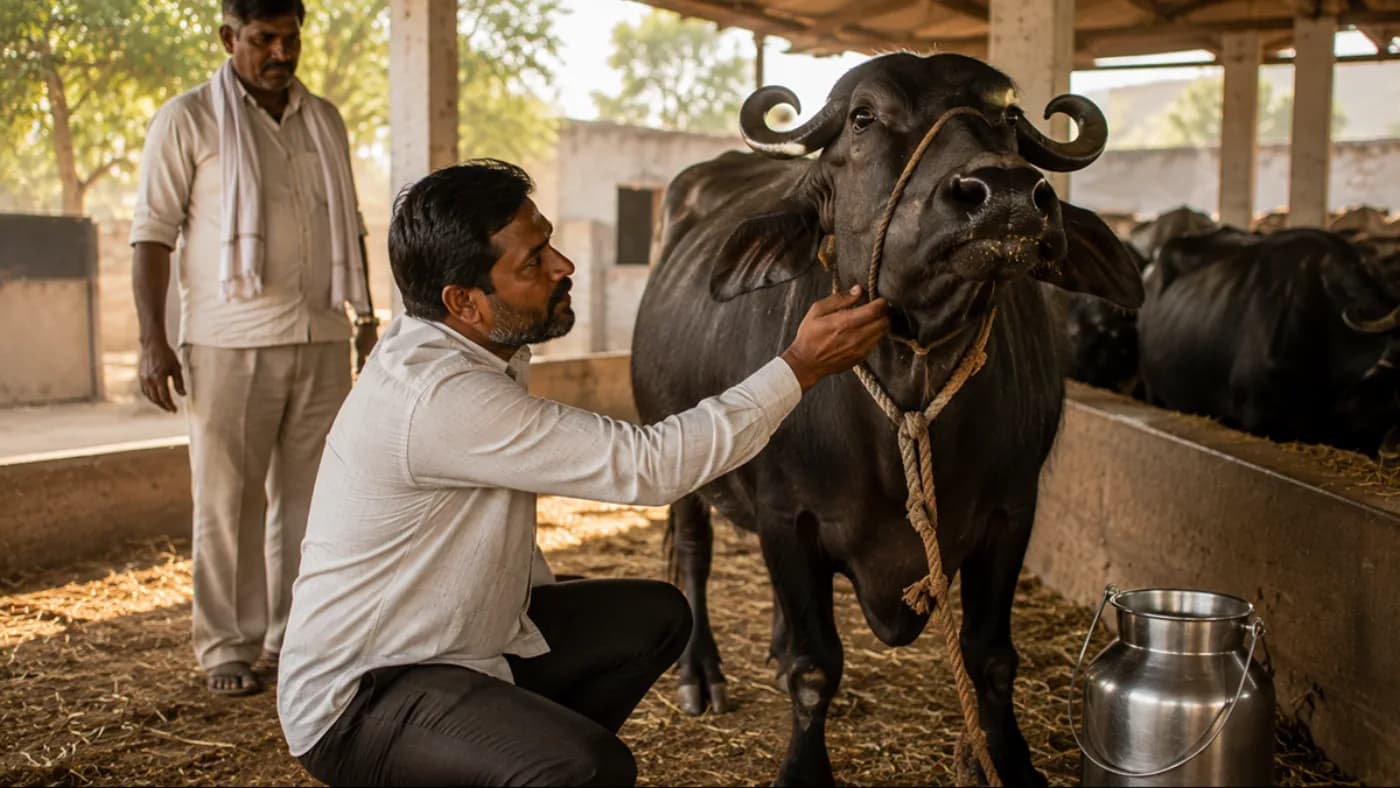
For a small dairy farm, a buffalo or a crossbred cow is frequently the biggest cheque written all year — and unlike a bag of seed, you cannot return it. An online listing solves the hardest part of the old process, which was finding animals outside your own village. It solves none of the verification. Everything below happens after you find the animal and before money changes hands.
Decide what you are buying before you look
Most bad purchases begin as vague ones. Write down, before you browse anything, the species and breed you want, the lactation number you are willing to accept, the minimum current yield in litres per day, your ceiling price, and whether you can manage a pregnant animal right now. A farmer with those five numbers walks away from the wrong animal easily; a farmer without them gets talked into whatever is in front of him.
Match the choice to your actual conditions rather than the highest yield on offer. A high-yielding crossbred needs feed, water and heat management that a buffalo in the same shed may not — our guides on cow vs buffalo dairy and dairy cattle breed selection exist precisely because this decision is made badly so often. Buying an animal your farm cannot feed properly is a slow, expensive mistake that looks fine on purchase day.
- Species and breed you actually want.
- Acceptable lactation number — first, second, third.
- Minimum current yield, in litres per day, measured not claimed.
- Your ceiling price, decided before you see the animal.
- Whether a pregnant animal suits you now or complicates things.
The milk test is the whole purchase
If you remember one thing, remember this: milk the animal yourself, in front of the seller, before agreeing anything. Not the seller's helper, not a bucket already filled when you arrived — you, at the time the animal would normally be milked. Yield is the single most inflated claim in cattle trade, and it is also the easiest to verify, which is why a seller's reaction to this request tells you almost everything.
Insist on the full let-down from all four quarters, and where you can, be present for two consecutive milkings, ideally morning and evening. A single milking can be manipulated by delaying the previous one so the udder is unusually full. Two milkings roughly twelve hours apart cannot be faked that way, and the difference between the two is itself informative.
While you milk, use your hands. Feel the udder for hard lumps, uneven quarters or heat, all of which suggest mastitis, past or present. Check that all four teats actually give milk — a blind quarter is common, permanently reduces yield, and is very often not mentioned. Look at the first few squirts for clots or watery, discoloured milk.
The rest of the physical check
Take someone who buys animals regularly, and if the amount is significant, pay a vet to examine it. A vet's fee is small against the price of a milch animal, and a pre-purchase examination catches mastitis, pregnancy misstatements and lameness far more reliably than an enthusiastic buyer will. Our guide to common cattle and buffalo diseases and the vaccination calendar is worth reading before you go, so you know what you are looking at.
- Age — read the teeth rather than trusting the stated age. Sellers routinely understate it.
- Lactation number and days in milk. An animal deep into lactation naturally yields less; that is not a defect, but it must be priced in.
- Pregnancy status, confirmed by a vet rather than asserted. It changes both value and what you can expect for months.
- Legs and feet — watch the animal walk. Lameness is expensive, sometimes permanent, and easy to hide while standing still.
- Eyes, coat and dung. Dull coat, sunken eyes or loose dung point at parasites or something worse.
- Temperament, especially around milking. An animal that will not stand for you is a daily problem you have bought.
- Vaccination and deworming records. Absence is not automatically fraud, but it is a negotiating point and a risk.
Red flags that should end the conversation
Insist on seeing the animal where it lives. The shed tells you things the animal will not — how it is fed, how clean the housing is, whether there are other sick animals, and whether the seller is a farmer or a trader moving stock quickly. A seller who wants to meet you at a neutral point with the animal already loaded is avoiding exactly that inspection.
- The seller will not let you milk the animal yourself, or has already milked it "just now".
- Pressure to decide today, or a claim that another buyer is coming this evening.
- A price well below the going rate for that breed and yield. Nobody gives away a good milch animal.
- Any request for advance payment before you have seen the animal in person.
- Refusal to let a vet examine it.
- The seller will not meet at the place the animal is kept.
- Vague or shifting answers about lactation number, calving date or why it is being sold.
Payment, transport and paperwork
Never send an advance to someone you have not met, and be especially firm about this online. This is the most common fraud pattern in every online marketplace: a convincing conversation, a plausible reason for urgency, and a request for a deposit to hold the animal. There is no animal. In Khetiyaar's Agri Bazar you can ask questions through the listing without sharing your phone number, so you can qualify a seller at length before you commit to anything — and the platform is a place to find each other, not a party to your transaction.
Pay on delivery or on collection, in a traceable way where you can, and take a written receipt with the date, the amount, the animal's description and identifying marks, and both parties' names and contact details. Cattle do not come with a title document, which is exactly why a receipt matters. Where a purchase is large, agree a short trial period in writing if the seller will accept one — reputable sellers often will.
Plan the transport before you buy, not after. Animals must be moved with adequate space, footing and ventilation, and there are legal requirements around animal transport in India that vary by state and situation. Check what applies locally before loading. A stressful journey can drop milk yield for days and turn a good purchase into a disappointing first fortnight.
Selling well: honesty is the faster route
If you are on the selling side, understand what makes buyers hesitate, because removing hesitation is what sells an animal quickly and at a fair price. Buyers want to know the breed, lactation number, days in milk, current measured yield, pregnancy status, vaccination history and why you are selling. A listing that answers all seven gets serious enquiries; one that says "good milk, best price" gets tyre-kickers and lowball offers.
Photograph the animal standing square in daylight from the side, then the udder, then a clear head shot showing the face. Add a short video of an actual milking if you can — nothing else you do will build trust faster, and it filters out buyers who were never serious. State any blind quarter, past mastitis or lameness plainly. It feels like it costs you money; in practice it saves the wasted day of a buyer who discovers it on inspection and walks away.
Price against reality. Breed, lactation number, current yield and pregnancy status set the value, and a seller who can show a measured yield can defend a higher price than one who claims one. If you are selling milk as well, our guide on selling milk through a dairy cooperative covers the income side, and dairy feeding and milk yield optimisation explains why a well-fed animal presents better and fetches more.
Frequently asked
Is it safe to buy cattle through an app?+
The app is safe for finding animals and asking questions; the risk sits entirely in skipping verification. Use the listing to shortlist and ask questions, then inspect in person at the place the animal is kept, milk it yourself, and pay only on collection. Never send an advance to hold an animal you have not seen.
How do I check a buffalo or cow's real milk yield before buying?+
Milk it yourself, in front of the seller, at the animal's normal milking time — and be present for two consecutive milkings about twelve hours apart if you can. A single milking can be inflated by delaying the previous one. Check all four teats give milk, since a blind quarter permanently reduces yield and often goes unmentioned.
What are the biggest red flags when buying a milch animal?+
A seller who will not let you milk it or has "just milked" it, pressure to decide immediately, a price well below the going rate, any request for advance payment before you have seen the animal, refusal of a vet examination, and unwillingness to meet where the animal is kept.
What paperwork should I get when buying cattle?+
Cattle do not come with a title document, so take a written receipt recording the date, amount paid, the animal's description and identifying marks, and both parties' names and contact details. Ask for vaccination and deworming records, and get pregnancy status confirmed by a vet rather than taking the seller's word.
What should I include in a cattle listing to sell faster?+
Breed, lactation number, days in milk, current measured yield, pregnancy status, vaccination history and your reason for selling. Add side-on daylight photos, an udder photo, and a short video of an actual milking. Disclose any blind quarter, past mastitis or lameness — it saves the wasted inspection visit that would have ended the deal anyway.
Where to go next
- Today's mandi bhavOfficial AGMARKNET rates for your crop, nearby mandis compared, and the net price after travel.
- AI farming chatbotAsk any farming question in Gujarati, Hindi or English and get an answer in seconds.
- Agri Bazar marketplaceBuy and sell animals, crops, equipment and dairy near you — and see what buyers want today.
Want this as daily tasks for your farm?
Khetiyaar turns guides like this into a day-by-day plan — in your language, free to start.

Related guides
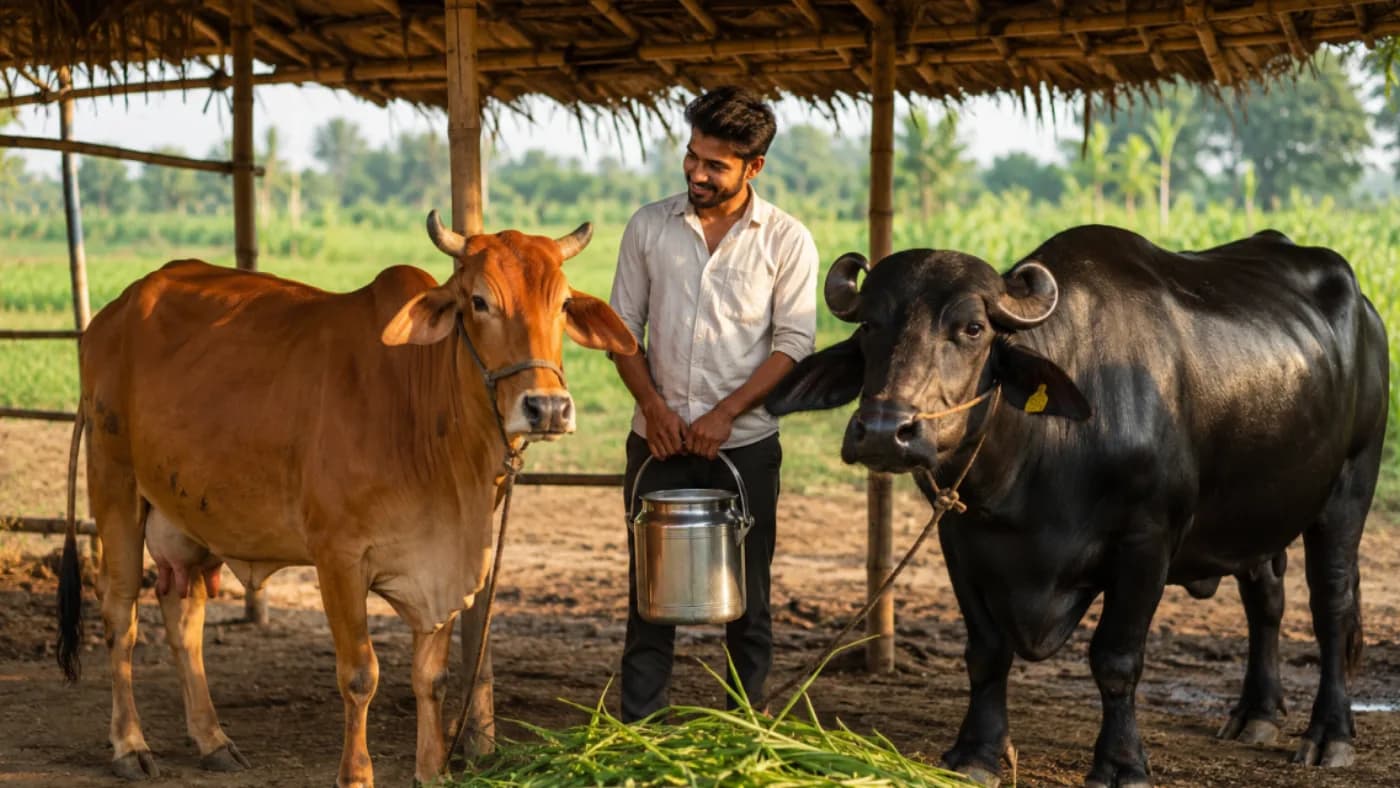
Cow vs Buffalo Dairy: Which One Actually Suits Your Farm?
Buffalo milk earns a better rate per litre at the collection centre — but the animal that earns it also eats more bulk, needs water to wallow in, and suffers far more in the sun. Here is how the two compare on the things that actually decide whether your dairy pays.
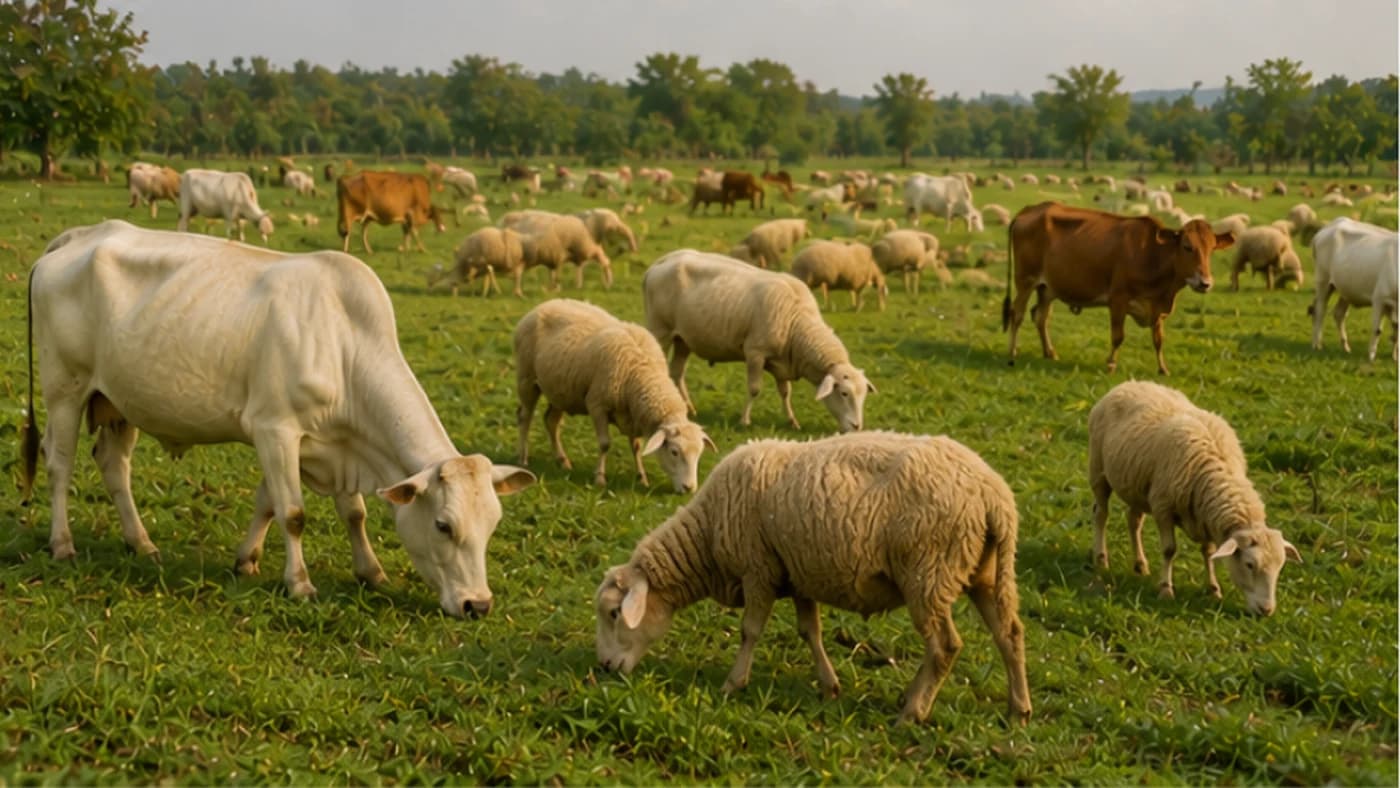
Grazing Sheep and Cattle Together: A Natural Parasite and Pasture Fix
Running sheep and cattle on the same pasture isn't a compromise — it's a biological upgrade. Cattle mop up the parasite larvae that sheep can't shake, sheep clean up the weeds cattle won't touch, and together they can lift how much your land actually produces.
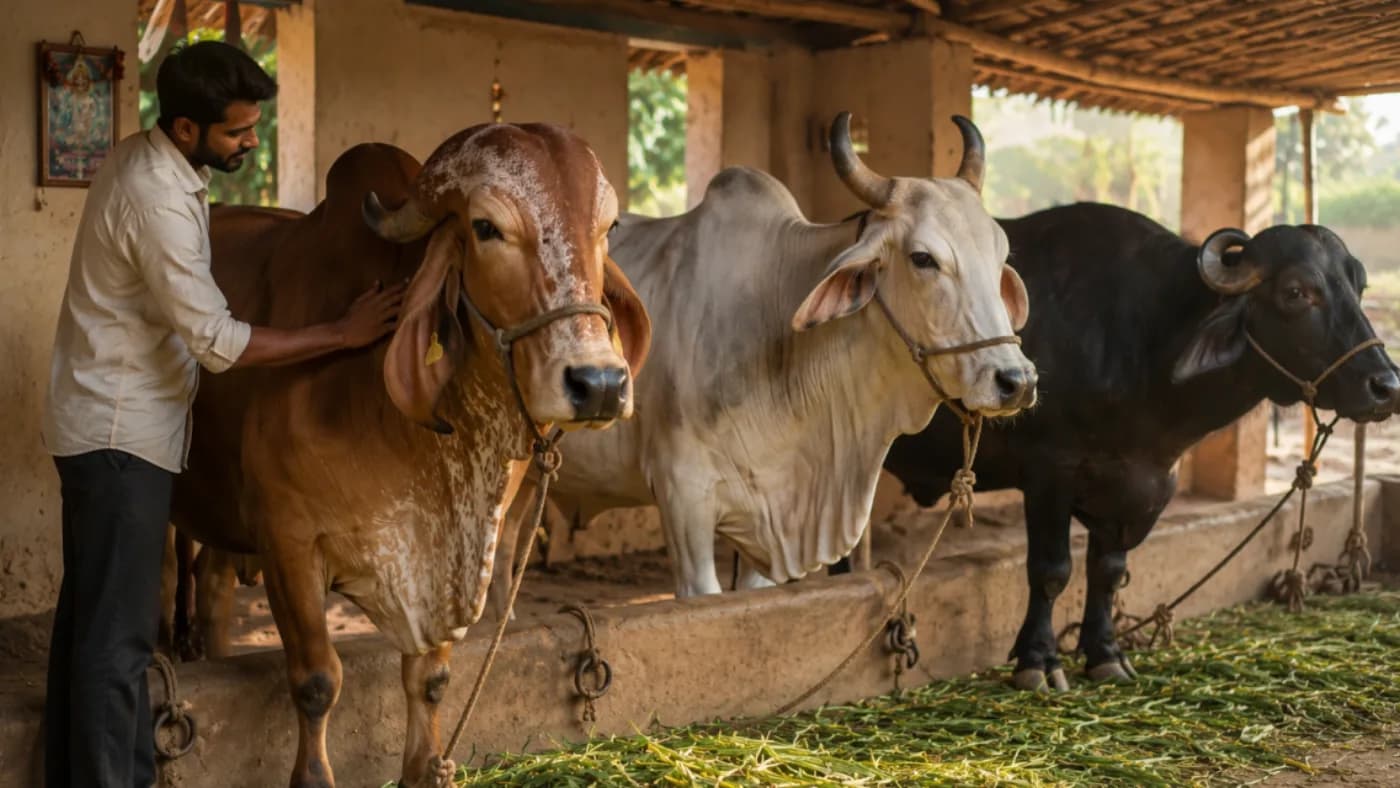
Choosing a Dairy Breed in India: Gir, Sahiwal, Crossbred, Murrah — and How to Decide
Indigenous, crossbred and buffalo dairy breeds each solve a different problem. This guide explains what Gir, Sahiwal, Tharparkar, HF and Jersey crosses, Murrah and Mehsana actually offer — and gives you a practical framework for deciding which one fits your district, your fodder and your management.