

Dairy Cattle Feeding and Milk Yield: How to Build a Ration That Actually Pays
Milk yield is decided at the manger and the water trough long before it shows up in the pail. This guide explains how a dairy ration is really built, the quiet feeding mistakes that cost milk every single day without anyone noticing, and why water is the most underrated input on the whole farm.
Quick answer
Milk yield is built from a ration with the right shape, not from a bigger bag of concentrate. Keep a solid base of green and dry fodder so the rumen stays healthy, add concentrate in proportion to what each animal is actually milking and split it across the day, never skip the mineral mixture and salt, change any feed gradually over a week or more, feed hardest in the weeks around calving and in early lactation because the peak she reaches there sets her whole lactation, and keep clean water in front of her all day long — because water restriction shows up in the pail faster than any other mistake. Then get your actual quantities from a veterinarian or your dairy's advisor, who can see the animal you are feeding.
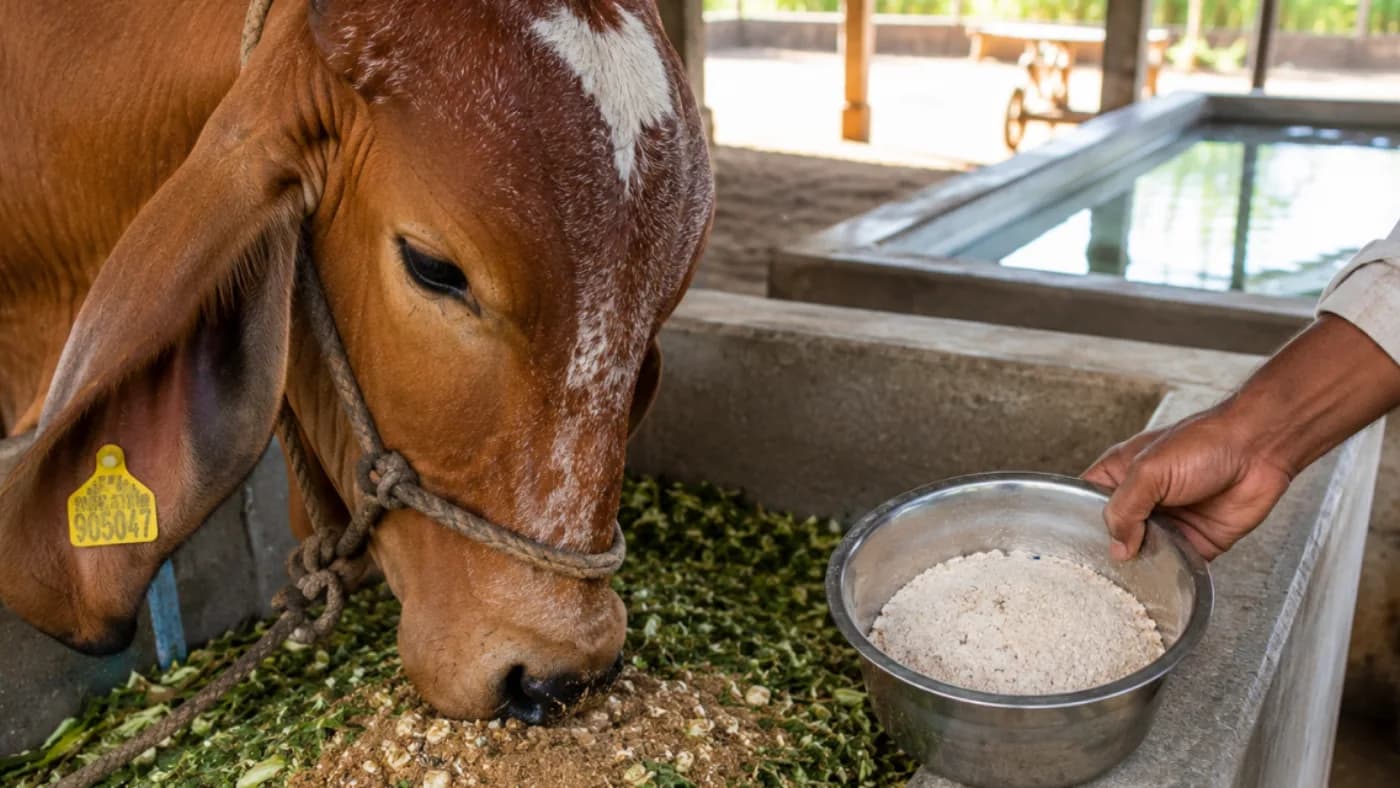
Ask ten dairy farmers why one animal in the shed gives noticeably more milk than another of the same breed, and most will point at the animal — her line, her mother, her luck. Sometimes that is true. But far more often the difference is sitting in front of both animals: what is in the manger, when it arrived, whether it changed suddenly last week, whether a spoonful of mineral mixture went in, and whether there is clean water within reach right now. Feed is the single largest cost on a dairy farm and also the single largest lever on yield, and the two facts are connected — most farms are not spending too little on feed, they are spending it in the wrong shape. This guide is about the shape: how a ration is put together, why the rumen decides whether that ration turns into milk or into trouble, the everyday mistakes that quietly remove milk from the pail, and how feeding should change as the animal moves through her lactation.
Where the milk actually comes from: maintenance before production
A dairy animal is not a machine that converts feed into milk at a fixed rate. Everything she eats is first spent on simply keeping her alive and working — breathing, standing, walking to the water trough, holding her body temperature, repairing tissue, fighting off infection, and growing the calf inside her if she is in calf. Animal nutritionists call that share maintenance, and it is paid first, every single day, whether she is giving twenty litres or nothing at all. Only what is left over after maintenance has been paid can become milk. This one idea explains most of what follows in this guide.
It also explains a pattern almost every dairy farmer has seen without naming it. When a genuinely high-yielding animal is underfed, she does not politely reduce her milk to match her feed. She keeps trying to give milk, and she takes the shortfall out of her own body — pulling down fat from her back and tail-head and eventually muscle. So you see two things happening at the same time: milk that falls short of what her breed and stage should be giving, and body condition that visibly slides, with ribs and hip bones standing out and the coat losing its shine. Farmers usually treat these as two separate problems, and often go looking for a disease. They are one problem with one cause.
The mistake runs in the other direction too. An animal that is not giving much milk, fed as though she were, simply gets fat — and excess fat brings its own bill, in difficult calving, slower return to heat after calving, and a higher risk of metabolic trouble in the days right after she calves. So the useful question is never 'how much should I feed a cow'. It is: what is this particular animal producing today, what stage of her lactation is she in, and does what I am putting in front of her cover her maintenance plus that production, with something to spare.
How a balanced ration is actually built
A dairy ration has a structure, and the structure matters far more than any single number. At the base sits bulk roughage — green fodder together with dry roughage such as straw or dry grass. This is not filler and it is not the cheap part of the ration that you cut when money is tight. It is the foundation that keeps the rumen physically full and working, and it drives the chewing and cud-chewing that protect the whole digestive system. Green fodder brings moisture, protein and carotene; dry roughage brings the long, coarse fibre that forms a mat in the rumen and keeps fermentation orderly. An animal on green fodder alone very often gives loose dung and disappointing milk fat, while an animal on dry roughage alone is short of almost everything. The two work as a pair.
On top of that roughage base sits the concentrate — dana in the north, khan in Gujarat: grain, oilcakes, brans, and compounded cattle feed from the dairy or the market. Concentrate exists for one reason, and it is worth being blunt about it: to meet the extra demand that milk creates. An animal giving a lot of milk has a demand that roughage alone cannot fill, because she can only physically eat so much bulk in a day. So concentrate rises as her yield rises and falls back as she dries off. This is exactly why the common practice of putting one fixed measure of concentrate in front of every animal in the shed is wrong in both directions at once — it starves the best animal in the shed and fattens the poorest one, using the same feed bag.
Then there is the mineral mixture: a small daily addition that is not optional. It supplies calcium and phosphorus, which milk carries out of her body in large amounts, along with the trace minerals that ordinary fodder in most parts of India simply does not supply reliably, because the soil the fodder grew in did not have them. Measured against what it protects, mineral mixture is one of the cheapest inputs on a dairy farm, and it is also the one most often skipped, because nothing dramatic happens on the day you skip it. Common salt belongs in the daily ration too. Feeding lopped tree leaves alongside the regular ration helps here as well — our guide Tree Fodder for Livestock: The Free Mineral Feed Growing on Your Farm goes into which trees are worth having on the farm boundary for exactly this reason — but tree fodder supplements a mineral mixture rather than replacing it.
You will notice that this section gives you no quantities, and that is deliberate. The right amount of roughage and concentrate for an animal depends on her breed, her body weight, how far into her lactation she is, how much milk she is actually giving, whether she is in calf, and — importantly — what your own fodder is. A ration built on good green berseem needs a very different concentrate than the same animal's ration built on dry straw in April. Getting those numbers right needs someone who can see the animal, look at your fodder, and weigh what you are feeding: your local veterinarian, the district animal-husbandry office, the animal advisor or extension staff at your dairy cooperative society or district milk union, or the nearest KVK. Standard feeding recommendations also differ from state to state and get revised as research and local feed availability change, so confirm them locally rather than carrying a figure from a neighbour with a different breed and different fodder.
The rumen is the animal you are really feeding
Cattle and buffalo can live on fodder that would starve us because the first and largest chamber of their stomach, the rumen, works like a big fermentation vat. It is packed with billions of microbes, and those microbes do the actual work of breaking down fibre. They release energy she can absorb, and their own bodies, passed further down the gut, become a large share of the protein she uses to make milk. Understood properly, you are not feeding the cow. You are feeding the microbes, and the microbes feed the cow. Everything they need comes down to three things: fibre, time, and a stable environment.
Long, coarse fibre in the rumen is what makes her lie down and chew her cud for hours. Cud-chewing produces large volumes of saliva, and saliva is what keeps the acid produced by fermentation from building up. Now consider what happens when a big helping of concentrate goes in without enough roughage behind it. Concentrate ferments fast, acid accumulates quickly, saliva cannot keep pace, and the rumen turns sour — acidosis. It shows up as an animal who suddenly goes off her feed, dung that turns loose and watery, a dull and uncomfortable-looking animal, and a fall in milk fat that the dairy will notice at the collection centre. This is the reason 'just give more concentrate' is not a yield strategy on its own: past a point, more concentrate takes milk out of the pail instead of putting it in. If you suspect an animal has gone acidic, that is a case for the veterinarian, not for home remedies or leftover medicines.
The second thing the microbes need is time. The population inside the rumen is matched to what she has been eating, and rebuilding it around a new feed takes days, not hours. That is why every feed change has to be gradual — a new brand of cattle feed, the shift from green fodder to dry fodder as the season turns, the first opening of a silage pit, a switch from one oilcake to another, even moving to a different cut of the same crop. Mix a small share of the new feed into the old and increase it step by step over a week or more. This is the single most frequently broken rule in dairy feeding, and it is broken most often at exactly the moments when milk is most valuable.
The silent yield-killers: mistakes that cost milk without ever looking like a problem
- Feeding and milking at inconsistent times. A dairy animal runs on habit to a degree that surprises people who have not kept one. When feed arrives at a different hour every day, total intake drops, because she does not eat as much in an unfamiliar rhythm as she does in a settled one; when milking times drift, milk letdown becomes less complete and less reliable. A fixed daily routine, kept even on busy days, is a free input that costs nothing but discipline.
- Skipping the mineral mixture, or giving it only when someone remembers. Nothing visible happens on the day you skip it, which is exactly why it is dangerous. What happens over months is slower return to heat after calving, repeat services and a longer gap between two calvings, weaker bones, poorer appetite, and a general flattening of yield that nobody attributes to a missing spoonful. It is one of the cheapest things you buy and one of the most expensive things to skip.
- Changing feed suddenly. A sudden change crashes the rumen microbe population and the animal loses milk for several days while it rebuilds — sometimes she also loses her appetite entirely for a day or two. This applies to the good changes as much as the bad ones: starting a better cattle feed abruptly costs you milk in the same way that running out of it does.
- Giving the whole day's concentrate in one go. A single large helping is exactly the condition that turns the rumen sour, and much of the energy in it is wasted. Splitting the concentrate across the milkings, spread through the day, keeps rumen fermentation steady and lets her use far more of what you paid for.
- Not chopping the fodder. Fed long, animals sort through the pile, pick out the soft leaves and tender tops, and leave the coarse stems standing in the manger to be thrown out. You paid for the whole plant and she ate the expensive third of it. Chopped fodder is eaten more completely, wasted less, and — because she cannot sort it — keeps the leaf-to-stem balance you intended.
- Feeding mouldy or spoiled fodder, or silage from a pit that has gone bad. It is tempting when fodder is scarce and the alternative is throwing it away, but mould costs far more than it saves: intake falls because she refuses it, and mould toxins hit appetite, fertility and yield, and can make her genuinely ill. Silage that smells rotten or foul rather than pleasantly sour, or that has visibly turned slimy or grown white and coloured moulds, should not go in the manger. Feed anything doubtful to nobody.
- Not stepping feed up before calving and in early lactation. In the last weeks before calving, concentrate should be introduced gradually so the rumen is already adapted when demand suddenly arrives, and in early lactation she needs the best fodder and the largest share of concentrate she will get all year. This matters more than any other single feeding decision, because the highest yield she reaches in early lactation largely sets how much she gives across the whole lactation. Milk you fail to reach at the peak is not just this week's milk — it is milk lost for the year.
- Letting body condition slide at drying-off, or the opposite. An animal dried off thin has no reserves to draw on when the next lactation begins, and starts that lactation already behind. An animal dried off over-fat runs into difficult calving and metabolic trouble in the days after. Body condition at drying-off is a decision you make in mid and late lactation, not something you can fix in the last fortnight.
- Too little manger and trough space for the number of animals. When animals have to crowd or compete to eat and drink, the timid and lower-ranking ones eat and drink less than they need, day after day. It never appears as a disease, only as one or two animals in the shed who never quite give what they should.
Water: the most underrated input on a dairy farm
Milk is overwhelmingly water. Every litre that leaves in the pail is mostly water that left her body and has to be replaced from the trough that same day. On top of that she needs water for digestion, for cooling herself, and for everything else her body does. A milking cow or buffalo drinks a great deal, and how much she needs is not a fixed figure — it climbs steeply with air temperature, with how much milk she is giving, and with how much of her ration is dry roughage rather than green fodder. An animal on straw in the hot season has a completely different water requirement from the same animal on green fodder in the monsoon, which is exactly why a fixed daily bucket count is the wrong way to think about it.
The practical consequence is that any restriction on drinking water turns up in the milk pail within a day, faster and more reliably than almost any other feeding fault. Watering twice a day, which is still common where water has to be carried or the trough is far from the shed, puts a hidden limit on how much milk she can give — she simply cannot drink enough in two visits to support high yield in hot weather. Clean water available at all times, where she can reach it without being pushed away by a stronger animal, is the correct standard, and it is often the cheapest yield improvement available on a small dairy farm.
Then there is the part nobody credits. Animals drink noticeably less from water that is dirty, green with algae, slimy to the touch, or has been standing in the sun until it is warm. She will not refuse it outright; she will just drink less than she needs, and the milk will drop, and the loss will be blamed on the weather or the feed or the animal. Put the trough in shade or shade it with a simple roof, keep it where she passes it often, empty and scrub it frequently enough that slime never gets a foothold, and top it up so the water in it is fresh rather than a day old. Offer water right after milking, when she is most inclined to drink, and check troughs more than once a day in the hot months.
Water quality is also a shed-hygiene matter, not only an intake matter. A trough that everything drinks from and nothing cleans becomes a route for infection to move around the shed, and a trough placed where dung and urine can splash into it is worse still. Position and cleaning are cheap; treating what a shared dirty trough spreads is not.
Feeding by stage of lactation
Early lactation is the demanding phase and the one that decides the year. Yield climbs quickly after calving and reaches its peak within the first weeks, but appetite recovers more slowly than yield rises, so for a while she genuinely cannot eat as much energy as she is spending. Her body runs at a deficit and she draws on her own reserves to cover it — which is normal and expected, but the deeper and longer that deficit runs, the more milk and the more body condition you lose, and the later she comes back into heat. So early lactation is where your best green fodder goes, where the concentrate share is highest, where the mineral mixture is least negotiable, and where feed is split into more, smaller helpings through the day. It is also why concentrate should be introduced gradually in the weeks before she calves: the rumen needs to be ready before the demand arrives, not after.
Mid lactation is the comfortable phase. Yield is now declining gently week by week along its natural curve, while appetite is fully recovered, so for the first time she can eat more than she is spending. Two things matter here. Do not cut her feed faster than she is cutting her milk — a common way to lose the back half of a lactation is to start reducing concentrate on the assumption that she is finished when she is not. And use this window to put back the body condition she spent in early lactation, because rebuilding reserves now, while she is eating well, is far more efficient than trying to do it later.
In late lactation, yield is genuinely falling and concentrate should come down with it, because feeding for milk she is no longer giving just makes her fat. But do not read that as a general cut. She is usually well into pregnancy by now and the calf grows fastest in the last stretch, so she needs good roughage, her mineral mixture, and enough concentrate to support the pregnancy and hold her condition. And through the dry period itself, the goal is a well-conditioned animal — neither thin nor over-fat — carrying a well-grown calf.
It is worth saying plainly that the dry period is not wasted time, even though it produces nothing to sell. That is when udder tissue repairs and regenerates itself for the coming lactation, when her body reserves are restored, and when the calf completes most of its growth. Milking an animal too long and drying her off too late, or drying her off in poor condition to save on feed, quietly reduces the lactation you have not started yet. How long a dry period a particular animal should get, and how to dry her off safely without inviting udder infection, is a question for your veterinarian, who can examine the animal and check her udder.
What not to reach for when milk drops
When yield falls, the temptation to buy a solution is strong, and there is no shortage of people willing to sell one — unlabelled injections offered at the door, powders and tonics that promise more milk, and preparations passed around between farmers with confident instructions. Be very clear about this: anything injectable, any hormone, and any medicine of any kind goes through a qualified veterinarian and nowhere else. Using such things on your own risks the animal's health and her fertility, can leave residues in milk that your cooperative and the person who drinks it should never have to deal with, and — most of the time — does nothing for the actual cause. Money spent on a bottle of promises is money that should have gone into mineral mixture, chaffing your fodder, and a clean trough kept full.
The honest first step when milk drops is to look at the list of silent yield-killers above, because the answer is usually sitting there: feed changed a few days ago, someone stopped adding the mineral mixture, the timings slipped during a busy week, the trough has been low or dirty, the fodder that came in was mouldy. If none of that fits and the drop is sudden or one animal is clearly unwell — off feed, running a temperature, a hot or swollen udder, abnormal milk — then it is a veterinary matter and delay is expensive.
One boundary worth naming: this guide is about how to feed, not about how to produce the feed. Growing good green fodder through the year, choosing fodder crops for your season and water, and preserving surplus green fodder as silage so that April feeding does not collapse to straw alone is a substantial subject with its own guide in this series. It matters enormously to everything above, because the cheapest way to feed a dairy animal well is almost always to grow more of her feed on your own land rather than buy your way out of a fodder gap.
Putting it together on your own farm
Practically, a farm that feeds well looks like this. Fodder arrives at the same hours every day, chopped. There is a roughage base of green and dry fodder that the animals can fill up on, with concentrate given on top of it in proportion to what each animal is actually milking, split across the milkings rather than dumped once. A measured daily spoonful of mineral mixture and salt goes in without fail. Clean water is available all day, in shade, in a trough that gets scrubbed. Feed changes happen slowly, over a week or more. Fresh animals and high yielders get the best of everything, and dry animals are neither neglected nor overfed. Nothing in that list is expensive; most of it is routine, and the routine is the point.
The one habit that ties it together is writing things down. If you do not know what each animal is actually giving, you cannot feed her according to her yield, and you cannot tell whether a change you made helped or hurt. A simple notebook with each animal's daily milk, her calving dates, when she came into heat, and what her feed was that week turns feeding from guesswork into management — and it is also exactly what a veterinarian or a dairy extension advisor needs to see in order to give you real quantities for your animals, your fodder and your conditions. Take that record to your local veterinary dispensary, your district animal-husbandry office, your dairy cooperative society, or the nearest KVK, and ask them to work out a ration with you. That conversation, backed by your own records, is worth more than any figure you could copy from an article.
Frequently asked
How much concentrate should I feed a dairy cow or buffalo per day?+
There is no single correct figure, and any number you copy from elsewhere is likely to be wrong for your animal. The right amount depends on her breed, body weight, how much milk she is actually giving, how far into her lactation she is, whether she is in calf, and what your roughage is — a ration based on good green fodder needs very different concentrate than one based on dry straw. Feed roughage as the base, scale concentrate to her actual yield, and get real quantities from your local veterinarian, the district animal-husbandry office, or the animal advisor at your dairy cooperative, who can see the animal and your fodder.
Why did my cow's milk drop right after I changed her feed?+
Because the microbes in her rumen do the actual work of digesting her feed, and that microbe population is matched to what she has been eating. A sudden change forces it to rebuild, which takes days, and milk falls in the meantime. This happens even when the new feed is better than the old one. Always mix a small share of the new feed into the old and increase it step by step over a week or more. If the change was to a lot of concentrate at once and she has also gone off her feed with loose dung and lower fat, that can be rumen acidosis and needs a veterinarian.
Is mineral mixture really necessary if I am feeding good green fodder?+
Yes. Milk carries large amounts of calcium and phosphorus out of her body every day, and fodder in most parts of India cannot reliably supply the full range of trace minerals, because the soil it grew in was short of them. Skipping mineral mixture produces nothing dramatic on the day, which is why it gets skipped — but over months it shows up as delayed return to heat, repeat services and a longer gap between calvings, weaker bones, and a general flattening of yield. Lopped tree leaves are a genuinely useful mineral-rich addition alongside the ration, but they supplement a mineral mixture, they do not replace it.
How much water does a milking cow or buffalo need in a day?+
Rather than a fixed number of buckets, think about the drivers, because the requirement moves a great deal: it rises steeply with heat, with how much milk she is giving, and with how much of her ration is dry roughage instead of green fodder. The practical answer is clean water available at all times, in shade, in a trough she can reach without being pushed away, scrubbed often enough that it never grows slime. Animals drink less from dirty or sun-warmed water and lose milk for it, and that loss is almost never blamed on water.
Should I stop giving concentrate during the dry period?+
No, but it should come down as her milk comes down, because feeding for milk she is no longer giving simply makes her fat, and an over-fat animal has harder calvings and more trouble in the days after. She is usually well into pregnancy during this time and the calf grows fastest at the end, so she still needs good roughage, her mineral mixture, and enough concentrate to support the pregnancy and hold her condition. Then concentrate should be increased gradually in the weeks before calving, so her rumen is already adapted when the demand of a new lactation arrives.
Where to go next
- AI farming chatbotAsk any farming question in Gujarati, Hindi or English and get an answer in seconds.
- Kheti app for Indian farmersCrop plans, disease diagnosis, weather and mandi rates in one app.
- Agri Bazar marketplaceBuy and sell animals, crops, equipment and dairy near you — and see what buyers want today.
Want this as daily tasks for your farm?
Khetiyaar turns guides like this into a day-by-day plan — in your language, free to start.

Related guides
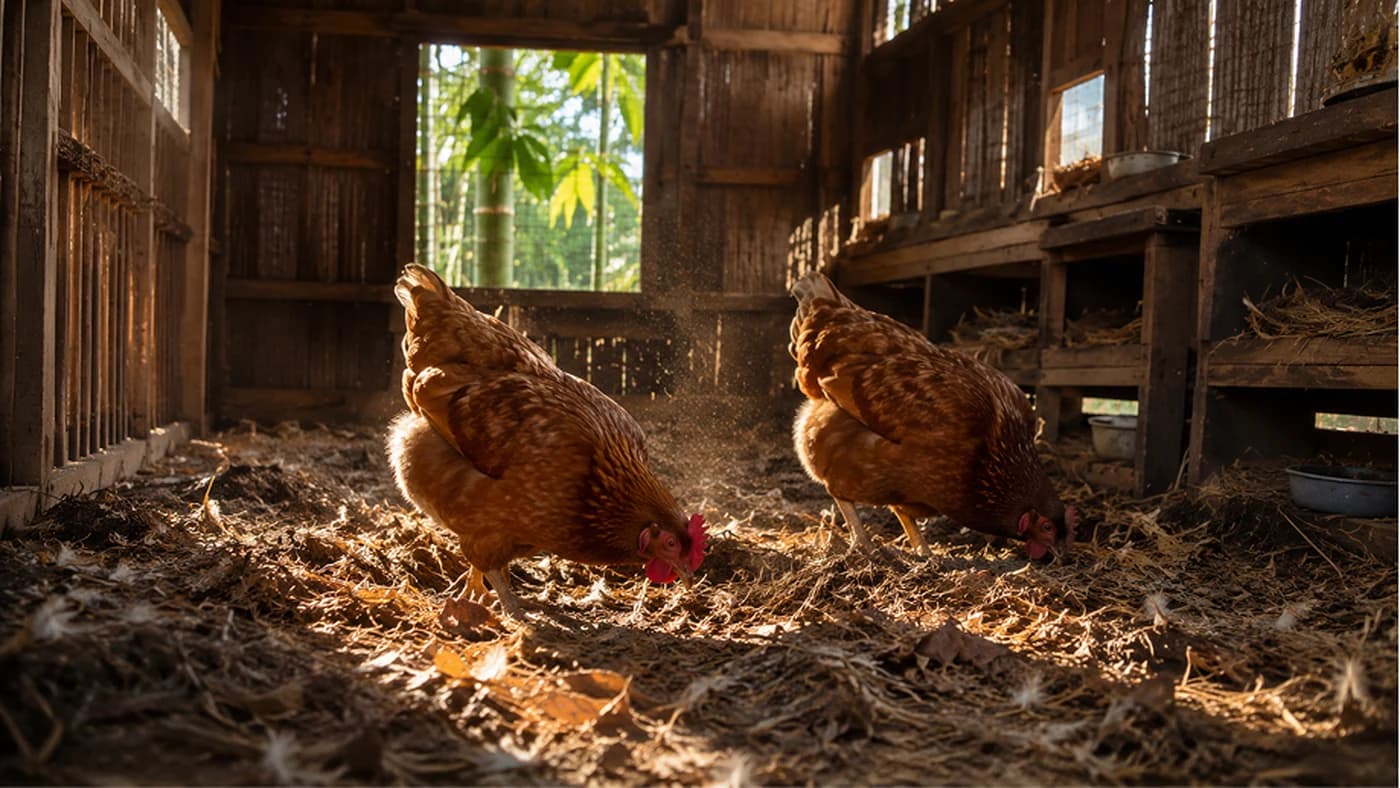
Deep Litter Method: Turn Your Chicken Coop Into a Living Compost System
A scrubbed, bare coop floor is a wasted opportunity. Let a thick carbon bed and billions of microbes do the composting for you — less labour, healthier birds, and free fertiliser for the field.
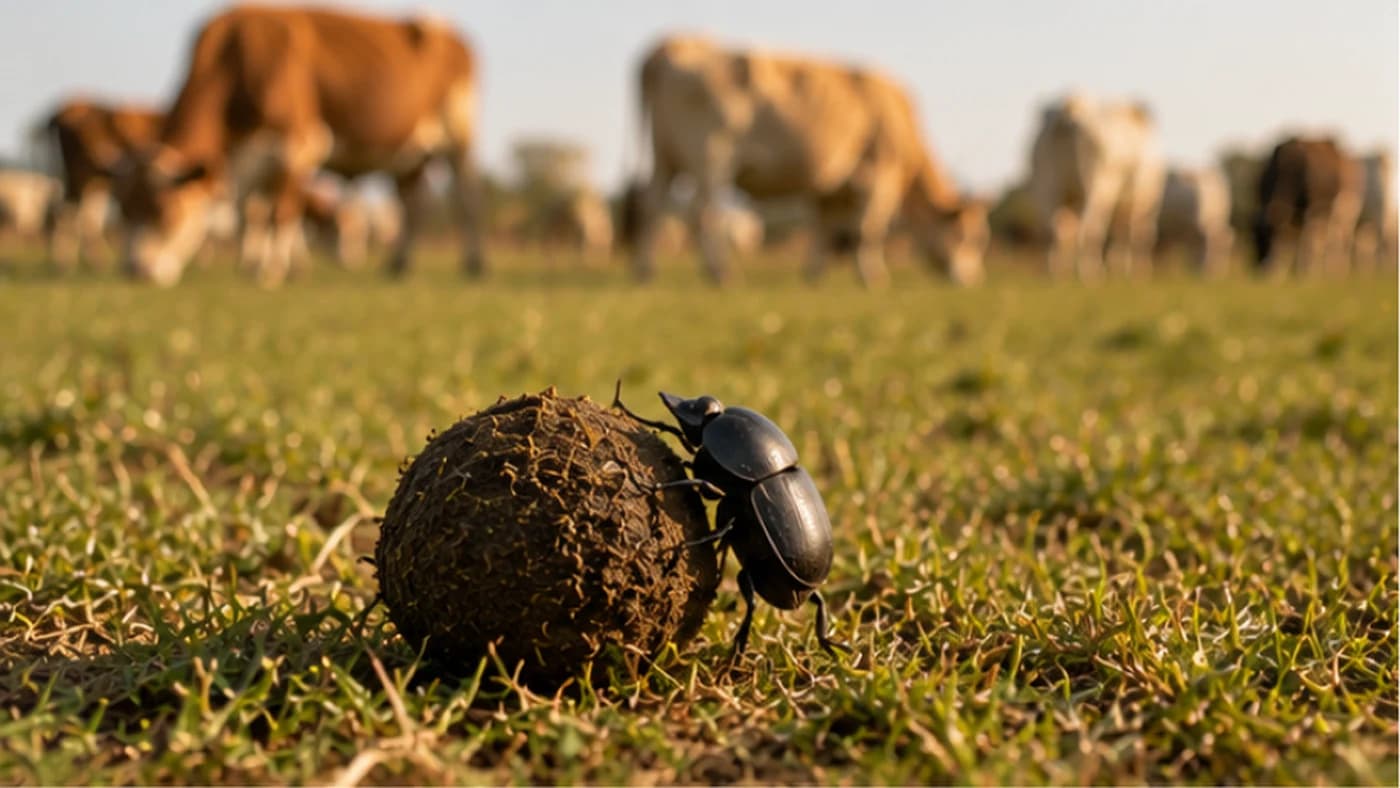
How to Attract Dung Beetles to Your Pasture (and Why Your Dewormer Might Be Killing Them)
Most farmers see a manure pat as a chore. The smart ones see a biological engine — dung beetles that bury parasites, aerate the soil, and cut fly populations, for free, if you stop poisoning them with routine deworming.
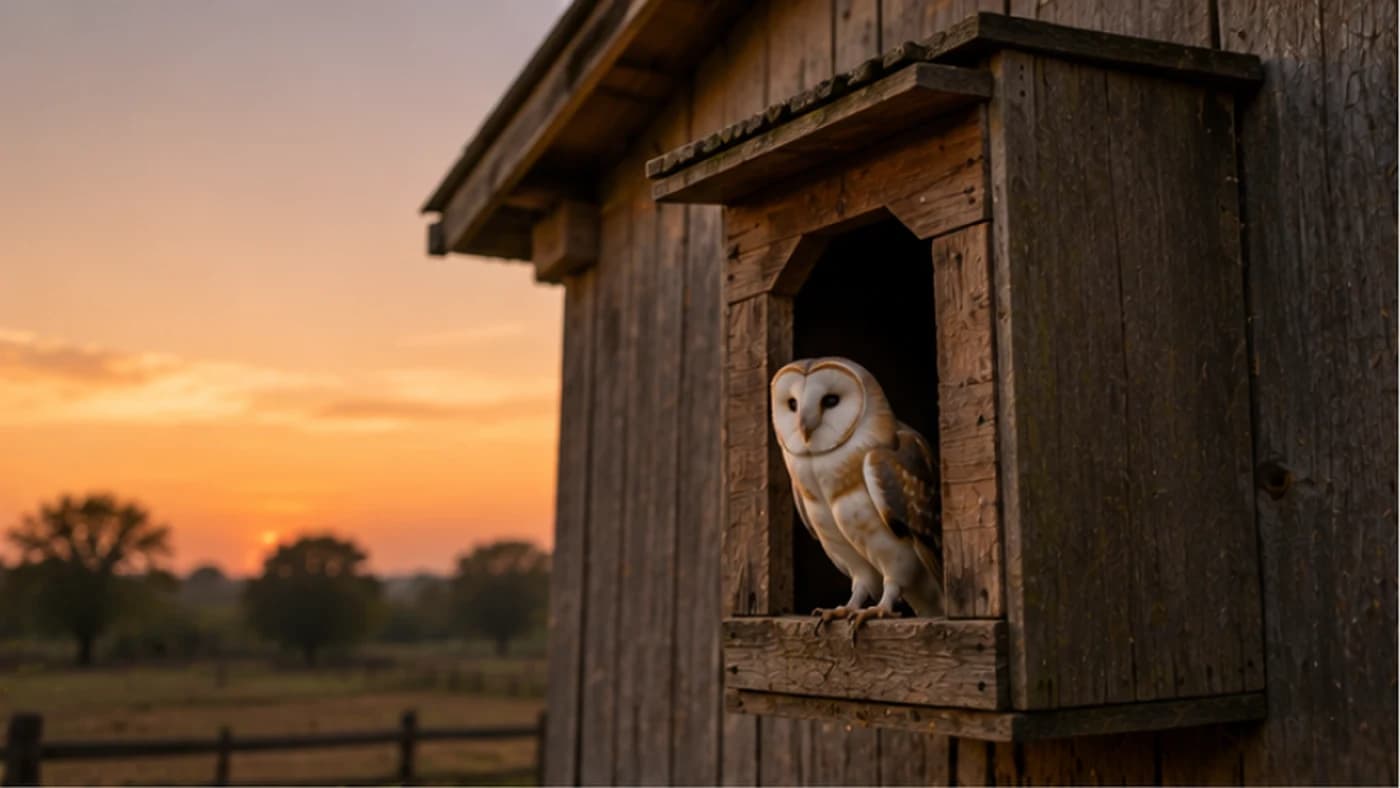
How to Attract Barn Owls to Your Farm for Free Rodent Control
One pair of barn owls can hunt over a thousand rodents in a single season — but only if you give them a properly designed, dark, predator-proof box. Barn owls (Tyto alba) already live across most of India; here's how to bring them onto your farm.