

Grazing Sheep and Cattle Together: A Natural Parasite and Pasture Fix
Running sheep and cattle on the same pasture isn't a compromise — it's a biological upgrade. Cattle mop up the parasite larvae that sheep can't shake, sheep clean up the weeds cattle won't touch, and together they can lift how much your land actually produces.
Quick answer
Multi-species grazing turns two separate management headaches — parasites and patchy pasture — into a single, largely self-solving system. It asks for better fencing, careful mineral management, and a bit of patience while animals bond or you learn the leader-follower rhythm, but the payoff is a more resilient, less chemical-dependent pasture that produces more from the same land. Start by checking your fencing, find a small group of sheep to trial alongside your existing herd, and let the biological vacuum effect do the rest.
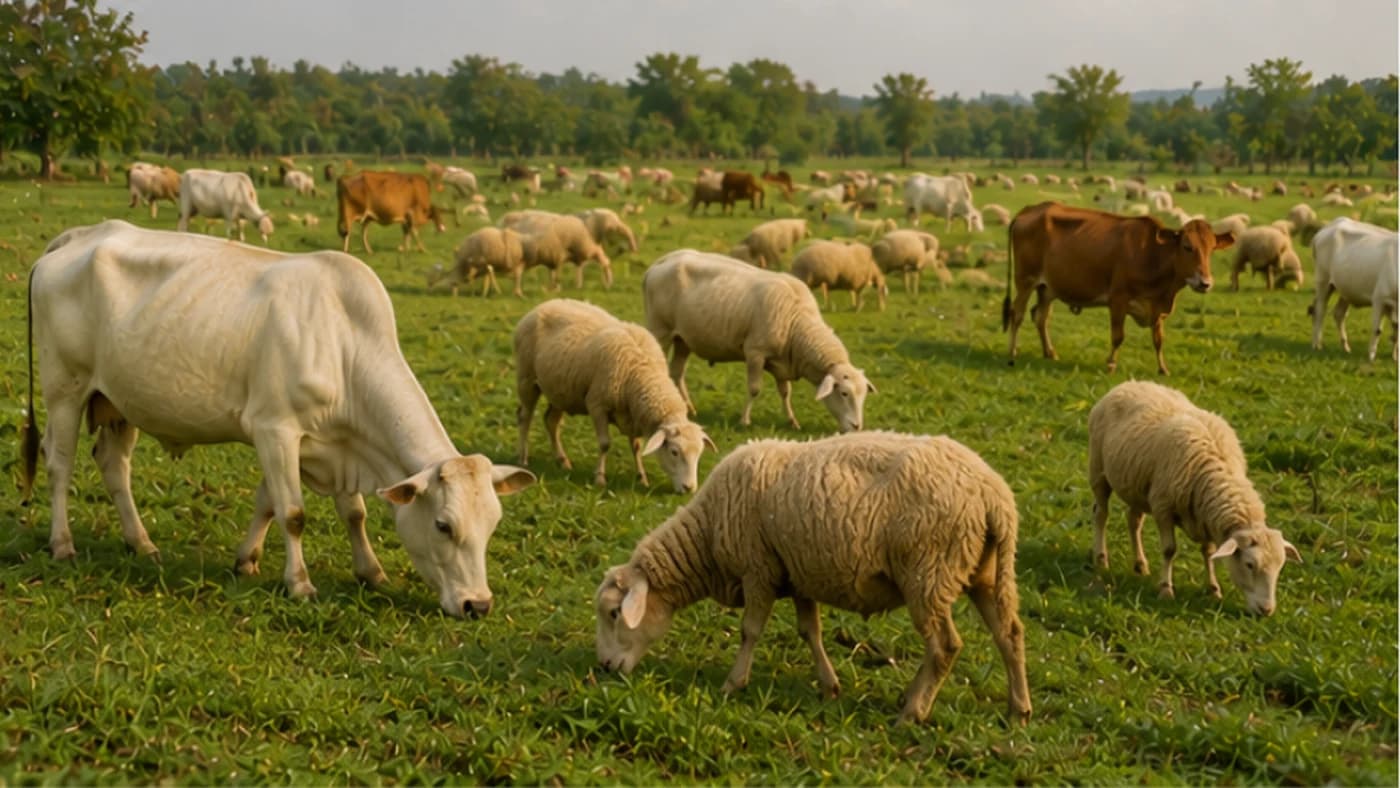
Isolating cattle in one field and sheep in another feels tidy, but it concentrates each species' own waste and its own parasites in one place — a setup that quietly breeds chemical dependency over the years. Multi-species grazing does the opposite: it mimics how wild herbivores actually share land, with different animals eating different parts of the same pasture and, crucially, breaking each other's parasite cycles. This isn't a new idea for India — pastoral herders in many regions have long moved mixed flocks and herds together — but understanding the biology behind it lets you get far more out of the practice deliberately.
Why cattle and sheep are natural partners
Cattle and sheep have different mouths and different appetites, which is exactly why they work well together. Cattle are bulk grazers — they wrap their tongues around tall, coarse grass and pull it in, and aren't fussy about it. Sheep are selective grazers with a split upper lip that lets them nibble close to the ground, picking out broadleaf weeds and clover that cattle walk past. Run together, the two make far fuller use of a pasture's full range of plants than either species grazing alone.
The real payoff is the 'biological vacuum' effect on parasites. Most internal parasites are host-specific — the worms that plague sheep, like the deadly Haemonchus contortus (barber's pole worm), generally cannot survive inside a cow's gut. So when cattle graze a pasture carrying sheep parasite larvae, those larvae are destroyed or fail to mature, breaking the parasite's life cycle and leaving a cleaner pasture behind for the sheep that follow.
Grazing patterns even out too: cattle tend to avoid grazing right around their own dung, leaving rank, wasted patches, but sheep have no such hesitation and will graze up to the edge of cattle dung — and cattle return the favour near sheep dung. And where cattle-only pastures let certain weeds like thistle take over, sheep will actively eat those same plants, turning a weed problem into feed without a single herbicide spray.
Two ways to structure the grazing
The Flerd model runs sheep and cattle as one bonded group, grazing, moving and resting together. It takes real effort to bond them at the start — keeping young lambs and calves together for several weeks until they treat each other as one social group — but once bonded, sheep often stay in the middle of the herd, using the larger animals as a living shield against predators, while the parasite-vacuum effect runs continuously as they move as a unit.
The Leader-Follower model is the simpler alternative: move one species into a fresh paddock first to take the best of the forage, then move them out and bring the second species in to clean up what's left. Send whichever animal has the highest nutritional need first — lactating ewes or growing cattle, depending on your priority — or send cattle first specifically to mow down tall grass and vacuum up parasite larvae before the sheep move onto the shorter, cleaner regrowth.
Stocking rates: how much more can the same land carry
Because sheep and cattle eat different plants and different parts of the same plant, adding sheep to a cattle operation often doesn't add proportional grazing pressure — many farmers see their land's total carrying capacity rise by roughly 10–25%. A common starting ratio for beginners is one sheep per cow (1:1); as pasture health improves with experience, some systems support two or three sheep for every cow. Watch your grass height and soil condition closely as you scale up — bare patches or animals losing condition are the signal that you've overstepped what the land can currently support.
Where the real gains show up
Running two species diversifies your income the same way intercropping diversifies a farmer's harvest — if wool or lamb prices dip, milk or beef can carry you, and vice versa. Parasite loads drop measurably: research shows sheep grazed alongside cattle carry significantly lower worm-egg counts, cutting how often you need to deworm and keeping chemical residues out of your milk and meat. Manure distribution improves too — cattle drop large, concentrated pats while sheep spread small pellets more widely, giving a more even nutrient return to the soil, and the two species' different hoof action (heavier, compacting cattle hooves versus smaller, sharper sheep hooves) breaks up the soil surface in complementary ways that encourage more varied seed germination.
Common mistakes to watch for
Fencing is the most common trip-up — standard cattle fencing (two or three strands of wire) will not hold sheep, which are smaller and more persistent about finding gaps. Containing both properly usually needs woven wire or several strands of electric fencing set closer to the ground, with the bottom wire at around 15cm often the minimum to keep sheep in and predators out.
Mineral mixing is a genuinely dangerous mistake: cattle need much more copper in their mineral supplement than sheep can safely tolerate. If sheep eat cattle mineral mix over time, copper builds up in their liver until it triggers a sudden, often fatal reaction. Feed a sheep-safe mineral to the whole group, and give cattle their extra copper separately in a way sheep can't reach — a high-hanging feeder or a cattle-only area works.
Temperament matters too — not every cow tolerates sheep well, especially around calving or near water troughs, and a bossy cow can injure or kill a sheep. Cull genuinely aggressive animals from a mixed system and make sure sheep always have an escape route around shared water and feed points.
Real limits of the system
Not every parasite is host-specific — the stomach worm Trichostrongylus axei can infect both species, and diseases like Malignant Catarrhal Fever can be carried harmlessly by sheep but prove fatal to some cattle breeds, so check with a veterinarian before mixing specialised or sensitive stock. In heavy monsoon conditions or on heavy clay soil, running two species raises the total hoof-pressure on wet ground and the risk of compaction and pugging — cattle especially can badly damage saturated pasture, so move animals off wet ground promptly. And handling equipment sized for a large steer is simply unsafe for a small ewe — mixed operations generally need separate, smaller-scale handling setups for the sheep.
Cattle versus sheep grazing habits, side by side
Cattle (bulk grazer): eats tall, coarse grass; grazes down to roughly 10–25cm; wraps and pulls forage with the tongue; moderate parasite risk (older cattle build resistance); low predator risk. Sheep (selective grazer): eats short grass, broadleaf weeds and clover; grazes down to roughly 2.5–10cm; nibbles and clips with a split lip; high parasite risk (very susceptible); high predator risk, needing more protection.
Practical tips for a smooth start
If you're primarily a cattle operation adding sheep, hair-sheep breeds that don't need shearing simplify management and tend to carry better natural parasite resistance — in India, hardy local breeds suited to your region are usually a better starting point than imported wool breeds. Design water access so sheep aren't forced to jump into a deep cattle trough — a low step or a shallow secondary trough works well. Make sure both species are properly trained to respect an electric fence before turning them into a large paddock together, since an untrained sheep will lead cattle straight through a hot wire. A creep gate — an opening sized for sheep but too small for cattle — gives sheep a safe retreat and access to their own mineral feeder. And start small: 5–10 sheep alongside your existing cattle is enough to learn the dynamics and test your fencing before scaling up.
Advanced use: mob grazing and the nutritional ladder
Once the basics are working, some farmers move to mob grazing within a mixed system — a very high density of both species on a small paddock for just 12–24 hours, where intense hoof action tramples a large share of forage into the ground as mulch that feeds soil microbes and holds moisture. The paddock then rests for 60–90 days, long enough for most parasite larvae to die before animals return — a genuine boost to both soil carbon and pasture health. It's also worth tracking a 'nutritional ladder': animals with the highest metabolic demand — lactating ewes, growing calves — should get first access to the best forage in a sequential system, so watching grass quality helps you decide exactly when to rotate each group.
A worked example
Picture a farm carrying 40 head of cattle on about 40 hectares, struggling with thistle and high deworming costs. The farmer adds 60 hardy hair sheep and runs a leader-follower system: cattle move through paddocks every three days, eating the top growth of grass and clover, then sheep follow for two days, targeting thistle heads, low regrowth and the weeds cattle ignored. After one season, thistle cover drops by roughly 70% without a single herbicide spray, worm burdens fall in both species from the cross-grazing effect, and total meat production from the same land rises by around 15% with a large cut in chemical input costs.
Terms explained in this guide
Frequently asked
Why do sheep and cattle work well grazed together?+
They eat different plants in different ways — cattle graze tall coarse grass, sheep pick out short grass and weeds — and most internal parasites are host-specific, so cattle eating grass with sheep parasite larvae breaks the worm's life cycle, and vice versa.
What ratio of sheep to cattle should a beginner start with?+
A common starting point is one sheep per cow. As pasture health and your management improve, many systems can support two or three sheep per cow without extra grazing pressure.
Can I use my existing cattle fencing for sheep?+
Not reliably — sheep are smaller and more persistent about finding gaps in standard cattle wire. You generally need woven wire or extra strands of electric fencing set close to the ground.
Is it dangerous to feed cattle and sheep the same mineral mix?+
Yes — cattle need more copper than sheep can safely handle, and copper builds up in a sheep's liver over time, which can trigger a sudden, often fatal reaction. Feed a sheep-safe mineral to the group and supplement cattle's copper separately.
Does mixed grazing actually reduce how often I need to deworm?+
Yes — studies show sheep grazed with cattle carry measurably lower worm-egg counts, since cattle clear sheep-specific parasite larvae from the shared pasture.
Where to go next
- AI farming chatbotAsk any farming question in Gujarati, Hindi or English and get an answer in seconds.
- Kheti app for Indian farmersCrop plans, disease diagnosis, weather and mandi rates in one app.
- Agri Bazar marketplaceBuy and sell animals, crops, equipment and dairy near you — and see what buyers want today.
Want this as daily tasks for your farm?
Khetiyaar turns guides like this into a day-by-day plan — in your language, free to start.

Related guides
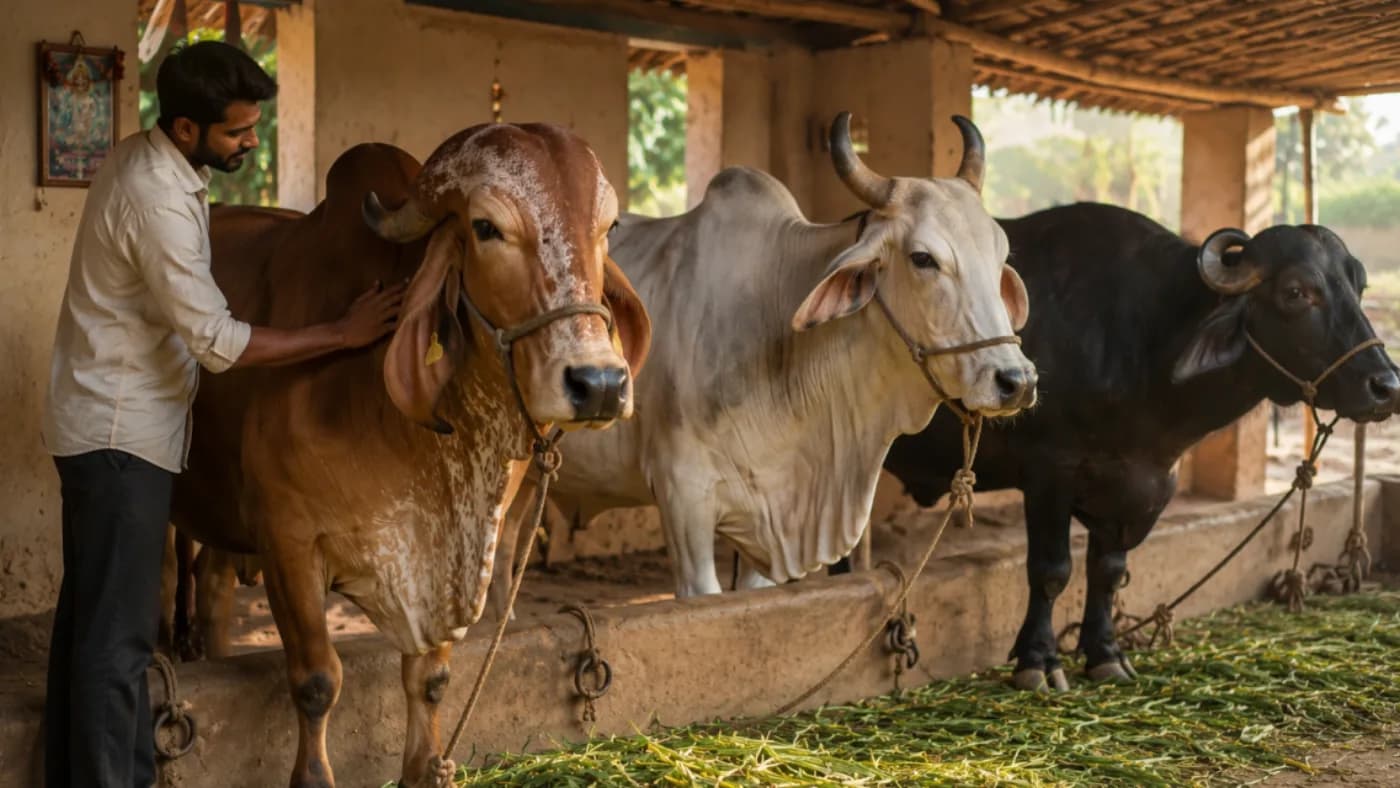
Choosing a Dairy Breed in India: Gir, Sahiwal, Crossbred, Murrah — and How to Decide
Indigenous, crossbred and buffalo dairy breeds each solve a different problem. This guide explains what Gir, Sahiwal, Tharparkar, HF and Jersey crosses, Murrah and Mehsana actually offer — and gives you a practical framework for deciding which one fits your district, your fodder and your management.
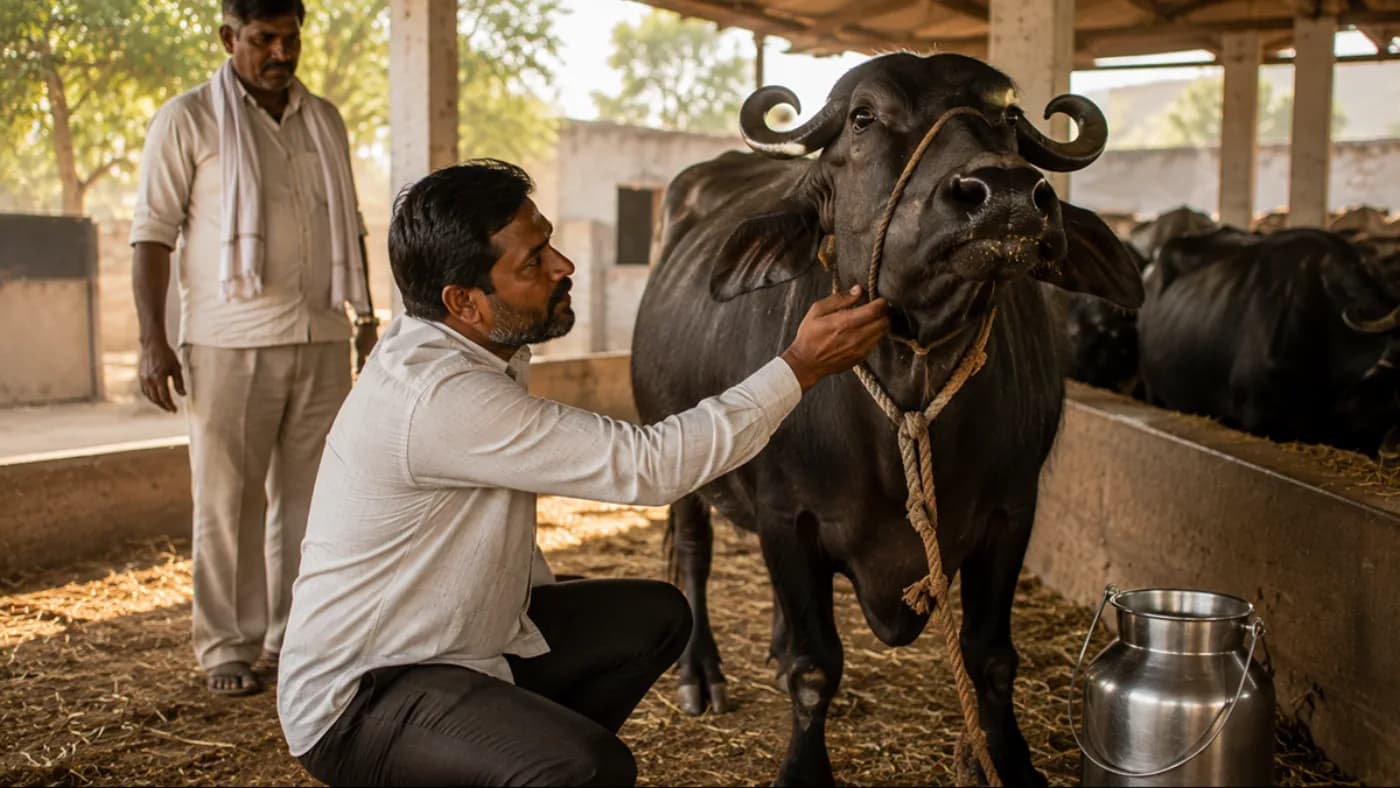
Buying and Selling Cattle Online: What to Check Before You Pay
A milch animal is often the largest single purchase a small farm makes, and the easiest to be cheated on. Listings make discovery far easier — they do not make verification optional. Here is exactly what to check, in what order, and the red flags that should end a deal.
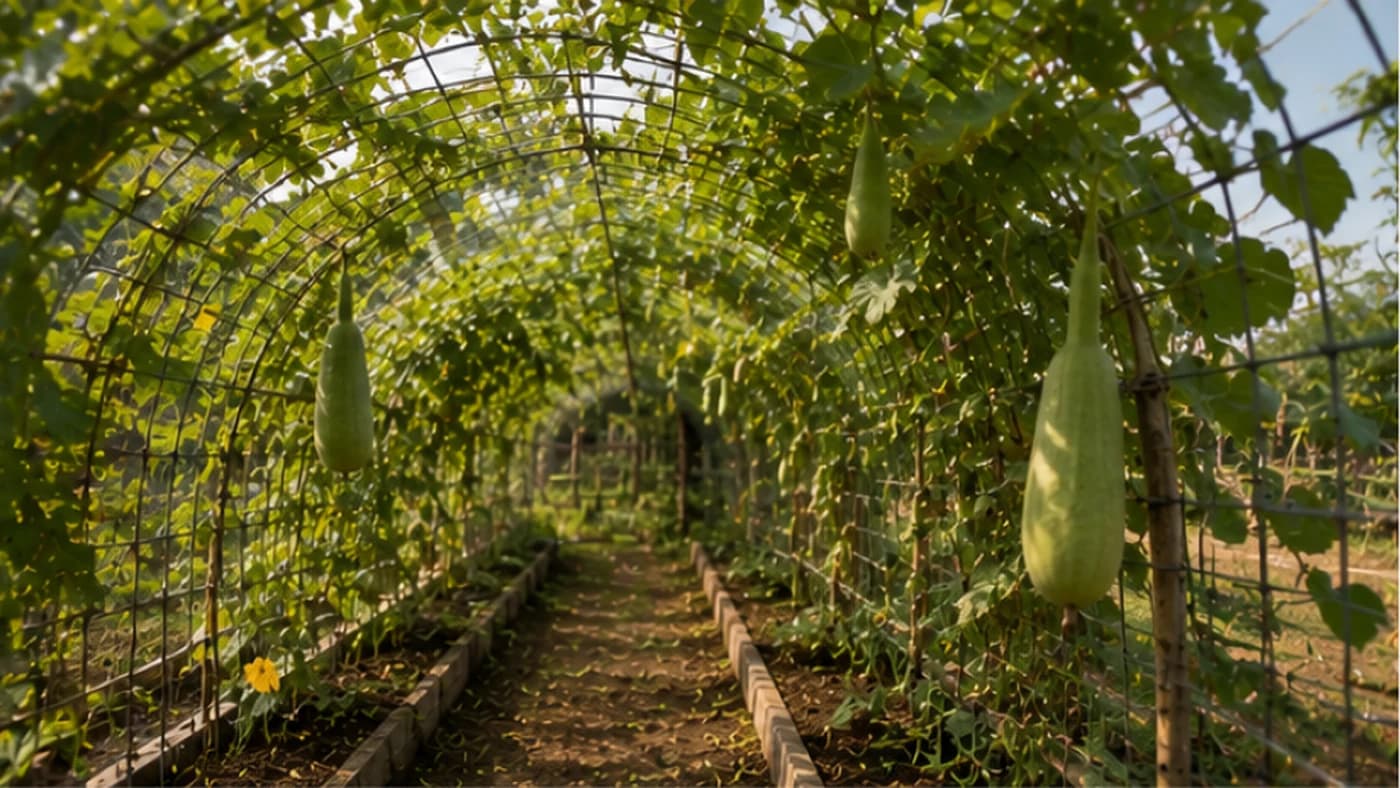
Vertical Gardening With Cattle Panels: Get Vines Off the Ground and Double Your Space
Sprawling cucumber and gourd vines eat up your walking paths, trap humidity, and rot fruit against wet soil. A simple welded-mesh panel arch fixes all three problems and can nearly double the usable growing space in a small plot.