

Kisan Drone Subsidy and Drone Spraying in 2026: Costs, Rules and Whether It Pays
Agricultural drones cut spraying from hours to minutes per acre, and subsidies go as high as 80 per cent for women's self-help groups. But buying one is rarely the right move for an individual farmer. Here is the honest arithmetic.
Quick answer
Drone spraying works — faster coverage, less chemical, no one walking through a treated crop. Ownership usually does not, unless the machine serves a village rather than a field, which is why the 80 per cent subsidy up to ₹8 lakh is aimed at women's self-help groups and Custom Hiring Centres. For most individual farmers, hire per acre, insist on drone-approved label directions, book by the weather window, and put your effort into spraying at the right moment rather than owning the machine.
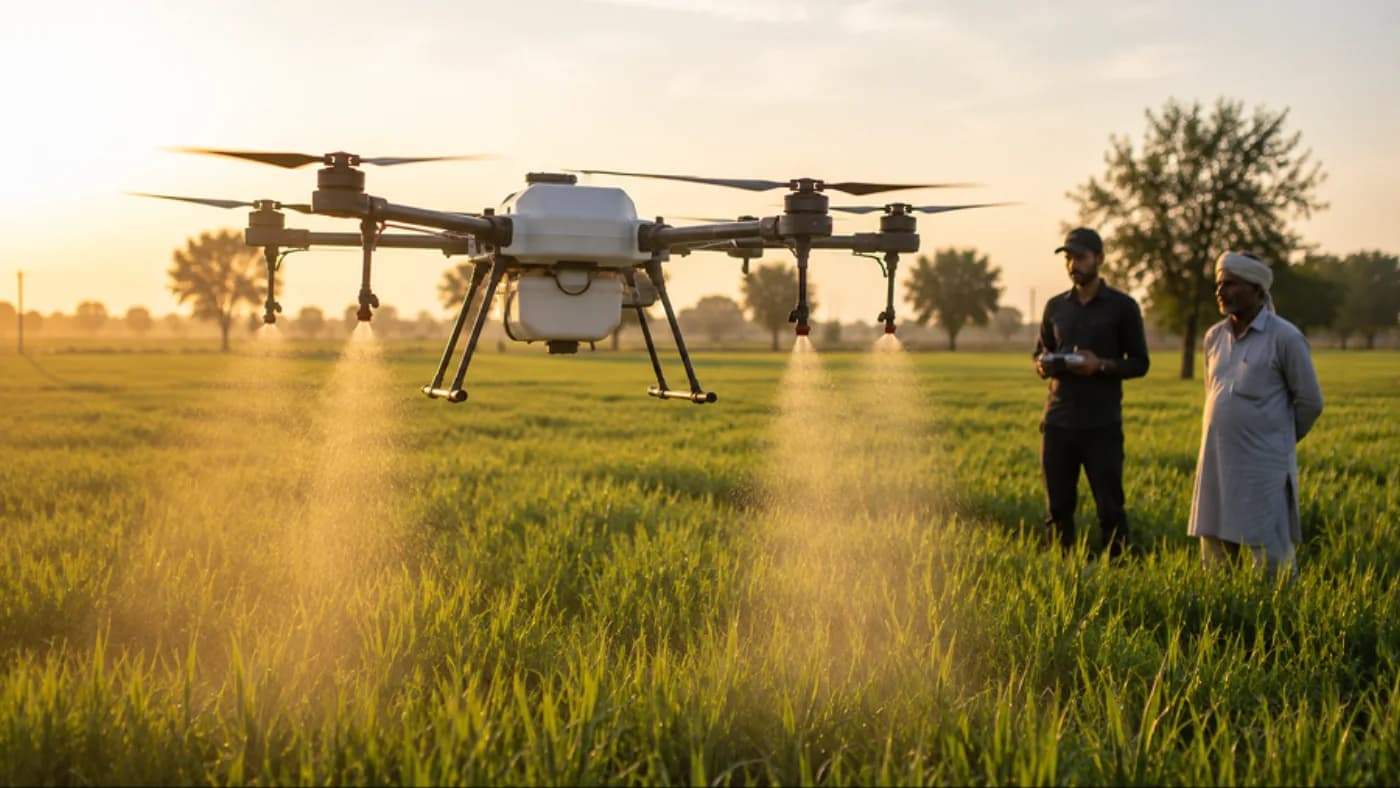
Drone spraying is the most visible piece of agri-tech in India right now, and also the most misunderstood. The technology genuinely works: a job that takes a labourer most of a day is done in minutes, with less chemical and no one walking through a wet crop. What is far less clear is whether you should own the machine. For most farmers the answer is no — and that is not a criticism of drones, it is arithmetic.
Why drone spraying is spreading so fast
India's drone market is projected to grow from around ₹3,900 crore in 2025 to roughly ₹11,500 crore by 2030, and agriculture is one of the largest drivers. The reasons are practical rather than fashionable. Precision spraying puts droplets where they are needed with far less drift, which cuts chemical use. Coverage is dramatically faster — minutes per acre against hours of manual knapsack work. And nobody has to walk through a treated crop carrying a leaking tank on their back, which matters more than it is usually given credit for.
There is a labour dimension too. Finding people willing to do knapsack spraying in peak heat is getting harder and more expensive every season, and drone operators arrive with their own machine and their own licence. In districts where spraying labour has become the binding constraint, drones solve a scheduling problem as much as an agronomic one.
The subsidy landscape in 2026
The most generous support goes to women's self-help groups: an 80 per cent subsidy, up to ₹8 lakh, towards an agriculture drone, along with training for the operator. This is the flagship route, designed so that an SHG owns the drone and earns by providing spraying as a service to farmers in surrounding villages.
Beyond that, support flows through farm mechanisation schemes to Custom Hiring Centres, Farmer Producer Organisations and agricultural institutions, generally at high percentages, and to individual farmers at lower percentages — with enhanced rates typically available to small and marginal, SC/ST and women farmers. Exact percentages and ceilings vary by state and by year, so treat any figure you read online as indicative and confirm the current rate for your state. In Gujarat, mechanisation subsidies are applied for through the iKhedut portal, which opens for a defined window rather than year-round.
The arithmetic most articles skip
Here is the question that actually matters: how many acres will the machine spray in a year? A drone is a capital asset with real running costs — batteries that degrade and need replacing, spare parts, insurance, licensing, transport between fields and an operator's time. Those costs are largely fixed, which means cost per acre falls sharply with utilisation and stays punishing at low volume.
A farmer with five or ten acres spraying a handful of times a season simply cannot generate the volume to justify ownership, even at a high subsidy rate. The same farmer can hire drone spraying per acre and pay only for what he uses. Ownership starts to make sense when the machine serves a village or a cluster — which is precisely why the subsidy design pushes drones towards SHGs, Custom Hiring Centres and FPOs rather than individual smallholders.
Before you apply for anything, run your own numbers rather than the brochure's. Put the full purchase cost, your subsidy share, expected acres per year, battery replacement and operator time into the farming cost and profit calculator and look at the cost per acre that comes out. If it is above local hiring rates, hire.
- Total cost including batteries, spares and insurance — not the headline price.
- Realistic acres per year, including custom work for neighbours if you plan to offer it.
- Battery replacement cycle, which is the running cost people most often forget.
- Licensing and training time for the operator.
- Local hiring rate per acre — your benchmark for whether ownership makes sense at all.
Rules you must follow
Drone spraying in India is regulated, and treating it casually creates real legal and agronomic risk. Operators require appropriate certification and training, drones must be registered, and operations are subject to the civil aviation rules on where and how you may fly — near airports and in restricted zones in particular.
On the agronomic side, the critical point is that not every pesticide is approved for drone application, and drone application is not simply the same spray from higher up. Concentrations, droplet size and water volume per acre differ from knapsack spraying, and using a knapsack recommendation through a drone can either waste the chemical or damage the crop. Insist that the operator follows label directions approved for aerial or drone application, and be sceptical of anyone who cannot tell you what dilution they are using and why.
Getting good results from a hired drone
- Book by weather window, not by convenience. Wind above the operating limit causes drift and wasted chemical; check the forecast for a calm, dry slot.
- Spray early morning or late afternoon. Midday heat increases evaporation and reduces what actually reaches the leaf.
- Mark field boundaries and obstacles — poles, wires, trees — before the operator arrives.
- Agree the exact product, dilution and water volume per acre in advance, in writing if possible.
- Walk the field afterwards and check coverage on the underside of leaves, which is where most sucking pests sit and where poor spraying shows first.
- Keep a record of date, product, dose and result. Over two seasons this tells you far more than any sales pitch.
Where drones fit in a sensible spray programme
A drone changes how you apply, not whether you should. If your underlying programme is calendar spraying — treating on a fixed schedule regardless of what is in the field — a drone simply makes you wrong faster and more efficiently. The bigger gain almost always comes from spraying less often but at the right moment, which requires scouting and correct identification rather than better hardware.
Start with integrated pest management to decide whether a spray is warranted at all, use good insects vs bad insects so you stop killing the predators already working for you, and confirm the problem with a crop disease detection app before you commit. Timing beats equipment: Khetiyaar's kheti app combines photo diagnosis with weather-based spray windows so the drone gets booked on the right day rather than a convenient one.
Frequently asked
How much subsidy is available on agriculture drones in India?+
Women's self-help groups can receive an 80 per cent subsidy, up to ₹8 lakh, towards an agriculture drone along with operator training. Custom Hiring Centres, FPOs and agricultural institutions receive support at high percentages, and individual farmers at lower percentages, with enhanced rates typically for small and marginal, SC/ST and women farmers. Exact rates vary by state and year, so confirm the current figure for your state.
How do I apply for the kisan drone subsidy?+
Mechanisation subsidies are applied for through your state's agriculture portal within a defined application window. In Gujarat this is the iKhedut portal, which opens for a limited period rather than year-round. You will generally need Aadhaar, land records, bank details and scheme-specific documents such as quotations, and in most schemes you must not purchase before the sanction order is issued.
What does drone spraying cost per acre?+
Hiring rates vary widely by state, crop, operator and season, so ask two or three local operators rather than relying on a published figure. The more useful comparison is against your alternative: the cost of manual knapsack spraying including labour availability, plus the chemical you save through reduced drift.
Is it worth buying a drone for a small farm?+
Usually not. Drone costs are largely fixed — batteries, spares, insurance, licensing, operator time — so cost per acre only becomes competitive at high annual utilisation. A farmer with five or ten acres cannot generate that volume even with a large subsidy. Ownership makes sense when the machine serves a cluster of villages as a service, which is why subsidies favour SHGs, Custom Hiring Centres and FPOs.
Can any pesticide be sprayed by drone?+
No. Not every product is approved for drone or aerial application, and drone spraying uses different concentrations, droplet sizes and water volumes per acre than knapsack spraying. Applying a knapsack recommendation through a drone can waste the chemical or damage the crop. Insist the operator follows label directions approved for drone application.
Where to go next
- Farming cost & profit calculatorWork out cost per acre, break-even yield and expected profit before you sow.
- Kheti app for Indian farmersCrop plans, disease diagnosis, weather and mandi rates in one app.
- AI farming chatbotAsk any farming question in Gujarati, Hindi or English and get an answer in seconds.
Want this as daily tasks for your farm?
Khetiyaar turns guides like this into a day-by-day plan — in your language, free to start.

Related guides
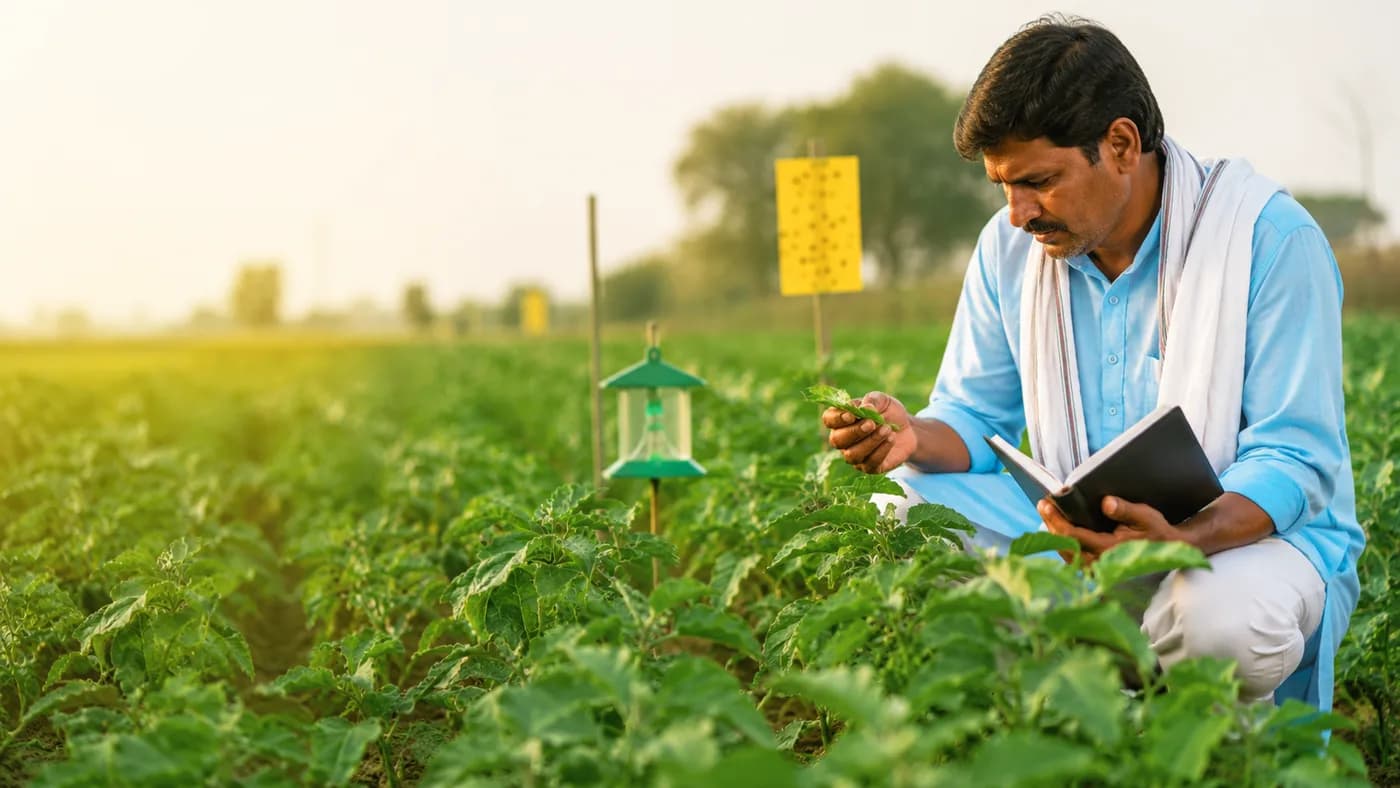
Integrated Pest Management (IPM) for Indian Farms
IPM doesn't mean 'no chemicals' — it means 'chemicals last'. Done well, it cuts spraying costs and stops pests becoming resistant to your sprays.
How to Actually Read a Weather Forecast for Your Farm
A seasonal forecast and a three-hour warning are different products with different reliability. Knowing which to trust for which decision is most of the skill — and it is rarely explained.
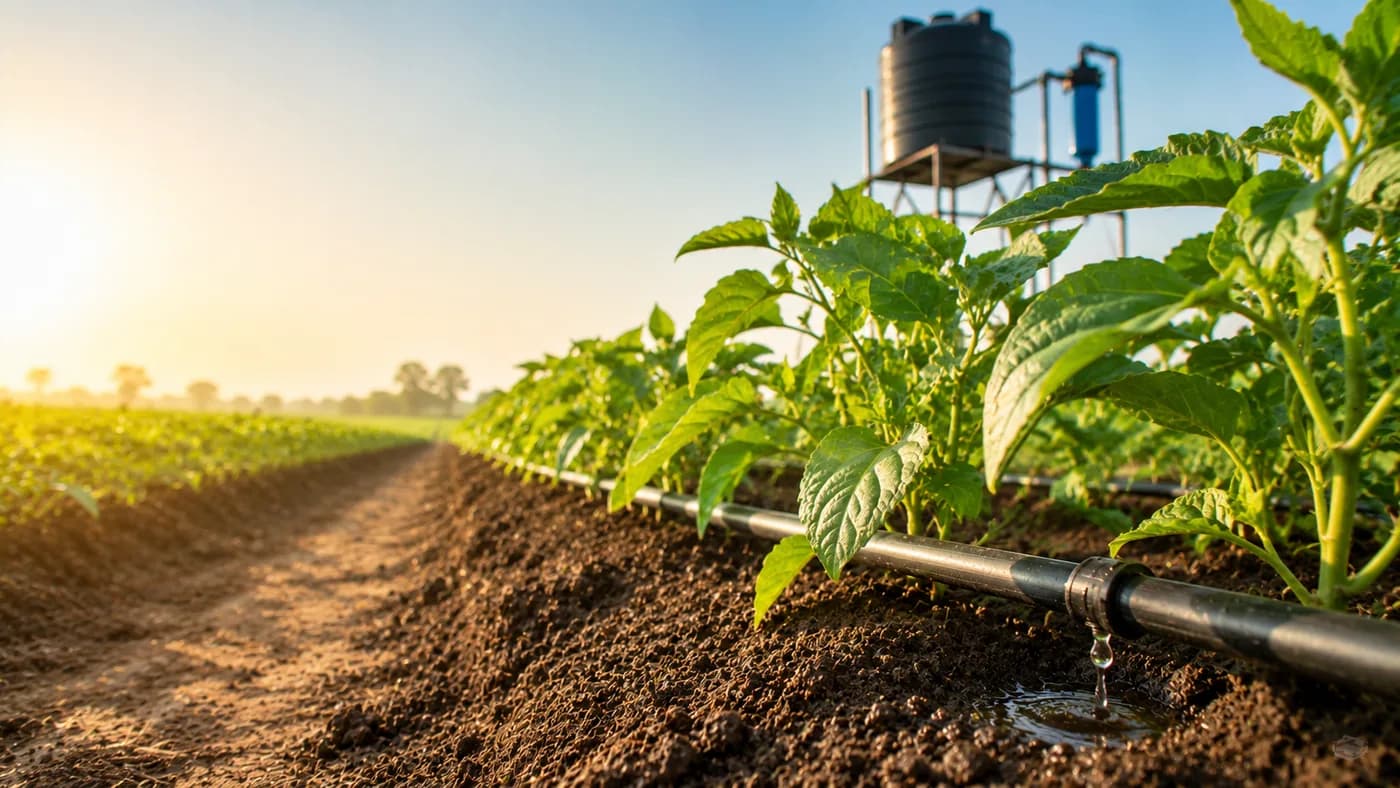
Drip Irrigation: Save Water and Increase Yield
Drip delivers water directly to the roots, drop by drop — saving a large share of your water while lifting yield and cutting weeds.