

Crop Rotation: Which Crop After Which, and Which to Never Repeat
The cheapest pest control and the cheapest fertiliser on your farm are the same thing — deciding what follows what. The three rules, the crop families you must not repeat, and what your soil type allows.
Quick answer
Follow three rules. Never plant a crop where the same family grew last season, because soil-borne disease and nematodes are host-specific and build up. Follow a heavy feeder such as cotton, maize or wheat with a legume, because legumes leave nitrogen behind. And alternate deep-rooted with shallow-rooted crops so different soil layers are drawn on. Rotation is the strongest pest and fertility tool that costs nothing.
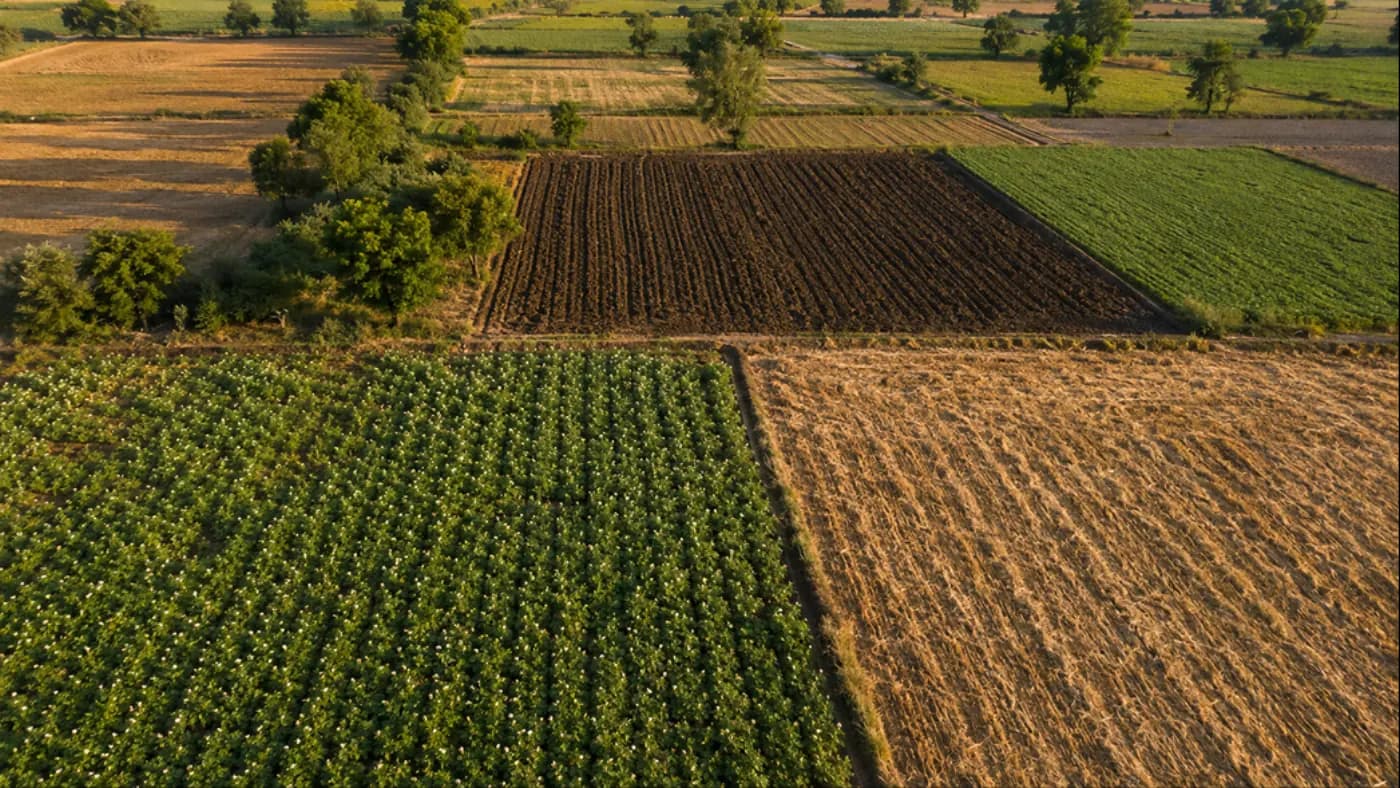
Ask what a farmer can do this season that costs no money and still lifts yield, and the honest answer is almost always the rotation. Deciding what follows what is free. It breaks disease cycles that no spray fully controls, it replaces fertiliser you would otherwise buy, and it is the single practice that makes chemical-free growing realistic rather than aspirational. It is also the thing most often decided by habit — the same crop, in the same field, because that is what was there last year. This guide sets out what to plant after what, what never to repeat, and the reason behind each.
Rule 1 — never follow a crop with its own family
This is the rule that matters most, and the one most often broken without realising it. The pathogens that do the worst damage — wilts, root rots, nematodes — live in the soil and are host-specific. They build up under a crop and collapse without it. Plant the same family again and you are feeding the population you are trying to fight; plant something unrelated and it starves.
The trap is that family is not obvious from the plate. Tomato, potato, brinjal and chilli are all nightshades and share bacterial wilt and early blight, so brinjal after tomato is very nearly tomato after tomato. Cotton and bhindi are both mallows. Mustard, cabbage, cauliflower and radish are all crucifers. Learn the families and half the rotation problem solves itself.
| Family | Crops in it | What builds up if you repeat |
|---|---|---|
| Nightshades | Tomato, potato, brinjal, chilli, capsicum, tobacco | Bacterial wilt, early blight, root-knot nematode |
| Legumes | Chana, tur, moong, urad, groundnut, soybean, cowpea | Wilt, stem and root rot, nematodes |
| Cereals and grasses | Wheat, rice, maize, bajra, jowar, sugarcane | Smuts, root rots, cereal cyst nematode |
| Crucifers | Mustard, cabbage, cauliflower, radish, turnip | Club root, Alternaria blight, aphids |
| Mallows | Cotton, bhindi (okra) | Fusarium wilt, root rot, whitefly pressure |
| Gourds | Bottle gourd, bitter gourd, cucumber, pumpkin, melon | Downy and powdery mildew, fruit fly, wilt |
| Onion family | Onion, garlic | Purple blotch, basal rot, thrips |
Rule 2 — follow a heavy feeder with a legume
Crops differ in how hard they draw on the soil. Cotton, maize, wheat, sugarcane and cabbage are heavy feeders, particularly of nitrogen. Root crops such as onion, garlic, carrot and radish are lighter. Legumes are the only group that gives back: with the right Rhizobium bacteria on their roots they fix nitrogen from the air, and a good share of it stays in the soil for the crop that follows.
So the pattern that works almost everywhere is heavy feeder, then light feeder or legume, then back. Chana after cotton, wheat after moong, maize after groundnut — each of those hands the next crop nitrogen you did not have to buy. The saving is real and it compounds, because soil that is not being mined every season holds structure and organic matter better.
Two cautions, because this is where enthusiasm overshoots. A legume does not replace your whole nitrogen requirement — it reduces it, and by how much depends on the crop, the nodulation and whether you removed the residue. And a legume still counts as a family: groundnut after chana is a legume following a legume, which breaks Rule 1 even though both are 'good for soil'.
| Group | Examples | Effect on soil | Plant it |
|---|---|---|---|
| Heavy feeders | Cotton, maize, wheat, sugarcane, cabbage, brinjal | Draws heavily on nitrogen and organic matter | After a legume, never twice in a row |
| Light feeders | Onion, garlic, carrot, radish, coriander | Modest demand, shallow rooting | Between a heavy feeder and a legume |
| Soil builders (legumes) | Chana, moong, urad, tur, groundnut, soybean, cowpea | Fixes nitrogen and leaves some behind | After a heavy feeder, before the next one |
| Green manure | Dhaincha, sunhemp, cowpea ploughed in | Adds organic matter and nitrogen fastest | In a fallow gap, before a heavy feeder |
Rule 3 — alternate deep roots with shallow roots
Crops draw water and nutrients from the depth their roots reach. Cotton, castor, tur and sugarcane go deep; onion, wheat, most vegetables and the millets stay shallower. Run the same rooting depth season after season and you exhaust one layer while another sits unused, and you encourage a compacted pan at plough depth.
Alternating fixes both. A deep-rooted crop opens channels the following shallow crop uses, brings up nutrients that had leached below reach, and helps break compaction without machinery. This is a slower benefit than the nitrogen one, and it is the reason a long rotation beats a two-crop cycle even when both crops are from different families.
What your soil type allows
Rotation choices narrow by soil, and pretending otherwise wastes a season. The three broad situations most Indian farmers are in are below. If you do not know your soil's texture and organic carbon, a soil test costs little against a season of the wrong crop — reading a Soil Health Card explains the figures.
| Soil | Behaves like | Rotates well with | Avoid |
|---|---|---|---|
| Black cotton soil (vertisol) | High clay, holds water, swells and cracks, drains slowly | Cotton → chana → jowar; soybean → wheat | Crops needing sharp drainage in a wet year; repeated cotton |
| Sandy and light soil | Drains fast, holds little water or nutrient | Bajra → moong; groundnut → castor → bajra | Long-duration thirsty crops; back-to-back groundnut |
| Loam and alluvial | The forgiving middle — holds water, still drains | Almost any sequence that respects the family rule | Paddy → wheat repeated for years without a legume break |
| Saline or alkaline patches | Salt limits what will germinate at all | Barley, mustard and cotton tolerate more | Most pulses — they are among the first to fail on salt |
Three rotations that work, and three that quietly cost you
- Works — cotton → chana → jowar. A heavy feeder, then a legume that restores nitrogen, then a cereal from a third family. Three families, three seasons, no shared disease.
- Works — groundnut → wheat → moong. Legume, cereal, legume from a different genus, with rooting depth alternating through.
- Works — maize → potato → moong. Different families throughout, and the potato benefits from the loosened soil the maize leaves.
- Costs you — paddy → wheat, repeated for years. The most common rotation in north India and among the most damaging: puddling for paddy destroys the structure wheat wants, groundwater falls, and no legume ever enters to restore nitrogen. Inserting a summer moong breaks it cheaply.
- Costs you — groundnut after groundnut. Stem rot and nematodes build fast in the same family, and yields fall while input costs rise to chase them.
- Costs you — tomato after brinjal or chilli. All nightshades. Bacterial wilt and root-knot nematode carry straight over, and no spray reliably fixes a soil-borne problem you re-seeded yourself.
Why this matters most if you want to farm without chemicals
Chemical-free growing fails most often for a simple reason: the farmer removes the spray but keeps the rotation that made the spray necessary. Rotation is not a nice extra alongside organic practice — it is the mechanism that makes it work. Break the host cycle and the disease pressure falls before any input decision is made.
The same is true of fertility. A legume in the rotation, residue returned rather than burned, and green manure in a fallow gap will together carry a large part of the nitrogen requirement. That is not a claim that you can drop all inputs; it is the reason organic systems that rotate seriously succeed while ones that simply stop spraying do not. Improving soil health naturally covers the organic matter side, and integrated pest management covers what to do about the pressure that remains.
One honest caveat, because it decides whether the plan survives contact with the year: the best agronomic rotation is worthless if you cannot sell the crop. Check that a buyer or a procurement centre exists for the break crop before you commit the field to it, not after.
Where Khetiyaar helps
A rotation is a multi-season plan, and the reason most rotations fail is that nobody wrote down what was in which plot two seasons ago. Recording crop, plot, sowing date and inputs as you go is what makes the family rule enforceable — keeping a farm record covers the habit, and the app does the same job with the dates filled in automatically.
The cost and profit calculator is worth running before you switch: a break crop often shows a lower gross return and a better net one once the saved fertiliser and spray are counted, and that comparison is the argument for rotating. It needs no account.
What we will not do is tell you the dose or the variety. Those come from your state package of practices or your KVK, because they change by region and season. And nothing here replaces knowing your own field — the rules above are the frame, not the answer.
Frequently asked
Which crop should I plant after cotton?+
A legume is usually the best next crop — chana in rabi, or moong where the season allows. Cotton is a heavy nitrogen feeder and a legume restores some of what it took. Avoid bhindi, since it is in the same family as cotton and shares wilt and root rot.
Which crops should never be grown one after another?+
Any two from the same family. The common mistakes are tomato after brinjal, potato or chilli (all nightshades), groundnut after chana or any other pulse (all legumes), bhindi after cotton (both mallows), and onion after garlic. Soil-borne disease and nematodes are host-specific, so repeating a family multiplies the population you are trying to reduce.
How does crop rotation replace fertiliser?+
Legumes host Rhizobium bacteria on their roots which fix nitrogen from the air, and a useful share stays in the soil for the next crop. It reduces rather than eliminates your nitrogen requirement — how much depends on the crop, how well it nodulated, and whether you returned the residue to the field or removed it.
Is crop rotation necessary for organic farming?+
It is the practice organic farming depends on. Without a spray programme, breaking the host cycle is the main tool against soil-borne disease and nematodes, and legumes plus returned residue are the main source of nitrogen. Chemical-free systems that rotate seriously tend to work; ones that simply stop spraying without changing the sequence tend not to.
How many years should a crop rotation cycle be?+
Longer is better, and three or more distinct families is a reasonable target before a crop returns to the same plot. Two-crop cycles such as paddy–wheat are common but leave no room for a legume and tend to degrade soil structure over time. Even inserting one short legume, such as a summer moong, materially improves a tight rotation.
Where to go next
Want this as daily tasks for your farm?
Khetiyaar turns guides like this into a day-by-day plan — in your language, free to start.

Related guides
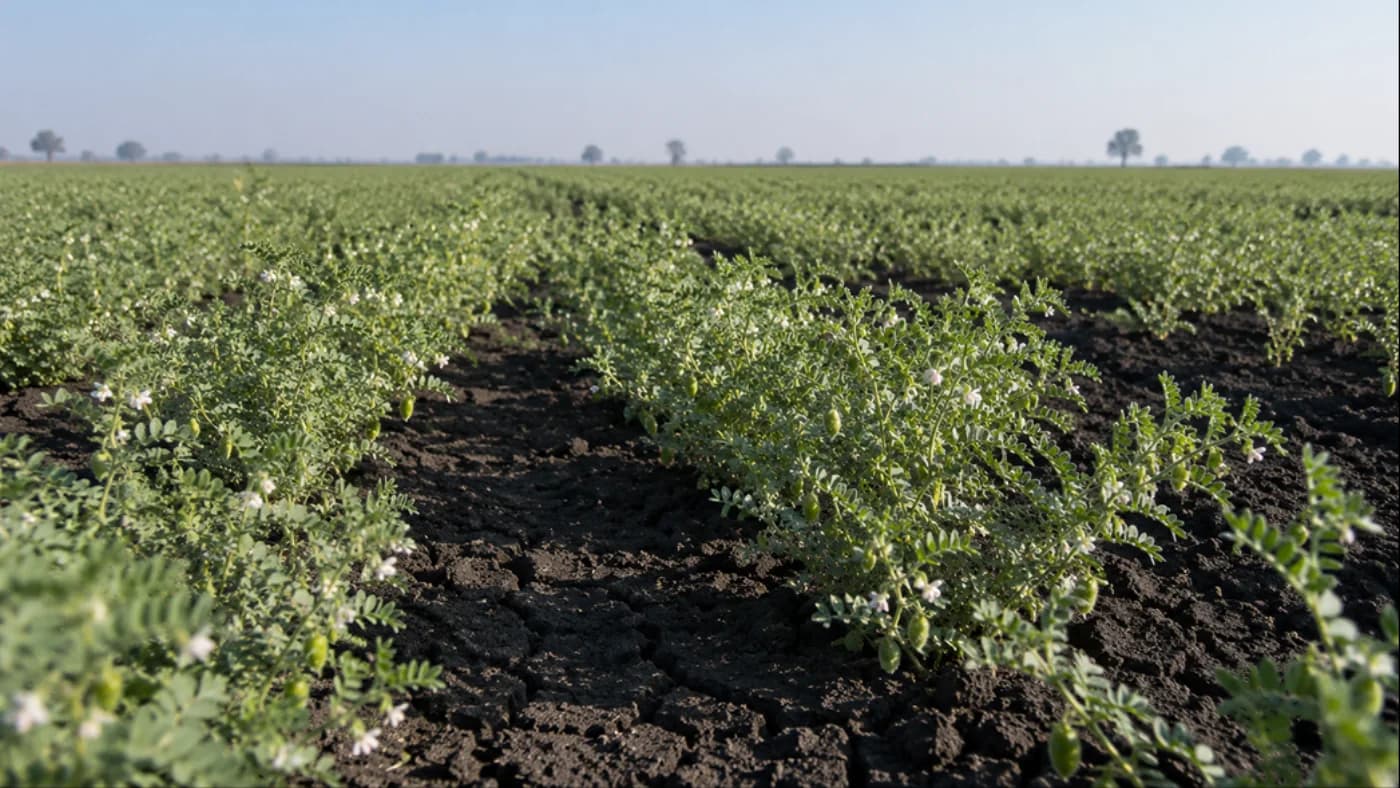
Chana Farming: Growing Chickpea on Residual Moisture
India's biggest pulse crop is also the one most often ruined by kindness — too much water, too much nitrogen. What chana actually needs, how to beat wilt and pod borer, and desi versus kabuli.
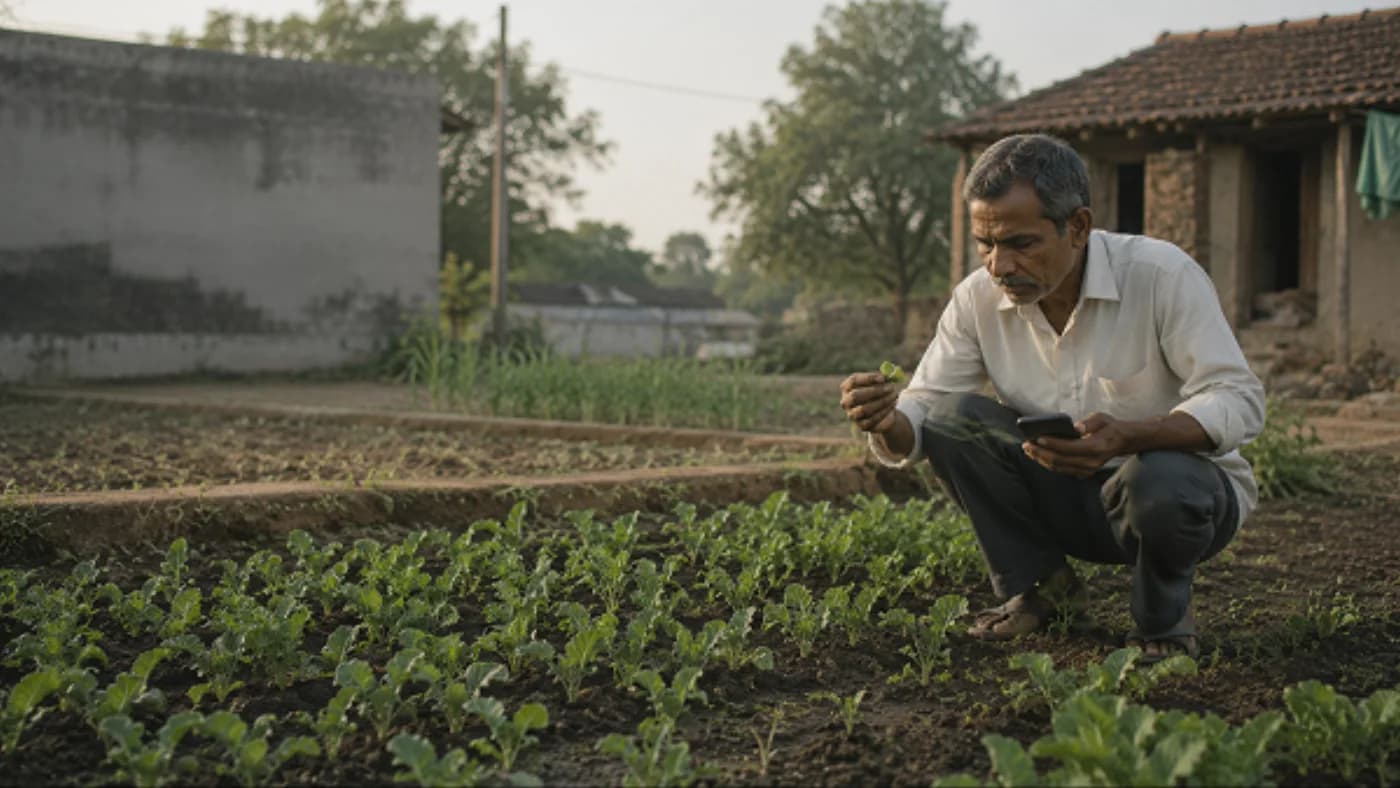
Precision Farming on Two Acres: What Is Worth It and What Is Not
Precision agriculture was built for hundreds of acres. Some of it now reaches two. Here is which tools repay the effort on a smallholding, which are marginal, and which are simply not for you yet.

How to Increase Cotton Yield Per Acre in India
Yields differ hugely between fields in the same village — and it's rarely luck. Good seed, correct spacing, timely water and weekly scouting lift cotton yield without a fortune in inputs.