

Carbon Credit Farming in India: Real Income Stream or Long Contract for Small Money?
India has over 50 active carbon farming projects and, with the world's largest cropland area, is positioned to become a leading market. Before you sign a multi-year agreement, understand exactly what you are selling, what it pays, and what you are agreeing not to do.
Quick answer
Carbon farming pays you for practices that improve your soil anyway — which is exactly why you should adopt them for the agronomy first and treat carbon revenue as a bonus. Per-acre payments are modest, arrive after verification, and come attached to multi-year contracts with clawback and permanence conditions. Read the agreement as carefully as a land document, especially the clauses on early exit and land transfer.
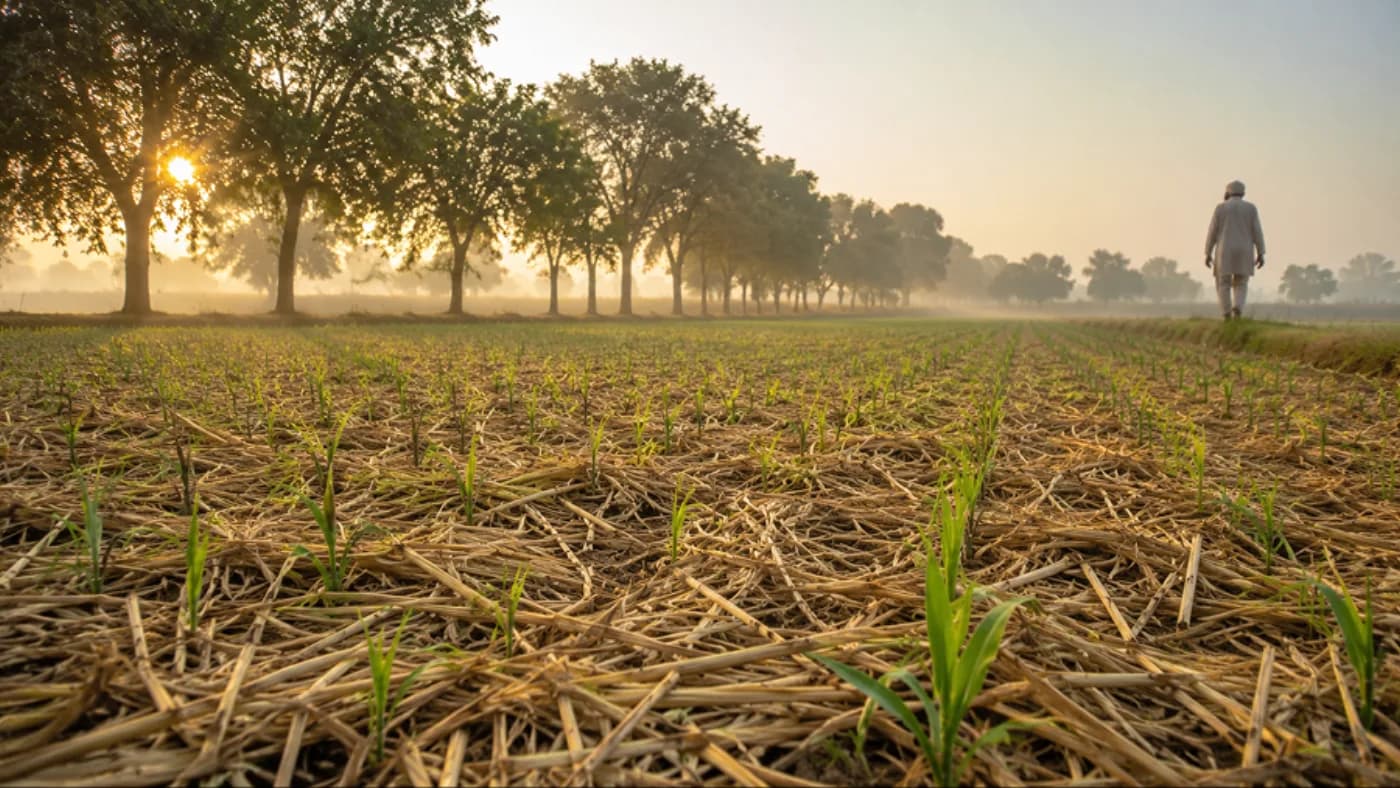
Carbon farming is the newest income proposition being offered to Indian farmers, and it arrives with genuine promise and genuine complications. The promise is real: you can be paid for practices that also improve your soil. The complication is that you are signing a long agreement about future farming decisions, in a market that is still forming, for a payment that is usually modest per acre. This guide is deliberately even-handed, because the enthusiasm around this topic tends to outrun the detail.
What you are actually selling
A carbon credit represents a measured, verified quantity of greenhouse gas either kept out of the atmosphere or removed from it. In farming, that comes from two sources: sequestering carbon in the soil as organic matter, and avoiding emissions such as methane from flooded rice or nitrous oxide from over-applied nitrogen.
The critical thing to grasp is that you are not selling a crop, which you deliver once and are paid for. You are selling a change in practice, sustained and verified over years. That is why every serious programme involves a multi-year agreement, monitoring, and documentation — and why the contract terms matter more than the headline price per credit.
Practices that typically qualify
Notice that almost every item on this list is something you would want to do anyway. Residue retention, cover cropping and optimised nitrogen all raise organic carbon and reduce input spend — see how to read a soil health card for why organic carbon is the number that governs everything else. That overlap is the strongest argument for participating: the agronomic benefit arrives whether or not the carbon market pays well.
- Reduced or zero tillage, which slows the oxidation of soil organic matter.
- Direct seeded rice instead of puddled transplanting, which sharply cuts methane emissions from flooded fields.
- Alternate wetting and drying in paddy, which reduces both methane and water use.
- Cover cropping and green manure, adding root biomass and keeping soil covered.
- Crop residue retention instead of burning — one of the highest-impact changes available in North India.
- Agroforestry and boundary planting, which sequester carbon in woody biomass as well as soil.
- Optimised nitrogen use, which cuts nitrous oxide emissions and usually cuts your fertiliser bill at the same time.
How the money actually works
Farmers rarely sell credits individually. The economics of measurement and verification only work at scale, so an aggregator — a company, an FPO or a project developer — enrols many farmers, handles the monitoring and verification, sells the credits, and passes a share back. Grow Indigo, a joint venture between Mahyco and Indigo Ag, is one of the better-known Indian programmes, and CIMMYT and ICAR have been working on carbon market structures aimed specifically at smallholders.
Be realistic about the amount. Per-acre payments from soil carbon are generally modest — this is a supplementary income stream, not a replacement for crop income, and any pitch that presents it otherwise deserves scepticism. Payment also usually arrives after verification, which means a lag of a year or more between changing your practice and receiving anything. Ask precisely how your share is calculated, what happens to the payment if verified sequestration comes in below projection, and who bears that risk.
The three technical risks worth understanding
Additionality means the carbon benefit must be additional to what would have happened anyway. If you already practise zero tillage, a programme may not be able to credit you for continuing — which strikes many farmers as unfair, since it penalises those who adopted good practice early. Ask upfront whether your existing practices disqualify you.
Permanence means the carbon has to stay in the soil. Soil carbon is reversible: plough intensively for two seasons and much of what you built is released again. This is why contracts run for years and why breaking them can trigger clawback provisions. Understand exactly what happens if you need to change your system mid-contract, or if you lease out or sell the land.
Measurement is genuinely hard. Soil carbon varies across a single field and changes slowly, so programmes rely on sampling plus modelling rather than measuring every acre. Academic reviews of carbon farming projects in India have raised real questions about how inclusive, additional and permanent existing projects actually are. None of this makes carbon farming a scam — it means you should read the contract as carefully as you would a land document.
Questions to ask before you sign
Get the answers in writing, and have someone you trust read the agreement with you. A multi-year commitment over how you farm your land deserves the same caution as any other long contract — particularly the clauses about land transfer, which many farmers do not think about until a partition forces the question.
- How many years is the commitment, and what precisely happens if I exit early?
- What is my share of the credit revenue, and is it a fixed rate per acre or a share of an uncertain sale price?
- When am I paid — on enrolment, annually, or only after verification?
- Which of my current practices, if any, disqualify me on additionality grounds?
- What records must I keep, and what field access does the verifier need?
- What happens if I sell the land, lease it out, or a family partition changes the holding?
- Is there any clawback if measured sequestration falls short, and who absorbs that?
- Can I still access government schemes and subsidies on the same land?
The sensible position for most farmers
Adopt the practices for their agronomic value first. Residue retention, cover cropping, reduced tillage and optimised nitrogen improve organic carbon, reduce input cost and build drought resilience regardless of whether a single credit is ever sold. Our guides on improving soil health naturally, composting on the farm and climate-resilient farming for 2027 cover the practices themselves.
Then, if a credible aggregator operates in your district and the terms are fair, treat carbon payment as a bonus on top of practices you had good reason to adopt anyway. That ordering protects you: if the carbon market develops slowly or prices disappoint, you still hold the agronomic gain. Reverse the ordering — changing your system solely because someone promised carbon money — and you are exposed to a market you do not control.
Whichever route you take, measure. Track cost per acre and yield across the plots where you have changed practice using the farming cost and profit calculator, and keep the season records that any verifier will eventually ask for. Khetiyaar's kheti app keeps your plan, tasks and records in one place in Gujarati, Hindi and English, which makes documentation far less painful when it is needed.
Frequently asked
How much do farmers earn from carbon credits in India?+
Per-acre payments from soil carbon are generally modest and vary by programme, practice and verified sequestration. Treat it as a supplementary income stream rather than a replacement for crop income. Payment typically arrives only after verification, so expect a lag of a year or more between changing practice and receiving money.
Which farming practices qualify for carbon credits?+
Commonly reduced or zero tillage, direct seeded rice, alternate wetting and drying in paddy, cover cropping and green manure, crop residue retention instead of burning, agroforestry, and optimised nitrogen use. Most of these also raise soil organic carbon and cut input costs, which is the strongest reason to adopt them.
What is additionality in carbon farming?+
Additionality means the carbon benefit must be additional to what would have happened anyway. If you already practise zero tillage or residue retention, a programme may not be able to credit you for simply continuing. Ask before enrolling whether your existing practices disqualify you, because this catches early adopters unfairly often.
What are the risks of signing a carbon farming contract?+
Multi-year commitments that restrict how you farm, clawback provisions if verified sequestration falls short, uncertainty about payment because credit prices vary, and complications if you sell, lease or partition the land during the contract. Soil carbon is also reversible, which is why permanence conditions exist. Get all terms in writing and have someone you trust review them.
Can I claim government subsidies and carbon credits on the same land?+
This depends on the specific scheme and the specific carbon programme, and it is exactly the kind of question to ask the aggregator in writing before enrolling. Do not assume compatibility — confirm it, and confirm it against the schemes you actually use, such as state mechanisation or irrigation subsidies.
Where to go next
Want this as daily tasks for your farm?
Khetiyaar turns guides like this into a day-by-day plan — in your language, free to start.

Related guides
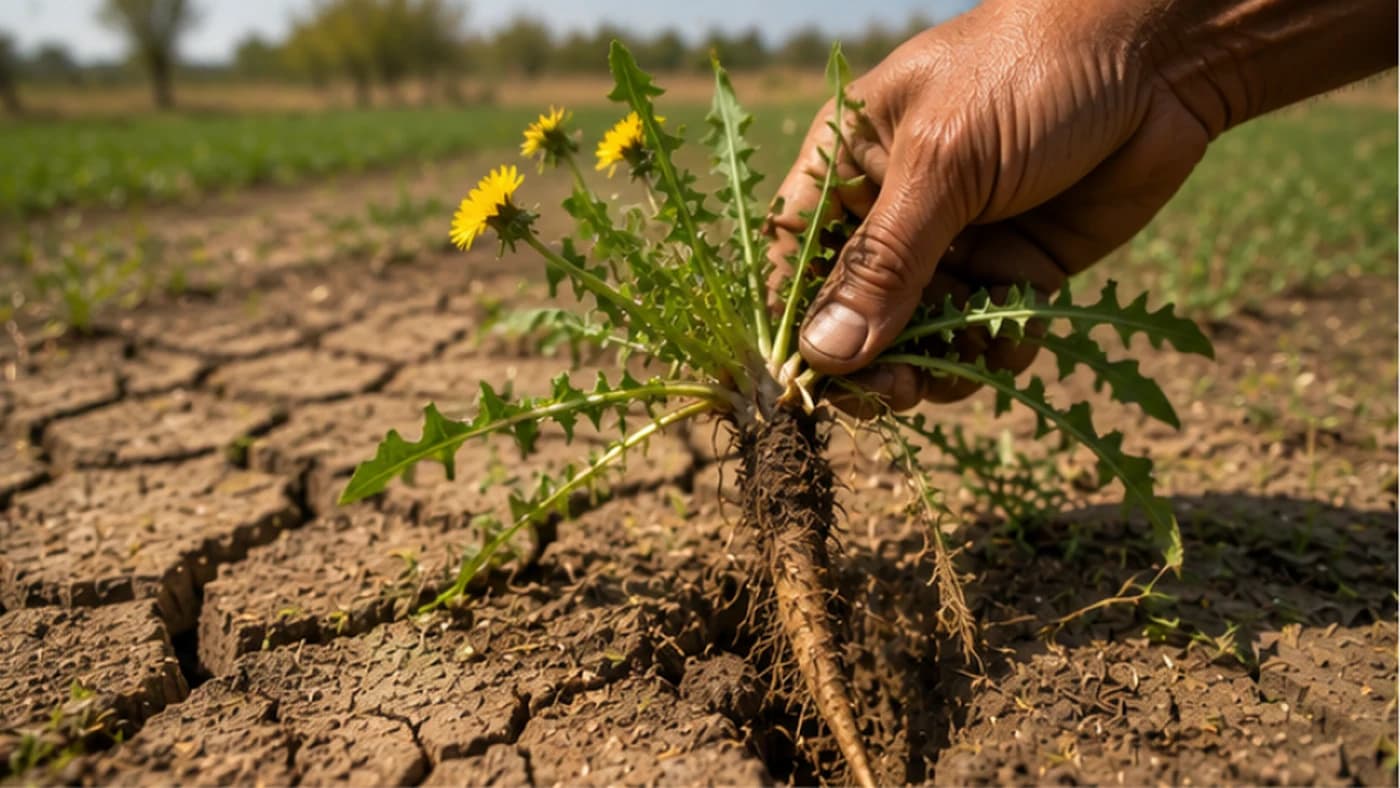
Deep-Rooted Weeds and Cover Crops That Fix Compacted Soil for Free
A weed with a long taproot pushing through hardpan isn't a sign your land has failed — it's the soil trying to repair itself. Here's how deep-rooted plants act as free biological drills, and which ones actually make sense on Indian farms.

Why Turning Unused Lawn into Flowering Legumes Pays Off for Farms and Homes
A patch of mowed, sterile grass gives nothing back — no food for bees, no roots deep enough to hold soil or water. Converting it to flowering legumes and native plants turns dead space into a working part of the farm.
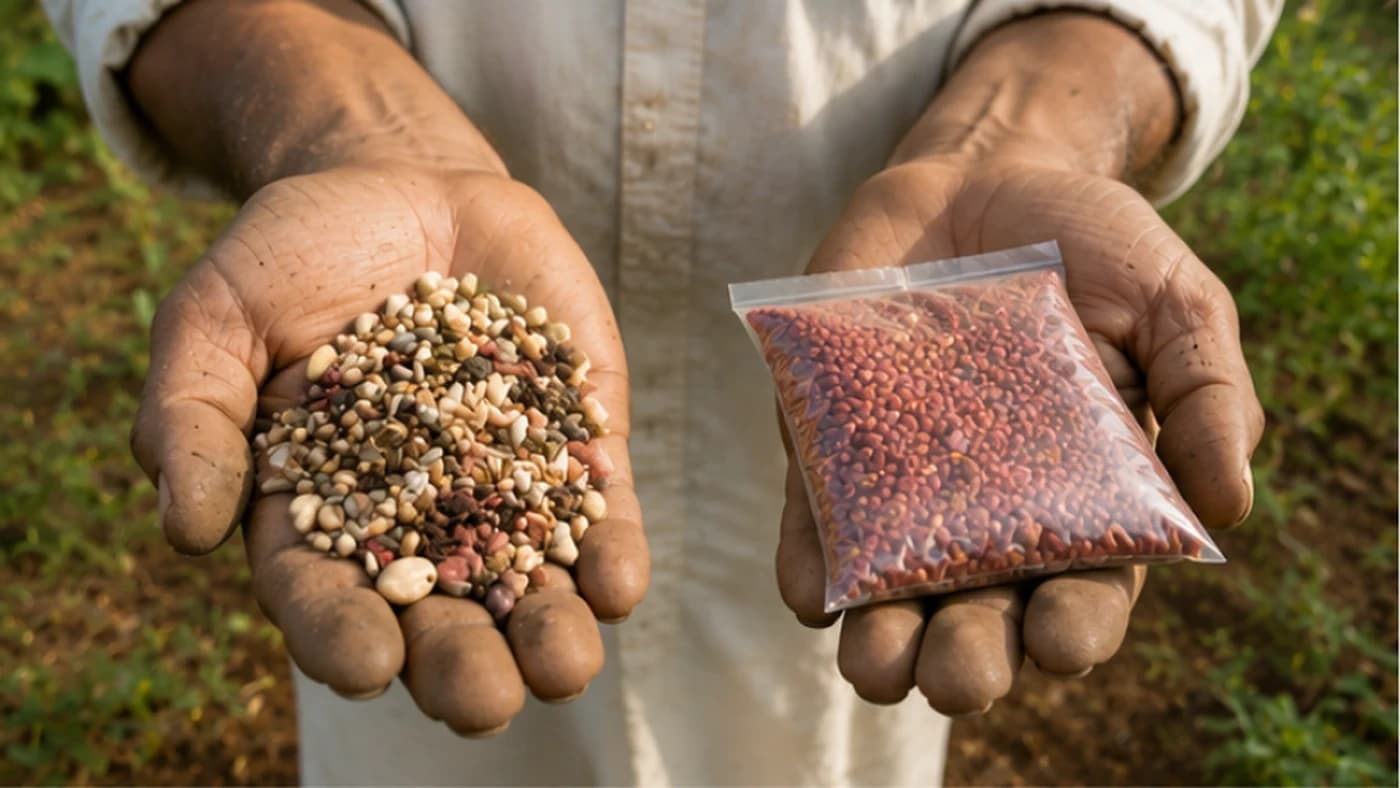
Seed Patents, Seed Rights and Seed Saving: What Every Indian Farmer Should Know
Patented hybrid and GM seed built the Green Revolution's yield gains — but it also changed what a farmer can legally do with their own harvest. Here's what Indian law actually protects, and how to keep seed-saving alive alongside modern seed.