

Deep-Rooted Weeds and Cover Crops That Fix Compacted Soil for Free
A weed with a long taproot pushing through hardpan isn't a sign your land has failed — it's the soil trying to repair itself. Here's how deep-rooted plants act as free biological drills, and which ones actually make sense on Indian farms.
Quick answer
A deep taproot pushing through hardpan is doing, for free, what a mechanical subsoiler or aerator does at real cost: opening channels for water, air and roots, and lifting locked-away minerals back to the surface. On Indian farms outside the Himalayan belt, sunn hemp and forage radish give you this same benefit deliberately as a green manure or cover crop — let the roots finish their work before removing the plant, and compacted ground becomes noticeably softer, more absorbent and more fertile within a season or two.
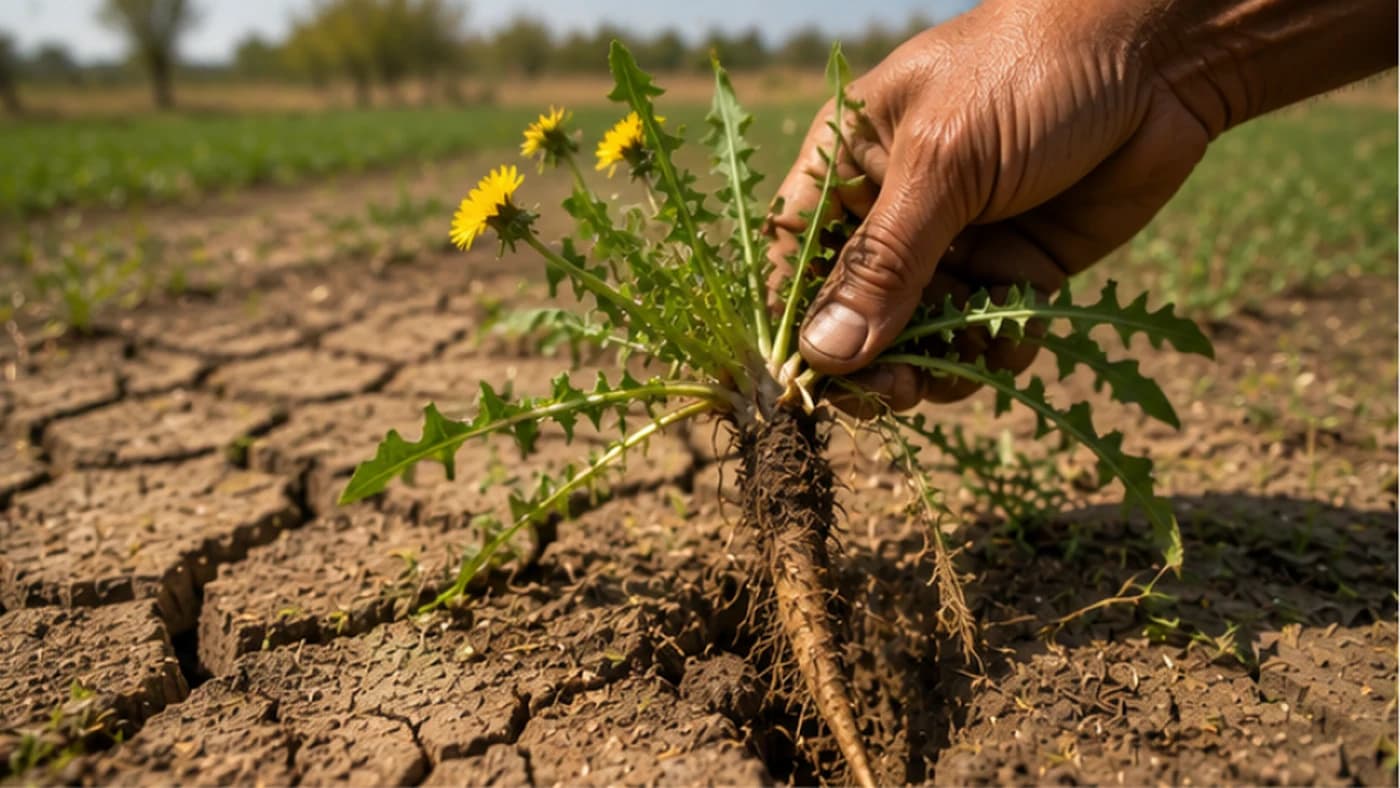
When soil becomes compacted — its particles packed so tightly that air and water can no longer move through — most shallow-rooted crops and grasses simply cannot grow well there. But certain plants are built differently: a single powerful taproot that can pierce through hardpan and clay like a slow-motion drill, opening channels that persist long after the plant itself is gone. Farmers have traditionally read the appearance of these plants as a message about the soil beneath, and increasingly it's understood as a genuine, free tool for restoring compacted ground rather than just a weed to spray away.
Why certain weeds show up on compacted ground
Pioneer plants — the hardy species that colonise disturbed or degraded ground — are nature's response to a soil in trouble, not the cause of the trouble. Most grasses and shallow-rooted crops have root systems that struggle to penetrate more than a few centimetres into hardpan, which commonly develops from repeated foot or vehicle traffic, tillage at the same depth every season, or heavy machinery. Deep-taprooted plants are built to solve exactly this problem: dandelion (Taraxacum officinale), for instance, can send a single taproot 15–45 cm deep in ordinary conditions and considerably deeper in loose soil, physically forcing compacted particles apart as it grows.
How the biological drill actually works
As a taproot extends downward, it exerts real mechanical pressure against compacted earth — a living, expanding force no liquid soil conditioner can fully replicate. Just as important, these plants act as a nutrient elevator: minerals like calcium, potassium and iron are often locked away deep in the subsoil, out of reach of shallow roots, but a deep taproot draws them up into its leaves. When the leaves die back or are mulched into the soil, those subsoil minerals are deposited on the surface — effectively free, natural top-dressing. Once the plant dies or is removed, the channel its root carved remains as a ready-made path for water and air to reach deeper soil layers and the microbes that depend on them.
What actually applies to Indian conditions
Dandelion itself is not a common plant across most of India — it grows wild mainly in the cooler Himalayan belt (Kashmir, Himachal Pradesh, Uttarakhand), so farmers there can genuinely use it exactly as described. Across the rest of the country, the same bio-drilling principle is already used deliberately in Indian agronomy through different plants: sunn hemp (Crotalaria juncea), a widely grown green manure crop, develops a strong taproot and is routinely used to open up compacted soil while also fixing nitrogen. Forage/oilseed radish (mool muli types) is another deep-taprooted cover crop increasingly used in conservation agriculture circles for exactly this subsoil-loosening effect. Rather than trying to force dandelion to grow where it doesn't naturally occur, Indian farmers outside the hill states get the same benefit by deliberately sowing sunn hemp or forage radish as a green manure or cover crop ahead of a main crop on compacted land.
The real, measurable benefits
The most immediate benefit is restored water infiltration — compacted soil sheds rainfall as runoff, while the channels left by a deep taproot let water penetrate and be stored for drier weeks ahead. This also reintroduces oxygen deep into the profile, which restarts the soil microbiology that a compacted, low-air soil cannot support. Because these plants pull up subsoil calcium and other minerals, they help correct nutrient imbalances near the surface over time, and because the approach uses a living plant rather than mechanical aeration or expensive inputs, it costs little beyond seed and a growing season.
Common mistakes to avoid
Pulling these plants out too early defeats the purpose — if the root is removed before it has penetrated the hardpan, you lose the drilling effect entirely, and even a broken-off root left an inch below the surface will simply regrow. Letting deep-rooted cover crops go to seed uncontrolled can create a bigger weed problem than the one you were solving, so where the goal is a cover crop like sunn hemp or forage radish, terminate and incorporate it before seed set, at the timing recommended for your region and crop rotation. And mowing or grazing too low removes the leaf area the plant needs to keep pulling minerals upward, so keep a reasonable canopy height until the job is done.
When this approach has limits
In cases of extreme, near-concrete compaction — a track where heavy vehicles have driven repeatedly, for example — even a strong taproot may struggle to establish in a single season, and mechanical subsoiling may be needed first to give roots a foothold. On fine-turf or highly managed surfaces, uneven rosettes or ridges are a genuine practical drawback. And on soils that are extremely alkaline, waterlogged, or bone-dry, deep-taprooted cover crops may not establish vigorously without other supporting measures, so this is a useful, low-cost tool rather than a universal fix for every compaction problem.
Terms explained in this guide
Frequently asked
Does dandelion grow in India?+
Mainly in the cooler Himalayan belt — Kashmir, Himachal Pradesh, Uttarakhand — where it can genuinely be used as a bio-drilling plant. Across most of the rest of India, sunn hemp and forage radish are the practical equivalents.
What is a bio-drilling or bio-tillage plant?+
A deep-taprooted plant — dandelion, sunn hemp, forage radish and similar species — whose root physically penetrates and loosens compacted soil, leaving channels behind that improve water infiltration and aeration.
How deep do these roots actually go?+
Dandelion typically reaches 15–45 cm in ordinary soil and can go much deeper in looser ground. Sunn hemp and forage radish also develop substantial taproots capable of penetrating moderate hardpan within a single growing season.
Is this a substitute for mechanical aeration or subsoiling?+
For moderate compaction, yes, and it works at a deeper level than most mechanical aerators while also improving soil fertility. For extreme, concrete-like compaction, mechanical subsoiling may still be needed to give roots an initial foothold.
What is the biggest mistake to avoid?+
Removing the plant too early. If you pull it before the taproot has penetrated the compacted layer, you lose the drilling benefit — let cover crops like sunn hemp or forage radish grow through their intended cycle before terminating them.
Where to go next
Want this as daily tasks for your farm?
Khetiyaar turns guides like this into a day-by-day plan — in your language, free to start.

Related guides
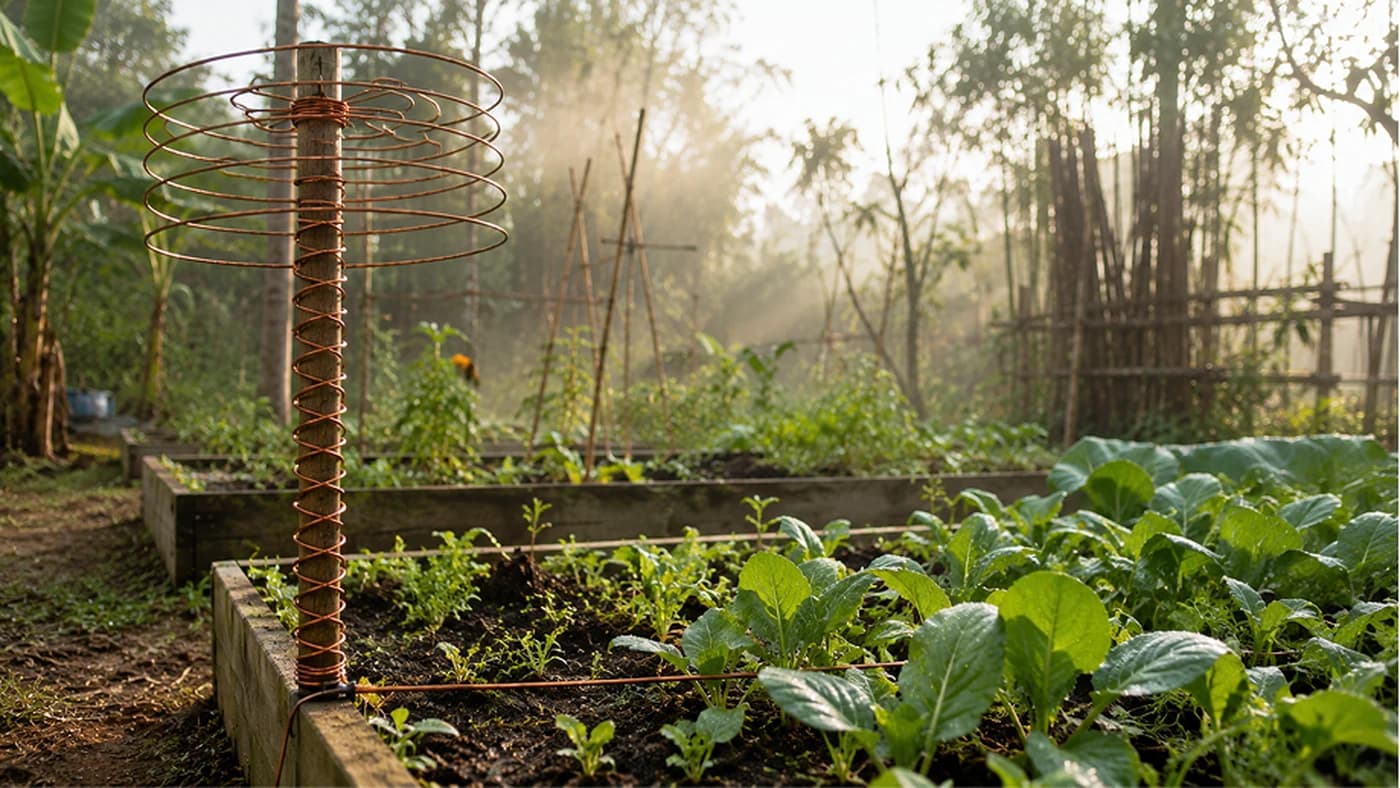
Electroculture Gardening: What It Is, and What the Evidence Actually Says
Copper antenna gardening promises faster growth and lower water use for almost no cost. It's a genuinely old folk technique — but the claims run well ahead of the science. Here's what it involves and how to think about it honestly.
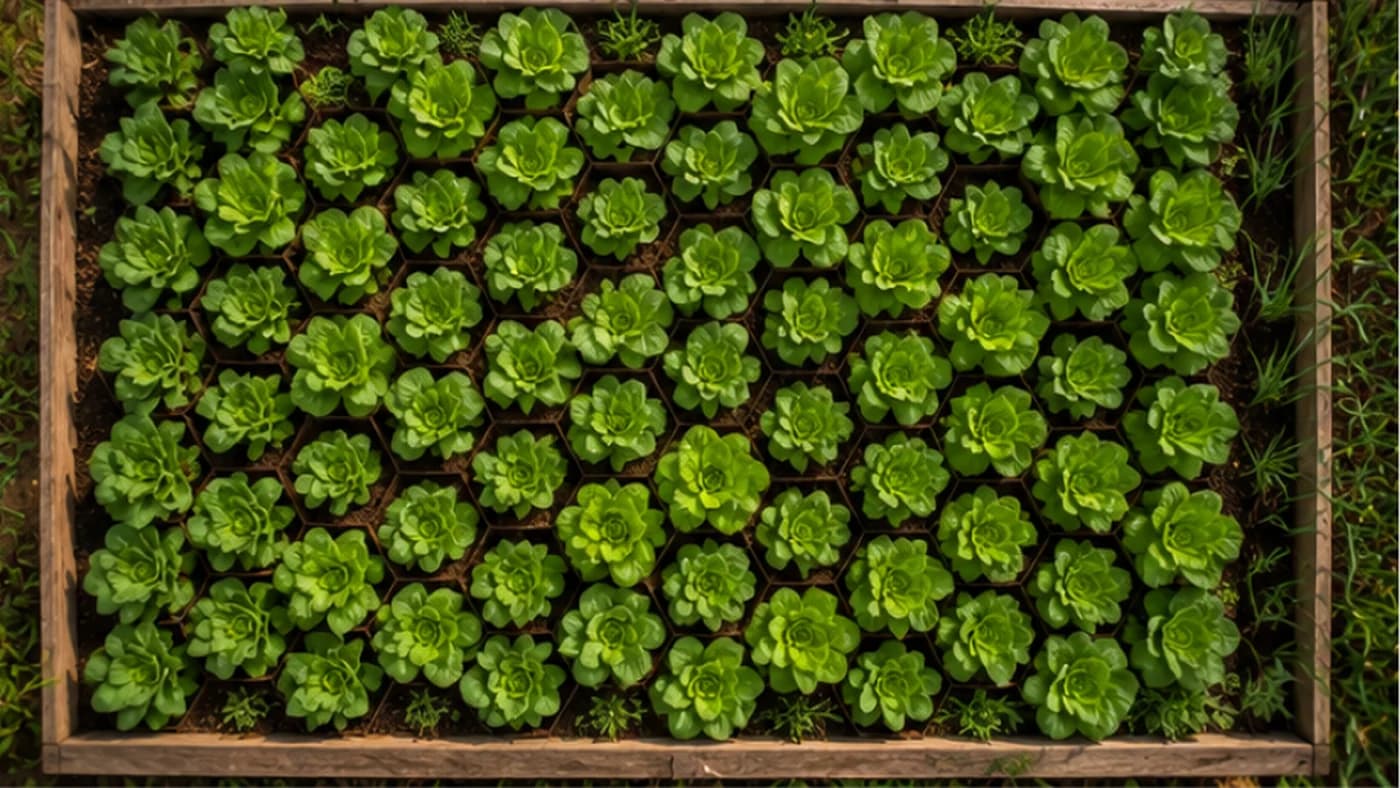
Hexagonal Spacing: Fit 15% More Plants in the Same Bed and Stop Weeding
Plant in a staggered triangle pattern instead of straight rows and the leaves close into a canopy that shades out weeds on its own — 10-15% more plants per bed, far less watering, and far less hoeing.
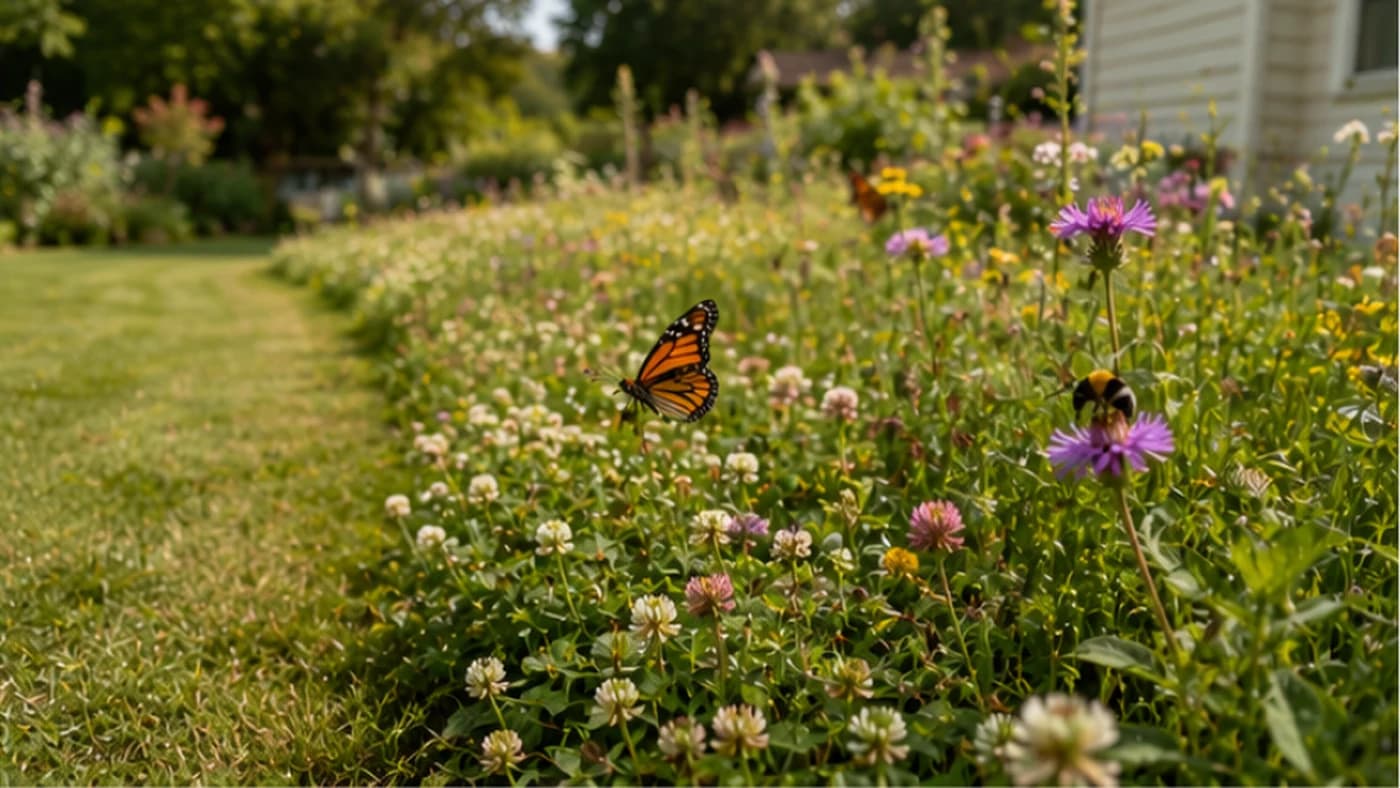
Why Turning Unused Lawn into Flowering Legumes Pays Off for Farms and Homes
A patch of mowed, sterile grass gives nothing back — no food for bees, no roots deep enough to hold soil or water. Converting it to flowering legumes and native plants turns dead space into a working part of the farm.