

Why Turning Unused Lawn into Flowering Legumes Pays Off for Farms and Homes
A patch of mowed, sterile grass gives nothing back — no food for bees, no roots deep enough to hold soil or water. Converting it to flowering legumes and native plants turns dead space into a working part of the farm.
Quick answer
A patch of mowed lawn or bare border land costs you effort and gives almost nothing back. Converting even a small corner to deep-rooted flowering legumes and native plants — as Minnesota's grant program encourages at scale — improves water infiltration, builds soil, and feeds the pollinators your other crops depend on, all for less ongoing work than mowing. You don't need a government grant to start: site prep, patience through the first slow season, and locally suited seed are what actually make it work.
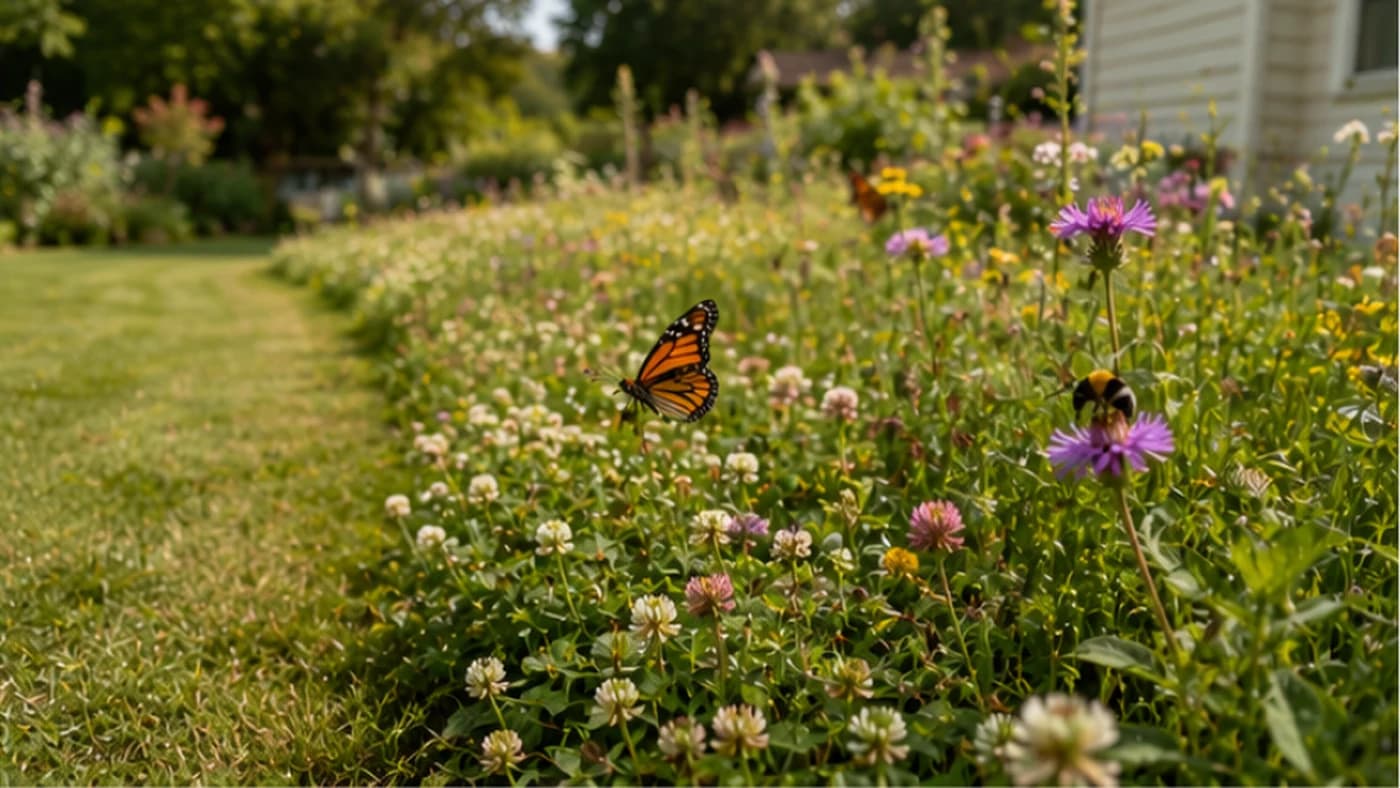
Every farm and home has some patch of land that does almost nothing: a mowed strip along a boundary, an unused corner, a lawn kept short purely out of habit. That bare or closely-mowed ground supports almost no pollinators, holds very little water, and needs constant mowing or weeding for no real return. In the US state of Minnesota, a state program called 'Lawns to Legumes' pays residents a small grant to convert exactly this kind of unused lawn into native, pollinator-friendly plantings — and the underlying principle behind it works just as well on an Indian farm border, homestead boundary, or unused kitchen-garden corner, without needing any government scheme at all.
The problem with bare, mowed ground
A closely mowed lawn or bare field border is, ecologically, close to a desert. Its shallow-rooted grass offers almost no nectar or pollen for bees and other pollinators, and its roots typically reach only 5–10 cm into the soil — nowhere near enough to meaningfully improve water infiltration or carbon storage in the ground beneath it. Keeping it that way also costs real, recurring effort: regular cutting, and often weeding or spraying, for a patch of land that gives nothing back in food, fodder or pollinator support.
What the Minnesota program actually does
Minnesota's Board of Water and Soil Resources runs 'Lawns to Legumes', a cost-share grant (typically $350–$400) that helps homeowners and renters replace lawn with native pollinator plantings — pocket gardens, low 'bee lawns' mixed with clover, larger pollinator meadows, or native trees and shrubs. The program exists because pollinator decline is a real, measurable problem, and it works by lowering the financial and knowledge barrier for ordinary people to restore small patches of habitat that, added together across a state, form real pollinator corridors.
This is not something an Indian reader can apply for — it's a specific US state program — but the underlying idea, that converting even small patches of unused land to flowering plants meaningfully helps pollinators and soil, holds everywhere. In India, similar thinking already shows up in state agriculture and horticulture department pushes for green manure crops, legume intercropping, and border planting of flowering trees and shrubs — worth asking about at your local Krishi Vigyan Kendra or state agriculture office if you want support or planting material.
Why deep-rooted flowering plants outperform lawn
Native and flowering legume plants typically send roots far deeper than lawn grass — sometimes several metres down for well-established perennial legumes and native grasses, compared to a few centimetres for turf. These deep roots act like biological pumps: they open channels for rainwater to soak in rather than run off, pull carbon down into the soil, and hold the ground together during heavy monsoon rain far better than shallow turf roots do.
Once established (usually by year two or three), a planting like this needs little to no fertiliser, no pesticide, and far less water than a lawn kept green through the dry season — the plants that survive are the ones already suited to your local rainfall and soil.
The 'sleep, creep, leap' pattern to expect
Newly planted native and legume patches follow a predictable pattern: in the first year they 'sleep' — putting almost all their energy into roots, so the visible growth above ground looks sparse or even messy. In the second year they 'creep', spreading and filling in. By the third year they 'leap', producing full flowering growth. The most common mistake is giving up during the sleep year and tilling the whole patch under, assuming it has failed — patience through that first unimpressive season is what makes the difference.
Getting the site ready
You cannot simply scatter seed over existing grass — established turf or weeds will out-compete tiny new seedlings almost every time. Remove the existing sod or kill it first, either by covering the area with plain cardboard (tape and staples removed) topped with a few centimetres of mulch or wood chips for several weeks before the monsoon, or by digging it out directly. Planting through dead, mulched-over sod after the grass beneath has died gives new seedlings a real chance to establish.
Common mistakes to avoid
Skipping proper site preparation and planting straight into live grass is the most common failure. A close second is losing patience during the slow first 'sleep' year. Misidentifying weeds versus your new plantings in the bare first-year soil is another frequent error — take time to learn what your sown seedlings actually look like before you start pulling anything out, or use a good plant-identification guide or app.
Limitations to plan around
This is not a zero-maintenance solution in the first year or two — you'll need to weed and water occasionally through dry spells while the planting establishes. If a local body, cooperative, or neighbour expects a tidy mowed edge, a mowed border strip, small fence, or a simple sign can signal that the patch is intentional rather than neglected. And a small planting on its own only helps so much — the real ecological benefit compounds when several nearby farms or homes do the same, forming a connected patch of habitat rather than isolated islands.
Practical steps to start
Observe your land first — note which spots get full sun for six or more hours, and which stay damp after rain, since different flowering species suit different conditions. Sheet-mulch with cardboard and wood chips ahead of the monsoon so the ground beneath is dead and ready by planting season. Source seed or seedlings from a reliable local nursery or Krishi Vigyan Kendra, favouring species genuinely suited to your region over generic ornamental varieties, since locally adapted plants establish faster and need far less babying.
Advanced practice: succession and no-till
Once established, choose a mix of species that flower at different times across the year, so pollinators have a continuous food source rather than one short burst. Avoid tilling an established planting — tilling destroys the underground fungal networks that help these plants exchange nutrients — and let fallen leaves and dead stalks stay through winter, since many native bees and beneficial insects shelter in hollow stems and leaf litter over the cold season. Save seed from your own planting each year to expand it or share with neighbours, building a small local seed bank adapted to your exact soil and climate.
Frequently asked
Can I apply for Minnesota's Lawns to Legumes grant from India?+
No — it's a program specific to Minnesota residents in the US. But the underlying principle (convert unused lawn to flowering, deep-rooted plants) applies anywhere, including India, without needing any grant.
Why does converted land need less water than a lawn?+
Once established, deep-rooted native and legume plants access moisture far below the surface and are naturally suited to local rainfall, unlike shallow-rooted lawn grass that needs frequent watering to stay green.
Why does my new planting look messy in the first year?+
This is the normal 'sleep' stage — the plants are building deep root systems below ground before putting visible growth on top. Don't till it under; by year two or three it fills in and flowers properly.
Do I need to remove the grass before planting?+
Yes — scattering seed over live grass almost always fails, since established turf outcompetes new seedlings. Smother it first with cardboard and mulch, or dig it out.
Is a small planting on one farm actually useful?+
Yes, but the benefit grows when nearby farms or homes do the same — connected patches of habitat support pollinators far better than one isolated patch.
Where to go next
Want this as daily tasks for your farm?
Khetiyaar turns guides like this into a day-by-day plan — in your language, free to start.

Related guides
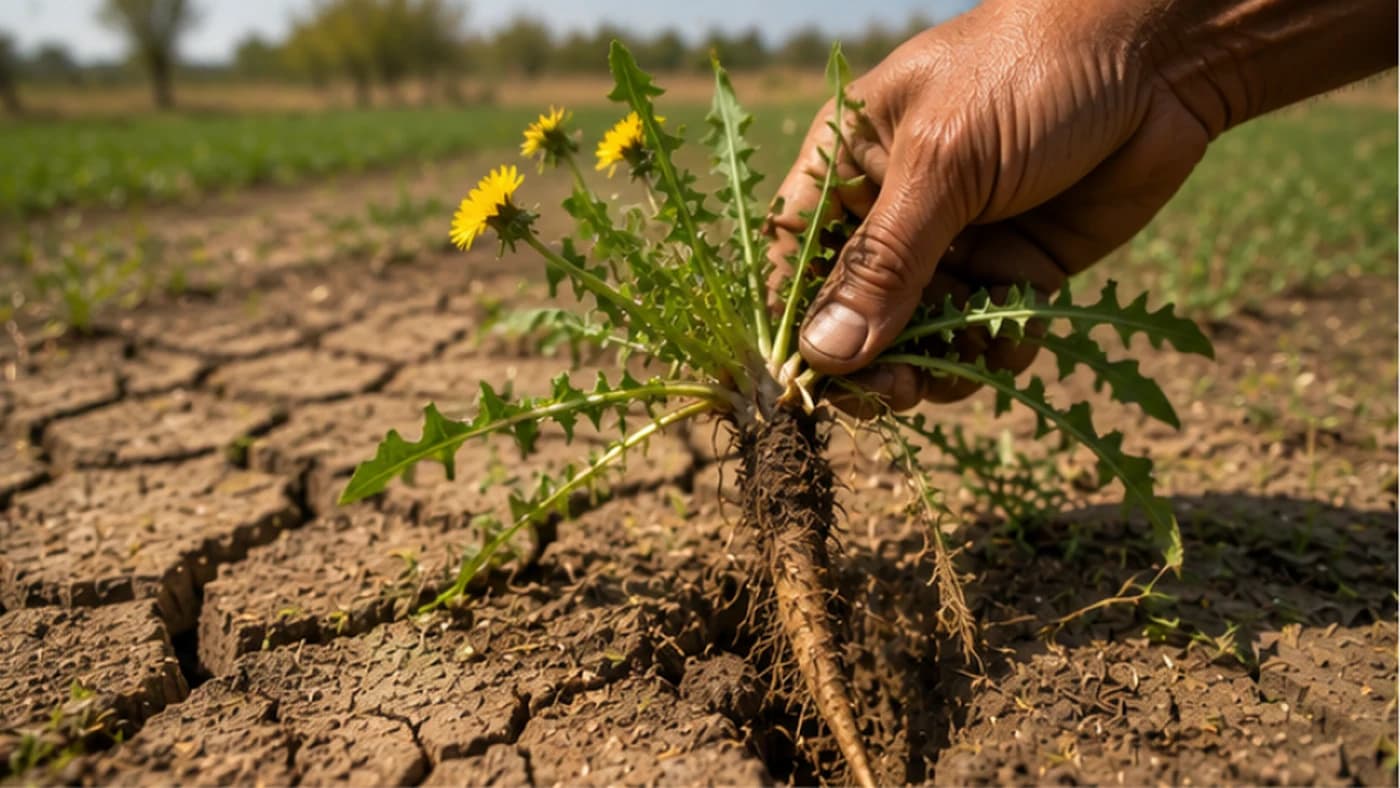
Deep-Rooted Weeds and Cover Crops That Fix Compacted Soil for Free
A weed with a long taproot pushing through hardpan isn't a sign your land has failed — it's the soil trying to repair itself. Here's how deep-rooted plants act as free biological drills, and which ones actually make sense on Indian farms.
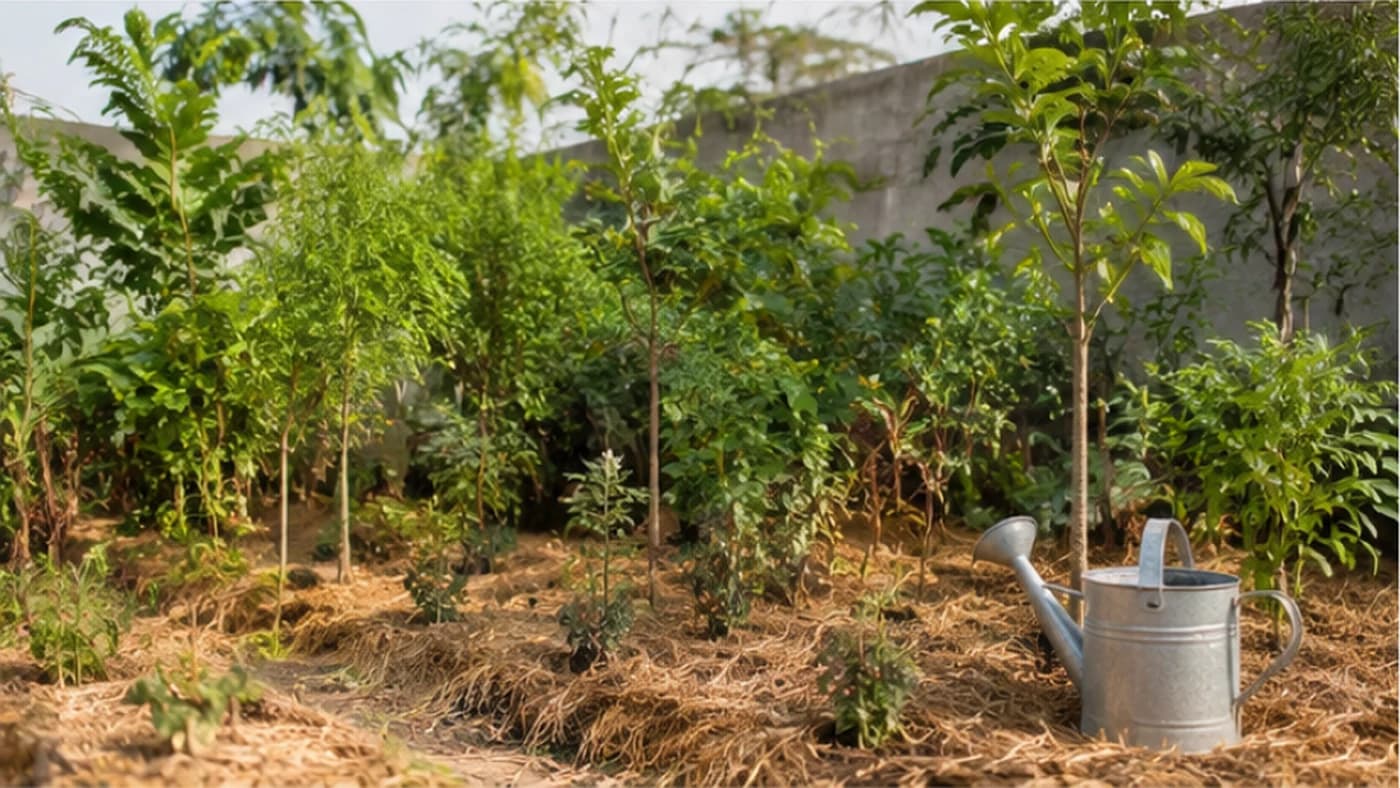
How to Plant a Miyawaki Forest in Your Backyard
You don't need a hundred acres to grow a forest — just the right density. The Miyawaki method packs native saplings so tightly that they race each other into a mature, self-sustaining forest in three years instead of thirty.
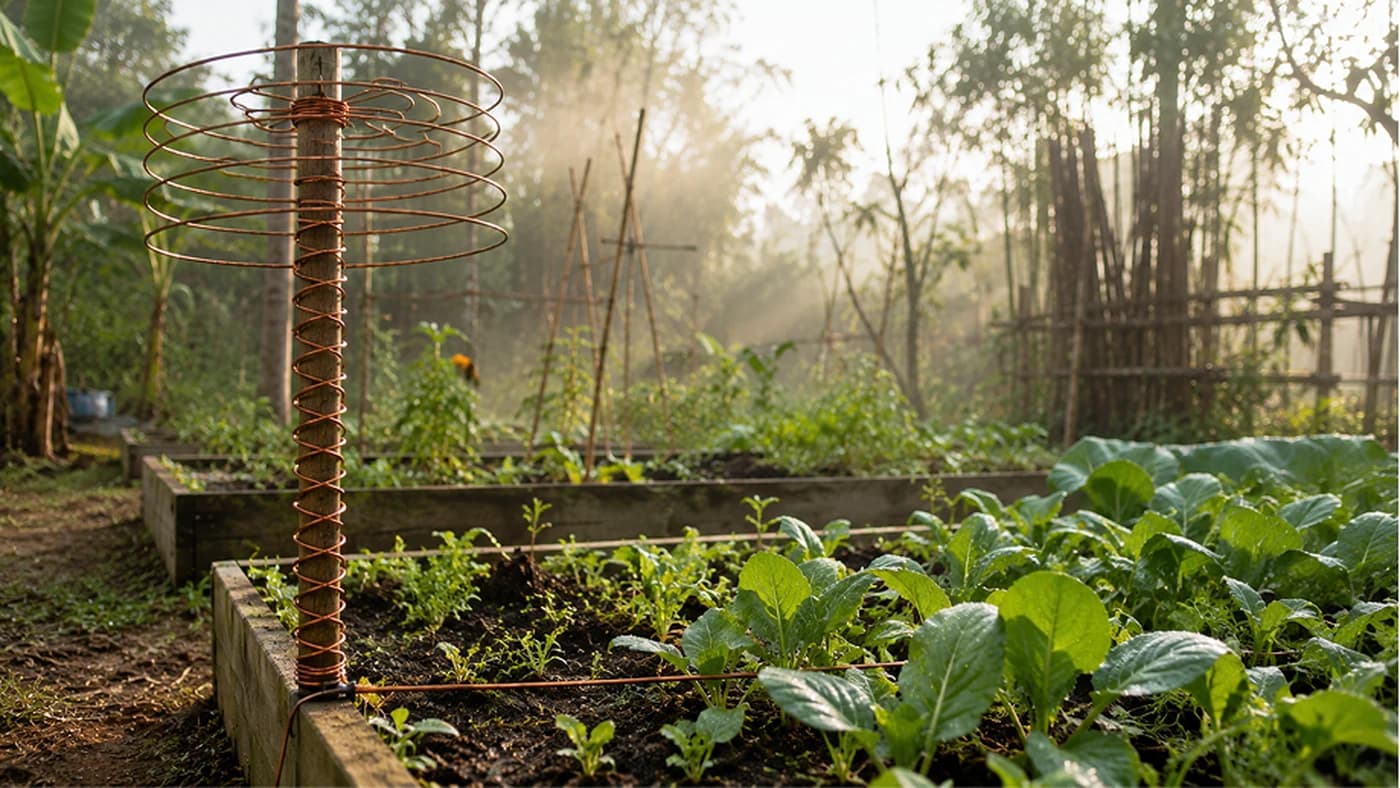
Electroculture Gardening: What It Is, and What the Evidence Actually Says
Copper antenna gardening promises faster growth and lower water use for almost no cost. It's a genuinely old folk technique — but the claims run well ahead of the science. Here's what it involves and how to think about it honestly.