
AgriStack and the Farmer ID: What It Is and How to Check Yours
The Farmer ID links your identity to your land and to whatever crop the survey says you sowed. That record — not what you tell an official — is what schemes will be assessed against. Here is how to register, and how to check it is right.
Quick answer
AgriStack is India's digital record system for agriculture, built on three registries: farmers, land parcels, and the crop actually sown each season. The Farmer ID, or Kisan Pehchaan Patra, is the unique number that links you to your land records. Enrolment is run by your state government, usually through village camps. Registration is free, and no private app can do it for you.
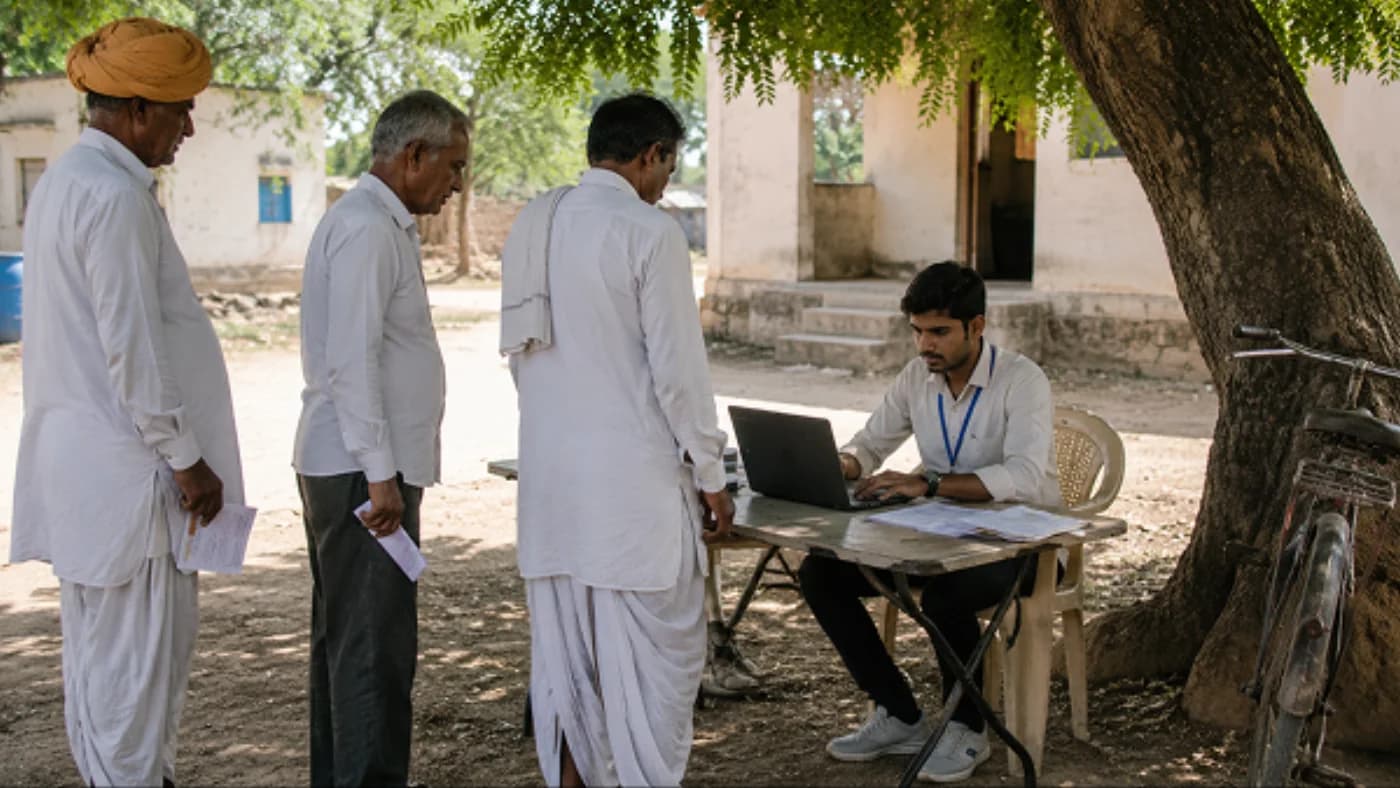
For most of Indian farming history, what you grew was established by a patwari walking the field and writing it down. That record decided your insurance, your loan and your scheme eligibility, and if it was wrong you argued with a person. AgriStack replaces the notebook with a database, and the argument with a correction request. That is mostly an improvement. It is also a change worth understanding before it matters, because a database is much better at remembering a wrong entry than a notebook ever was.
What AgriStack actually is
AgriStack is not an app you download. It is a set of linked government registries — digital public infrastructure, in the official phrase — intended to become the single source of truth about who farms what, where. It rests on three foundations: a Farmer Registry of cultivators, a geo-referenced record of land parcels, and a Crop Sown Registry built from a season-by-season Digital Crop Survey.
The purpose is delivery. If the state already knows that you hold a particular parcel and sowed cotton on it this kharif, then a subsidy, an insurance assessment or a crop loan can in principle be processed without you assembling the same documents for the fifth time. That is a genuine benefit, and it is the reason the system exists.
The Farmer ID, and how enrolment works
The Farmer ID — Kisan Pehchaan Patra in several states — is your unique identifier within that system, generated by linking your identity to your land records. It is what turns three separate registries into one connected picture of your farm.
Enrolment is a state government process, run in phases. In most states it happens through camps at the village or panchayat level, often alongside the Digital Crop Survey, with local officials or trained enumerators doing the entry. Some states also offer a self-registration portal. Two things are worth being firm about: it is free, and no private company or app can enrol you. If someone offers to create your Farmer ID for a fee, that is not a service, it is a scam.
The Digital Crop Survey is the part that will affect you most
The Farmer ID gets the attention, but the Crop Sown Registry is where the practical risk sits. Each season, enumerators visit plots and record what is actually growing, with a geo-tagged photograph. This is replacing the traditional girdawari in state after state.
Whatever that survey records becomes the official answer to what you sowed. If your plot is recorded as fallow when it carried a crop, or as growing wheat when it carried mustard, then your PMFBY assessment, your loan eligibility and any crop-specific scheme are all evaluated against the wrong thing. A correction after a loss event is a very different conversation from a correction before one.
How to check and correct your entry
- Find your state's farmer registry portal — most states host it under the agriculture department, and the name varies by state. Search for your state's name with 'farmer registry' or 'Kisan Pehchaan'.
- Check the basics first: your name spelling, the parcel numbers listed against you, and the total area. Land record errors are the most common problem, because the registry inherits whatever the revenue record already said.
- Check the crop recorded for the current and previous season against what you actually sowed.
- For land record errors, the correction happens at the revenue office, not in the app — the registry is reading from the record, so the record is what has to change.
- For crop survey errors, most states provide an objection or correction window after the survey. Ask your village-level officer what that window is in your state, and use it.
- Keep your own dated evidence: sowing date, seed purchase receipt, a photo of the standing crop. Whoever has the record wins the correction argument.
The consent question, honestly
Enrolment involves linking your identity to your landholding and your cropping history, and that combination is commercially valuable — to lenders, insurers, input companies and buyers. The official framework requires consent for sharing with third parties, and India's data protection law applies. Whether consent obtained at a village camp, in a queue, is meaningfully informed is a fair question to ask.
The practical position for a farmer is not refusal — schemes will increasingly be routed through this — but awareness. Ask what you are consenting to. Ask whether consent can be withdrawn. And keep your own records regardless, because the ability to prove what you actually did is what protects you in every scenario. Who owns your farm data goes into what you can and cannot control.
Where Khetiyaar fits, and where it does not
Plainly: Khetiyaar has no role in AgriStack. We cannot enrol you, we cannot see your registry entry, and we cannot correct one. We do not collect Aadhaar numbers, land record documents or bank details, and we are not connected to any government body. Any farming app that claims otherwise is either mistaken or misleading you.
What an app can do is help you hold your own version of the truth. Recording sowing dates, area, costs and crop photographs per plot as you go gives you exactly the evidence a correction request needs. Our land measurement and unit converter will give you an area figure for planning — though a GPS walk is an estimate, not a legal survey, and never a substitute for the revenue record. Keeping a farm record covers the habit itself, which matters far more than the tool you keep it in.
Frequently asked
What is the Farmer ID or Kisan Pehchaan Patra?+
It is a unique digital identifier for a farmer under AgriStack, created by linking your identity to your land records. It lets government systems recognise you and your holding across schemes, insurance and credit without you resubmitting the same documents each time.
Is Farmer ID registration free?+
Yes. Enrolment is conducted by your state government, usually through village-level camps, at no cost. No private agent or app is authorised to create a Farmer ID, and anyone charging a fee to do so is running a scam.
What happens if the Digital Crop Survey records the wrong crop?+
Your insurance assessment, loan eligibility and any crop-specific benefit are evaluated against the recorded crop, not the one you grew. Most states allow an objection window after the survey — use it. Correcting the record before a loss event is far easier than after one.
Can a private app register me for AgriStack?+
No. Enrolment runs through your state agriculture department. Khetiyaar does not register users for schemes, does not collect Aadhaar or land records, and is independent of any government body. Treat any app claiming to do this as a red flag.
Is the Farmer ID mandatory?+
It is framed as the route to scheme benefits rather than as a legal obligation, which in practice makes it difficult to avoid if you claim subsidies, insurance or credit. Enrolment timelines vary by state.
Where to go next
- Farming cost & profit calculatorWork out cost per acre, break-even yield and expected profit before you sow.
- Today's mandi bhavOfficial AGMARKNET rates for your crop, nearby mandis compared, and the net price after travel.
- Agri Bazar marketplaceBuy and sell animals, crops, equipment and dairy near you — and see what buyers want today.
Want this as daily tasks for your farm?
Khetiyaar turns guides like this into a day-by-day plan — in your language, free to start.

Related guides
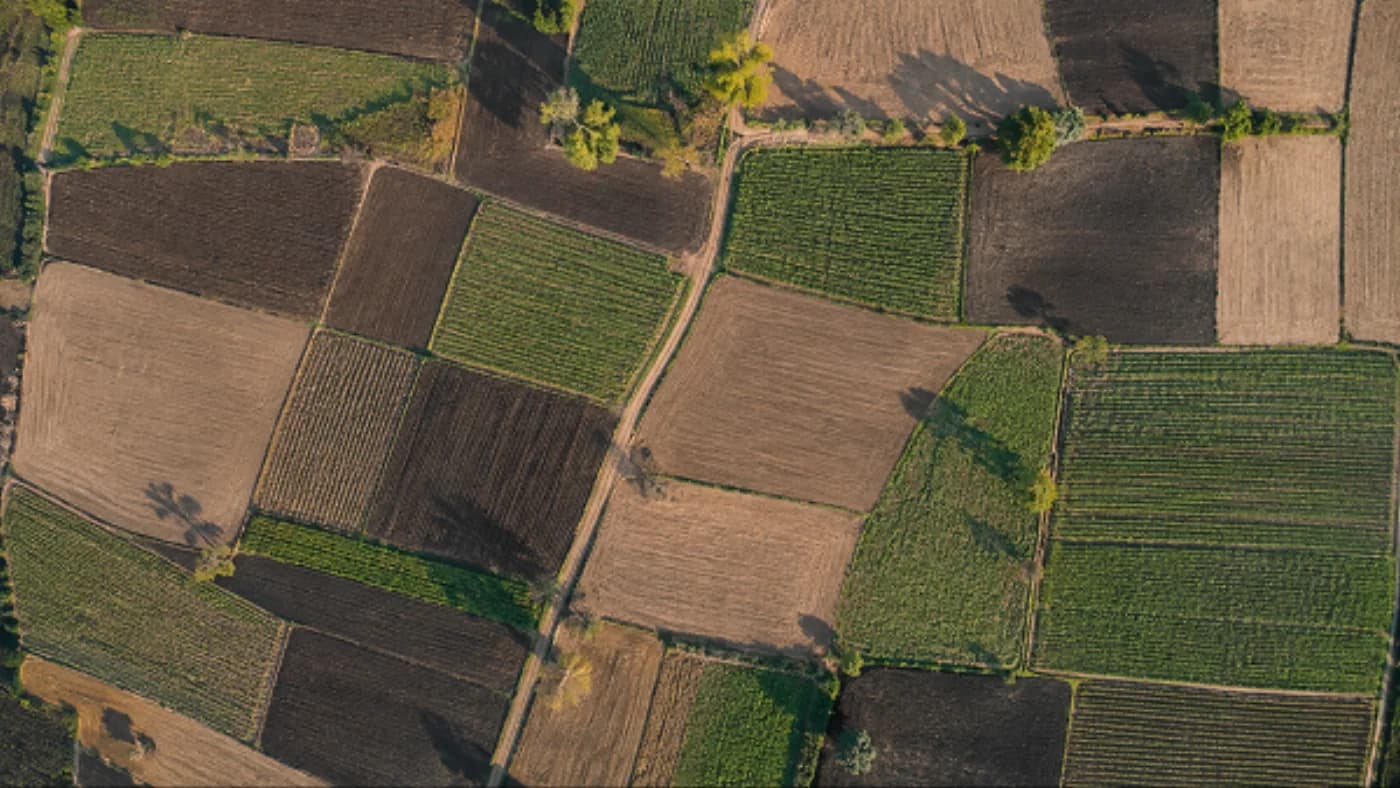
Indian Farming in 2027: Four Changes Already Underway
Not predictions — four shifts that have already started and will decide how you farm in 2027: digital farm records, the fight over your data, a fertiliser policy turn, and sensing cheap enough for two acres.
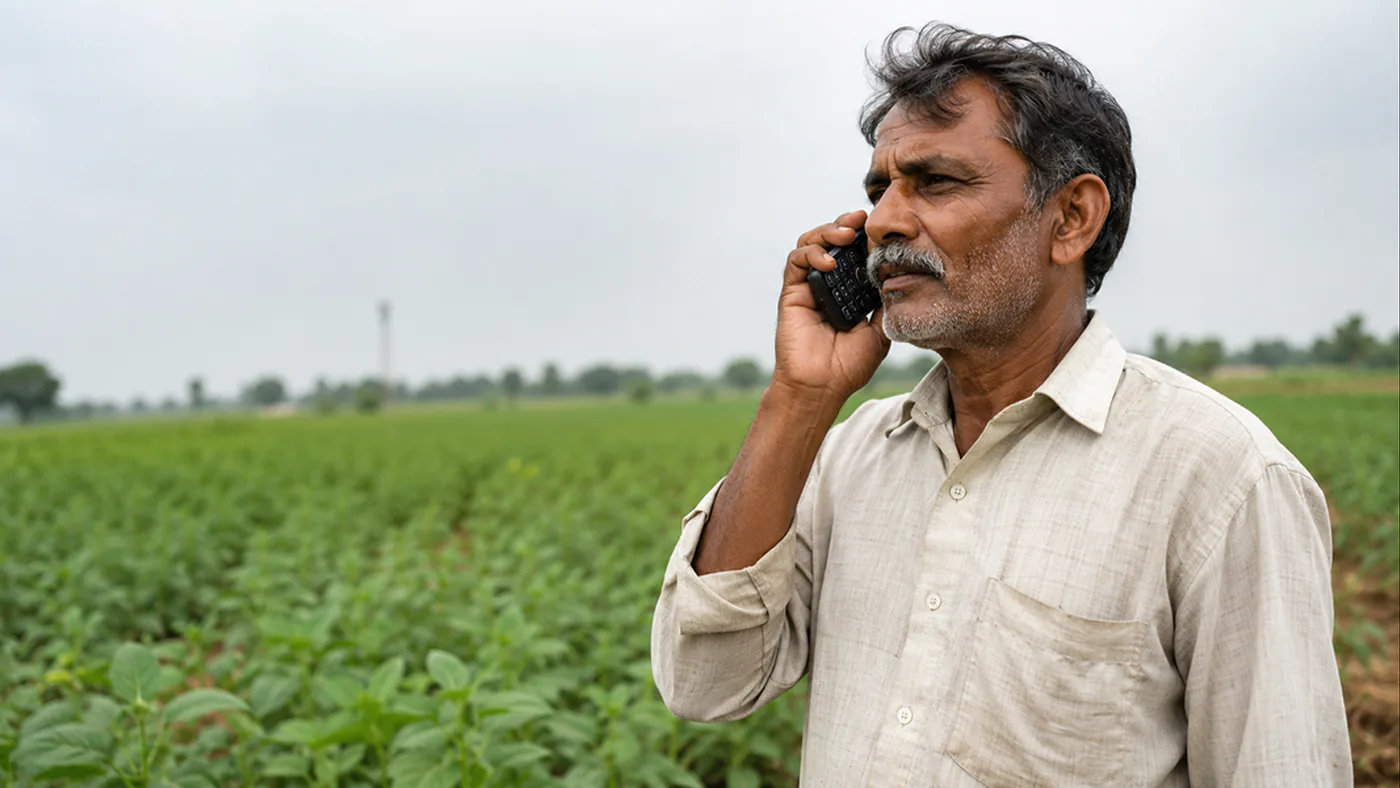
Best Free Farming Apps in India: What Is Actually Free
The word free is doing four different jobs in this market. Government apps are permanently free and almost nobody recommends them, because there is no commission on a free app.
Women Farmers in India: The Paperwork That Decides What You Can Access
Most of what blocks a woman farmer is not farming — it is a record. Schemes, credit and insurance are issued against land in your name, and that is the gap worth closing. Here is exactly how.