Who Owns Your Farm Data? A Plain Guide for Indian Farmers
Your cropping history is worth money to somebody. Here is what farming apps actually collect, what you should refuse outright, and what India's data protection law lets you demand.
Quick answer
Under India's Digital Personal Data Protection Act, 2023, the data a farming app holds about you is yours to see, correct, withdraw consent for, and have erased. An app may fairly ask for what its features need — location for local weather, your crop for a plan. It has no business asking a farmer for Aadhaar, land records or bank details, and you should refuse those.
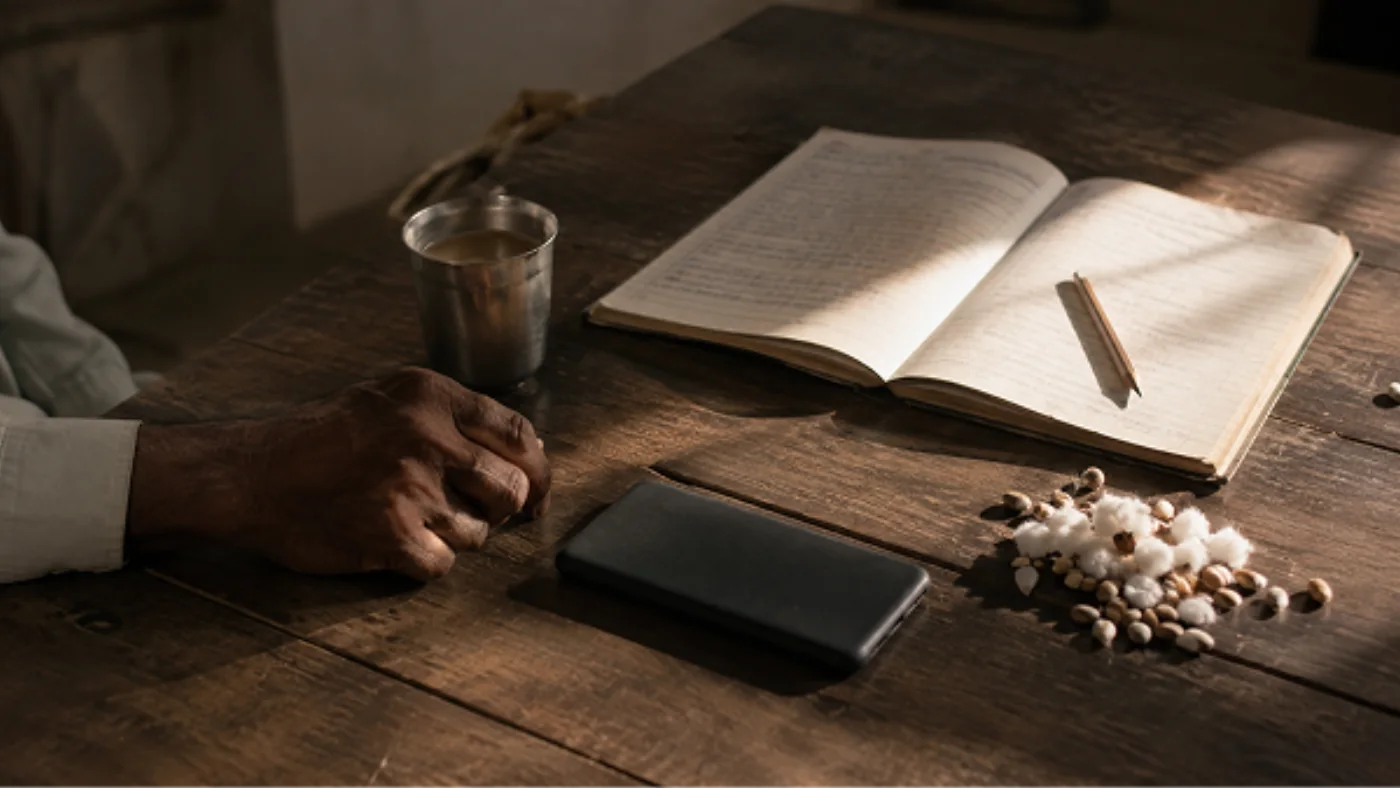
A farmer's cropping history used to live in a notebook and in the memory of the village. Now it lives on servers, and it is worth money — to input companies deciding where to push stock, to lenders pricing your risk, to traders who know how much cotton is about to reach your mandi. None of that is sinister on its own. It becomes a problem only when you do not know it is happening, which is the situation most farmers are in. This guide is about getting out of that situation without needing a lawyer.
Why your farm data is worth something
Information about supply is information about price. A trader who knows the sown area for onions across four districts before you do is negotiating with an advantage you cannot see. A lender who knows your yield history can price a loan more accurately — which helps you if your record is good and hurts you if it is not. An input company that knows which villages sowed cotton knows exactly where to send its sales team.
This is ordinary commerce, and some of it genuinely benefits farmers. The asymmetry is the problem: everyone in that list can see your data, and you can see none of theirs. The realistic goal is not secrecy. It is knowing what you have given away, and to whom.
What the law actually gives you
India's Digital Personal Data Protection Act, 2023 applies to farming apps like any other. It gives you a set of rights that are worth knowing by name, because naming them in a support email changes the response you get.
You have the right to know what is collected and why; the right to correct wrong data; the right to withdraw consent you previously gave; and the right to have your data erased. Companies must provide a grievance officer and respond within a defined period. If they do not, you can escalate to the Data Protection Board of India. The right that matters most in practice is withdrawal of consent, because it is the one that actually stops an ongoing collection.
What is fair to ask for, and what is not
The test is simple: does the app need this to do the thing you opened it for? Location for a local weather forecast passes. Location harvested continuously in the background when you only use the app to check mandi prices does not. Your crop and land size for a sowing plan passes. Your contact list does not, ever, for any farming feature.
Three requests should stop you outright, because no private farming app needs them: your Aadhaar number, your land record documents, and your bank details. Government schemes need those — through government channels. An app that asks is either building something it has not told you about, or collecting what it can because it can.
| Data | Why an app asks | Fair? | What Khetiyaar does |
|---|---|---|---|
| Phone number | Sign-in, and letting a buyer contact a seller | Reasonable | Collected — OTP sign-in, and shown to buyers if you list on Bazar |
| Location | Local weather, nearby mandis, GPS land measurement | Reasonable if you can switch it off | Collected with permission; switch it off in phone settings and those features stop |
| Crop, soil type, land size, field boundaries | Building a crop plan and advisories | Reasonable — it is what the plan is made from | Collected; it is the basis of the plan |
| Aadhaar number | No legitimate reason for a private farming app | Refuse | Not collected |
| Land record documents | No legitimate reason for a private farming app | Refuse | Not collected |
| Bank details | Only if the app genuinely pays you money | Refuse otherwise | Not collected |
| Selling your data on | Advertising and lead generation revenue | Refuse | We never sell personal data |
| Third-party advertising | Revenue from whoever pays most | Your call, but know it is happening | No third-party ads inside the app |
Five minutes that are worth spending
- Open the privacy policy of every farming app on your phone and search for the words 'Aadhaar', 'sell' and 'third party'. You will learn most of what matters in two minutes.
- Check app permissions in your phone settings. Location, camera and storage are usually justified. Contacts, call logs and SMS almost never are for a farming app.
- Set location to 'while using the app' rather than 'always', unless a feature genuinely needs background access.
- Find the grievance officer's email in the policy. An app that does not name one is not complying with the law.
- Before entering land records or Aadhaar anywhere, stop and ask whether you are on a government portal or a private app. Scams targeting farmers rely on that confusion.
The AgriStack question
The largest farm dataset being assembled in India is not being built by an app; it is being built by the government, through the farmer, land and crop registries under AgriStack and the Farmer ID. Enrolment links your identity to your holding and your cropping history, and the framework permits sharing with third parties on consent.
Refusing is not really a practical option, because scheme delivery is moving onto that rail. Awareness is. Ask what you are consenting to at the enrolment camp, ask whether consent can be withdrawn later, and keep your own records regardless — being able to prove what you actually sowed is what protects you when a record disagrees with reality.
What we do, so you can hold us to it
We are one of the apps this article is about, so here is our position stated plainly enough to be checked. Khetiyaar collects your phone number, your location if you permit it, and the farm details a plan is built from — crop, soil type, land size, field boundaries you record. We do not collect Aadhaar numbers, land record documents or bank details. We do not sell personal data and we do not run third-party ads. We are independent of any government body and cannot register you for any scheme.
You can withdraw consent, and you can delete your account and its data from within the app under Profile, or by emailing us. Some features stop working without location or farm details — that is a consequence, not a punishment. All of this is set out at our privacy policy, which names a grievance officer as the law requires. If we ever fall short of this page, that is the address to write to.
Frequently asked
Are farming apps safe to use in India?+
Many are, but the category is uneven. Judge an individual app rather than the class: read its privacy policy for the words Aadhaar, sell and third party, check what permissions it requests against what its features actually need, and confirm it names a grievance officer. An app that asks a farmer for Aadhaar, land records or bank details should be deleted.
Does Khetiyaar collect my Aadhaar number?+
No. We do not collect Aadhaar numbers, land record documents or bank details, we do not sell personal data, and we do not show third-party ads. We collect your phone number, your location if you allow it, and the farm details your crop plan is built from.
Can I get my data deleted from a farming app?+
Yes. Under the DPDP Act 2023 you can withdraw consent and request erasure. In Khetiyaar you can delete your account and its data directly in the app under Profile, or by emailing support from your registered contact. Any compliant app must offer a route and a named grievance officer.
Who owns the data about my farm?+
Personal data about you remains yours in the sense that the law gives you rights over it — access, correction, withdrawal of consent and erasure — even while a company processes it. That is why what you consented to matters so much: consent is the thing that made the processing lawful in the first place.
Where to go next
- AI farming chatbotAsk any farming question in Gujarati, Hindi or English and get an answer in seconds.
- Today's mandi bhavOfficial AGMARKNET rates for your crop, nearby mandis compared, and the net price after travel.
- Farming cost & profit calculatorWork out cost per acre, break-even yield and expected profit before you sow.
Want this as daily tasks for your farm?
Khetiyaar turns guides like this into a day-by-day plan — in your language, free to start.

Related guides
Indian Farming in 2027: Four Changes Already Underway
Not predictions — four shifts that have already started and will decide how you farm in 2027: digital farm records, the fight over your data, a fertiliser policy turn, and sensing cheap enough for two acres.
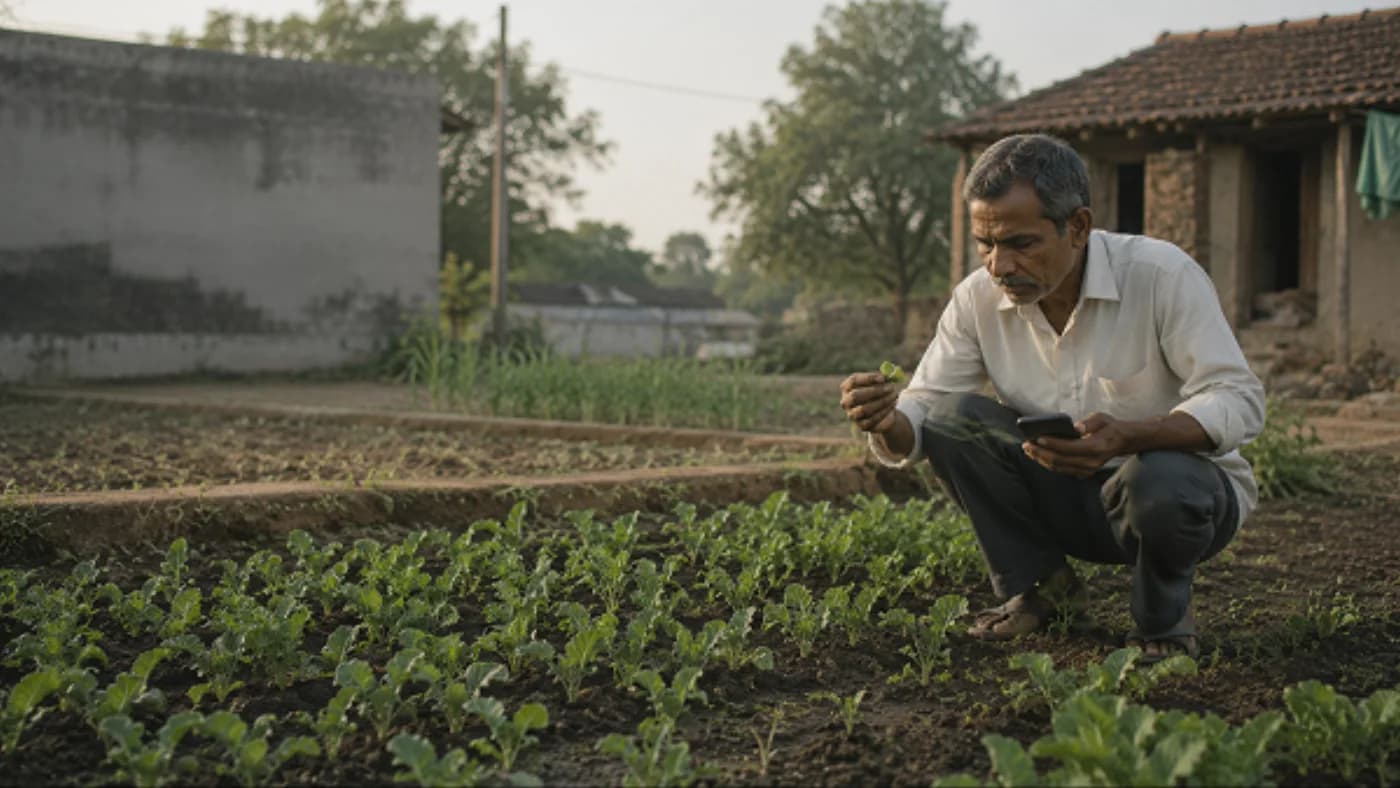
Precision Farming on Two Acres: What Is Worth It and What Is Not
Precision agriculture was built for hundreds of acres. Some of it now reaches two. Here is which tools repay the effort on a smallholding, which are marginal, and which are simply not for you yet.
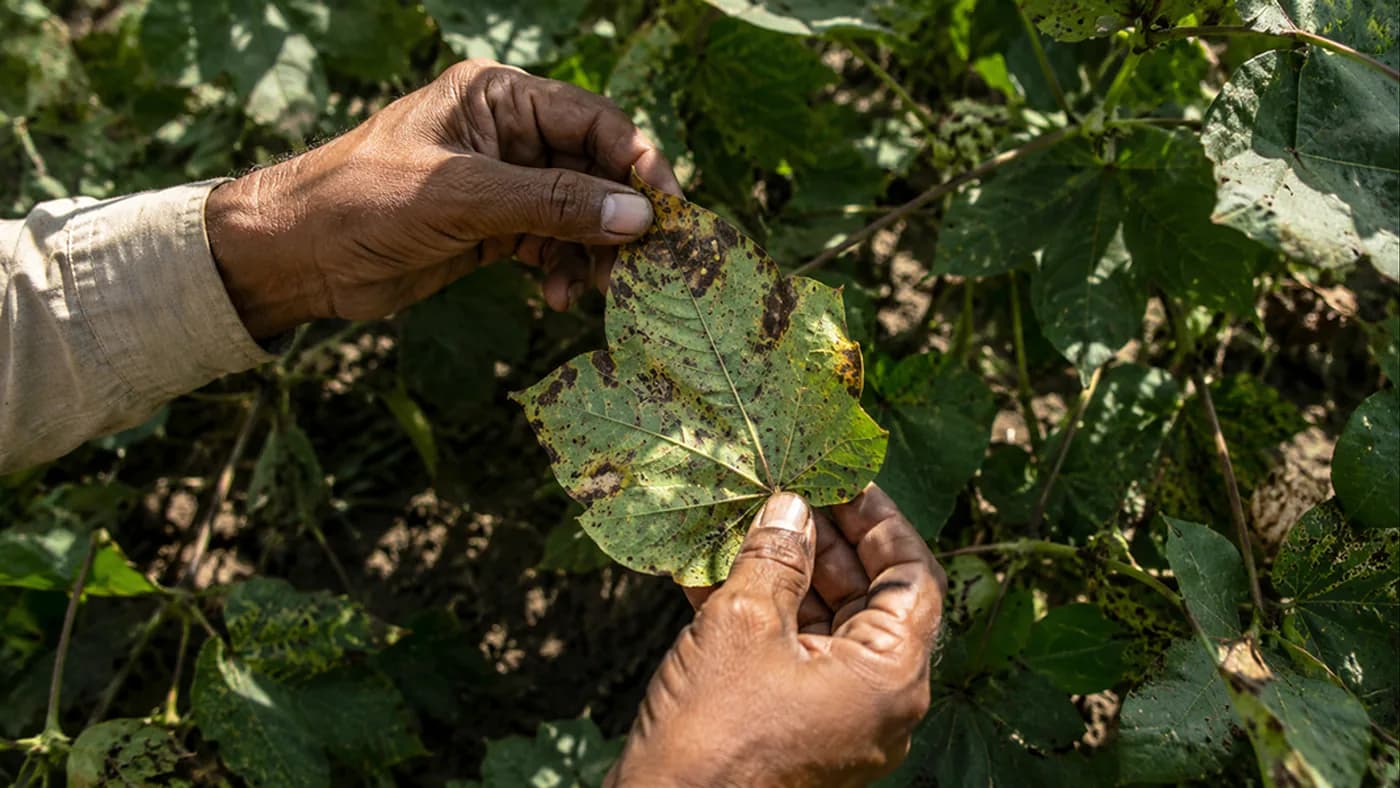
Do AI Farming Apps Actually Work? An Honest Assessment
Five different capabilities are sold under the word AI, and they have wildly different reliability. Photo disease diagnosis scores above 95% in the lab and commonly 70-80% on real field photos. Judge each feature separately.