
Indian Farming in 2027: Four Changes Already Underway
Not predictions — four shifts that have already started and will decide how you farm in 2027: digital farm records, the fight over your data, a fertiliser policy turn, and sensing cheap enough for two acres.
Quick answer
Four changes are already underway and will shape 2027: farm records are moving into a national digital registry through AgriStack and the Farmer ID; the question of who owns farm data is becoming a real one; fertiliser policy is turning from volume toward balance and nano products; and sensing has become cheap enough to reach two-acre farms. None of them replaces judgement — they change what you know when you decide.
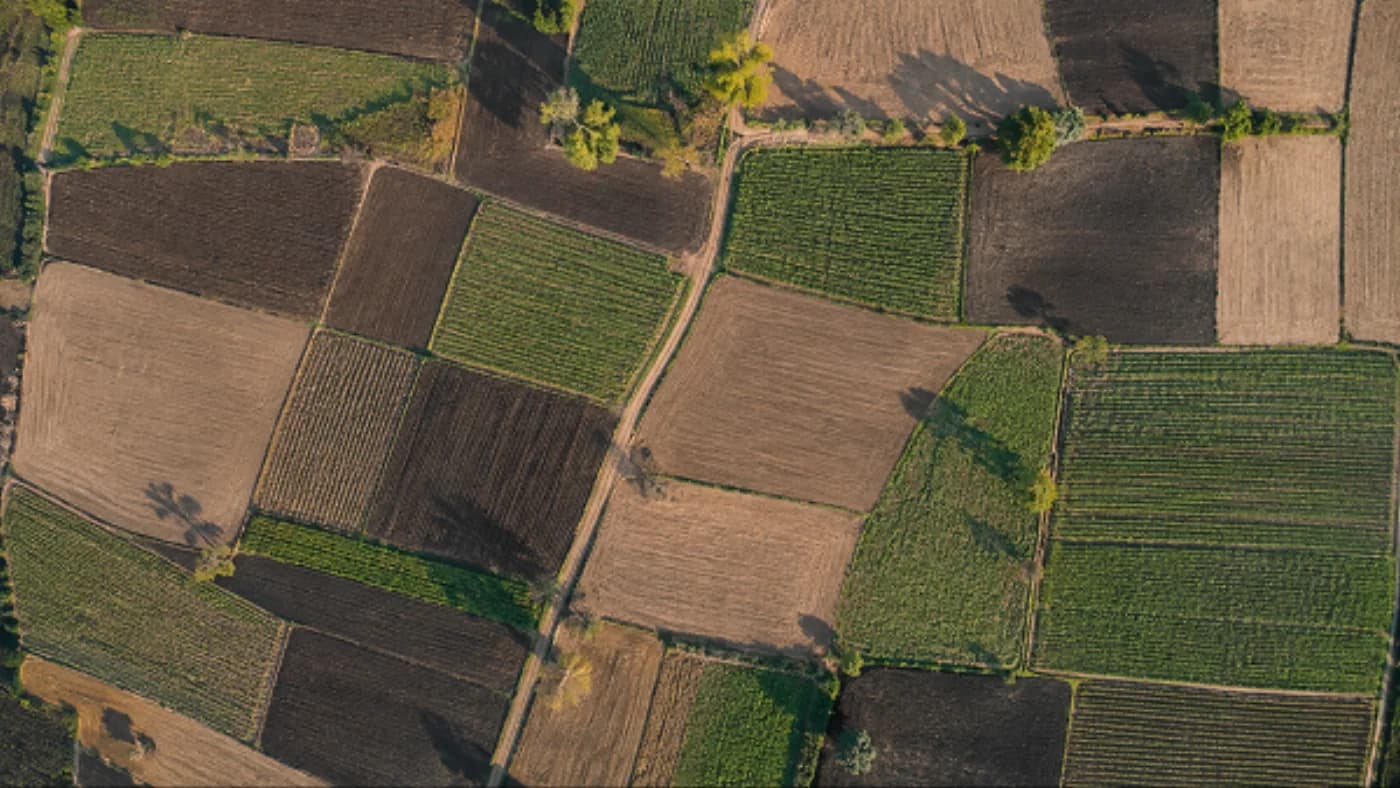
Most articles about the future of farming are guesses dressed as forecasts. This one is not. Everything below has already begun — the registries are being built, the policy has already turned, the phones are already in pockets — and 2027 is simply when the effects reach the ordinary farmer who did not ask for any of it. That makes this worth reading not because the future is exciting, but because the changes are administrative, and administrative changes are the kind that quietly decide whether your insurance claim succeeds or your loan is approved.
1. Your farm becomes a database entry
India is assembling a national digital layer for agriculture — commonly called AgriStack — built on three registries: farmers, land parcels, and what is actually sown on them each season. Its visible face is the Farmer ID, sometimes called the Kisan Pehchaan Patra, a unique number that links you to your land records and your cropping history. States are enrolling farmers in phases, usually through camps at the village level.
The practical consequence is that schemes will increasingly be delivered against what the registry says, rather than against what you tell an official. If the digital crop survey records the wrong crop on your plot, that is the crop your insurance and your loan eligibility will be assessed against. The single most useful thing you can do is check your own entry and get it corrected while corrections are still easy. How AgriStack and the Farmer ID actually work sets out the registration and correction process.
2. Your farm data becomes worth arguing about
Once cropping patterns, yields and land holdings exist as structured records, they have commercial value — to input companies deciding where to push product, to lenders pricing risk, to buyers who now know how much cotton is about to arrive at your mandi and what that should do to the price they offer you. This is not hypothetical; it is the ordinary economics of information.
India's Data Protection Act gives you rights over personal data, and farm apps are covered by it. But rights only matter if you know what you agreed to. Before 2027 the useful habit to build is a simple one: know what each app on your phone collects, and refuse the ones that want more than their function requires. Who owns your farm data explains what to check and what to refuse.
3. Fertiliser policy turns from volume to balance
For decades urea was cheap and everything else was not, and Indian soils show the result: nitrogen-heavy, phosphorus and potassium short, organic carbon falling. Policy is now pushing the other way — toward balanced nutrition, soil-test-based application, and nano formulations that deliver nutrients in much smaller volumes. Expect the incentives around what sits in the shop to keep moving.
Treat the marketing with the same scepticism you would apply to any input. Nano urea in particular has genuinely mixed field evidence, and the honest position is that it works in some situations and disappoints in others. Nano urea and the fertiliser cost question sets out how to test it on your own field rather than trusting either the advertisement or the internet argument.
4. Sensing gets cheap enough for two acres
Precision agriculture used to mean equipment priced for hundreds of acres. What changed is that the sensor most farmers already own is the phone camera, and the computation happens on someone else's server. Photo-based disease diagnosis, GPS area measurement, satellite-derived crop vigour and hyperlocal weather with soil-level data are now available at a price a smallholder can justify.
What has not changed is that a measurement is only useful if it changes a decision. Knowing your soil moisture matters if it moves your irrigation by a day; it is a novelty if you irrigate on the same schedule regardless. What precision farming is actually worth on two acres works through which of these tools repay the effort at small scale, and which do not.
What does not change
It is worth saying plainly, because a page about change tends to overstate it. The monsoon still decides more than any app. Soil built over years still outperforms soil corrected in a season. The neighbour who has farmed that field for thirty years still knows things no dataset holds. Nothing in the four shifts above changes the fundamentals of crop rotation, organic matter, or timely sowing.
What changes is the quality of the information you bring to those decisions, and how much of your farming life is recorded by someone else. Both are worth attending to. Neither is a substitute for knowing your own land.
Where an app helps, and where it does not
We build a farming app, so treat this table as interested rather than neutral — but it is written to be checkable. The right-hand column is the more useful one.
| Change | What it means for you | Where an app helps | Where it does not |
|---|---|---|---|
| Farmer ID and AgriStack | Your land and crop get a permanent digital record tied to your identity | Keeping your own sowing and cost record, so you can spot a wrong entry | Registration is a government process. Khetiyaar cannot enrol you, and does not hold your Aadhaar or land records |
| Digital crop survey | What is recorded decides your insurance assessment and loan eligibility | A dated record of what you actually sowed, from your own phone | No app can correct a government record. That is the revenue office |
| Fertiliser policy shift | Subsidy and shop stock lean toward balanced and nano products | Working out what a change actually costs or saves per acre | We do not know your soil. That needs a soil test, not an app |
| Cheaper sensing | Phone-based measurement replaces some services you used to pay for | GPS area measurement, photo disease diagnosis, soil-level weather | A GPS area is a planning estimate, not a legal survey. A photo diagnosis is a first opinion, not a pathologist |
What to do in the next six months
- Find out whether your state has begun Farmer ID enrolment, and check what the registry already says about your land.
- Look at the crop recorded against your plot in the last digital crop survey. Correcting a wrong entry is far easier before a claim depends on it.
- Start a dated record of sowing, inputs and costs per plot — on paper or in an app. Almost every dispute above is settled by whoever has the record.
- Get a soil test before changing your fertiliser plan, not after. Reading a Soil Health Card explains the numbers.
- Pick one measurement to start with rather than five. The one that changes a decision you already make weekly is the one worth having.
Frequently asked
What will farming in India look like in 2027?+
Broadly as it does now in the field, and quite different on paper. The crops, seasons and monsoon dependence do not change. What changes is that your land, your identity and what you sowed exist as linked digital records used to assess schemes, insurance and credit — and that measurement tools which were priced for large farms are now within reach of small ones.
Is the Farmer ID compulsory?+
It is being positioned as the route to scheme benefits rather than as a legal requirement, which in practice makes it hard to avoid if you claim anything. Enrolment is run by your state government through village-level camps. No private app can register you, and any that claims it can is worth treating with suspicion.
Will AI replace farmers?+
No, and the framing is wrong. What these tools replace is a narrow slice of information gathering — identifying a disease, estimating an area, checking a price — that farmers previously paid for or guessed at. The decisions, and the risk of getting them wrong, stay exactly where they were.
Which is the most important change to act on first?+
Checking what the government registry already records about your land and your crop. It is the only one of the four where a wrong entry made without your knowledge can cost you a claim, and the only one that gets harder to fix the longer you leave it.
Where to go next
- AI farming chatbotAsk any farming question in Gujarati, Hindi or English and get an answer in seconds.
- Today's mandi bhavOfficial AGMARKNET rates for your crop, nearby mandis compared, and the net price after travel.
- Farming cost & profit calculatorWork out cost per acre, break-even yield and expected profit before you sow.
Want this as daily tasks for your farm?
Khetiyaar turns guides like this into a day-by-day plan — in your language, free to start.

Related guides
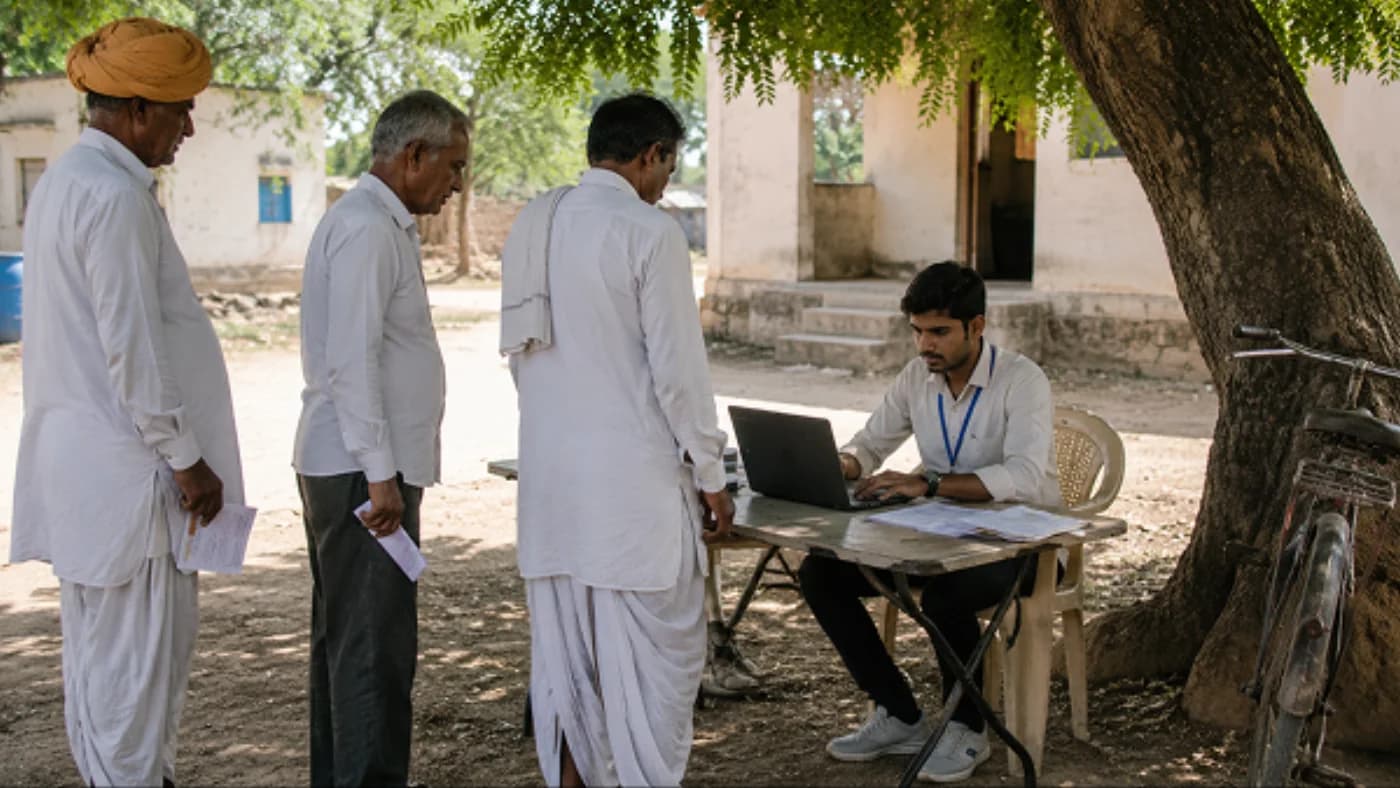
AgriStack and the Farmer ID: What It Is and How to Check Yours
The Farmer ID links your identity to your land and to whatever crop the survey says you sowed. That record — not what you tell an official — is what schemes will be assessed against. Here is how to register, and how to check it is right.
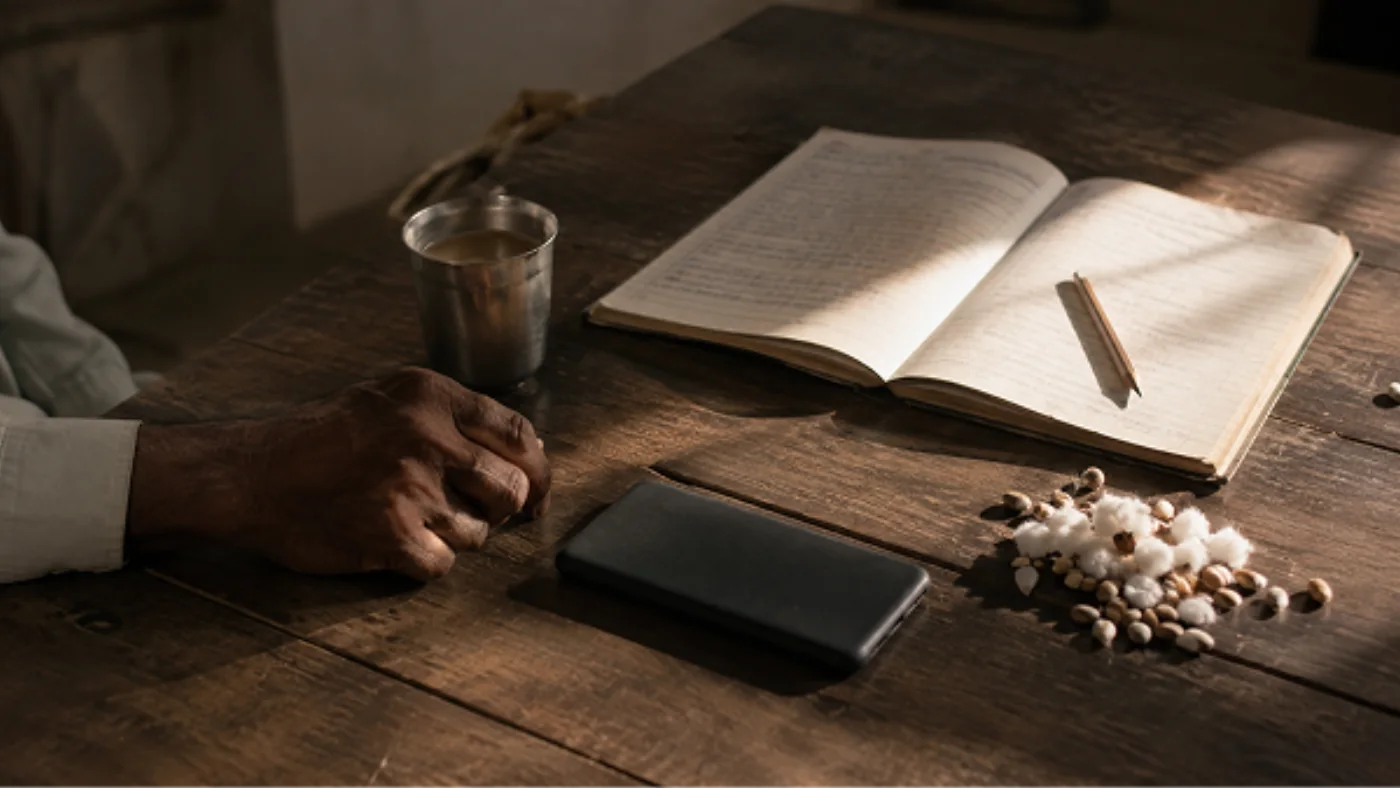
Who Owns Your Farm Data? A Plain Guide for Indian Farmers
Your cropping history is worth money to somebody. Here is what farming apps actually collect, what you should refuse outright, and what India's data protection law lets you demand.
Best AI Farming Apps in India (2026): An Honest Comparison
From photo-based disease diagnosis to AI chatbots and agri bazar marketplaces, farming apps have come a long way. We compare Khetiyaar, Plantix, AgroStar, DeHaat, Kisan Suvidha and BharatAgri — honestly, feature by feature.