

Best Free Farming Apps in India: What Is Actually Free
The word free is doing four different jobs in this market. Government apps are permanently free and almost nobody recommends them, because there is no commission on a free app.
Quick answer
The genuinely and permanently free apps are the government ones: Kisan Suvidha for mandi prices, weather and advisories, Meghdoot for district and block-level agromet advisories from IMD and ICAR, Damini for lightning alerts, and eNAM for online mandi trade — plus the Kisan Call Centre on 1800-180-1551, where you can speak to an advisor at no cost. Private apps are usually free to install but earn either on the inputs they sell you or on a subscription after a trial.
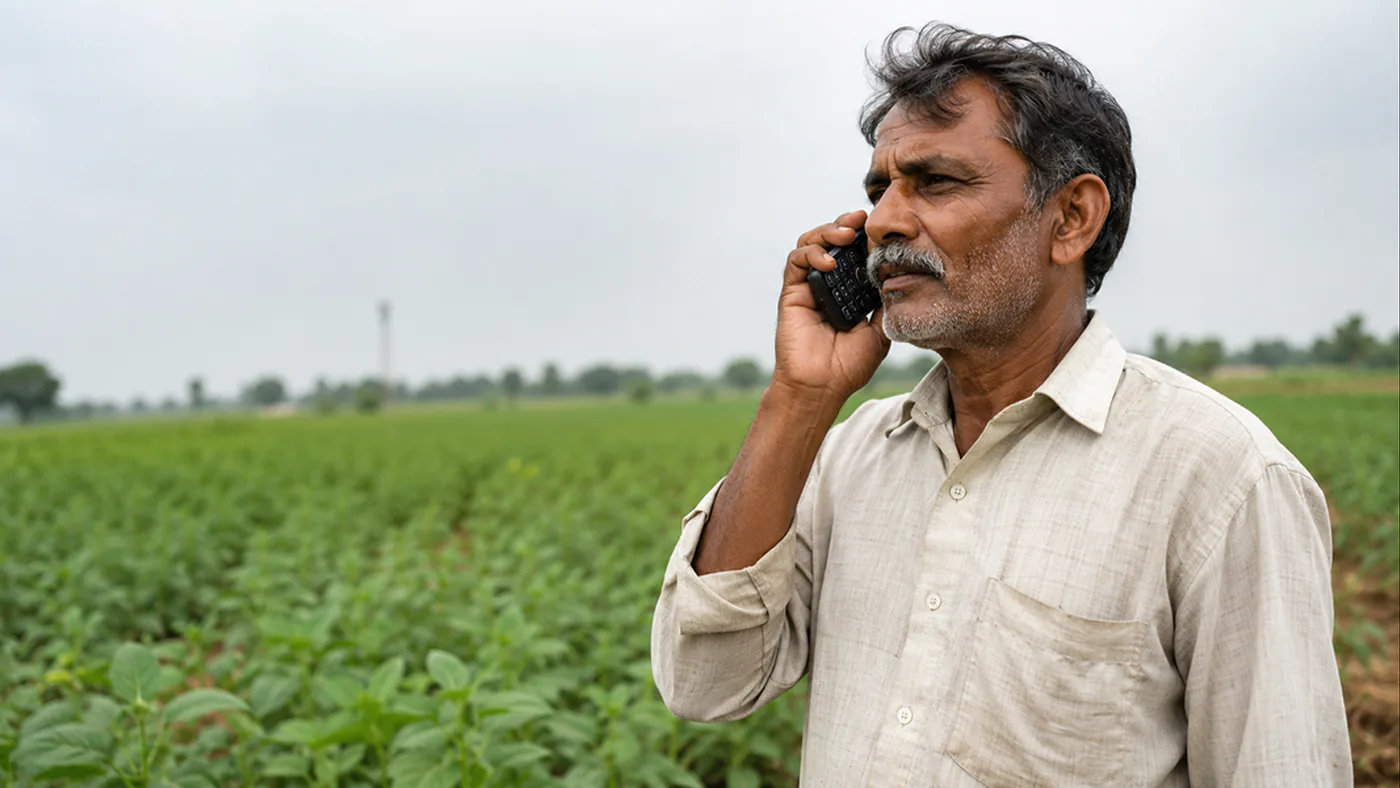
Search for a free farming app and you will get a dozen listicles recommending the same private apps. What you will rarely see near the top is the government stack — Kisan Suvidha, Meghdoot, Damini, eNAM — which costs nothing, ever, and is run by the IMD, ICAR and the Ministry of Agriculture. The reason is not that those apps are bad. It is that nobody earns a commission recommending them. This article puts them first, then explains honestly what the paid and part-paid options add on top, and what Khetiyaar itself costs.
Free means four different things here
Before comparing anything, it is worth separating the four business models hiding behind the same word, because they fail you in completely different ways.
A permanently free public service has no upsell and no paywall — it is funded by the government and the only cost is your data connection. A free app that sells inputs costs nothing to install, and the advice inside it is usually real, but it exists to move product, so it will rarely tell you that the cheapest answer is to do nothing. A free trial is free until the paywall arrives, typically just as the season gets serious. And pay-as-you-go is free to install and use, with charges attached to specific actions rather than to the calendar.
None of these is dishonest by itself. What causes trouble is not knowing which one you have installed.
| Model | What you pay | The thing to watch for |
|---|---|---|
| Permanently free public service | Nothing beyond your data connection | Plainer interfaces and generic, district-level information rather than farm-level |
| Free app, paid products | Nothing for the app; you pay for seed, fertiliser and pesticide | The advice is tied to a catalogue — the option of spending nothing is rarely presented |
| Free trial, then subscription | Nothing at first, then a recurring fee | You pay the same in a light season as in a heavy one |
| Free to use, pay per action | Nothing to install; charges attach to specific actions | Costs are easy to lose track of unless the app shows a running total |
The free government stack most farmers are never told about
These four apps cost nothing, have no paid tier and are not trying to sell you anything. If your needs are weather, prices and official advisories, this stack covers them for zero rupees and you should not pay anyone for the same thing.
Meghdoot deserves particular attention because it is the least known and among the most useful. It is a joint effort of the India Meteorological Department, the Indian Institute of Tropical Meteorology and ICAR, and it delivers crop and livestock advisories prepared by Agro Met Field Units — the agricultural scientists who translate a weather forecast into what to actually do about it. Advisories are issued twice a week, on Tuesdays and Fridays, and the app now carries block-level weather forecasts for roughly 6,970 blocks and agromet advisories for roughly 3,100. That is a far finer scale than most private apps offer, from the people who generate the underlying forecast in the first place.
Damini is worth installing even if you install nothing else. Built by IITM Pune, it gives real-time lightning alerts within a 20 km and 40 km radius of where you are standing, with safety instructions. Lightning kills a significant number of people working in open fields in India every year, and this app is free and takes a minute to set up.
| App | Run by | What you get | Best for |
|---|---|---|---|
| Kisan Suvidha | Ministry of Agriculture, Government of India | Current and 5-day weather with extreme-weather alerts, mandi prices, Soil Health Card data, cold storage and warehouse contacts, plant protection where you upload a photo for an expert, and a direct line to the Kisan Call Centre — in nine languages | One free place for official prices, weather and advisories |
| Meghdoot | IMD, IITM and ICAR | District and block-level crop and livestock advisories from Agro Met Field Units, issued every Tuesday and Friday; block-level forecasts for about 6,970 blocks | Turning a weather forecast into an actual farm decision |
| Damini | IITM Pune | Real-time lightning alerts within 20 km and 40 km of your location, plus safety guidance | Personal safety during pre-monsoon and monsoon storms |
| eNAM | Ministry of Agriculture, Government of India | The national electronic mandi platform — arrivals, rates and online trade across linked APMC markets | Seeing official rates and selling beyond your local mandi |
The free thing that is not an app at all
The Kisan Call Centre, on 1800-180-1551, is toll-free and connects you to an agricultural advisor in your language. It costs nothing, it involves no download, and it works on the most basic phone.
It is genuinely useful for the questions that no app answers well: an unfamiliar pest, a variety recommendation for your specific block, whether a symptom is disease or deficiency. A conversation handles ambiguity in a way that a photo classifier cannot.
Your nearest Krishi Vigyan Kendra is the other free resource that outperforms every app on local specifics, including ours. Every district has one, they hold the district Agriculture Contingency Plan, and they will look at a sample you carry in. Any app that does not tell you this is holding something back.
Free apps that make money on what they sell you
AgroStar and DeHaat are free to install and useful, and they are also input businesses. That is not a criticism, but it is a structural fact worth understanding: an app whose revenue comes from selling seed, fertiliser and pesticide has no path to revenue in telling you that this season your soil needs nothing bought.
The practical approach is to use them for what they are unusually good at — getting genuine product delivered to a village where the local shop stocks a narrow range, at a price you can compare — and to take a second opinion before an expensive input decision. The Kisan Call Centre and your KVK provide that second opinion for free, and they have nothing to sell.
Subscription apps such as BharatAgri invert the incentive, which is genuinely a point in their favour: they earn from advice rather than from product. The cost is that you pay the same in a season where you needed a great deal of help as in one where you needed none.
What Khetiyaar costs, plainly
Khetiyaar is free to install and free to start using. There is no subscription. Charges are pay-as-you-go and attach to specific actions rather than arriving every month whether you used the app or not. It is Android only at the moment, with iOS coming.
The honest recommendation, which is the same one we would give a relative: if all you need is weather, official mandi rates and a district advisory, install the government stack above and pay nobody. It genuinely covers that, and paying for it would be a waste.
The case for Khetiyaar starts where that stack stops — when you want those things in one place in Gujarati or Hindi, tied to your own plots, with your sowing dates and costs recorded per field so that next season you are working from your own history rather than a district average. The government apps are not built to hold your farm's record. That is the gap, and it is a narrower and more honest claim than being the best app in India.
On mandi prices we say the same thing everywhere: rates are dated, distances to market are approximate, and what you see is an estimate rather than a promise. Getting a better price for your produce explains why a price you saw yesterday is not a price you will get today.
A zero-rupee setup for this season
- Install Kisan Suvidha for official mandi prices, weather and Soil Health Card data, and Meghdoot for the twice-weekly agromet advisory for your block.
- Install Damini and turn notifications on. It is a safety app, not a farming app, and it is the highest-value free download on this page.
- Save 1800-180-1551 in your phone. A free conversation with an advisor beats a paid diagnosis you cannot question.
- Find your Krishi Vigyan Kendra and ask for your district Agriculture Contingency Plan. Free, specific to your district, and hardly anyone requests it.
- Get a Soil Health Card and actually read it — how to read a Soil Health Card covers the part most people skip, which is what the numbers mean for the fertiliser you buy.
- Check which government schemes you are already eligible for before spending on anything — government schemes for Indian farmers lists them.
- Only then decide whether a paid or part-paid app adds anything for you. Try it for one season and judge it against the free stack rather than against its own marketing — and do AI farming apps actually work sets out how to test one properly.
Frequently asked
Which farming app is completely free in India?+
The government ones. Kisan Suvidha gives weather, mandi prices, Soil Health Card data and advisories in nine languages; Meghdoot gives district and block-level agromet advisories from IMD, IITM and ICAR twice a week; Damini gives lightning alerts; eNAM covers online mandi trade. None has a paid tier or an upsell. The Kisan Call Centre on 1800-180-1551 is also free and needs no smartphone.
Is there a free app for mandi prices?+
Yes — Kisan Suvidha and eNAM both carry official rates at no cost, drawn from APMC market reporting. Bear in mind that any source, free or paid, is reporting what was recorded in a market on a particular day, so treat it as direction rather than as the price you will be offered.
Why are so many farming apps free to install?+
Because the app is not the product. Input platforms earn when you buy seed, fertiliser or pesticide through them, so the app is a shopfront; subscription apps are free until a trial ends. Neither is dishonest, but it is worth knowing which one you are using before you take an expensive recommendation from it.
Is there a free app that warns about lightning?+
Damini, built by IITM Pune, sends real-time alerts for lightning within 20 km and 40 km of your location along with safety instructions, and it is free on both Android and iOS. If you work in open fields it is worth installing ahead of any farming app.
Does Khetiyaar cost money?+
It is free to install and free to start, with no subscription. Charges are pay-as-you-go against specific actions. It is Android only for now, with iOS coming. If your needs are limited to weather, official prices and a district advisory, the free government apps cover that and you should not pay anyone for it.
Where to go next
- Today's mandi bhavOfficial AGMARKNET rates for your crop, nearby mandis compared, and the net price after travel.
- Farming cost & profit calculatorWork out cost per acre, break-even yield and expected profit before you sow.
- AI farming chatbotAsk any farming question in Gujarati, Hindi or English and get an answer in seconds.
Want this as daily tasks for your farm?
Khetiyaar turns guides like this into a day-by-day plan — in your language, free to start.

Related guides
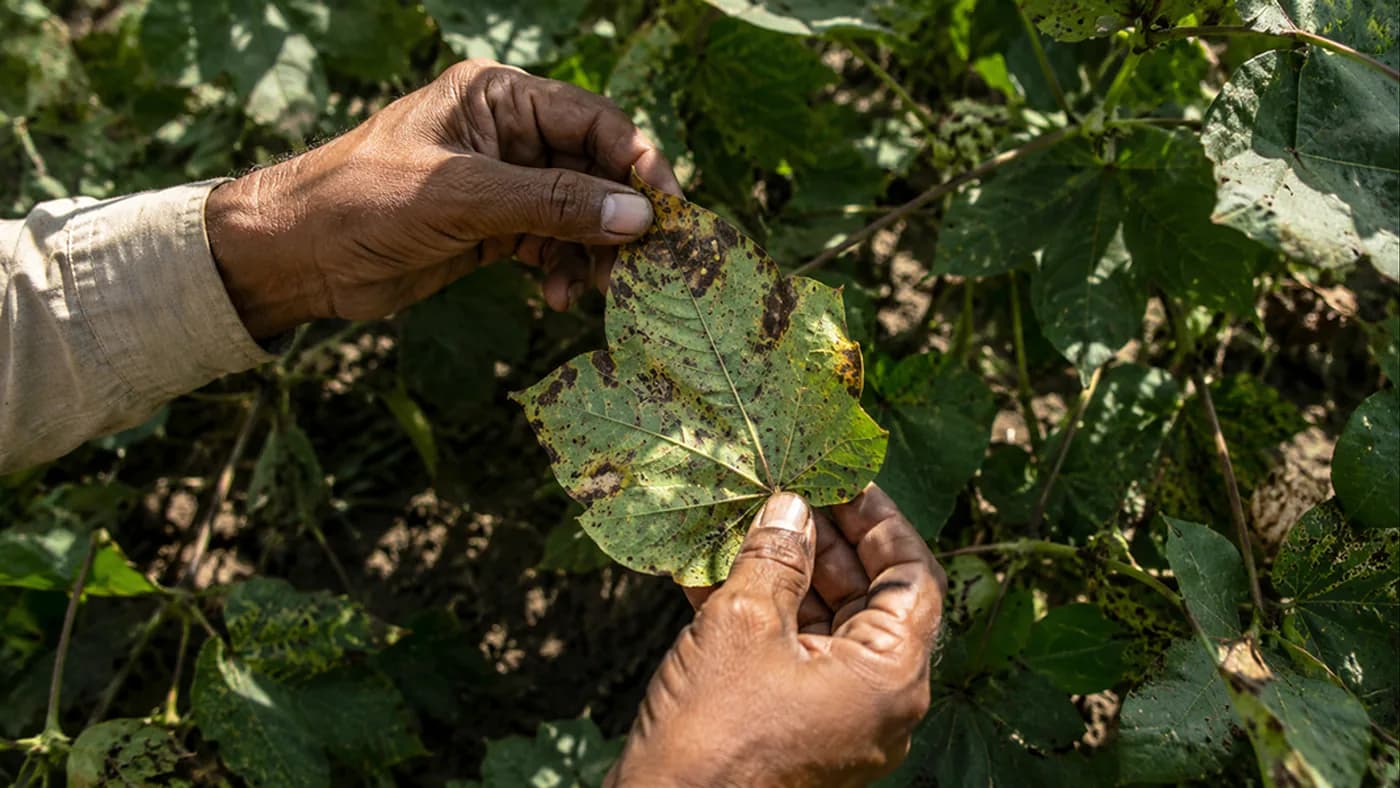
Do AI Farming Apps Actually Work? An Honest Assessment
Five different capabilities are sold under the word AI, and they have wildly different reliability. Photo disease diagnosis scores above 95% in the lab and commonly 70-80% on real field photos. Judge each feature separately.
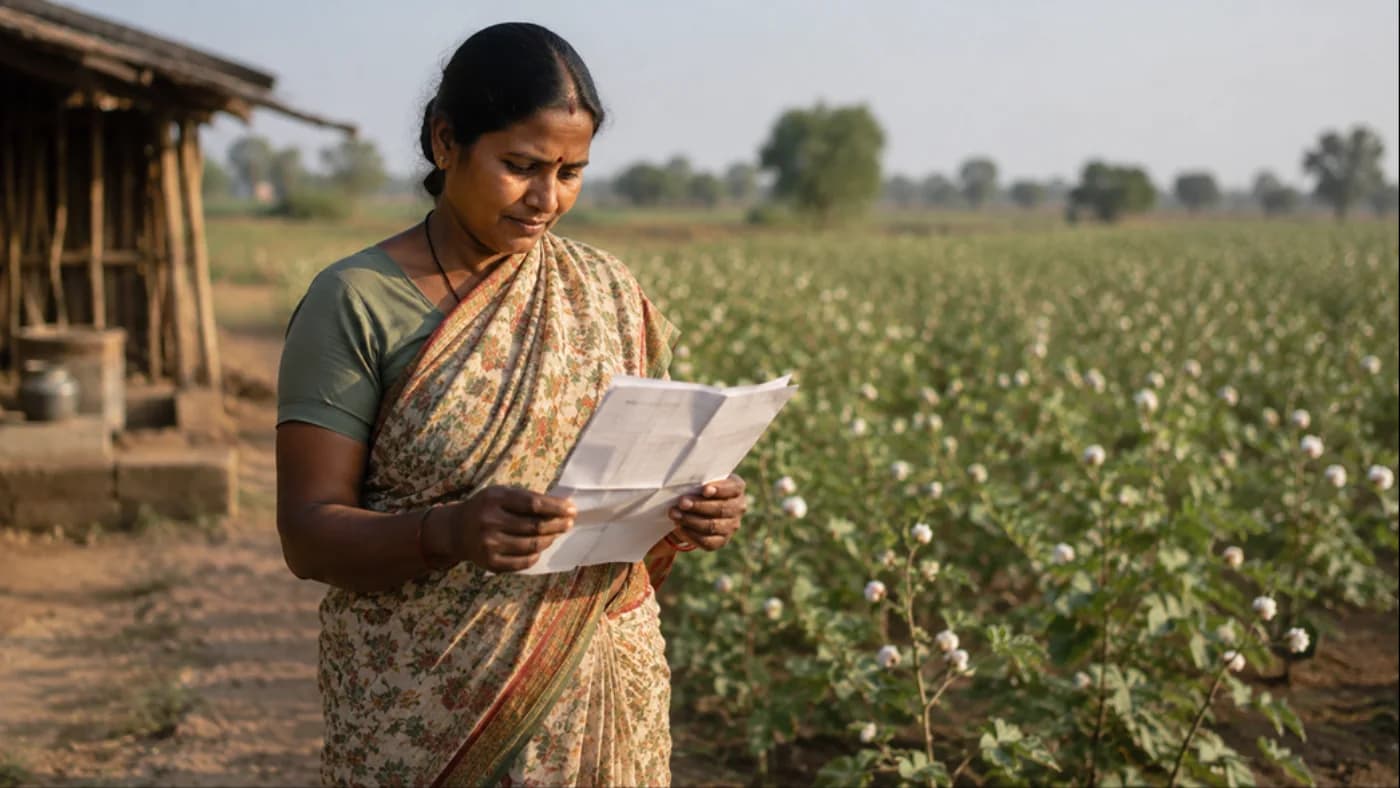
Women Farmers in India: The Paperwork That Decides What You Can Access
Most of what blocks a woman farmer is not farming — it is a record. Schemes, credit and insurance are issued against land in your name, and that is the gap worth closing. Here is exactly how.
Indian Farming in 2027: Four Changes Already Underway
Not predictions — four shifts that have already started and will decide how you farm in 2027: digital farm records, the fight over your data, a fertiliser policy turn, and sensing cheap enough for two acres.