

Winter Sowing vs Grow Lights: The Free Way to Raise Hardier Seedlings
Indoor grow lights run for 14-16 hours a day and add up on the electricity bill — and the seedlings they raise are often leggy and need careful hardening-off. Winter sowing in recycled containers outdoors costs almost nothing and produces tougher plants.
Quick answer
Whether you're at altitude with a genuine winter or on the plains with just a proper cool season, a recycled container and a sunny outdoor spot can start your seedlings for free, skip the hardening-off step entirely, and produce plants that are already tough by the time they go in the ground — reserve grow lights for the true heat-lovers that need an early, warm start indoors.
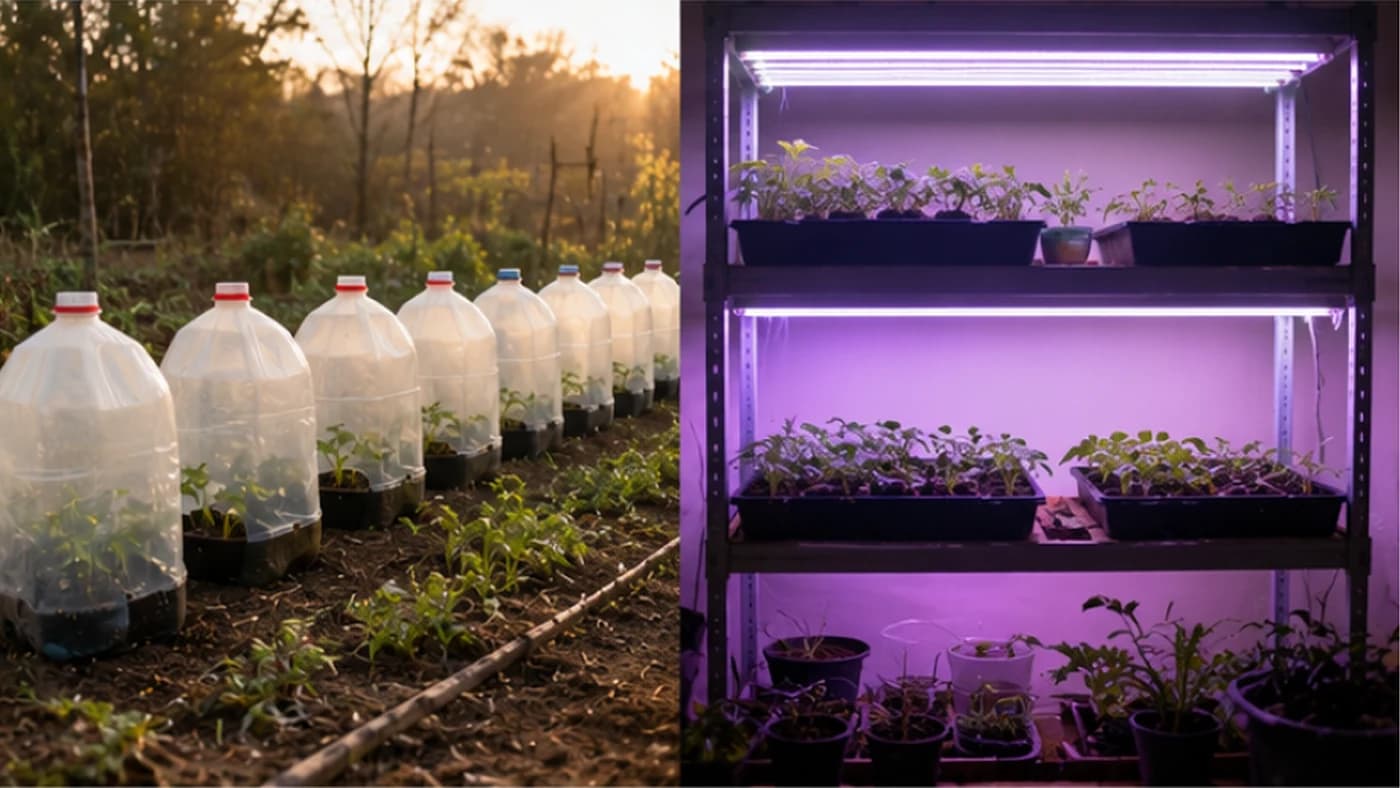
Growers in Himachal, Uttarakhand, Kashmir and the northeastern hills get a genuine winter — cold nights, sometimes frost or snow — that many temperate perennials actually need before they'll germinate. Growers on the plains get a real cool season too, even without snow. Either way, the same idea applies: instead of running grow lights indoors for hours every day to start your seedlings, you can let a simple outdoor mini-greenhouse and the season's own rhythm do the work for free.
Two different ways to start seeds
Winter sowing means planting seeds in small, vented mini-greenhouses — usually made from a recycled container like a milk jug — and leaving them outdoors through the coldest weeks of the year. Indoor grow lights, by contrast, try to recreate the sun's light and warmth inside your home, which works, but rarely matches full outdoor light intensity, and often produces "leggy" seedlings that stretch toward the light with weak stems, requiring a careful week-long hardening-off period before they can handle real outdoor conditions.
Winter-sown seedlings skip that step entirely, since they've never known anything but outdoor air, rain and temperature swings — they emerge already adjusted to the conditions they'll grow in.
The biology behind it
Many perennials and native wildflower seeds have a built-in dormancy called cold stratification — they simply won't germinate until they've experienced a period of cold and moisture, which stops them sprouting during a warm spell only to be killed by the next cold snap. For growers at real elevation (hill stations, the Himalayan belt), this happens naturally if jugs sit outside through winter.
On the plains, most vegetable seeds don't need true cold stratification, but the same mini-greenhouse method still works well as a zero-cost, low-maintenance way to start seedlings through the cool season — rain and dew pass through the vents to keep the soil moist, and the sun warms the container by day just enough to trigger germination when conditions are right, without your daily intervention.
Building the mini-greenhouse
Use a clear or translucent plastic container — a milk jug is the classic choice since it gives enough depth for roots and headroom for young seedlings. Cut it in half horizontally, leaving a small hinge, and poke 4-6 drainage holes in the bottom — skipping this is the single most common mistake, since without them the container becomes a bucket that drowns your seeds during rain.
Fill the bottom with a few centimetres of a good seed-starting or potting mix (not heavy garden soil, which packs down and suffocates roots), sow your seeds, label clearly, tape the jug shut, and place it outdoors somewhere it gets sun and rain. An open spot on the north or east side of your house is more stable than right against a south-facing wall, which reflects extra heat and can trick seeds into sprouting too early.
What you gain over grow lights
The most measurable saving is electricity — running grow lights 14-16 hours a day for weeks adds up meaningfully on the bill, especially if you're starting many plants, while winter sowing uses the sun for free. It also frees up indoor space that trays, lights and fans would otherwise occupy, and avoids common indoor problems like damping-off (a fungal disease common in still, humid indoor air) and fungus gnats, both of which thrive in a closed indoor setup.
Where this doesn't work
Heat-loving vegetables — tomato, chilli/pepper, brinjal (eggplant), and melons — are poor candidates for early winter sowing, since seed sown in cold, wet soil in January will often rot before conditions are warm enough to germinate. Start these either indoors, or winter-sow them much later, within a few weeks of your last expected frost or the true onset of warm weather.
In very windy areas, lightweight jugs can blow over or scatter your work across the ground — weigh them down or nestle several together in a crate. In very dry regions, check moisture manually through the top opening if rain has been scarce, since the vents only help if there's actually rain or dew to let in.
Getting it right
Label containers with an oil-based marker or paint pen rather than a regular marker, since ordinary ink fades under direct winter sun. When it's time to transplant, use the "hunk of seedlings" method: instead of separating each fragile root individually, slice the soil into blocks (like cutting a tray of brownies) and plant each cluster together — this minimises root disturbance and lets the seedlings support each other while they establish.
Time your sowing to the seed: true perennials and native species needing 60-90 days of cold stratification should go out in the depths of winter, while hardy cool-season vegetables (spinach, mustard greens, peas) can follow a few weeks later. Clear containers let in the most light; slightly opaque ones buffer intense midday sun — experienced growers often use a mix of both to see what different species prefer.
Frequently asked
What is winter sowing?+
Planting seeds in small, vented mini-greenhouses made from recycled containers (like milk jugs) and leaving them outdoors through the cold season, letting natural temperature and moisture cycles trigger germination at the right time.
Does winter sowing work without real snow or frost?+
Yes — on the plains, the same recycled-container method works as a zero-cost, low-maintenance way to start cool-season vegetables, even without true cold stratification. True dormancy-breaking cold stratification matters mainly for perennials and native species, and is most relevant for hill-station and Himalayan-belt growers.
Which seeds should NOT be winter-sown early?+
Heat-loving crops like tomato, chilli, brinjal and melon — sow these later (closer to your last frost or the true start of warm weather) or start them indoors instead.
What's the biggest mistake people make?+
Forgetting drainage holes. Without 4-6 holes in the bottom, the container fills with water during rain and the seeds rot instead of germinating.
How does this save money compared to grow lights?+
Grow lights running 14-16 hours a day for weeks add a real, recurring cost to your electricity bill, plus the cost of the lights and bulbs themselves. Winter sowing uses only recycled containers, potting mix and seeds, with no ongoing energy cost.
Where to go next
Want this as daily tasks for your farm?
Khetiyaar turns guides like this into a day-by-day plan — in your language, free to start.

Related guides
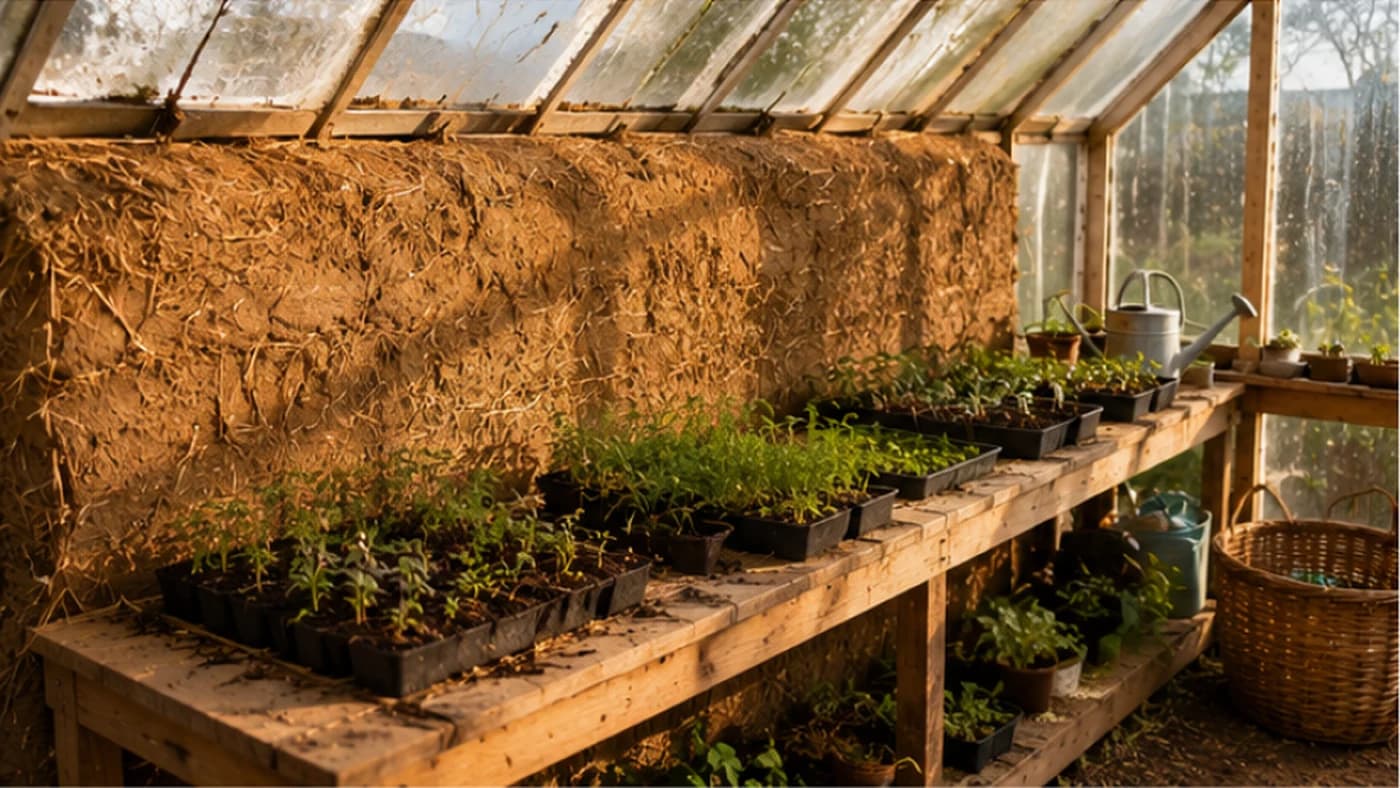
Heating a Greenhouse With Mud and Straw: The Free Thermal Mass Bench
No electricity, no diesel heater, no gas cylinder — just clay, sand, straw and the sun. A thermal mass bench keeps a polyhouse or low tunnel warm through winter nights for free.
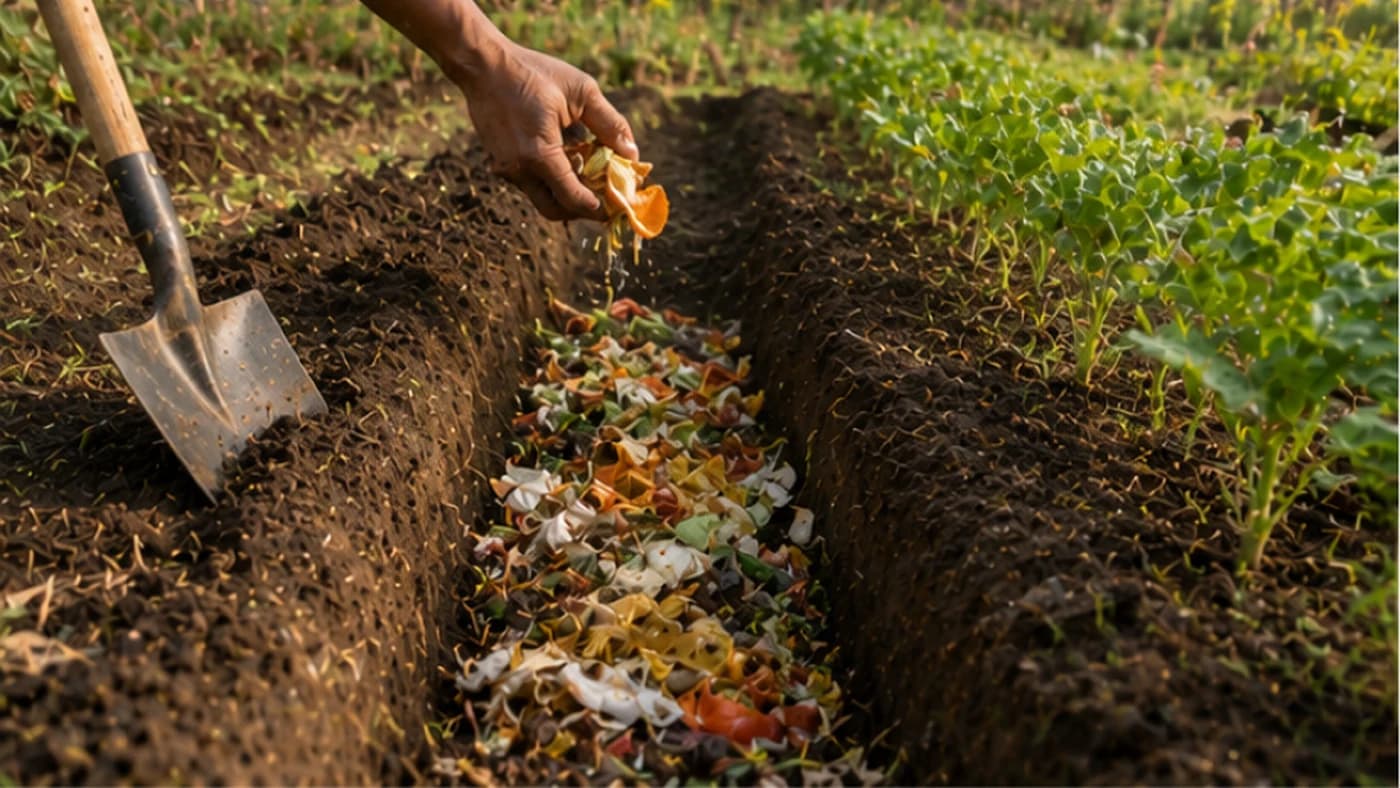
Trench Composting for Beginners: Bury Your Kitchen Waste Straight Into the Bed
Skip the compost pile and the turning altogether. Bury your kitchen scraps directly where your next crop will grow, and let the soil itself do the composting — no smell, no pests, no extra corner of the yard needed.
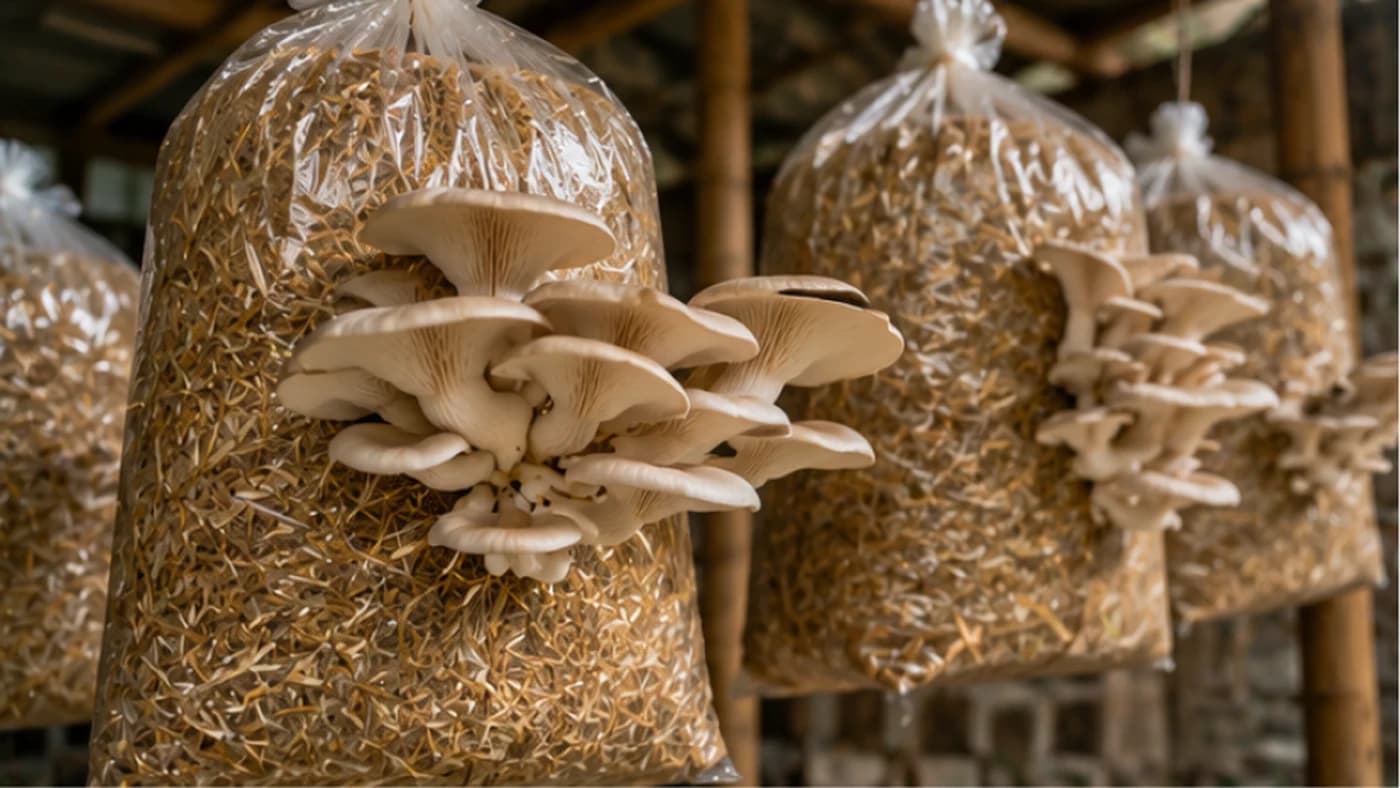
How to Grow Oyster Mushrooms on Straw at Home
A single bundle of wheat or paddy straw can turn into 10-25 kg of fresh oyster mushrooms across a few harvests — using a bucket, a bag of spawn, and space no bigger than a porch corner.