

Heating a Greenhouse With Mud and Straw: The Free Thermal Mass Bench
No electricity, no diesel heater, no gas cylinder — just clay, sand, straw and the sun. A thermal mass bench keeps a polyhouse or low tunnel warm through winter nights for free.
Quick answer
A mud-and-straw thermal bench costs almost nothing if you have clay soil and straw — the same crop residue many farmers already burn or discard — and it needs no fuel, no electricity and almost no maintenance once built. For hill and high-altitude vegetable growers running a nursery or polyhouse through winter, it is one of the cheapest ways to protect a season's worth of seedlings from a hard frost. Build a test brick first to get your clay-to-sand ratio right, place the bench where the winter sun lands directly on it, paint it dark, and let the physics of mass do the rest.
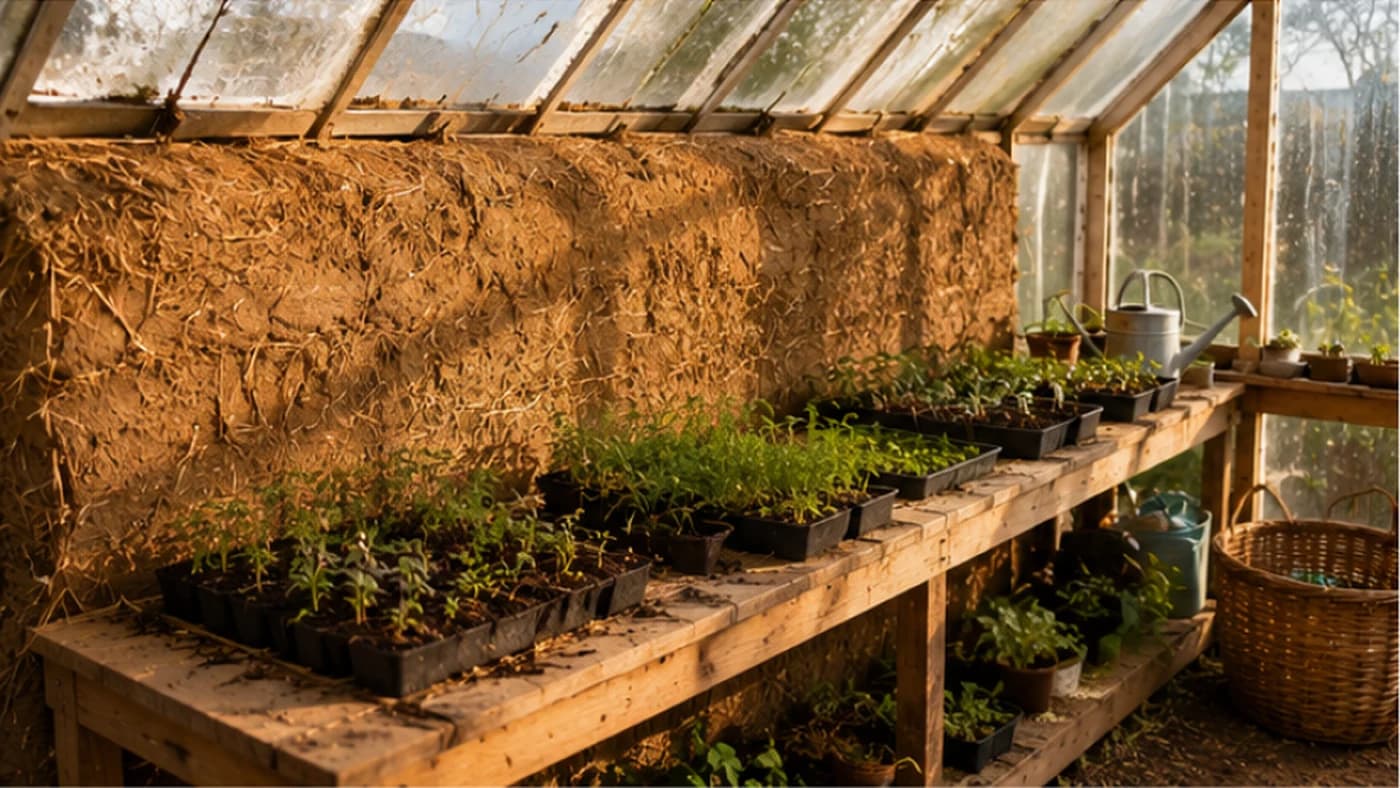
In the hill districts of Himachal, Uttarakhand, Kashmir and the higher parts of the Northeast, winter nights inside a polyhouse can fall close to freezing even while daytime sun makes it too hot to work in. Farmers who cannot afford a diesel heater or a gas cylinder every night often lose their winter vegetable nursery to a single cold snap. There is an old, nearly free solution: a thermal mass bench made of mud and straw. Instead of burning fuel, it stores the sun's heat during the day in a heavy mass of clay and releases it slowly through the night. This is the same principle behind the famous Chinese solar greenhouse, which keeps growing space above freezing through harsh winters using nothing but a massive earthen wall.
The idea: let mud do the heating for free
Air is a poor place to store heat — it cools almost the moment the sun goes down or a door opens. Solid, heavy material like mud is the opposite: it takes a long time to heat up, and just as long to release that heat back out. This is called thermal mass. Build a heavy bench of cob (a mix of clay-rich soil, sand and straw) directly in the path of the winter sun inside your greenhouse, and it becomes a solar battery — charging every clear day, discharging every night.
In a thin-walled polyhouse with no thermal mass, the inside can swing from a scorching 32°C in the afternoon to below freezing by midnight. The same structure with a well-built mud bench can hold a steady 10°C or higher overnight — enough to save a nursery of seedlings that would otherwise die in the cold.
How thermal mass actually works
During the day, sunlight passes through the polyhouse sheeting and strikes the dark surface of the mud bench. The surface heats up, and that heat slowly conducts deeper into the mass of clay and sand. Clay-rich mud holds a large amount of heat energy relative to its size — sand gives it bulk and storage capacity, clay binds everything together, and straw adds strength so the bench doesn't crack as it dries, while also creating tiny air pockets that regulate how fast heat moves through it.
How to build the bench, step by step
Test your soil first: put a handful in a clear glass or bottle of water, shake it, and let it settle. Sand falls to the bottom, silt in the middle, and clay forms a layer on top. You want roughly 25–30% clay and 70–75% sand for a good mix.
To mix cob, spread sand and clay-rich soil on a tarp, add water gradually, and knead it with your feet until it feels like stiff dough — not soup. Then work in long-strand straw (wheat, paddy or any dry crop straw you have) until it is fully coated through the mix.
Always build on a solid base — stone, brick, or broken concrete — so the bench never sits directly on damp earth, which would wick moisture up into it. Build in layers of 15–30 cm at a time, letting each layer firm up (leather-hard, not fully dry) before adding the next, so the lower layers don't slump under the weight above.
Where to place it, and how to finish it
The bench is useless if the sun can't reach it. In India (Northern Hemisphere), place it along the north wall of the structure, facing south, so it is the first thing the winter sun hits as it enters low in the sky. Once the bench is built and dry, paint the surface a dark colour — black, dark brown or deep green — to absorb the maximum possible heat.
Frequently asked
What is a thermal mass bench and why does it help a greenhouse?+
It's a heavy bench built from clay, sand and straw (cob) placed inside a greenhouse or polyhouse. It absorbs the sun's heat during the day and releases it slowly overnight, keeping the space several degrees warmer than one with no thermal mass — without burning any fuel.
What clay-to-sand ratio should I use?+
Aim for roughly 25–30% clay and 70–75% sand. Always make a small test brick first and let it dry — if it cracks badly, add more sand; if it crumbles, add more clay.
How heavy is a mud thermal bench, and does that matter?+
A cob bench can weigh over 1,600 kg per cubic metre, so it must sit on a solid ground-level foundation — never on a raised wooden or bamboo platform, which could collapse under the weight.
Does this work in every climate?+
It works best where winter days are sunny even if nights are freezing cold — common in Himachal, Uttarakhand, Ladakh, Kashmir and similar high-altitude farming areas. In regions with long, cloudy winter stretches, the bench will act more as a stabiliser than a full heat source, and you may still need backup warmth on the coldest, greyest days.
Can I combine this with a small fire for extra heat on cloudy days?+
Yes — advanced builders route the exhaust pipe of a small, efficient wood stove through the inside of the bench so heat charges the mass directly. A single small evening fire can keep the bench warm for 12–24 hours, which helps get through a stretch of cloudy days.
Where to go next
Want this as daily tasks for your farm?
Khetiyaar turns guides like this into a day-by-day plan — in your language, free to start.

Related guides
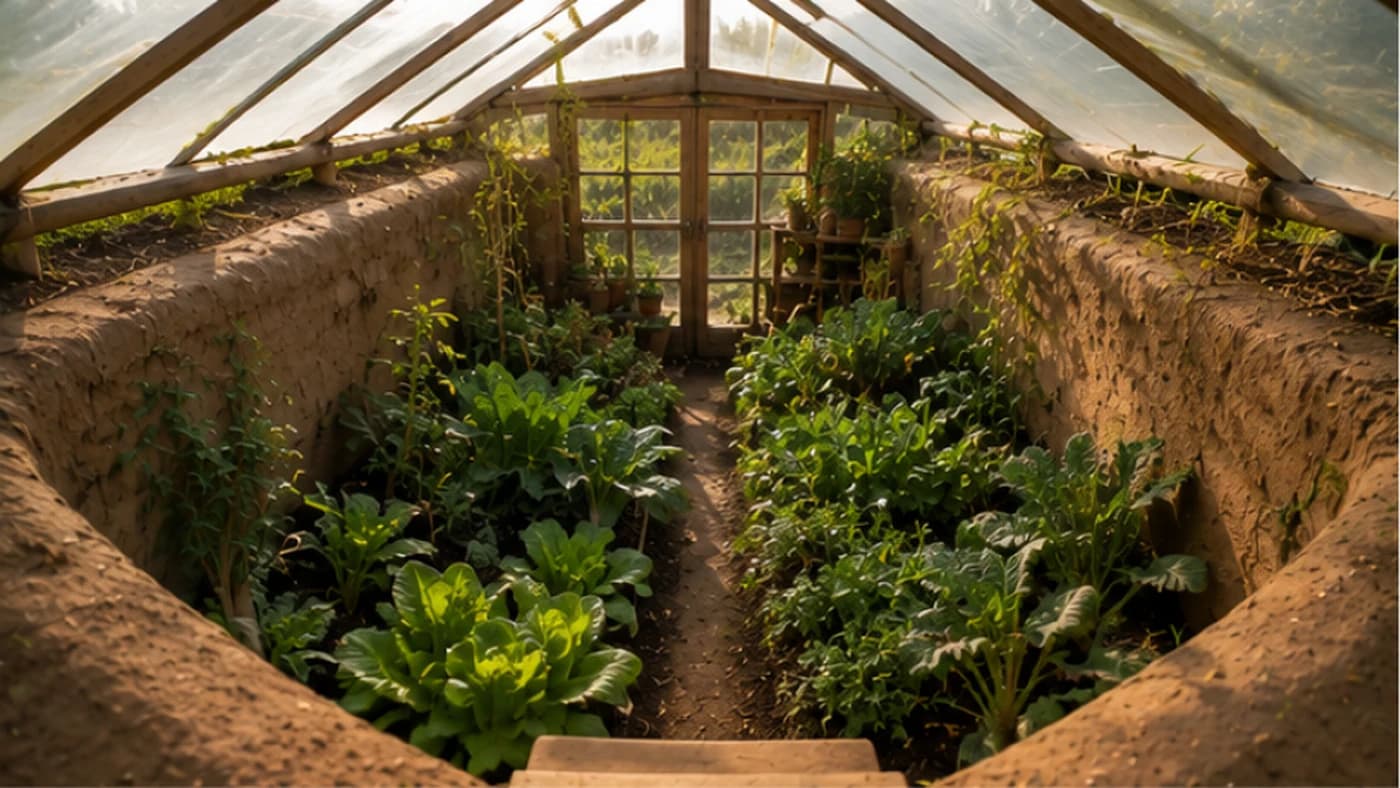
Walipini Underground Greenhouses: Growing Food Through Cold Himalayan Winters
In Bolivia's freezing high plains, farmers dig a few feet down to tap the earth's steady warmth and grow food through winter without fuel. The same principle already works in Ladakh and other cold, high-altitude parts of India — here's how it works and who it's actually for.
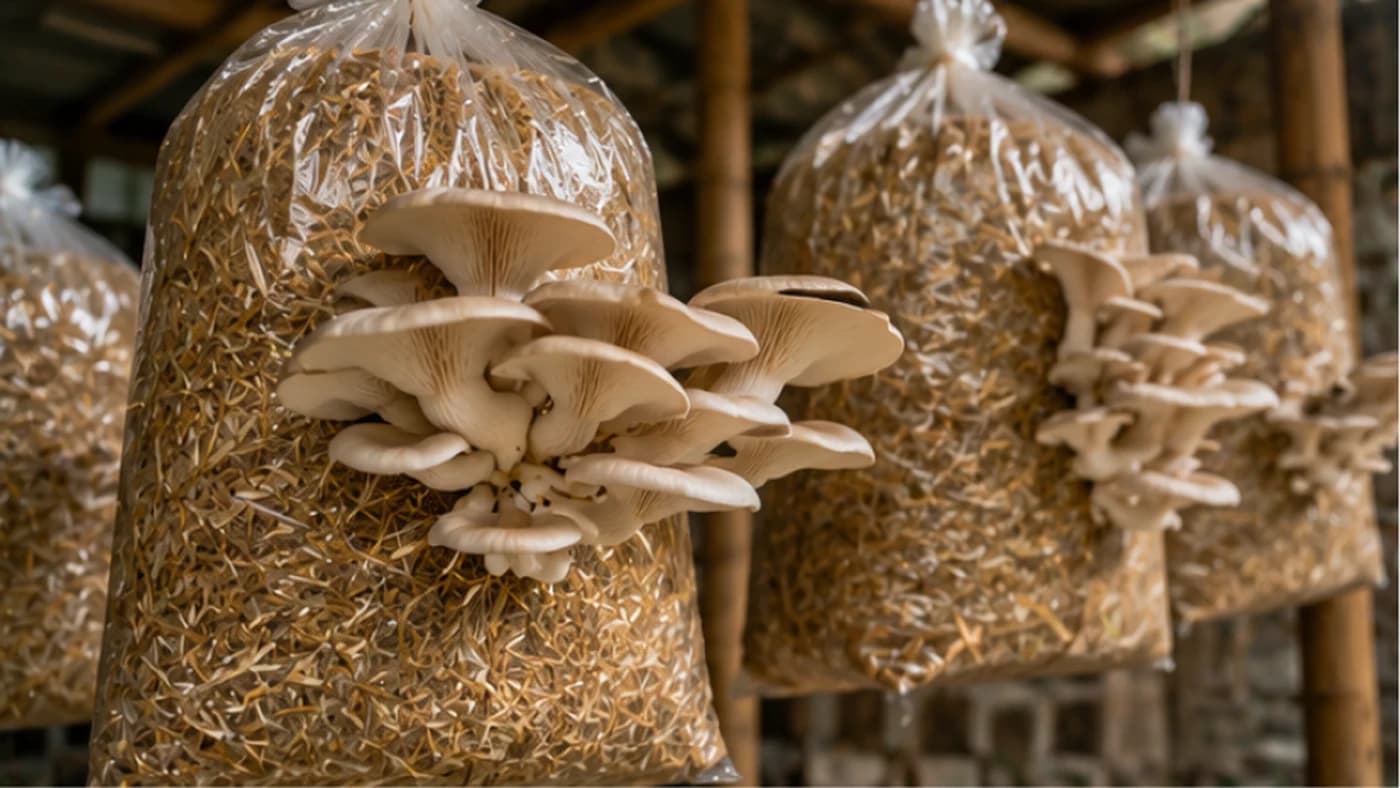
How to Grow Oyster Mushrooms on Straw at Home
A single bundle of wheat or paddy straw can turn into 10-25 kg of fresh oyster mushrooms across a few harvests — using a bucket, a bag of spawn, and space no bigger than a porch corner.
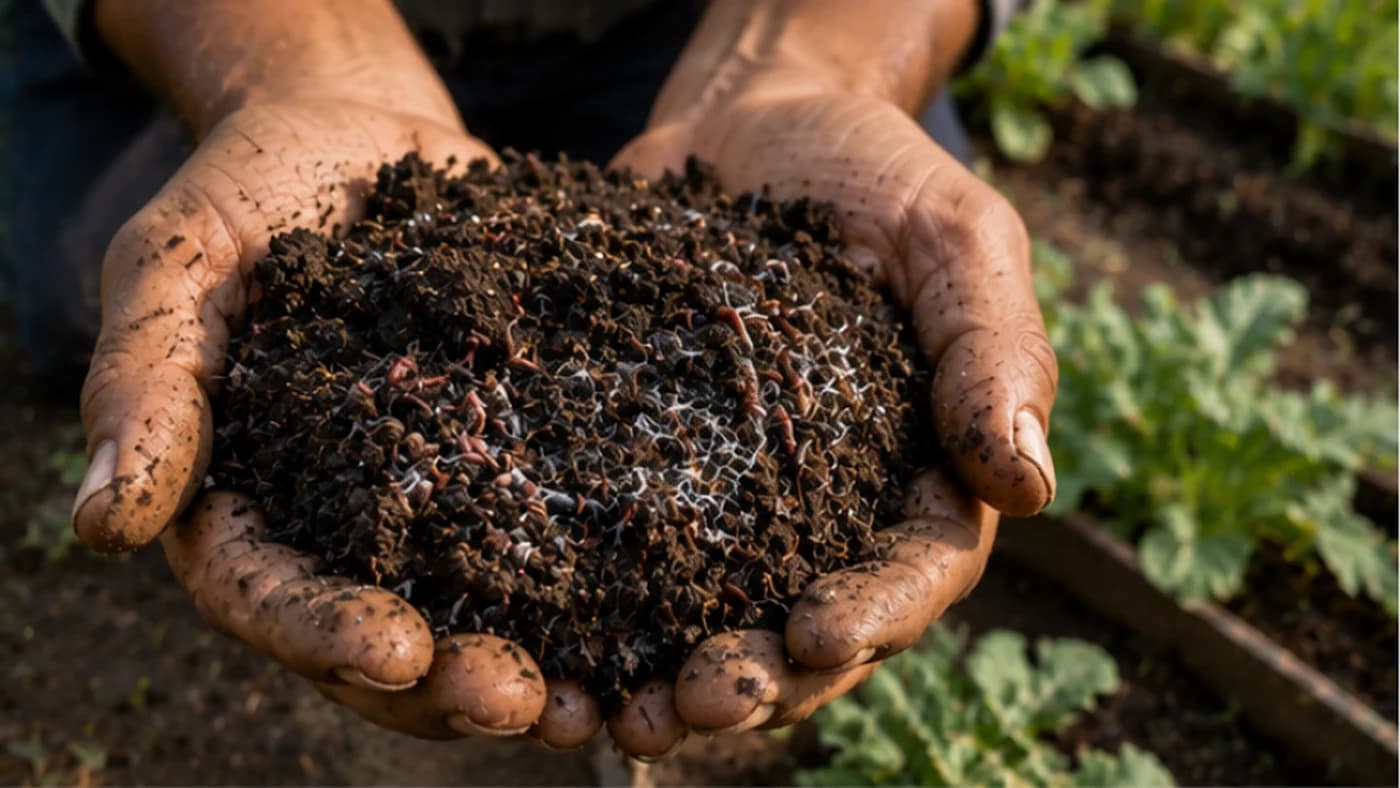
Soil Microbiome Benefits: Why Feeding Your Soil Beats Feeding Your Plants
A single teaspoon of healthy soil holds more living organisms than there are people on Earth. Learn how that hidden workforce feeds your plants, fights disease, and can cut your fertiliser bill for good.