

Walipini Underground Greenhouses: Growing Food Through Cold Himalayan Winters
In Bolivia's freezing high plains, farmers dig a few feet down to tap the earth's steady warmth and grow food through winter without fuel. The same principle already works in Ladakh and other cold, high-altitude parts of India — here's how it works and who it's actually for.
Quick answer
A Walipini is a serious answer to a specific problem: growing fresh food through genuinely cold winters without burning fuel to do it. For most of India it is the wrong tool, but in Ladakh, Spiti, Kinnaur and similarly cold, high-altitude regions, farmers are already using exactly this kind of underground and passive-solar structure successfully. If you farm in one of those regions, the labour of digging down roughly two metres, reinforcing the walls, and getting drainage and roof angle right pays back for years afterward in a growing season that would otherwise not exist.
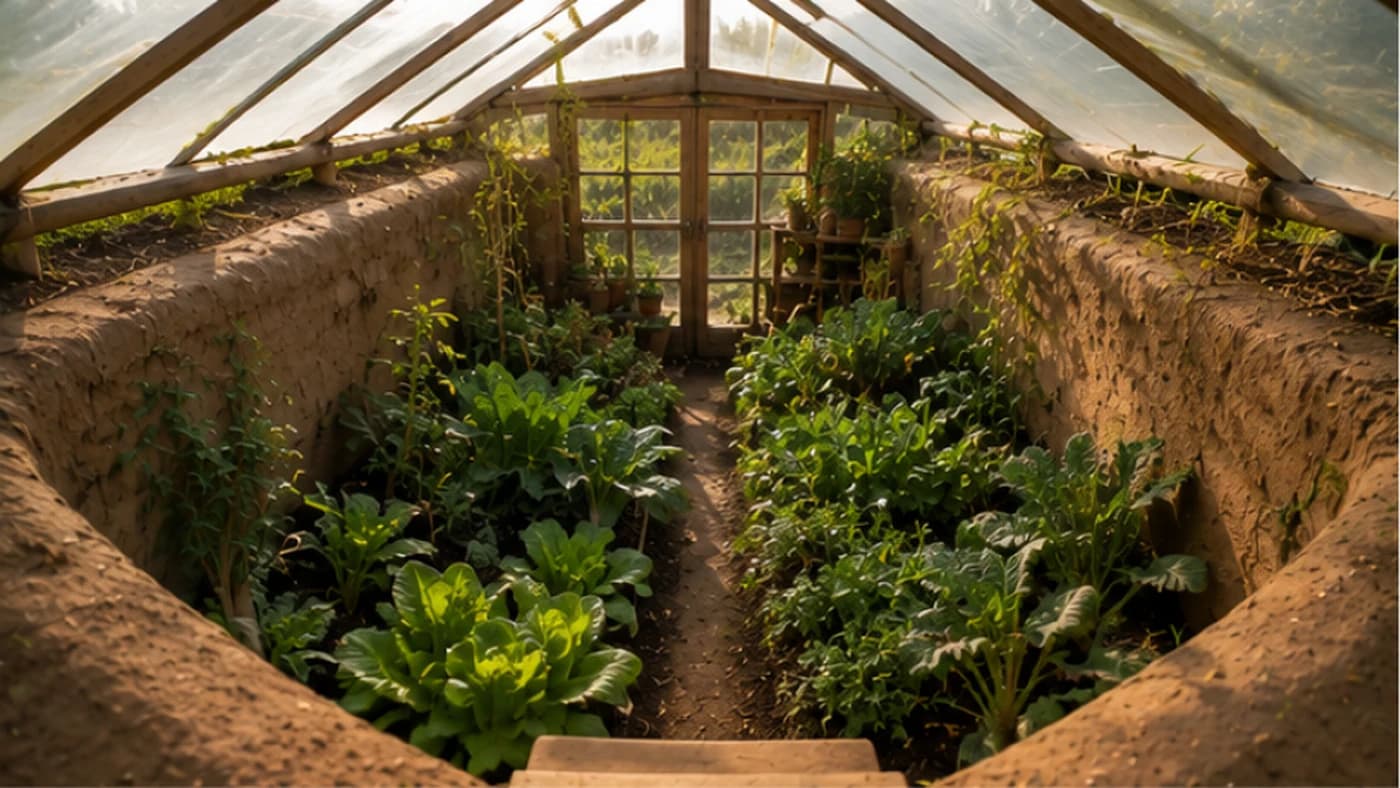
A standard glasshouse fights winter with fuel — a heater running constantly just to keep frost off the crop. A Walipini, or underground greenhouse, works with the earth instead of against the weather: dig down far enough and the soil holds a remarkably steady temperature no matter what the air above is doing, and a clear roof captures the sun's heat during the day and releases it slowly at night. It is not a technique for every climate, but where winters are genuinely cold — including parts of the Indian Himalaya — it lets farmers grow fresh food through months when nothing else survives outside.
What a Walipini is and where the idea comes from
"Walipini" comes from an Aymara word meaning "place of warmth," and the design was refined for the high, cold plains of Bolivia to help farmers grow food year-round in a harsh climate. Unlike a normal greenhouse sitting on the surface, a Walipini is dug partly underground, relying on the earth's natural insulation rather than a heater. The core principle: roughly 1.8–2.4 metres below the surface, soil temperature in most regions stays close to 10–16°C regardless of the air temperature above, so combining that steady geothermal base with passive solar gain through a clear roof creates a stable microclimate where even tender crops can survive a cold that would kill them outdoors.
Why this fits cold, high-altitude India — not the plains
This technique is not for most of India. It exists to solve a cold-climate problem, and across the hot plains that make up most of the country a Walipini's heat-trapping design would work against you — shade nets and cooling structures are the right tool there, not underground heat retention. Where it genuinely applies is India's cold high-altitude belt: Ladakh, Spiti, Kinnaur, and parts of higher Himachal Pradesh and Uttarakhand already see winters cold enough that fresh vegetables are otherwise unavailable for months. Passive solar and underground/semi-underground greenhouses are already used successfully by farmers in Ladakh's cold desert climate for exactly this reason — this is a proven, not theoretical, solution in that specific setting, and it is worth exploring seriously if you farm in a comparably cold, high-altitude region.
How the thermal mass actually works
During the day, sunlight passes through the clear roof and strikes the floor and walls of the pit; dark soil, stone, or water containers inside absorb that heat instead of it escaping the way it would through a standard glass wall. When the air cools after sunset, the surrounding earth slowly releases the stored heat back into the space, smoothing out the temperature swing rather than letting it plummet. Getting the roof angle right matters: it should sit close to perpendicular to the winter sun at your latitude so the pit captures maximum light exactly when plants need it most — as a rough guide, angle the roof at roughly your latitude plus 15–23 degrees.
Building one, step by step
Choose a site with full southern exposure and no risk of pooling water. Dig to a depth of about 1.8–2.4 metres — enough to reach the frost line — in a rectangle with its longest side facing the sun, saving topsoil for growing beds and using subsoil to build a berm on the north side for extra insulation. Reinforce the walls, since even heavy clay can collapse after rain or a freeze-thaw cycle — rammed earth, earthbags, stone, or packed-earth-filled tyres all work and add useful thermal mass, with walls sloped slightly inward for stability. Install drainage before anything else: a gravel layer or French drain at the base with a slight floor slope to a sump, since without it the pit becomes a swamp and roots rot. Add ventilation at both a high point (a roof vent or trap door) and a low point (a vent at the base of the back wall) to create airflow that prevents the humid, sealed environment from breeding mildew.
Real benefits and real limitations
A well-built Walipini can retain dramatically more heat than a surface greenhouse, cutting supplemental heating close to zero in most winters, and its low profile shrugs off high winds and snow load that would tear plastic sheeting off a standard hoop house. It also loses far less water to evaporation than an above-ground structure, which matters in dry, high-altitude regions where every litre counts. But it is a genuine construction project, not a weekend one — excavation to nearly 2 metres depth is labour-intensive and, if you cannot dig it yourself, hiring machinery can make it more expensive up front than a simpler hoop house. It only works well where the water table is low (check this before digging — a pit that fills with groundwater is unusable) and where the ground stays dry enough in winter; in very rainy or waterlogged climates the pit becomes a constant drainage battle rather than a benefit.
Getting the most from the space
Because the soil stays around 10°C even when the air outside is well below freezing, cold-hardy greens like spinach, kale and chard can often be planted and harvested through the winter without any supplemental heat. Placing dark water containers along the back wall adds extra thermal mass, absorbing heat by day and releasing it at night to lift the interior temperature a few degrees further, and heavy straw mulch on the beds keeps roots warm and moisture in. The stable, humid environment that makes plants thrive also suits pests like aphids and whiteflies, so check plants regularly and introduce beneficial insects early rather than waiting for an outbreak.
Terms explained in this guide
Frequently asked
What is a Walipini?+
A semi-underground greenhouse, dug roughly 1.8–2.4 metres deep with a clear roof, that uses the earth's stable underground temperature plus passive solar heat to stay warm through winter without a heater.
Is a Walipini useful anywhere in India?+
Mainly in cold, high-altitude regions like Ladakh, Spiti, Kinnaur, and higher parts of Himachal Pradesh and Uttarakhand, where underground and passive-solar greenhouses are already used successfully. It is not suited to India's hot plains.
How deep does a Walipini need to be dug?+
Typically about 1.8–2.4 metres, deep enough to get below the frost line and reach soil that holds a stable temperature year-round.
What is the biggest risk when building one?+
A high water table. Digging nearly 2 metres down in an area where groundwater sits close to the surface effectively creates a well, not a growing space — always check local water table depth before excavating.
Does a Walipini need any heating at all?+
Usually not, once established — the combination of geothermal stability and passive solar gain keeps it well above outdoor winter temperatures. Some growers add dark water barrels along the back wall for extra thermal buffering.
Where to go next
Want this as daily tasks for your farm?
Khetiyaar turns guides like this into a day-by-day plan — in your language, free to start.

Related guides
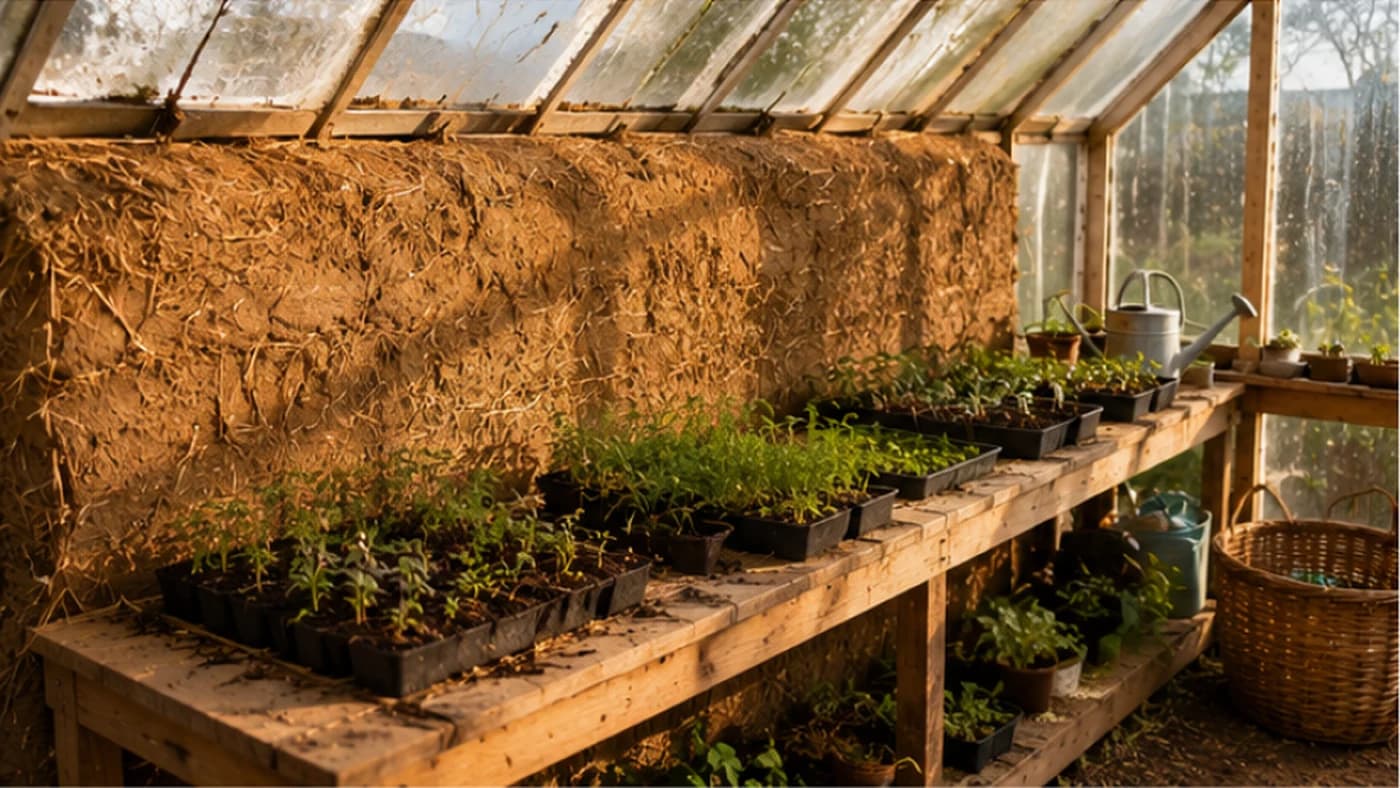
Heating a Greenhouse With Mud and Straw: The Free Thermal Mass Bench
No electricity, no diesel heater, no gas cylinder — just clay, sand, straw and the sun. A thermal mass bench keeps a polyhouse or low tunnel warm through winter nights for free.
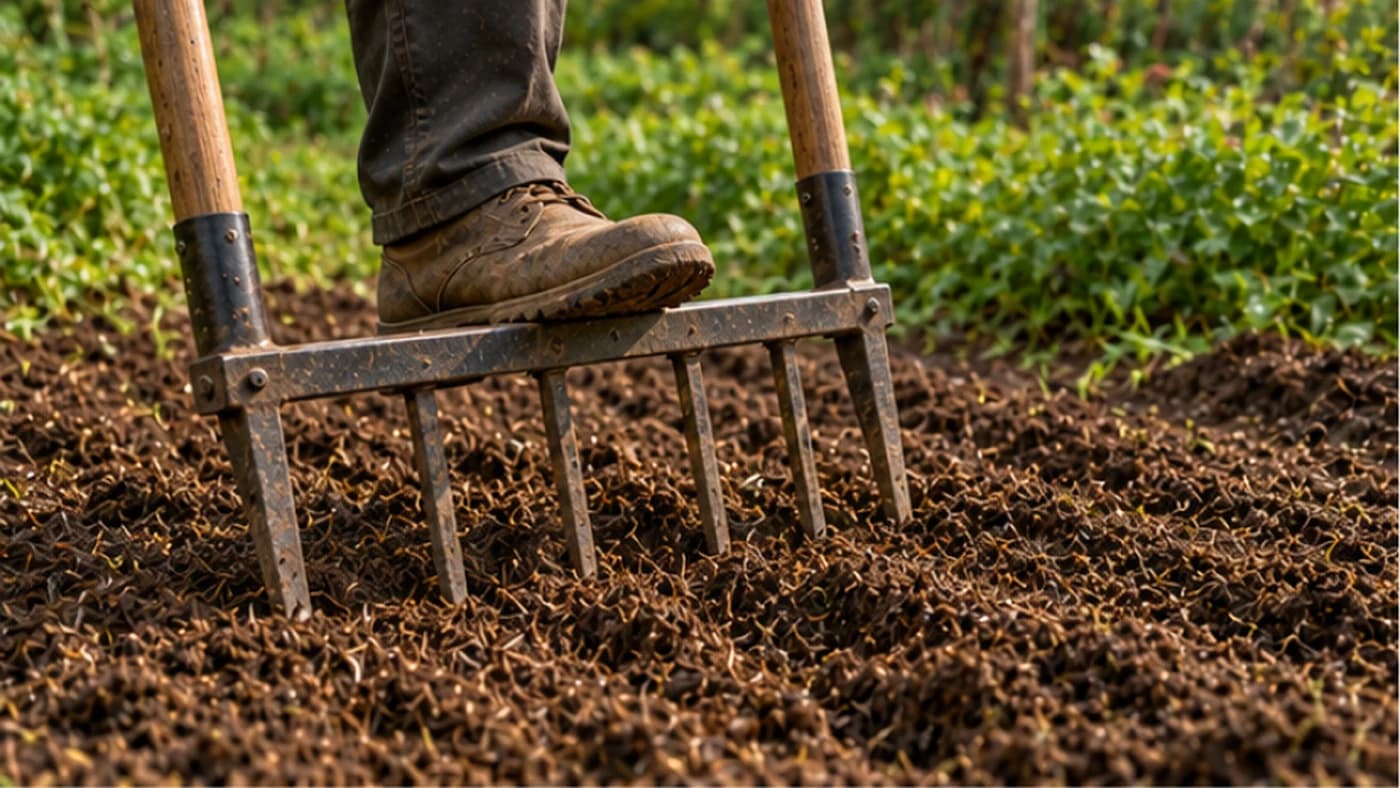
Broadfork vs Power Tiller: Which One Actually Protects Your Soil?
A power tiller looks fast and clean, but it can quietly wreck the soil life underneath. A broadfork — a simple, no-fuel hand tool — often does a better job for a kitchen garden or a small organic plot.
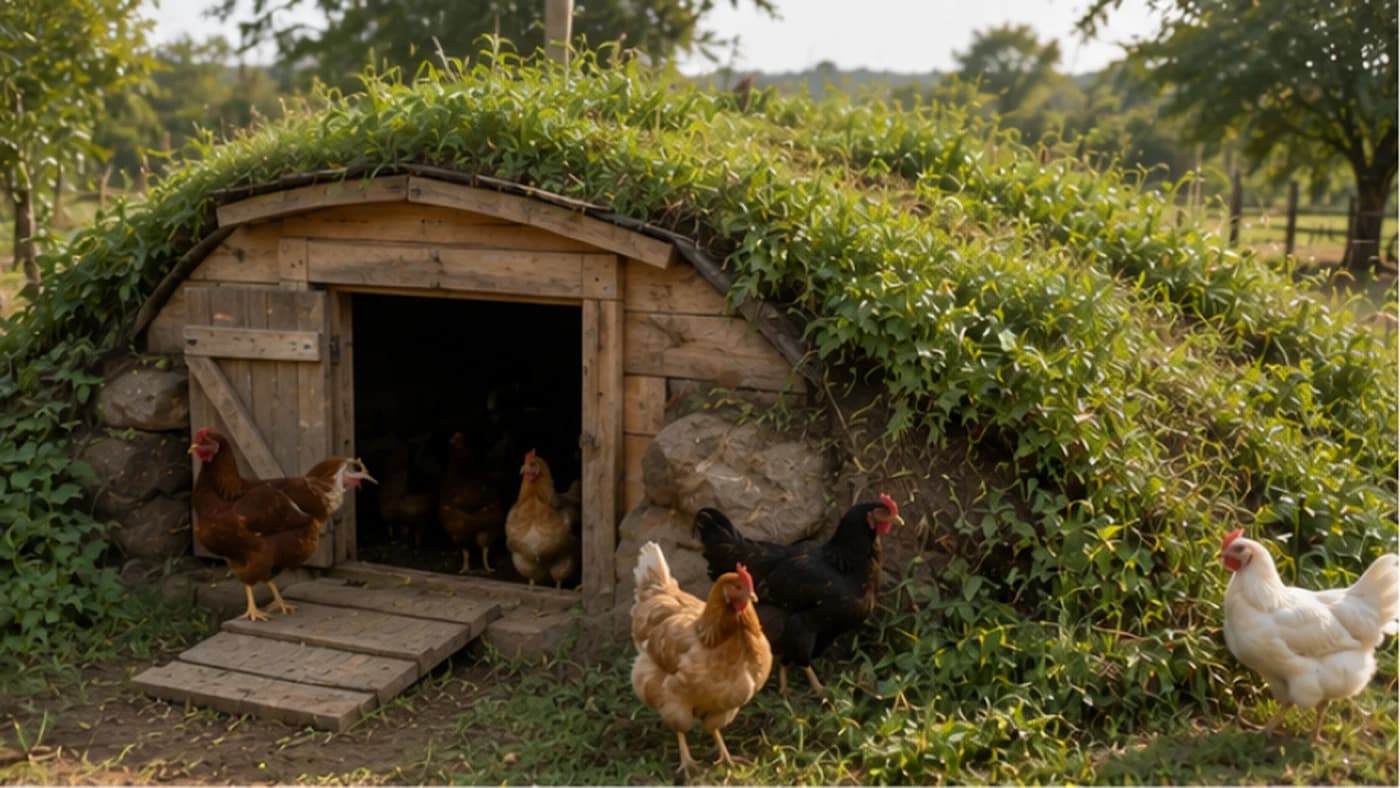
Earth-Sheltered Chicken Coop: Using the Ground to Keep Birds Cool in Summer and Warm in Winter
A coop built partly into the ground barely changes temperature between a 45°C afternoon and a cold winter night. Here's how earth-sheltering works and how to build one for your flock.