

Using Urine as Garden Fertiliser: The Free Nitrogen You're Flushing Away
Human urine is roughly 95% water and 5% urea, nitrogen, phosphorus and potassium — a fast-acting, completely free liquid fertiliser most people pour down the drain every day. Diluted and used correctly, it can match synthetic NPK feed at zero cost.
Quick answer
Used with sensible dilution and basic hygiene, human urine is a genuinely free, fast-acting nitrogen source that Indian farmers already have a cultural head start on through the use of cow urine. Start small — one nitrogen-hungry crop, a diluted drench, and careful observation — before scaling it into a regular part of your soil-feeding routine.
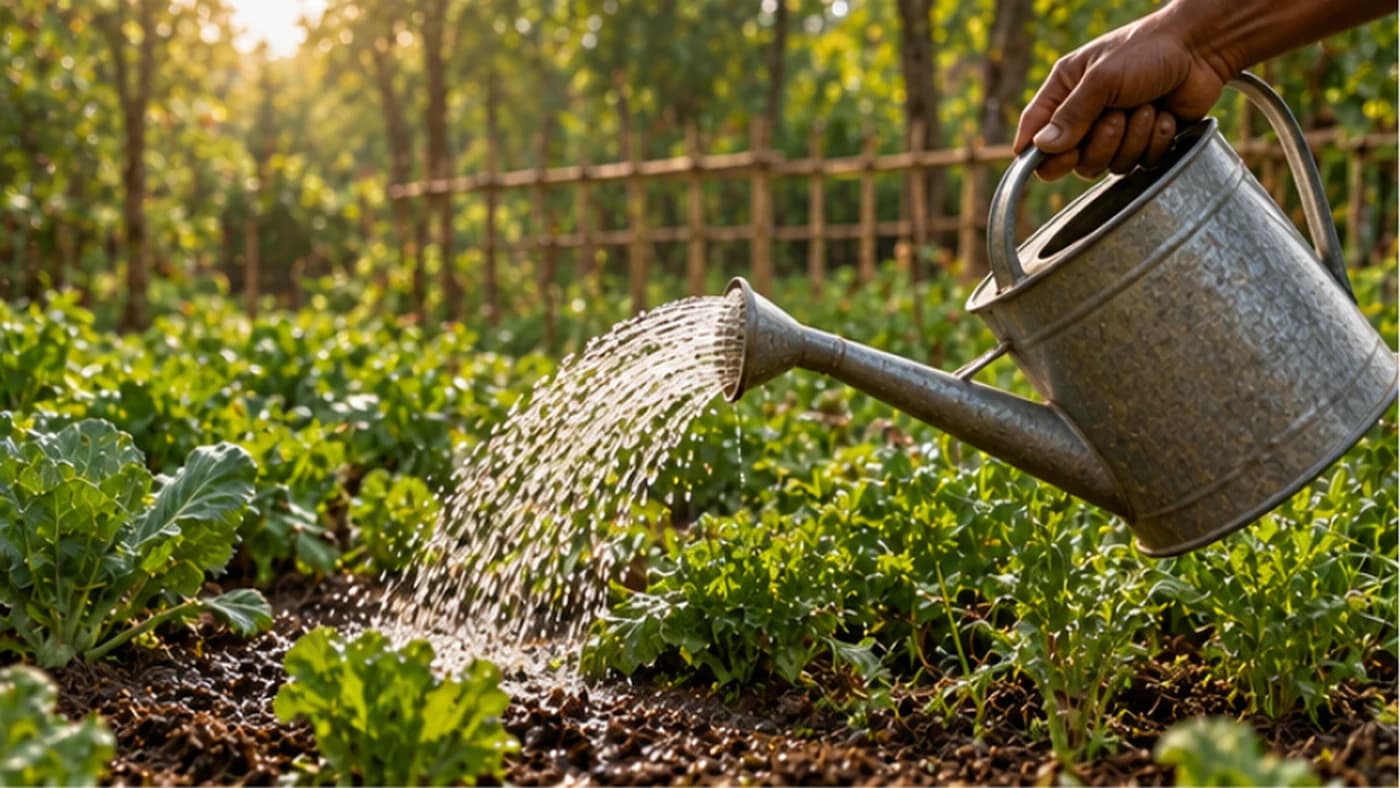
Indian farmers already know the value of animal urine as a fertiliser and pest deterrent — gau mutra (cow urine) has been used this way for generations. Human urine works on the same principle and is even richer in the nutrient plants want most: nitrogen. Most of it is simply flushed away every day, at real cost to your water bill and to municipal treatment systems, when — diluted correctly — it can replace a meaningful share of the nitrogen you'd otherwise buy in a bag.
What's actually in it
Human urine is about 95% water. The remaining 5% is mostly urea, along with the same three nutrients every fertiliser bag advertises: nitrogen (drives leafy growth), phosphorus (roots and flowering), and potassium (overall plant health and water regulation). A healthy adult produces, over a year, roughly the nitrogen equivalent of several large bags of commercial fertiliser.
This isn't a fringe idea — research institutions studying urine-based fertiliser (including Vermont's Rich Earth Institute) have found it performs comparably to synthetic NPK feed on crops like corn and hay. The only real difference is that one is free and the other costs money and fossil-fuel energy to manufacture.
How it works in the soil
The urea in urine is chemically similar to the urea in many commercial nitrogen fertilisers. Once it reaches the soil, bacteria carrying the enzyme urease break it down into ammonia within days; other soil bacteria then convert that ammonia into nitrates, the form of nitrogen roots can actually absorb.
Because this conversion is fast, urine acts almost like a quick-release fertiliser — you can often see a visible greening effect within days of application, faster than compost or farmyard manure, which release nutrients over months. Applying it to soil that already has plenty of organic matter (compost, mulch) helps, since the carbon holds onto the nitrogen and releases it steadily instead of letting it evaporate away as gas.
Why it's worth doing
Cost is the obvious win — you produce your own nitrogen source at zero cash outlay and zero packaging or transport. Environmentally, nitrogen and phosphorus that would otherwise strain sewage treatment and eventually leak into rivers and lakes (feeding toxic algal blooms) get put to productive use instead.
Soil life tends to tolerate urine well — research (including from the University of Birmingham) shows soil bacteria are notably resilient to it, and because it carries trace sulphur, magnesium and calcium alongside NPK, it feeds a broader range of soil microbes than a basic synthetic mix. It's also a real water-saving move: even an efficient toilet uses several litres of clean water per flush just to move a small amount of waste, so diverting urine for the garden cuts your household's water footprint.
Collecting, diluting and storing it correctly
A simple sealed container — a jug or bucket with a tight lid — is enough to collect it. Always keep containers sealed: an open container lets ammonia (and nitrogen) escape as smell, and lets flies and contamination in. Never mix it with faecal matter, and keep a separate, clean container just for this purpose.
Dilution is the golden rule: 1 part urine to 5 parts water for soil-drenching established plants, and a much weaker 1:10 to 1:20 for seedlings, potted plants or foliar spraying, since undiluted urine is concentrated enough to burn roots and leaves. If you want to store it before use, the World Health Organization's guidance is to store it sealed for about six months at room temperature — over that time its pH rises and becomes alkaline enough to neutralise almost all pathogens, making stored urine safe even to share with others. For your own household's immediate use, many people simply use it fresh, diluted at the point of application. A small splash of vinegar in the storage container keeps the pH slightly lower, which holds the nitrogen in liquid form rather than letting it turn into smelly ammonia gas.
Mistakes to avoid and where this doesn't fit
The most common mistake is over-application — applying it undiluted or too often, which burns roots and leaves through fertiliser burn and, over time in dry climates or containers with poor drainage, can build up harmful salts in the soil. Apply in the early morning or evening, not the heat of the day, and always water it into the soil rather than leaving it to sit on leaves you plan to eat.
It isn't the right fit everywhere: skip it near a very high water table, where nitrogen can leach quickly into groundwater — in that case, pour it into a compost pile instead, where carbon stabilises the nitrogen before it ever touches the soil. It also isn't a complete, standalone fertiliser — it's light on some of the phosphorus and potassium needed for heavy flowering and fruit ripening, so treat it as one part of a wider soil-feeding plan, not a full replacement for compost or balanced fertiliser.
Frequently asked
Is it safe to use urine on food crops?+
Yes, when diluted properly and collected hygienically. Avoid urine from anyone on heavy medication, keep it separate from faecal matter, and dilute before application — undiluted urine is too concentrated and can burn roots.
What's the right dilution ratio?+
For established plants, 1 part urine to 5 parts water for soil drenching. For seedlings or potted plants, go much weaker — 1:10 or 1:20 — since young roots are far more sensitive to the salts and concentration.
Does it smell?+
Fresh urine has very little odour. It's ammonia smell develops as it sits and the urea converts. Keep collection containers sealed, and a splash of vinegar in the storage bucket keeps the pH lower and the smell down.
Which crops respond best?+
Heavy nitrogen feeders like maize, leafy greens (spinach, amaranth) and fruiting vegetables in their vegetative stage. Avoid using it heavily on legumes (peas, beans, gram) — they fix their own nitrogen and extra feeding just pushes leafy growth at the expense of pods.
Are there situations where I shouldn't use it?+
Yes — avoid it where the water table is very high (risk of nitrogen leaching into groundwater), avoid undiluted application near plant stems, and don't rely on it as the sole nutrient source since it's light on some secondary nutrients large fruiting crops need at ripening.
Where to go next
Want this as daily tasks for your farm?
Khetiyaar turns guides like this into a day-by-day plan — in your language, free to start.

Related guides
Free Garden Fertiliser From Backyard Weeds (Fermented Plant Juice)
The weeds growing wild along your bund or driveway are nutrient pumps. Korean Natural Farming's Fermented Plant Juice (FPJ) turns them — plus a handful of jaggery — into a potent, nearly free plant tonic.
How to Apply Liquid Fertiliser for Maximum Yield (Without Feeding Your Weeds)
Broadcasting fertiliser feeds every weed seed in the field along with your crop. Precision liquid feeding — through the roots or the leaf — delivers nutrition exactly where the plant can use it, cutting weeding, waste and runoff while giving faster results than granules.
DIY Kitchen Waste Fertiliser: Turn Peels and Scraps Into Plant Food
Banana peels, eggshells, tea leaves and vegetable trimmings are a free source of nitrogen, phosphorus and potassium. Here are three simple, low-cost ways to turn kitchen waste into fertiliser for your garden or fields.