

How to Apply Liquid Fertiliser for Maximum Yield (Without Feeding Your Weeds)
Broadcasting fertiliser feeds every weed seed in the field along with your crop. Precision liquid feeding — through the roots or the leaf — delivers nutrition exactly where the plant can use it, cutting weeding, waste and runoff while giving faster results than granules.
Quick answer
Liquid feeding is a shift from tossing granules and hoping to a targeted, responsive way of feeding your crop — it costs a bit more attention but pays back in a cleaner, less weedy bed and a plant that reacts within hours instead of weeks. Get the dilution weak rather than strong, water before you feed, and pay attention to how your plants respond through their leaf colour and vigour — over a season or two, the little-and-often rhythm becomes second nature.
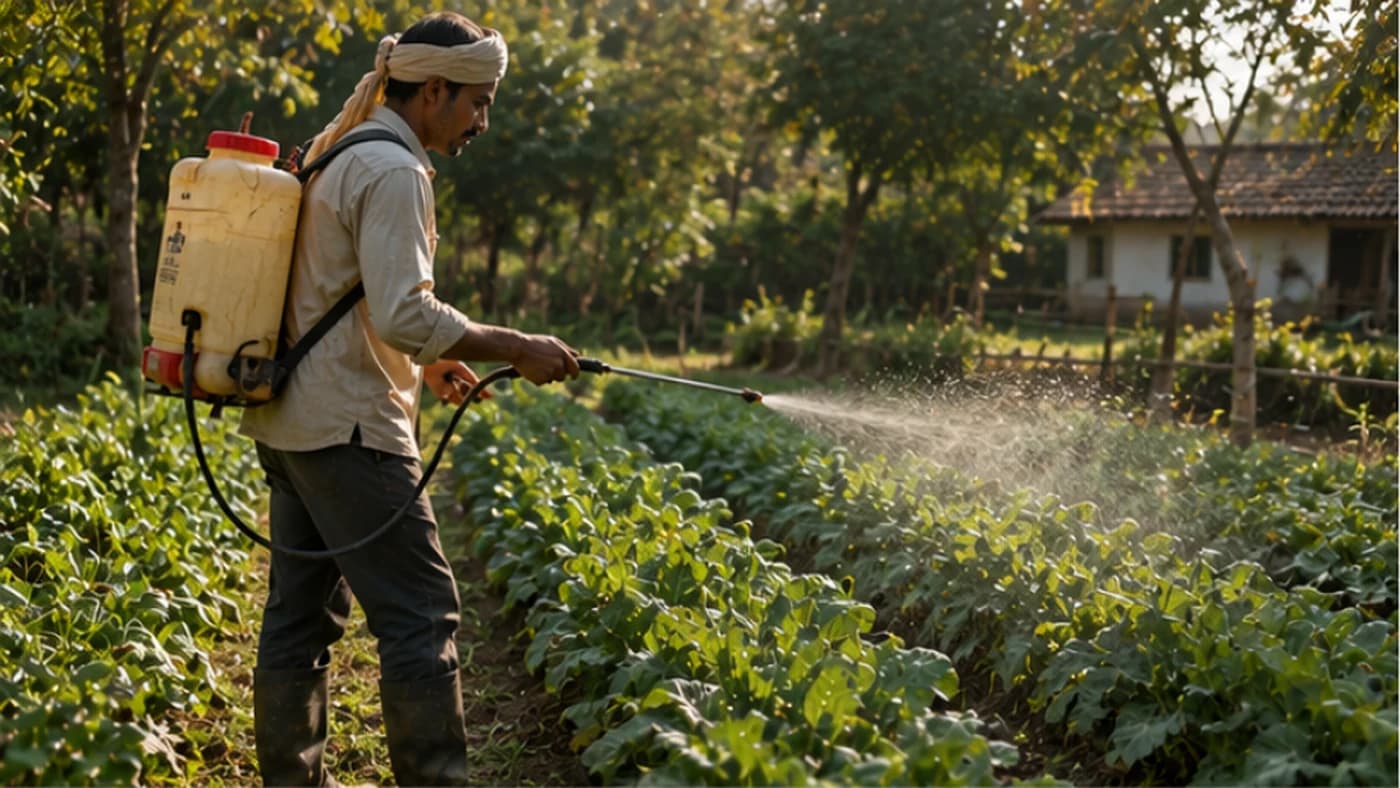
Broadcast a bag of fertiliser across a bed and you aren't just feeding your crop — you're feeding every dormant weed seed in the soil too. Precision liquid feeding works differently: instead of spreading nutrients over the whole surface, you deliver a concentrated, water-soluble solution straight to the plant's root zone or leaves, so the crop gets the benefit and the bare ground between rows stays lean and weed-free. Liquid feeds also act far faster than granular fertiliser, which can take weeks to break down — a liquid drench can be taken up within hours, making it a genuinely useful tool at high-demand stages like flowering and fruit set, or when dry soil leaves granules sitting uselessly on the surface.
Why precision beats broadcasting
Precision liquid fertilisation applies water-soluble nutrients directly to the root zone or foliage instead of scattering them across the whole bed. It's standard practice in high-yield commercial agriculture, and the same principles work just as well for a home garden or a smallholding. Think of it like handing a thirsty traveller a glass of water instead of spraying a hose over an entire crowd — the plant that needs the resource gets it, without waste.
How plants actually take up a liquid feed
Plants absorb nutrients through two pathways, and liquid fertiliser can target either one. Soil drenching works through mass flow and diffusion — pour the solution around the base of the plant, and because the nutrients are already dissolved, water carries them straight to the root hairs without waiting on rainfall or microbial breakdown. Foliar feeding sprays a diluted solution directly onto the leaves, which absorb it through their stomata (tiny pores mainly used for gas exchange). This is the fastest route of all, often correcting a deficiency within a day or two — but it only works well in the early morning or evening, when stomata are open and the sun isn't strong enough to evaporate the spray first.
What you actually gain from precision feeding
Efficiency: targeting the plant directly cuts the total fertiliser you need, saving money and reducing nutrient runoff into ponds and canals. Weed suppression: broadcasting nitrogen wakes up every dormant weed seed in the bed, while a targeted root drench leaves the space between plants lean and hungry — noticeably less weeding over a season. Consistency: a well-mixed liquid delivers the same nutrient ratio in every drop, whereas granular blends can separate or clump, leaving some plants overfed and others starved.
The mistakes that cause the most damage
Fertiliser burn is the single most common error: liquid feeds are concentrated and immediately available, so overdoing it pulls water out of the plant through osmosis, scorching leaf edges and dehydrating roots. The safe rule is to go weaker than you think, never stronger. Repeated use of synthetic liquid fertiliser without adequate watering can also build up salts in the soil over time, eventually blocking the plant's ability to take up water at all — deep, plain-water irrigation between feeds prevents this. And mixing errors happen when a solution isn't stirred properly, or when incompatible inputs (certain calcium and phosphorus sources, for instance) react and drop out as unusable sediment — always stir thoroughly and check for cloudiness before applying.
When liquid feeding isn't the right tool
Weather is the biggest constraint: heavy rain right after a soil drench can wash nutrients straight past the root zone, and strong wind makes foliar spraying nearly useless, since the fine mist drifts off target or evaporates before it lands. Precision feeding is also more labour-intensive than broadcasting a bag of granules — a large plot can take an hour or more to drench properly, and sprayers or fertigation equipment need regular cleaning to avoid clogged nozzles. And because liquid feeds don't linger in the soil the way slow-release organic matter does, heavy feeding crops over a long season often do best on a combination — a solid organic base plus supplemental liquid boosts, rather than liquid alone.
Precision liquid versus surface broadcasting
Precision liquid drench: nutrients available within hours; minimal, targeted weed growth; very low waste and runoff; requires more hands-on labour; moderate burn risk if not diluted properly. Surface broadcasting: nutrients available over days to weeks; feeds weeds along with the crop; higher waste and runoff; faster to apply with less labour; lower burn risk. Which to choose depends on your scale, your weed pressure, and how much labour time you have.
Getting the timing and technique right
Apply in the early morning while dew is still present, so the plant absorbs nutrients through the day's peak photosynthesis — avoid the heat of the afternoon, when the sun can scorch a wet leaf or root zone. The 'little and often' approach — a quarter-strength dose every week rather than one heavy monthly dose — gives a steady supply and avoids the boom-and-bust stress that can hit sensitive crops like chilli or tomato. Always water lightly with plain water about an hour before applying fertiliser, so parched roots don't gulp down a concentrated solution too fast and burn.
DIY liquid feeds you can make at home
Compost tea: steep a shovel-full of finished compost in about 19 litres of water for 48 hours, strain, and use as a gentle, biology-rich soil drench. Wood-ash tea: mix two cups of clean wood ash into about 4 litres of water, let it settle for a day, and use only the clear liquid on top as a potassium-rich boost for flowering plants. Jeevamrut or similar fermented liquid feeds, widely used in India's natural-farming systems, work on the exact same principle — a cheap, home-made, biology-rich liquid drench in place of a bottled product.
For the more advanced grower
Nutrients are only available to the plant within a specific pH range — usually 6.0 to 7.0 for most vegetables — so monitoring the pH of your solution matters; outside this range, nutrients can lock up even when they're technically present. Chelated fertilisers wrap micronutrients like iron and zinc in a protective molecule so they aren't tied up by alkaline soil particles before the plant can absorb them, which is worth looking for on tough, alkaline ground. An electrical conductivity (EC) meter measures the dissolved-salt strength of your solution directly, removing the guesswork of measuring spoons — the same tool professional greenhouse growers use to get consistent results.
A worked example: rescuing pale tomatoes mid-season
Picture heirloom tomatoes loaded with green fruit but looking pale in the middle of the season. On a clear, calm morning, mix a balanced organic liquid fertiliser diluted to half-strength, give the plants a light drink of plain water first, then apply roughly one litre of the solution to the base of each plant — taking care not to splash the leaves, which can invite fungal problems. Within a few days the leaves deepen to a vibrant green as the plant channels sugars into the ripening fruit, and because the fertiliser wasn't broadcast, the paths between rows stay dry and largely weed-free.
Terms explained in this guide
Frequently asked
Is liquid fertiliser better than granular fertiliser?+
Neither is strictly better — they solve different problems. Liquid feeds act fast and target the plant precisely, cutting weed growth and waste, while granular or organic fertiliser releases more slowly and suits heavy feeders over a long season. Many growers combine both.
What's the biggest risk with liquid fertiliser?+
Fertiliser burn from over-concentration — liquid feeds are immediately available, so applying them too strong pulls water out of the plant through osmosis and scorches leaves and roots. Always dilute weaker than the label suggests if you're unsure.
When is the best time of day to apply liquid fertiliser?+
Early morning, while dew is still present and the sun isn't strong — this lets the plant absorb nutrients through the day's peak photosynthesis without the solution burning wet leaves or evaporating before it's taken up.
Can I make liquid fertiliser at home instead of buying it?+
Yes — compost tea and wood-ash tea are simple, low-cost options, and fermented liquid feeds like jeevamrut used in Indian natural farming work on the same principle: a home-made, biology-rich solution instead of a bottled product.
Does liquid feeding really reduce weeds?+
Yes — broadcasting fertiliser feeds every dormant weed seed across the bed surface, while a targeted root drench leaves the soil between your crop plants lean and less hospitable to weeds.
Where to go next
Want this as daily tasks for your farm?
Khetiyaar turns guides like this into a day-by-day plan — in your language, free to start.

Related guides
Using Urine as Garden Fertiliser: The Free Nitrogen You're Flushing Away
Human urine is roughly 95% water and 5% urea, nitrogen, phosphorus and potassium — a fast-acting, completely free liquid fertiliser most people pour down the drain every day. Diluted and used correctly, it can match synthetic NPK feed at zero cost.
Free Garden Fertiliser From Backyard Weeds (Fermented Plant Juice)
The weeds growing wild along your bund or driveway are nutrient pumps. Korean Natural Farming's Fermented Plant Juice (FPJ) turns them — plus a handful of jaggery — into a potent, nearly free plant tonic.
Soil Microbiome Benefits: Why Feeding Your Soil Beats Feeding Your Plants
A single teaspoon of healthy soil holds more living organisms than there are people on Earth. Learn how that hidden workforce feeds your plants, fights disease, and can cut your fertiliser bill for good.