

Hexagonal Spacing: Fit 15% More Plants in the Same Bed and Stop Weeding
Plant in a staggered triangle pattern instead of straight rows and the leaves close into a canopy that shades out weeds on its own — 10-15% more plants per bed, far less watering, and far less hoeing.
Quick answer
Hexagonal spacing is a simple change in geometry with an outsized payoff for a hand-tended kitchen garden or terrace bed: 10-15% more plants in the same space, a big cut in watering, and weeds that mostly take care of themselves once the canopy closes. It asks a little more of you upfront — deep soil preparation, a template, and generous compost every season — but it pays that back within weeks in less hoeing and less time carrying water. Keep it for beds you tend by hand; for tractor-worked fields, stick with rows.
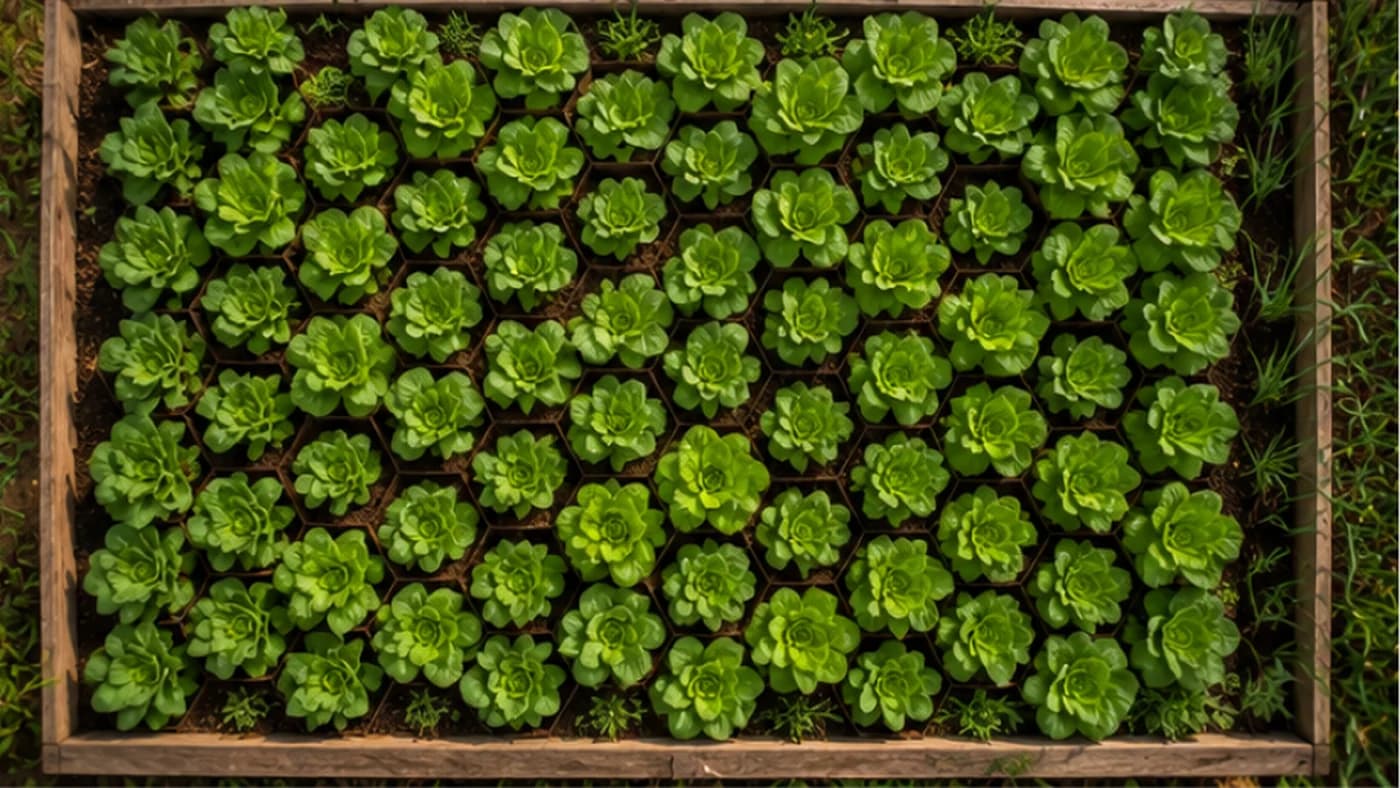
Most of us learnt to plant in straight rows with a path down the middle — easy to walk, easy to hoe, and easy to leave half the bed as bare soil for weeds to take over. Hexagonal (or triangular, offset) spacing does the opposite: every plant sits the same distance from all its neighbours, so as they grow their leaves meet and form a living canopy over the soil. That canopy shades out weed seedlings, holds in moisture and keeps the soil cooler — for free, with no extra work once it's planted. It's the backbone of intensive, hand-tended kitchen gardening the world over, from the old market gardens of Paris to today's raised-bed and terrace growers, and it fits a small, hand-worked Indian kitchen garden or terrace bed extremely well.
Rows vs. the 'living umbrella'
In a square-grid row planting, each plant only really needs to be a fixed distance from the plants in its own row and the next — but a lot of soil between rows sits bare, doing nothing but growing weeds and losing moisture to sun and wind. Hexagonal spacing packs plants in a staggered, equilateral-triangle pattern instead, so every plant is equidistant from all its neighbours in every direction — the geometrically tightest way to pack round root-and-leaf zones into a flat bed. As the crop matures, the leaves are meant to just touch, forming a continuous micro-canopy that shelters the soil surface, keeps a steadier soil temperature, and blocks the sunlight weed seeds need to germinate.
Setting the bed up — step by step
Deep, loose soil matters more here than in row planting, because plants are packed closer and need to send roots down rather than out; if your bed's soil is compacted, loosen it to at least 45-60 cm deep with a spade or fork before starting (double-digging, if you have the time and back for it). Find the recommended in-row spacing for your crop as your triangle side length — for example, a leafy green that normally wants 25 cm between plants gets a 25 cm equilateral triangle. Make a simple template: a triangle cut from scrap wood or thick cardboard with each side equal to your spacing, or a planting board with holes drilled in the hexagonal pattern. Plant your first row at your chosen spacing, then offset the second row so each plant sits in the gap between two plants of the row before it — at 25 cm spacing, that puts the second row roughly 21.7 cm behind the first, not 25 cm, to keep every plant the same distance from its neighbours. Raise seedlings and transplant rather than direct-sowing wherever you can — a few missing plants from patchy germination leaves a gap in your canopy that a weed will happily fill.
What you actually gain
- 10-15% more plants in the same bed area, because you aren't wasting space on paths between every row.
- Documented water savings of 67-88% versus conventional row cultivation in bio-intensive systems, since the closed canopy stops the soil from drying out in sun and wind.
- Far less hoeing — once the canopy closes, weeds are starved of the light they need to germinate in the first place.
- Better soil structure over time — the canopy protects against the soil-capping effect of heavy rain and the baking effect of direct sun, keeping it loose and full of earthworm and microbial life.
Common mistakes
Planting too close is the single most common error: if leaves overlap heavily rather than just touching, airflow is choked off, and in India's humid regions especially, that's a direct invitation to powdery mildew and other fungal disease — measure spacing from stem to stem, and go a little wider than the standard recommendation in humid climates or during the monsoon. Uneven spacing is the second: gaps from careless planting become weed nurseries and hot, dry patches, so use your template every time until laying out the pattern by eye becomes second nature. And don't forget the soil: intensive spacing means more plants drawing on the same patch of ground, so it demands more compost and organic matter each season, not less — skip that and yields will decline as the soil gets exhausted, even though everything looks fine above ground.
Where this method doesn't fit
This is a hand-tended, small-bed technique, not a mechanised-farming one — the offset pattern leaves no straight lane for a tractor, tiller or wheeled tool to pass through, so it belongs on kitchen garden beds, terrace containers and small intensive plots, not on tractor-worked field acreage. Large sprawling vine crops like pumpkin or big winter squash don't gain much from precise spacing either, since they find their own way across open ground regardless. And beds need to stay narrow enough to work by hand from the side — roughly 90-150 cm wide — so you can reach the centre without stepping on and compacting the soil; if you can't reach the middle of a bed comfortably, it's too wide for this method.
Rows vs. hexagonal — the trade-off
- Traditional rows: lower plant density, bare soil between rows; needs frequent hoeing or heavy mulching to control weeds; loses more water to bare, exposed soil; works well with machinery and long-handled tools; simplest for a first-time grower.
- Hexagonal spacing: 10-15% higher density in the same area; largely self-weeding once the canopy closes; shaded, protected soil uses far less water; suited to hand tools and closer daily attention; needs a bit more care to lay out correctly.
Making it practical
Keep a small set of triangle templates in common sizes — say 10, 15, 20, 30 and 38 cm — so switching crops doesn't mean cutting a new template each time. Run string lines along the bed edges so your hexagons don't drift into the walking paths. Once you're comfortable, you can eyeball spacing quickly by placing each new seedling in the centre of the V formed by the two plants ahead of it. And water at the base of the plants rather than overhead once the canopy has closed — a dense leaf cover can stop overhead water from reaching the soil at all, so a drip line or a watering can spout aimed at the base works far better than a sprinkler.
Balancing what you grow
One well-known bio-intensive rule of thumb splits a bed roughly 60% high-biomass 'carbon' crops (grain crops or tall stalky plants that feed your compost heap and keep soil fertility rising), 30% calorie-dense root crops (potato and sweet potato do especially well under hexagonal spacing, since the closed canopy keeps the soil cool for tuber development), and 10% vitamin crops — everyday vegetables like tomato, chilli, methi and other leafy greens. You don't need to follow the ratio exactly, but it's a useful reminder not to fill an entire intensive bed with vitamin crops alone and forget the compost material and staple crops that keep the system fed.
The numbers, side by side
Take a bed of roughly 9 square metres of a leafy green. Planted in traditional rows 30 cm apart with 25 cm between plants along the row, that bed holds around 120 plants — with a lot of the soil between rows sitting bare and inviting weeds. Planted with hexagonal spacing at the same 25 cm distance in every direction, the same bed fits roughly 138 plants. That's not just extra produce — by the time the canopy closes, roughly three to four weeks in, the soil is fully shaded, weeding largely stops, and watering can be cut close to half.
Terms explained in this guide
Frequently asked
How much more can I grow with hexagonal spacing?+
Typically 10-15% more plants in the same bed area compared with square-grid rows, because there's no wasted space along paths between rows.
Does hexagonal spacing really save water?+
Yes — bio-intensive systems using this spacing have shown water savings of roughly 67-88% versus conventional row planting, because the closed leaf canopy shades and protects the soil from drying winds and sun.
Is hexagonal spacing safe to use in India's humid monsoon season?+
Use it with a little extra caution: if leaves overlap heavily instead of just touching, poor airflow can encourage fungal disease in humid weather. Measure from stem to stem and go slightly wider than usual during the monsoon.
Can I use hexagonal spacing on a tractor-worked field?+
Not really — the offset pattern leaves no straight lane for machinery. It's built for hand-tended kitchen garden beds, raised beds and terrace containers, typically 90-150 cm wide so you can reach the centre from the side.
Does closer spacing mean I can skip adding compost?+
The opposite — more plants drawing on the same patch of soil need more organic matter each season, not less. Skipping compost under intensive spacing leads to declining yields even though the bed looks full and healthy above ground.
Where to go next
Want this as daily tasks for your farm?
Khetiyaar turns guides like this into a day-by-day plan — in your language, free to start.

Related guides
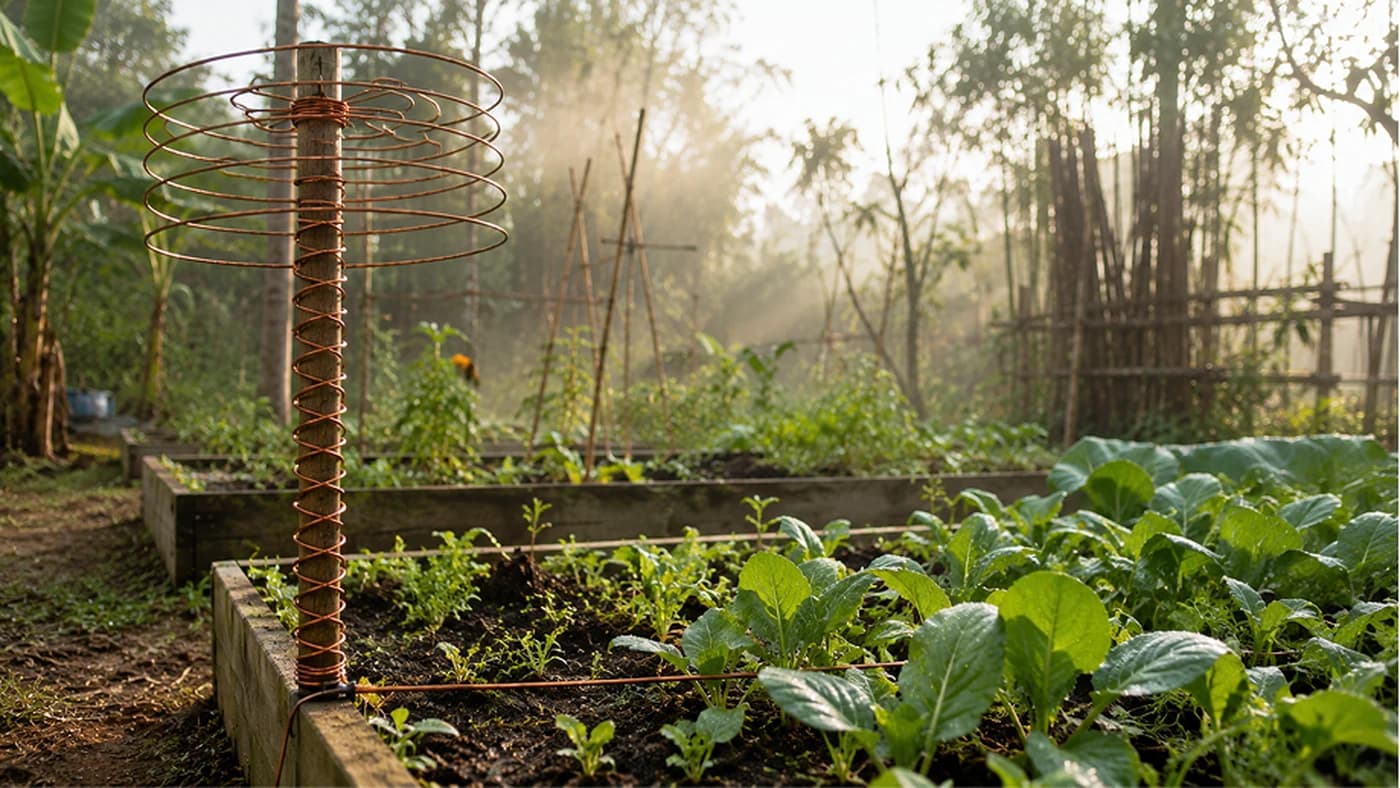
Electroculture Gardening: What It Is, and What the Evidence Actually Says
Copper antenna gardening promises faster growth and lower water use for almost no cost. It's a genuinely old folk technique — but the claims run well ahead of the science. Here's what it involves and how to think about it honestly.

Deep-Rooted Weeds and Cover Crops That Fix Compacted Soil for Free
A weed with a long taproot pushing through hardpan isn't a sign your land has failed — it's the soil trying to repair itself. Here's how deep-rooted plants act as free biological drills, and which ones actually make sense on Indian farms.
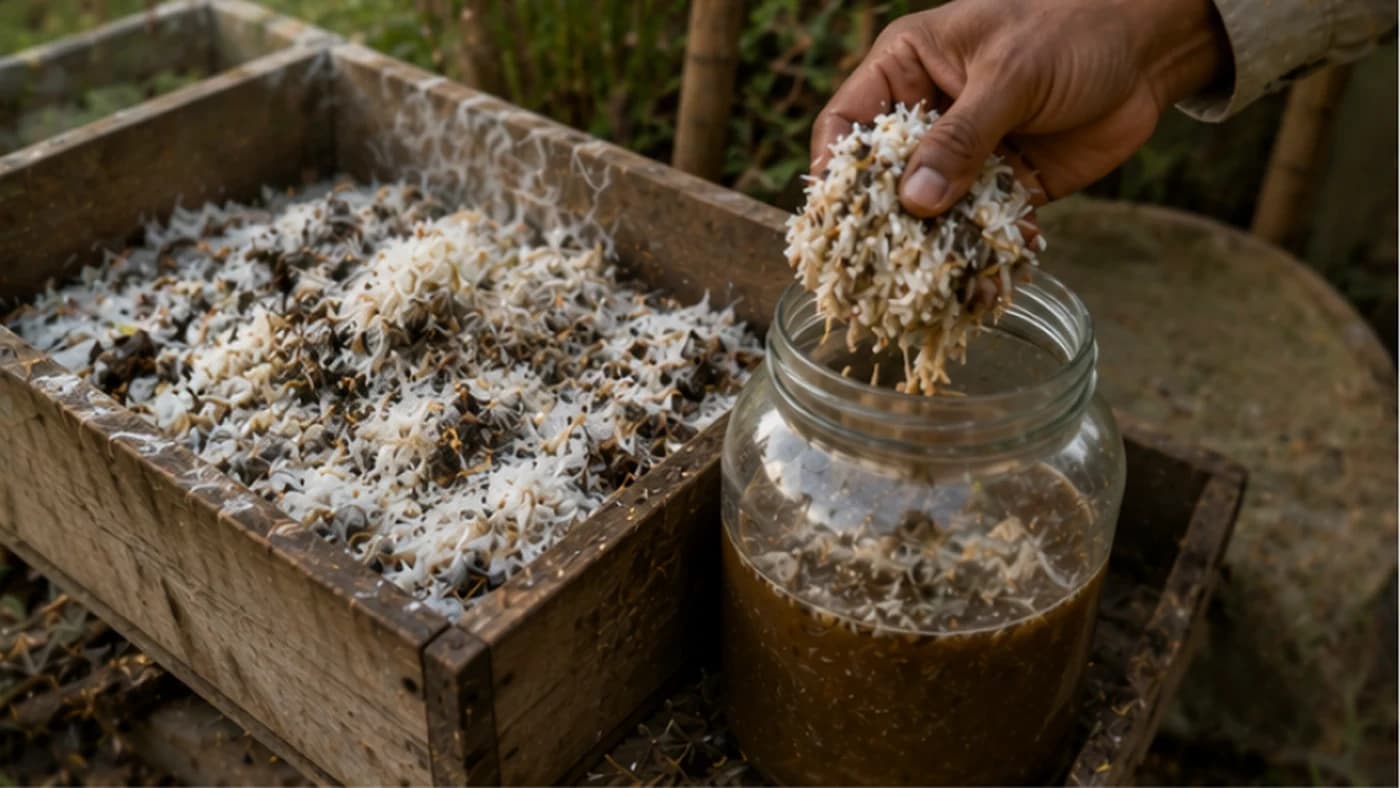
Indigenous Microorganisms (IMO): Turn Your Own Land Into Living Soil
Store-bought soil is often biologically dead and needs constant chemical feeding. Indigenous Microorganisms — the same idea behind Korean Natural Farming and India's own Zero Budget Natural Farming — let you capture your local forest's microbes and turn any field or garden bed into a self-sustaining biological engine.