

Stop Tossing Wood Ash: From Chulha Waste to Garden Gold
Every farm and home with a wood-fired chulha or stove produces a mineral-rich waste product for free. Wood ash raises soil pH like garden lime, feeds potassium-hungry crops, deters slugs and mites, and even makes traditional soap — if you know its limits.
Quick answer
Wood ash is one of the simplest zero-cost inputs a wood-burning household already produces — free lime, free potassium, a natural pest deterrent, and the raw material for traditional soap, all from something most people throw away. The only real skill required is respecting its potency: test your soil first, keep it away from acid-loving crops and potato, source it only from clean, untreated wood, and apply it lightly rather than all at once. Handled that way, the ash from your hearth or chulha becomes one of the better-value inputs on the whole homestead.
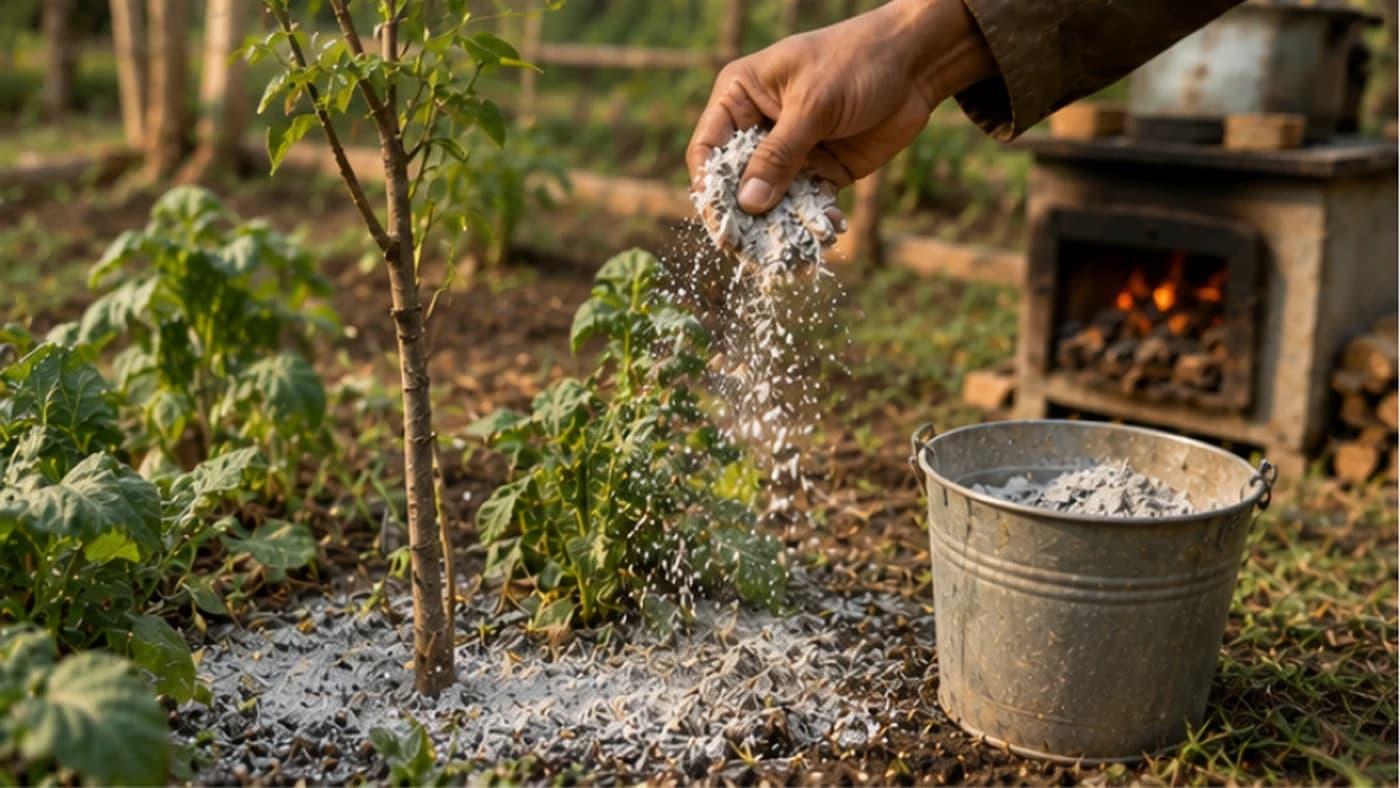
Most homes and farms burning wood for cooking or heating simply sweep the ash into the bin — but that grey powder is a concentrated store of minerals a tree spent decades pulling out of the soil. Every bucket of ash you save is a bucket of bought lime or potash fertiliser you don't have to buy. Used correctly, wood ash is a genuinely useful, zero-cost input for the soil, the compost heap, pest control and even traditional soap-making — but it's reactive and alkaline enough that using it carelessly can do real harm, so it pays to understand the chemistry before you spread it.
What wood ash actually contains
When wood burns, carbon, nitrogen and sulphur escape as gas, but calcium, potassium, magnesium and phosphorus stay behind in the ash — the building blocks the tree pulled from the soil over its lifetime. Most wood ash is roughly 25–50% calcium carbonate, the same active compound in agricultural lime, plus around 3–7% potassium and 1–2% phosphorus, along with trace amounts of iron, manganese and boron. In fertiliser terms, wood ash sits at roughly an N-P-K of 0-1-3: no nitrogen (it's lost as gas during burning), but a genuinely useful potassium and calcium boost. Hardwood ash — from trees like oak, mango, neem or other dense timber — tends to be more concentrated than ash from softer, faster-growing wood.
How it works once it hits the soil
The calcium and magnesium oxides in ash react with soil moisture to raise pH — a genuinely useful correction on acidic soil, and one that acts much faster than standard lime, which can take months to break down. Beyond chemistry, ash is also abrasive and strongly moisture-drawing, which is exactly why it works well against slugs and soft-bodied pests as a dry barrier, and why a damp mix of ash becomes a mild alkaline cleaning solution capable of cutting through grease.
Where wood ash genuinely helps
As a soil amendment, it's a free alternative to bought lime for raising pH in acidic soil, and a real potassium-and-calcium boost for heavy feeders like tomato and brinjal. Around vulnerable seedlings, a dry ring of ash deters slugs, snails and soft-bodied insects. Mixed into a chicken or bird dust bath, it helps control mites and lice without a chemical treatment. A little sifted ash mixed with water makes a gentle abrasive paste for cleaning metal or glass. And a light dusting on the compost pile can help neutralise strong odours and add trace minerals to the finished compost.
The mistakes that cause the most harm
Over-application is the single biggest error — ash is fine and highly reactive, so it's easy to accidentally push soil pH too high, which locks up other nutrients even though they're technically present. Source matters just as much: never use ash from painted, varnished or chemically treated wood, since it can carry arsenic or other contaminants straight into your food, and never burn plastic or treated waste in the same fire you're collecting ash from. Timing matters too — spreading ash in strong wind or right before heavy rain leads to uneven distribution or runoff, so handle it slightly damp, or dig it lightly into the top few centimetres of soil straight away.
Where wood ash should not be used
Acid-loving plants suffer the most from careless ash use — this includes crops that specifically want acidic soil. Avoid using it around potato, since raising alkalinity encourages potato scab, a fungal disease that damages the skin of the tuber. If your soil already tests at pH 7.0 or higher, adding wood ash is unnecessary and can push it high enough to cause chlorosis — yellowing leaves from blocked iron uptake — so always test before a major application.
Wood ash versus bought agricultural lime
Wood ash: reacts within weeks; supplies potassium, phosphorus, calcium, magnesium and trace minerals; free, since it's a waste product; a practical guide is around 1kg per 45 square metres per year. Agricultural lime: reacts over months; supplies calcium and magnesium only; has a real purchase cost; a comparable rate is roughly half that of wood ash by weight, since ash generally needs about twice the weight of lime to shift pH the same amount — but the added potassium and trace minerals often make wood ash the better all-round choice where you have a steady supply.
Collection, storage and safe application
Sift your ash through a fine mesh to remove unburnt charcoal chunks, which you can save separately as biochar. Store it in a metal container with a tight lid — this both prevents stray embers from starting a fire and keeps potassium, which is highly water-soluble, from leaching out in the rain. When applying to a bed, a light, even dusting worked lightly into the topsoil in late winter or early spring gives it time to react before your main season's crop goes in.
Advanced use: making lye for traditional soap
For those wanting to go further, wood ash is the traditional starting point for lye (potassium hydroxide), long used to make soap before industrial lye production. A simple leaching barrel — stones and straw at the bottom for filtration, packed with clean hardwood ash above — lets rainwater trickle through slowly, collecting a caustic, tea-coloured liquid at the bottom. This lye, handled with gloves and eye protection, can be combined with rendered fat or vegetable oil to make traditional soap — a genuine expression of using every part of a wasted resource, though it demands real care given how caustic the liquid is.
A worked example
Picture a small household with a few birds and roughly 45 square metres of vegetable beds, producing around five buckets of ash over a cold season. One bucket becomes a dust bath for the birds, mixed with equal parts sand and dry soil, cutting a spring mite outbreak before it starts. Two buckets go onto beds growing potassium-hungry crops like tomato and brinjal (never onto the potato patch). The remaining buckets are stored dry for use as a slug barrier around new seedlings and a mild abrasive for cleaning outdoor metal tools — turning a fireplace's waste into several genuinely useful homestead inputs at zero cost.
Terms explained in this guide
Frequently asked
What nutrients does wood ash actually provide?+
Mainly calcium (as calcium carbonate, like agricultural lime) plus a genuinely useful amount of potassium and some phosphorus and trace minerals. It contains no nitrogen, since that's lost as gas during burning.
Which plants should never get wood ash?+
Acid-loving plants, and potato specifically — raising soil alkalinity around potatoes encourages potato scab, a fungal skin disease. Skip it too if your soil already tests at pH 7.0 or above.
Can I use ash from any type of wood?+
Only from clean, untreated wood. Never use ash from painted, varnished, or chemically treated timber, or from a fire where plastic or treated waste was burned — contaminants like arsenic can carry straight into your soil and food.
How much wood ash should I apply?+
As a rough guide, around 1kg per 45 square metres per year, lightly worked into the top few centimetres of soil in late winter or early spring — always test your soil's pH first rather than applying on a fixed schedule.
Does wood ash really keep pests away?+
Yes, for soft-bodied pests specifically — a dry ring of ash around vulnerable seedlings deters slugs and snails, since the abrasive, moisture-drawing texture is unpleasant for them to cross. It stops working once the ash gets wet.
Where to go next
Want this as daily tasks for your farm?
Khetiyaar turns guides like this into a day-by-day plan — in your language, free to start.

Related guides
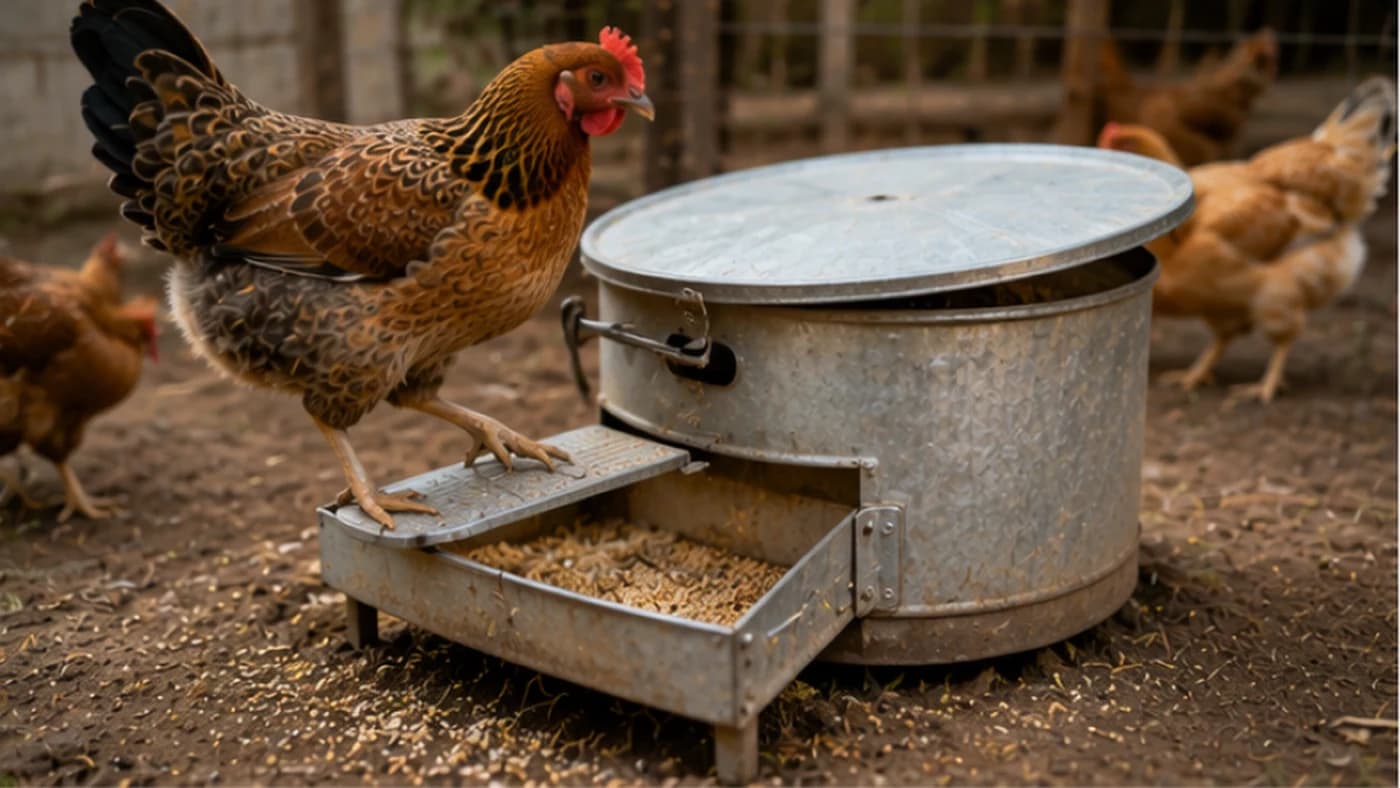
How to Stop Poultry Feed Waste (and Cut Your Feed Bill by 20-40%)
An open feeder loses feed to billing-out, rats and rain. A treadle feeder that only opens under a bird's weight can cut waste by 20-40% — here's how to set one up without starving your flock during training.
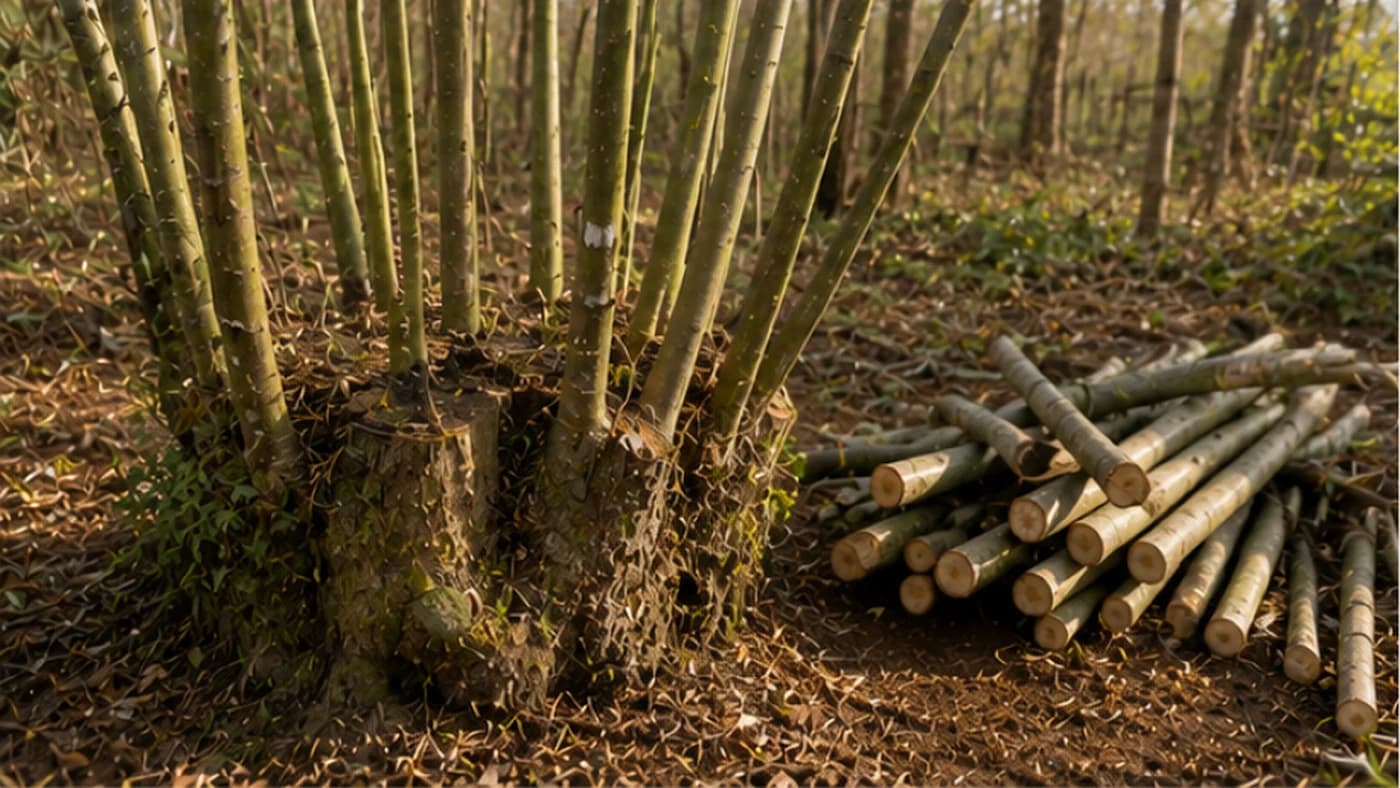
Coppicing: How to Grow Free Fence Posts and Firewood on Your Own Land
Instead of buying bamboo poles or timber every year, a well-managed coppice stool gives you free, strong building material for generations — without ever killing the tree.
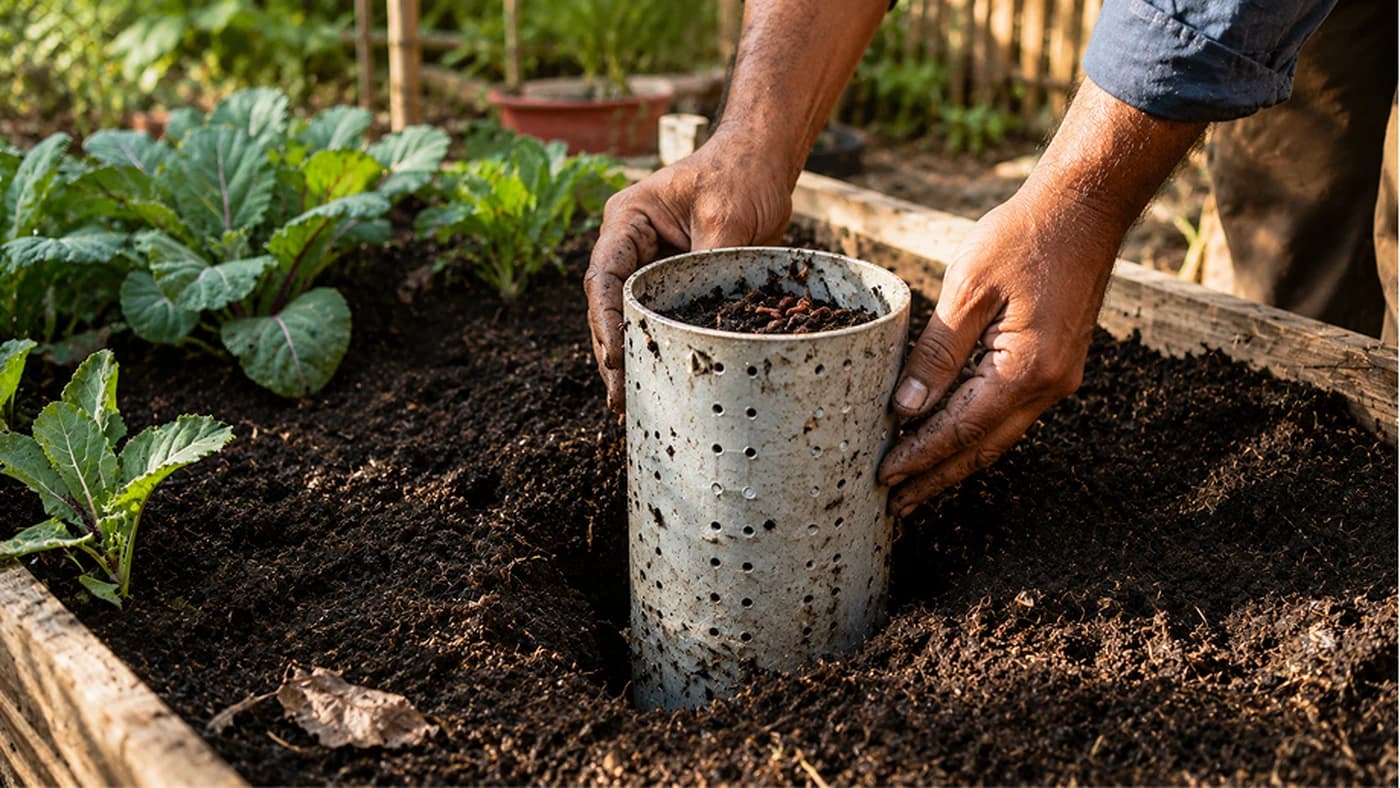
How to Build a Garden Worm Tower for Free, In-Bed Composting
Stop hauling kitchen scraps to a distant bin and hauling compost back months later. A buried worm tower lets worms process waste right where your plants are growing.