

How to Stop Poultry Feed Waste (and Cut Your Feed Bill by 20-40%)
An open feeder loses feed to billing-out, rats and rain. A treadle feeder that only opens under a bird's weight can cut waste by 20-40% — here's how to set one up without starving your flock during training.
Quick answer
Most feed loss on a poultry farm isn't the birds eating too much — it's an open feeder handing a share of every bag to rats, wind and wasteful billing-out. A treadle feeder, introduced patiently over a week or two, typically cuts feed use by 20-40% and pays for itself in savings well within a year, while keeping grain dry and pests away from the coop.
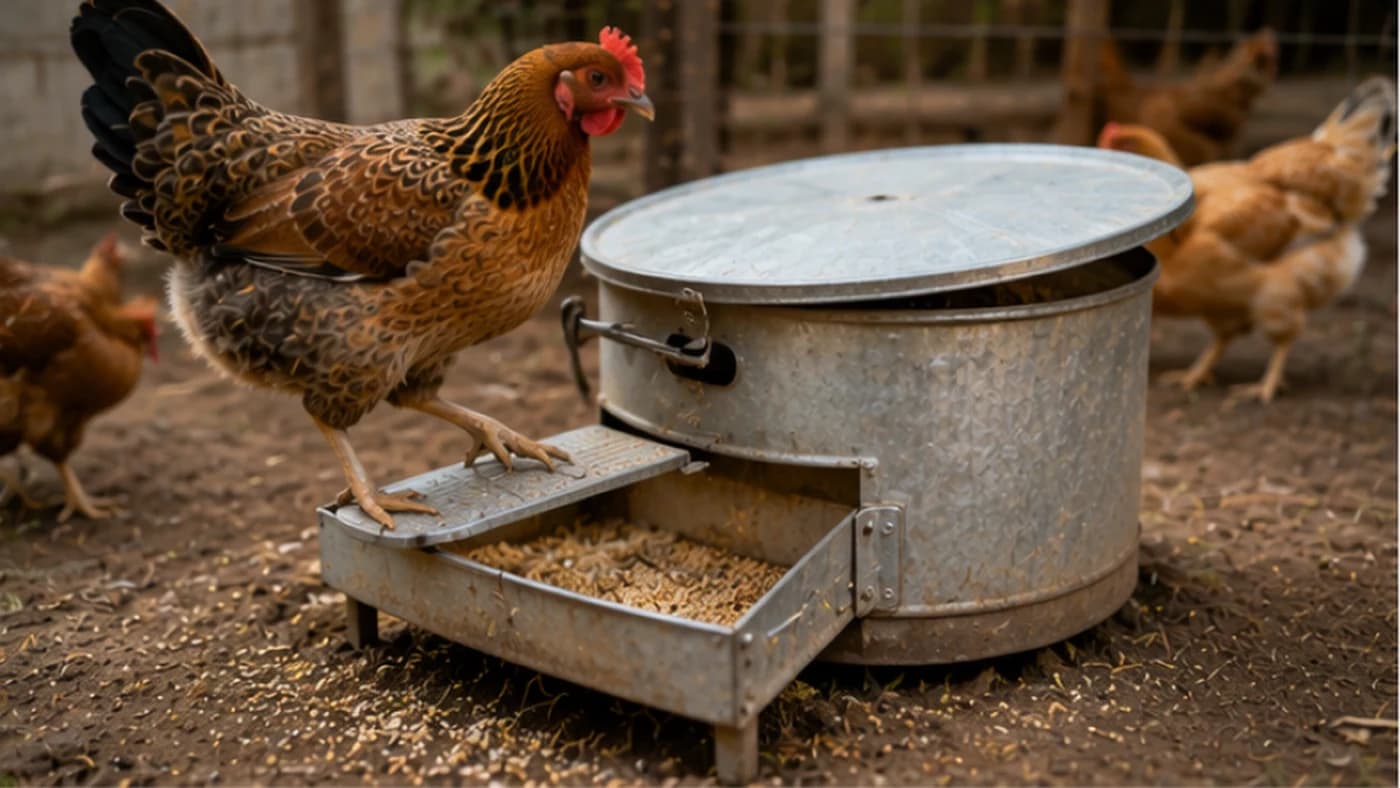
An open trough or gravity feeder gives wild birds, rats and squirrels the same unrestricted access as your flock, and every gram they take is a gram you paid for. Chickens also 'bill out' feed — flicking it sideways with their beak while hunting for specific bits — which wastes far more than most keepers realise. Since feed can be 70% or more of the total cost of raising poultry, a simple mechanical fix, the treadle feeder, is one of the highest-return changes you can make to a coop.
How a treadle feeder works
A treadle feeder has a hopper and a step plate: when a bird heavy enough steps on the plate, a linkage lifts the lid to reveal the feed, and the lid drops shut again once the bird steps off. The tension is adjustable, so you can set the trigger weight around 0.5-1 kg — comfortably below a laying hen but above a sparrow or rat, which keeps pests out entirely. Feeder height also matters: level with the birds' backs is right, since a feeder too low gets treated like open ground and one too high gets knocked around and spilled.
Training your flock without starving anyone
Chickens are wary of new, moving objects, so switching from an open bowl to a fully closed feeder overnight can leave timid birds hungry. Start by propping the lid fully open for several days and removing other food sources so the birds explore the box. After 3-5 days, let the lid move when stepped on but not close fully, teaching them that movement is normal. Only then engage the mechanism fully, and watch closely to confirm your most timid birds are still getting enough to eat.
What this actually saves
Most keepers report a 20-40% drop in feed consumption after switching from an open trough to a treadle feeder — not because birds eat less, but because rodents and wind no longer take their share. As a rough illustration: a flock of 20 hens eating about 113 g each per day needs roughly 68 kg of feed a month, but a 30% waste rate on an open feeder means buying closer to 88.5 kg to deliver that — about 20.5 kg thrown away every month. At scale, that waste adds up fast, and a secure feeder typically pays for itself well within its first year through savings alone.
A secure feeder also protects feed from rain and damp, which otherwise breeds mould and can cause respiratory illness, and a high-capacity model holding 10-20 kg lets you fill it once a week rather than daily.
Common mistakes
Rushing the training is the single biggest cause of failure — a lid that slams shut loudly the first time can put a hen off the feeder for good. Watch for 'bully bird syndrome' too: a dominant hen may guard the treadle and chase others away, so two medium feeders spaced apart usually work better than one large one for a mixed flock. Clean dust, feathers and bedding out of the hinges weekly and oil the pivot points occasionally, and choose a feeder heavy enough (or bolted down) that a large breed can't tip it over.
Where treadle feeders don't fit
Chicks and lightweight bantams generally can't trigger the mechanism until they're at least 8-10 weeks old or reach the minimum weight threshold. In very cold, damp climates the moving parts can freeze shut, so keep the feeder under cover and check it daily in winter. Flocks of 50 or more birds put too much competition on a single unit, since usually only one or two birds can eat at a time, so scale up to multiple feeders rather than one giant one. And very dusty mash can clog the hopper, especially in humid conditions — these feeders work best with pellets or crumbles that flow freely.
Comparing feeder types
An open trough or bowl is cheap and short-lived, gives pests full access, and offers no weatherproofing. A gravity PVC pipe feeder is a step up — moderate pest resistance, moderate weatherproofing, moderate cost and lifespan, though rats can still climb in. A galvanised-steel treadle box costs the most upfront but gives high pest resistance, high waste protection, strong weatherproofing and long service life — the best long-run value once training is done.
Getting more from the system
Adding internal baffles — small strips across the feed tray — stops hens sweeping the feed sideways with their beak, so they can only peck straight down, the least wasteful way to eat. Keep the feeder well away from the water source (about 2 metres), since dripping beaks and capillary action can wick water up into the hopper and spoil the feed. And adjust rations seasonally — more energy-dense grain in winter for warmth, lighter, mineral-focused feed in the hottest months to avoid heat stress.
Frequently asked
How much can a treadle feeder really save on feed costs?+
Most keepers see a 20-40% drop in feed consumption after switching from an open trough, since the savings come from excluding pests and wind rather than birds eating less.
Will my chickens be afraid of a treadle feeder?+
Some will at first — chickens are wary of new moving objects. Prop the lid fully open for several days, then let it move without closing fully for 3-5 more days, before engaging the mechanism completely.
What weight should a treadle feeder be set to trigger at?+
Around 0.5-1 kg is typical — enough for a standard laying hen but too heavy for sparrows or rats to trigger, so pests are excluded automatically.
Can chicks use a treadle feeder?+
Not usually until they're 8-10 weeks old or heavy enough to trigger the mechanism — very young or lightweight bantam birds should be fed separately until then.
Do I need more than one treadle feeder for a large flock?+
Yes — usually only one or two birds can eat at a treadle feeder at a time, so flocks of 50 or more need multiple units to avoid overcrowding and bullying at the feeder.
Where to go next
- AI farming chatbotAsk any farming question in Gujarati, Hindi or English and get an answer in seconds.
- Kheti app for Indian farmersCrop plans, disease diagnosis, weather and mandi rates in one app.
- Agri Bazar marketplaceBuy and sell animals, crops, equipment and dairy near you — and see what buyers want today.
Want this as daily tasks for your farm?
Khetiyaar turns guides like this into a day-by-day plan — in your language, free to start.

Related guides
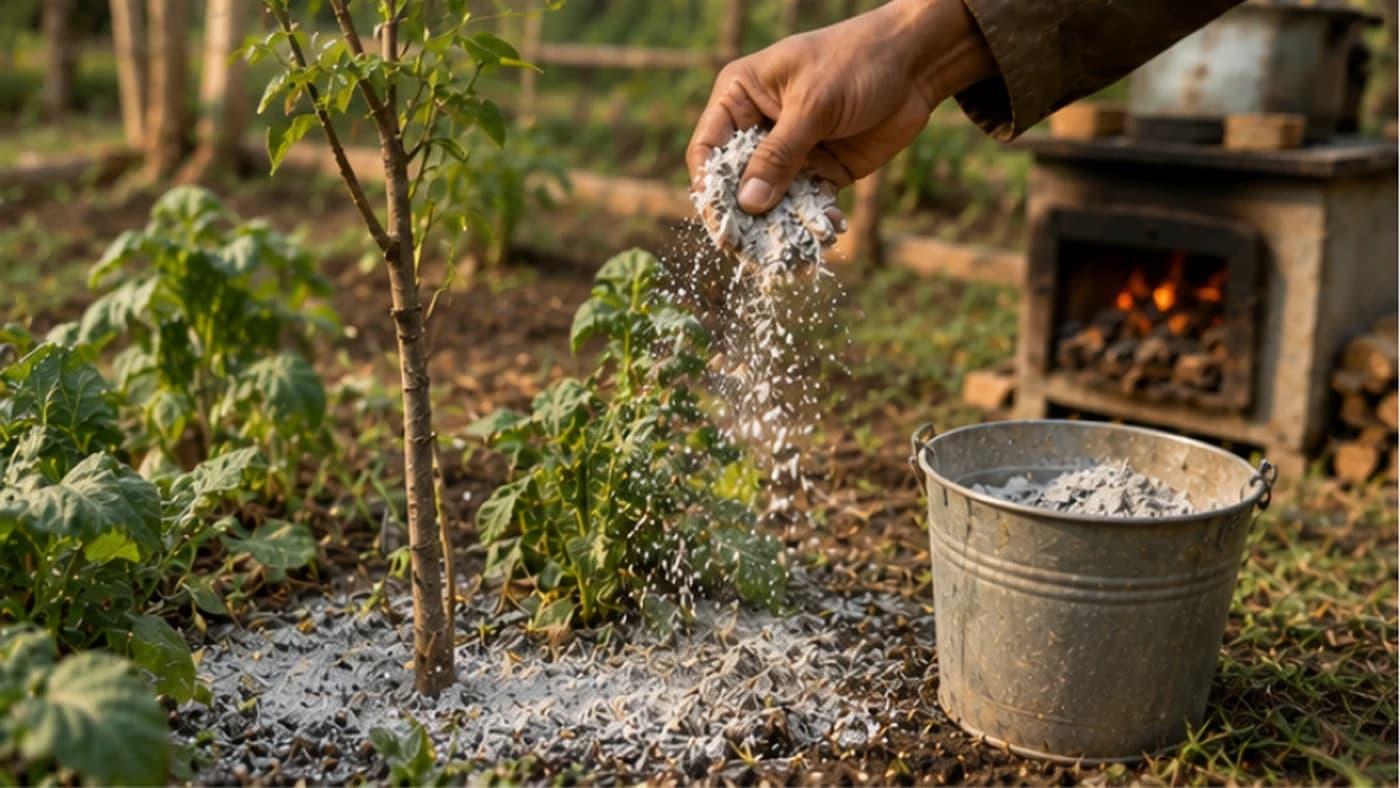
Stop Tossing Wood Ash: From Chulha Waste to Garden Gold
Every farm and home with a wood-fired chulha or stove produces a mineral-rich waste product for free. Wood ash raises soil pH like garden lime, feeds potassium-hungry crops, deters slugs and mites, and even makes traditional soap — if you know its limits.
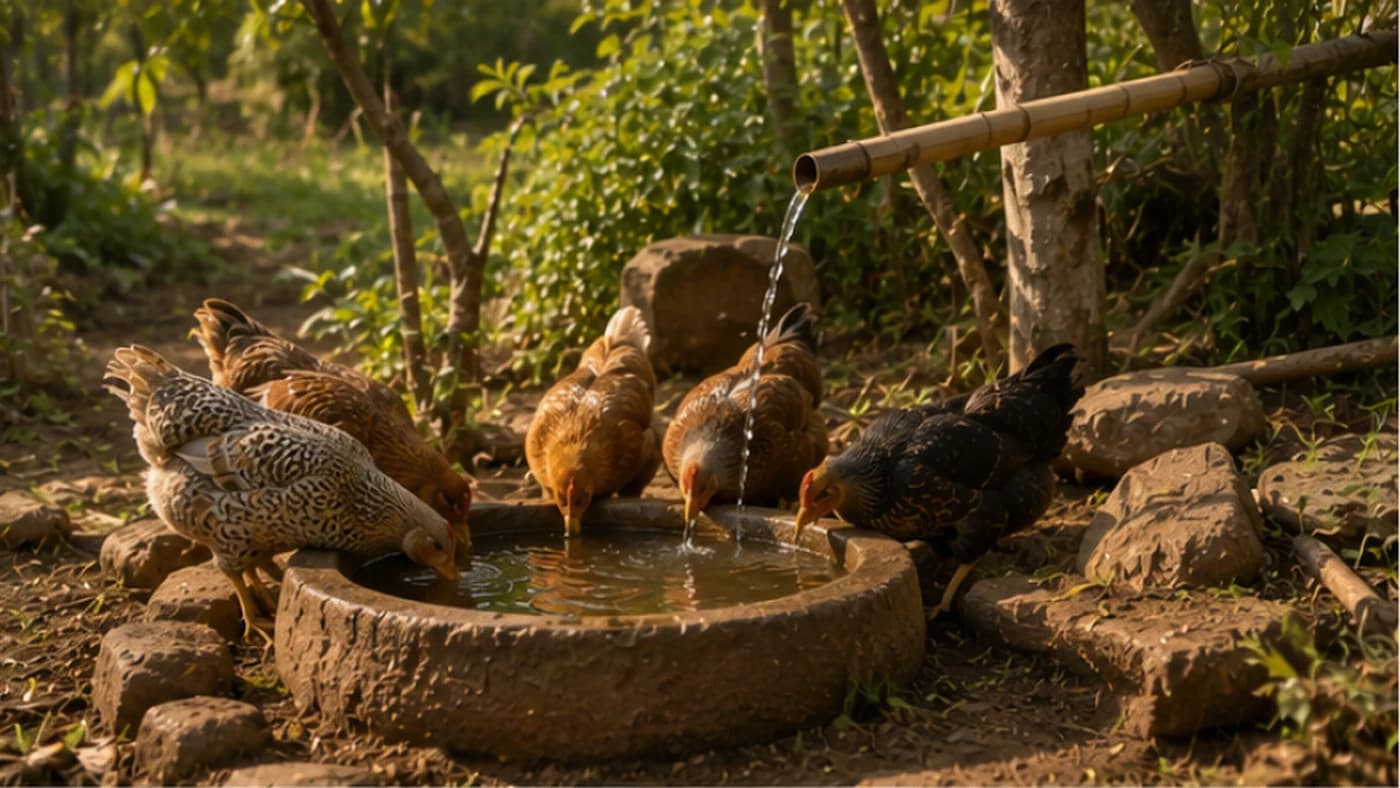
Stone Water Troughs for Poultry: The Ancestral Method That Still Beats Plastic
Plastic waterers crack under summer sun and can leach chemicals into drinking water. A carved stone trough — the same idea behind the village "naand" many Indian farmers already know — keeps water cooler, cleaner and lasts for generations.
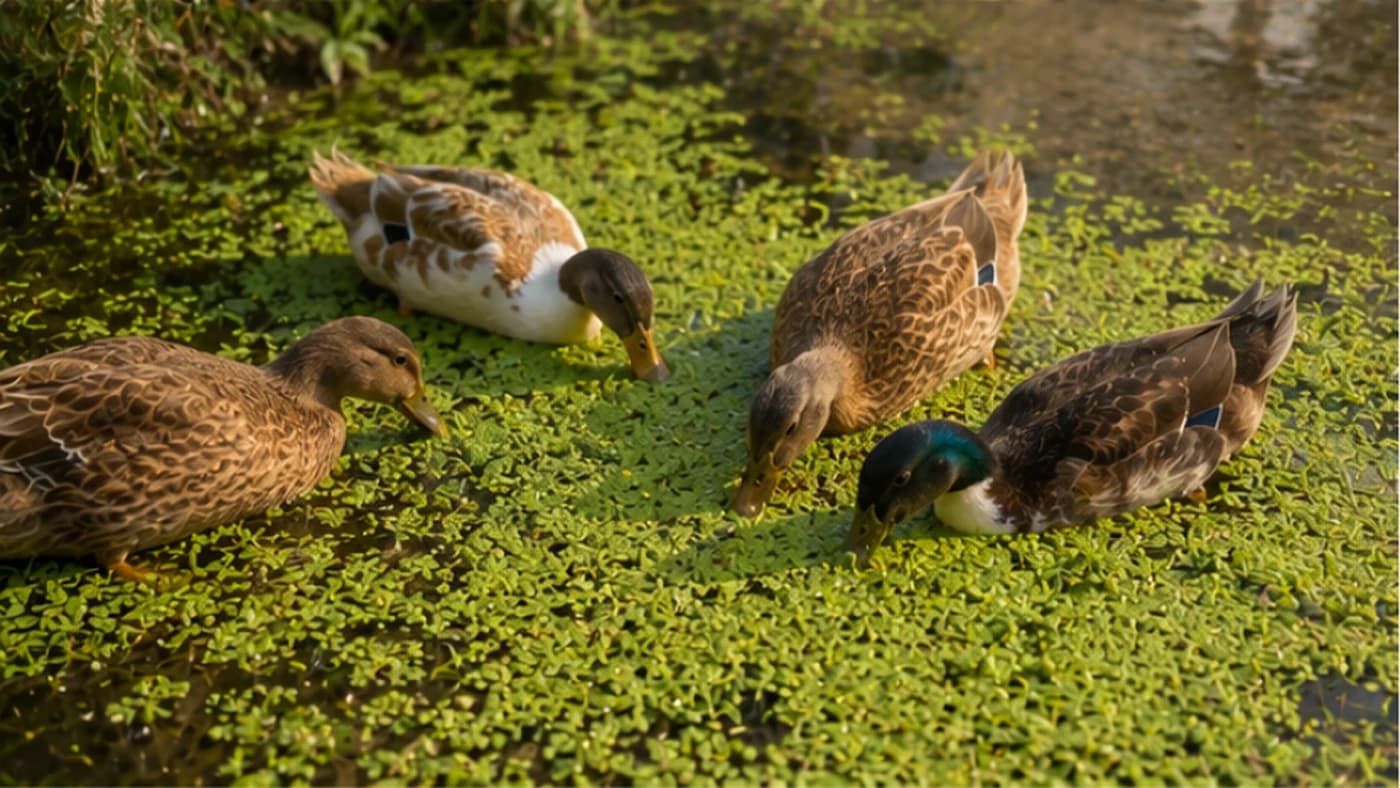
Free High-Protein Duck Feed: Turn Garden Pests Into Eggs
Slugs, snails and beetles are richer in protein than soyabean meal. Learn how duck keepers turn garden pests into free, high-quality feed — and where this trick runs into its limits.