

How to Build a Garden Worm Tower for Free, In-Bed Composting
Stop hauling kitchen scraps to a distant bin and hauling compost back months later. A buried worm tower lets worms process waste right where your plants are growing.
Quick answer
A worm tower turns kitchen scraps into fertiliser exactly where your plants need it, with almost no ongoing labour. Get the depth, feeding balance, and moisture right, keep an eye on overfeeding and drainage, and one tower can quietly feed a bed for years — start with a single tower before expanding to more.
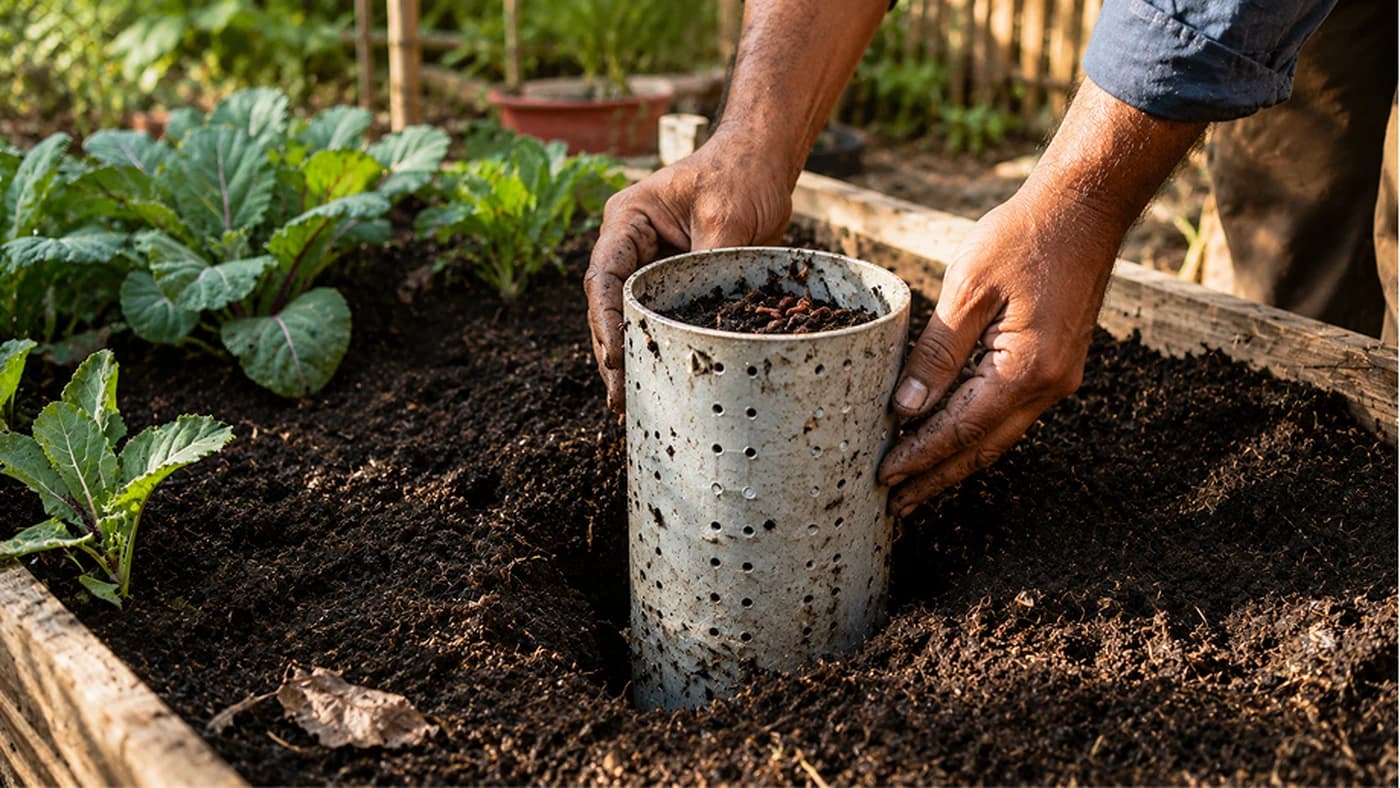
A worm tower is a perforated pipe or bucket buried upright in a garden bed, working as a permanent feeding station for composting worms. Instead of carrying kitchen scraps to a compost bin and later carrying finished compost back to the beds, you feed the scraps directly into the tower — the worms process it in place and travel out into the surrounding soil to deposit nutrient-rich castings exactly where your plants' roots can use them. One tower can comfortably service a bed of roughly 3 to 4 square metres.
What you need
A length of PVC pipe, 10 to 15 cm in diameter (or a large plastic bucket for bigger volumes), a drill with a bit of about 1.2 cm, a lid to keep out rain and rodents (an end cap, a broken clay pot, or a heavy stone), and red wiggler worms (Eisenia fetida) — ordinary earthworms dug from the yard will not thrive in this concentrated feeding setup and will simply leave.
Step-by-step: building and installing the tower
Cut the pipe to about 50 to 75 cm in length. Mark the bottom 30 to 45 cm as the buried section and drill dozens of holes at least 1.2 cm wide through this section — these are the doorways your worms use to move between the tower and the garden soil. Dig a vertical hole in the centre of your bed with a post-hole digger or narrow spade, place the pipe so the entire perforated section sits below the soil line, and firm the soil around it, leaving 15 to 25 cm of pipe above ground for feeding. Line the bottom with moist bedding — shredded cardboard, dry leaves, or coconut coir — until it feels like a wrung-out sponge. Add 100 to 500 red wigglers, let them settle for a day, then add your first handful of scraps topped with a layer of dry leaves or shredded paper to keep smells and fruit flies down.
Feeding and maintaining the colony
Add fruit and vegetable scraps once or twice a week — soft foods like melon rinds, banana peels, and squash work best. Avoid meat, dairy, oily foods, and large amounts of citrus or onion, which can turn the tower acidic and stress the worms. Follow a rough 50:50 balance of green kitchen waste to brown material like dry leaves or shredded paper by volume, so the tower doesn't become too wet or acidic. Chop scraps into smaller pieces before adding them — more surface area means bacteria and worms process the food faster. Check moisture during dry spells and add a cup of water if the bedding feels dry, since worms breathe through their skin and need dampness to survive.
What you gain
Worms distribute nutrients automatically as they travel in and out of the tower, so you skip turning a compost pile or hauling manure. Their tunnelling also aerates the surrounding soil and improves water movement to root zones. Worm castings hold close to nine times their own weight in water, which helps garden beds stay hydrated through dry spells. And because the whole system fits inside a buried pipe, it takes almost no visible space and produces no real odour when managed correctly — useful for small kitchen gardens or terraces where a full compost heap isn't practical.
Common mistakes to avoid
Overfeeding is the most frequent error — if you add more scraps than the worms can process, the excess rots without oxygen, smells bad, and attracts pests, so always check on the previous feeding before adding more. In very hot weather, worms may retreat deeper into the soil or die if the exposed pipe top sits in direct harsh sun — covering it with a light-coloured cap or a terracotta pot helps. In cold winters in hill and north Indian regions, pack extra straw around the buried section or mulch heavily to insulate it. A tight, secure lid also keeps out rats and other scavengers drawn to the concentration of worms.
Limitations to plan around
A single narrow tower isn't a high-volume solution — a household producing several litres of scraps a day will need multiple towers or a secondary compost system. In heavy clay soils with poor drainage, standing water inside the tower after rain can drown the worms; mix in sand or organic matter to improve drainage, or raise the buried section slightly. Vigorous feeders like tomato or gourd vines may send roots straight into the tower's holes seeking nutrients, occasionally blocking access for feeding — a gentle quarter-turn of the pipe every few weeks discourages this.
Worm tower vs. a traditional compost bin
A traditional bin needs regular turning, requires you to haul the finished compost to where it's needed, takes 3 to 12 months to mature, but handles a high volume of yard waste. An in-bed worm tower needs almost no turning, delivers nutrients directly and automatically to the root zone, finishes in 4 to 8 weeks, and produces little to no odour, though it handles a lower volume. Many gardeners run both — a bin for bulk yard waste like leaves and grass clippings, and one or more towers for daily kitchen scraps feeding specific vegetable beds.
Terms explained in this guide
Frequently asked
What worms should I use in a garden worm tower?+
Red wigglers (Eisenia fetida) — they are surface dwellers built for concentrated organic waste. Ordinary earthworms dug from soil prefer to burrow deep and will leave the tower.
How often should I feed a worm tower?+
Once or twice a week with chopped fruit and vegetable scraps, always topped with a layer of dry leaves or shredded paper, checking that the previous feeding has been mostly eaten before adding more.
How big an area can one worm tower cover?+
One tower can effectively service roughly 3 to 4 square metres of garden bed.
Why does my worm tower smell bad?+
Usually overfeeding or too much wet green waste relative to dry brown material. Reduce feeding, add more dry leaves or shredded paper, and make sure the lid and drainage are adequate.
How is a worm tower different from a normal compost bin?+
A worm tower is buried in the bed and delivers nutrients directly to plant roots in 4-8 weeks with almost no maintenance; a compost bin handles larger volumes but needs turning and hauling, and takes 3-12 months.
Where to go next
Want this as daily tasks for your farm?
Khetiyaar turns guides like this into a day-by-day plan — in your language, free to start.

Related guides
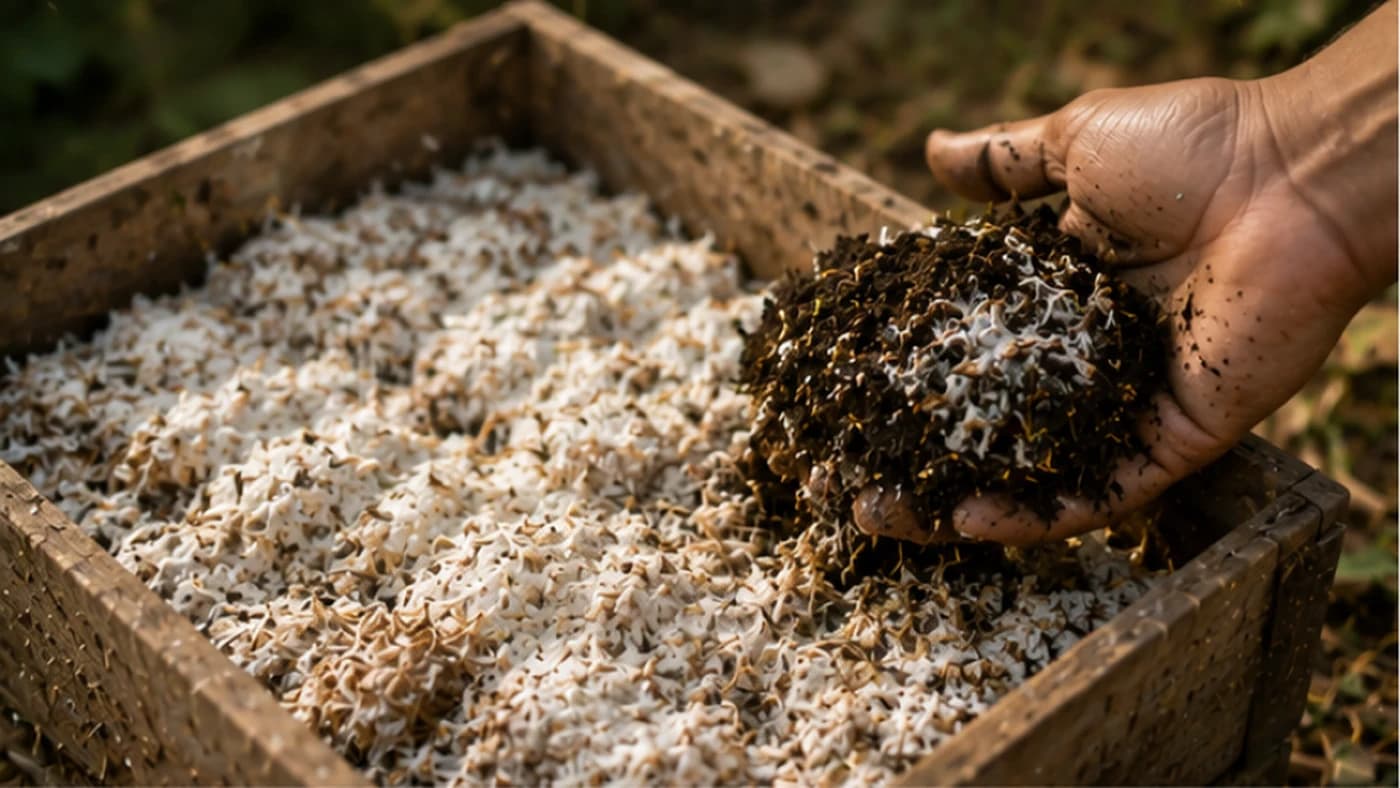
Native Microbial Soil Inoculation: Growing Your Own Living Fertiliser From Forest Soil
A healthy forest has never seen a bag of fertiliser, yet it out-produces most farms. Learn how to capture wild, local microbes from a nearby forest and turn them into a near-free biological fertiliser for your field or garden.

How to Make Biochar for Soil: A Permanent Upgrade for Your Farm
Burning crop waste releases its carbon into the air. Turning it into biochar locks that carbon into your soil instead — building fertility that can last for centuries, not seasons.
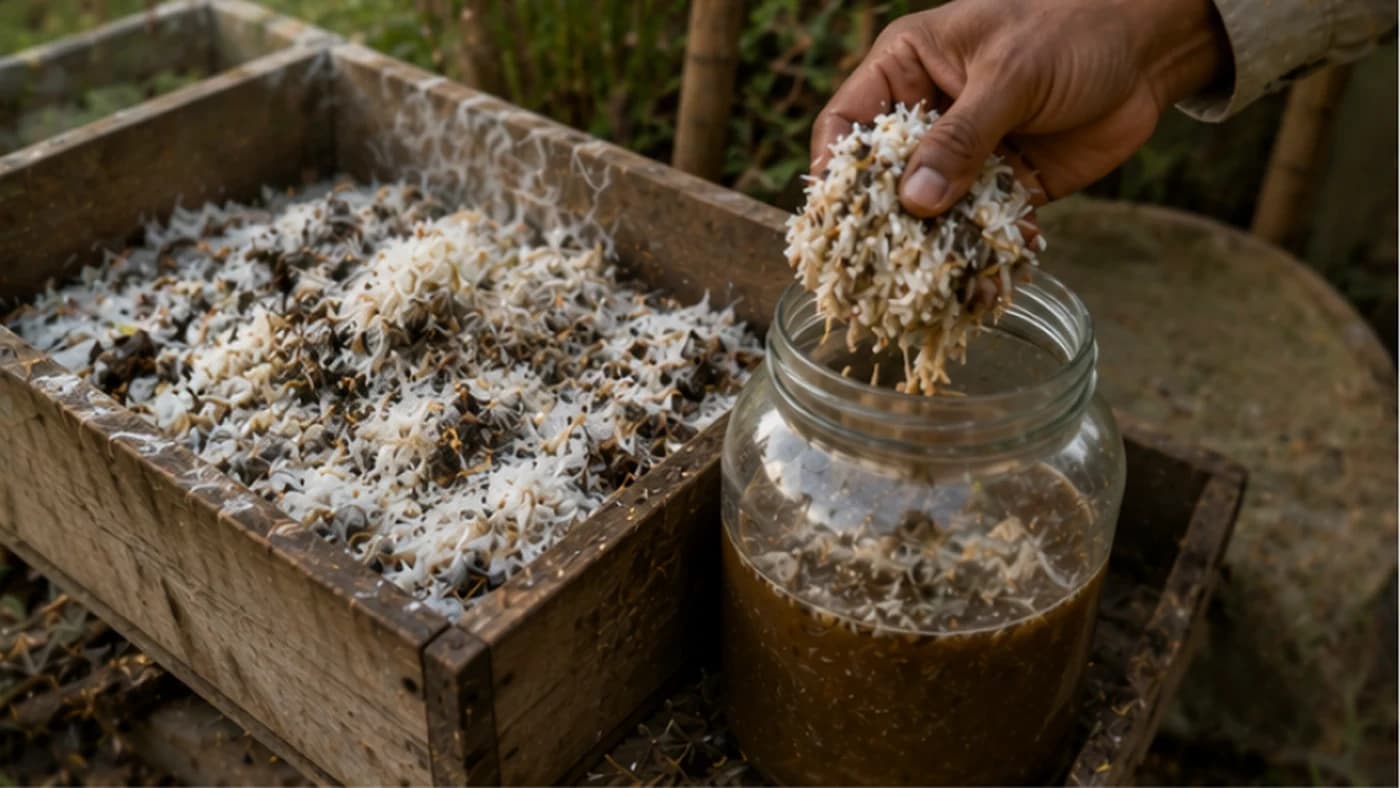
Indigenous Microorganisms (IMO): Turn Your Own Land Into Living Soil
Store-bought soil is often biologically dead and needs constant chemical feeding. Indigenous Microorganisms — the same idea behind Korean Natural Farming and India's own Zero Budget Natural Farming — let you capture your local forest's microbes and turn any field or garden bed into a self-sustaining biological engine.