

Soil Microbiome Benefits: Why Feeding Your Soil Beats Feeding Your Plants
A single teaspoon of healthy soil holds more living organisms than there are people on Earth. Learn how that hidden workforce feeds your plants, fights disease, and can cut your fertiliser bill for good.
Quick answer
Treat your soil like a living system, not a chemistry set, and it starts working for you instead of against you: unlocking nutrients, holding water through dry spells, resisting disease, and growing more nutritious food. Stop tilling more than you must, keep the ground covered, feed it real compost and mulch, and be patient — a degraded soil can take a few seasons to come back to life, but every earthworm and every flush of mushrooms is a sign your invisible workforce is back on the job.
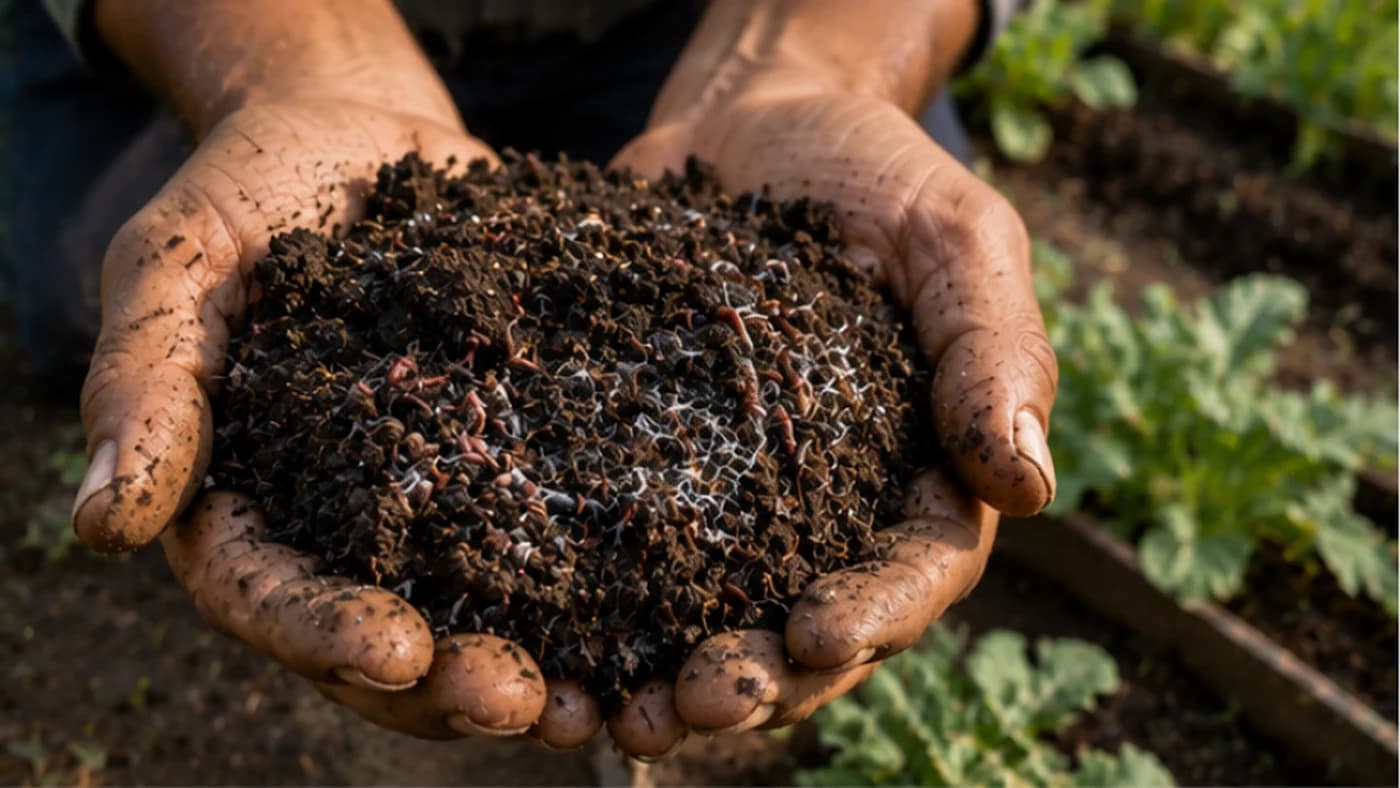
Most gardening advice focuses on what to feed the plant. But a healthy plant is really a sign of a healthy soil underneath it. Soil is not just dirt holding the roots up — one teaspoon of good soil contains more bacteria, fungi and other microbes than there are humans on the planet, each doing a specific job. When you farm for the microbiome instead of just the crop, that hidden workforce starts doing your fertilising and pest control for you, and your garden shifts from struggling on chemical support to thriving on its own.
What the soil microbiome actually does
The soil microbiome is the community of bacteria, fungi, protozoa and other tiny organisms that turn raw minerals into plant food. Bacteria and fungi are the main decomposers — they break down organic matter and lock nutrients inside their own bodies so the nutrients don't wash away. Fungi, especially mycorrhizal types, send out thread-like hyphae that can multiply a plant's root reach by hundreds of times, mining for phosphorus and water in exchange for sugar from the plant.
Protozoa and nematodes are the managers — they hunt and eat the bacteria and fungi, and as they digest their prey they release nitrogen-rich waste right into the root zone. This grazing action is actually what fertilises the plant; without these predators, the nutrients gathered by bacteria and fungi would stay locked away and out of reach of your crop.
The liquid-carbon pathway: how plants feed the soil back
Plants aren't passive here — through photosynthesis, a plant can pump up to 40% of the sugars it makes down through its roots into the soil as "exudates." This sugar is a dinner bell for beneficial microbes living in the rhizosphere, the few millimetres of soil right around the roots.
In return for that sugar, microbes mine minerals, transport water and defend the plant from disease. When a plant needs more phosphorus, it can send out specific chemical signals to attract the right fungi; when it's under pest or disease attack, it can recruit protective bacteria to form a shield around its roots. A living soil genuinely outperforms a dead one because of this two-way trade.
What a thriving microbiome gives you
Nutrient availability: in dead soil, minerals are often locked in forms plants can't use. Microbes release organic acids and enzymes that unlock these minerals — even in poor or rocky ground.
Drought resilience: fungal threads and bacterial "glues" build a spongy soil structure that holds water far longer than compacted, over-tilled ground. A sticky protein called glomalin, made by mycorrhizal fungi, also acts as a long-term carbon store that stabilises soil structure.
Natural pest and disease resistance: when every space in the soil is filled by beneficial organisms, there is simply no room left for disease-causing fungi like Fusarium or Pythium to take hold — a principle called competitive exclusion. Some microbes even produce natural antibiotic compounds.
Better nutrition in your food: crops grown in microbially rich soil tend to have higher levels of vitamins, minerals and antioxidants, because the microbes are mining a fuller range of trace elements than three or four synthetic fertiliser nutrients ever could.
The mistakes that destroy soil life
- Tilling: turning the soil over rips apart fungal networks that took months to build and exposes underground organisms to lethal UV light and oxygen.
- Heavy synthetic fertiliser: salt-based chemical fertilisers give a quick green colour but pull moisture out of microbial cells, killing them off over time — this is what creates a crop that needs more and more chemical input just to survive.
- Bare soil: without living roots providing exudates, or a mulch layer for protection, microbes starve or die from heat and cold extremes. Keeping the ground covered — with a crop, cover crop or mulch — is essential.
Living soil vs. chemical-dependent soil
- Living soil: nutrients cycle naturally through organic matter; spongy structure holds water well; pests are resisted through microbial competition; costs fall as the system matures; crops handle drought and heat better.
- Chemical-dependent soil: relies on synthetic salt fertiliser; compacted or water-repelling; pests need external pesticides to control; costs keep rising as the soil degrades further; crops are quicker to wilt and stress.
How to rebuild your soil's microbiome
Stop the damage first: move to no-till or low-till. If you must loosen compacted soil, use a broadfork rather than a rotavator, since this aerates without flipping and destroying the soil layers.
Feed the soil, not just the crop: apply good, mature compost (not sterilised) as both a fertiliser and a microbial inoculant — every load introduces a fresh population of beneficial organisms. Add a thick mulch of straw, dried leaves or crop residue to keep that population fed.
Keep something growing: instead of leaving beds bare between seasons, sow a cover crop like dhaincha, sunn hemp, cowpea or clover. Nitrogen-fixing legumes partner with Rhizobium bacteria to pull nitrogen from the air into the soil, and living roots keep the sugar pump running.
Try a microbial tea: brew a small amount of good compost in water with a little jaggery or seaweed extract for a day or two, then use it to water your soil or spray it on leaves. This is a cheap way to multiply beneficial populations quickly.
Advanced tools for serious growers
A standard soil test usually reports only NPK levels — useful, but it tells you nothing about the biology living in that soil. Where available, advanced tests that measure microbial biomass and the fungal-to-bacterial ratio give a truer picture of soil maturity.
Some experienced growers collect Indigenous Microorganisms (IMO) — beneficial microbes captured from healthy, undisturbed local forest or old-growth soil and cultured for their own farm. Because these organisms are already adapted to the local climate and geology, they often outperform store-bought inoculants.
Biochar is another long-term tool: it is highly porous and doesn't break down, so it works like a permanent apartment complex for microbes, giving them somewhere to shelter from predators and survive dry spells once it is "charged" with nutrients and biology.
A real transformation: restoring a neglected plot
Picture a small backyard plot used for years as bare, hard-packed ground where almost nothing grows but a few stray weeds. Instead of tilling it, the grower smothers the weeds under cardboard topped with roughly 15 cm of wood chips or crop residue — a method sometimes called sheet mulching.
Within six months, moisture trapped under the cardboard draws in earthworms and fungi, which do the aeration no machine ever could. By the following season, the cardboard has broken down and the soil beneath has turned dark and crumbly; the grower plants directly into it, inoculating each hole with a handful of vermicompost. By the third year, the soil rarely needs frequent watering, pest damage is minimal, and yields have risen sharply — not by magic, but by getting out of the way and letting the biology do the work.
Terms explained in this guide
Frequently asked
What exactly is the soil microbiome?+
It's the community of bacteria, fungi, protozoa and other microscopic organisms living in your soil. Together they decompose organic matter, unlock minerals, build soil structure, and protect plant roots from disease.
Why does tilling harm the soil?+
Tilling physically tears apart fungal networks that take months to rebuild, and it exposes soil organisms to damaging UV light and oxygen. Frequent tilling is one of the fastest ways to turn living soil back into lifeless dust.
How long does it take to rebuild a dead soil?+
It's rarely overnight. Soil that has seen years of heavy chemical use and tillage can take several seasons of consistent no-till, composting and cover cropping before its full microbial community returns.
Can a healthy microbiome really replace fertiliser and pesticides?+
It significantly reduces the need for both. Microbes unlock nutrients already present in your soil and crowd out disease-causing organisms through competition, though very poor or contaminated soils may still need some initial correction.
What is the cheapest way to start feeding my soil's microbiome?+
Stop tilling more than necessary, add a layer of good compost, keep the ground covered with mulch or a cover crop, and avoid heavy synthetic fertiliser. These four habits cost little and do most of the work.
Where to go next
Want this as daily tasks for your farm?
Khetiyaar turns guides like this into a day-by-day plan — in your language, free to start.

Related guides
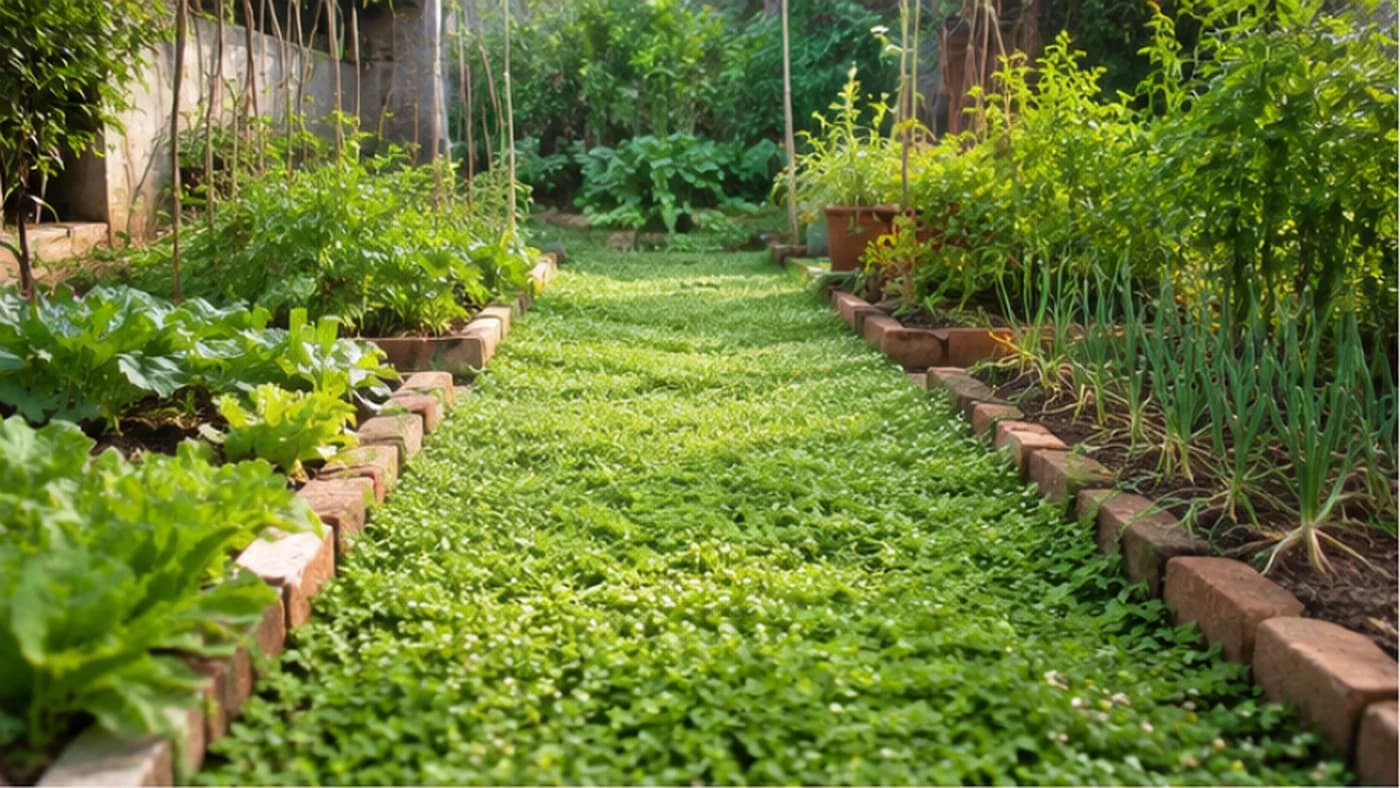
Living Garden Paths: Groundcover Walkways That Feed Your Beds Instead of Baking Them
Bare dirt or concrete paths turn into heat islands that bake nearby roots. A living groundcover path — clover, dwarf peanut, or creeping herbs — stays far cooler, feeds the soil with nitrogen, and heals itself when you walk on it.
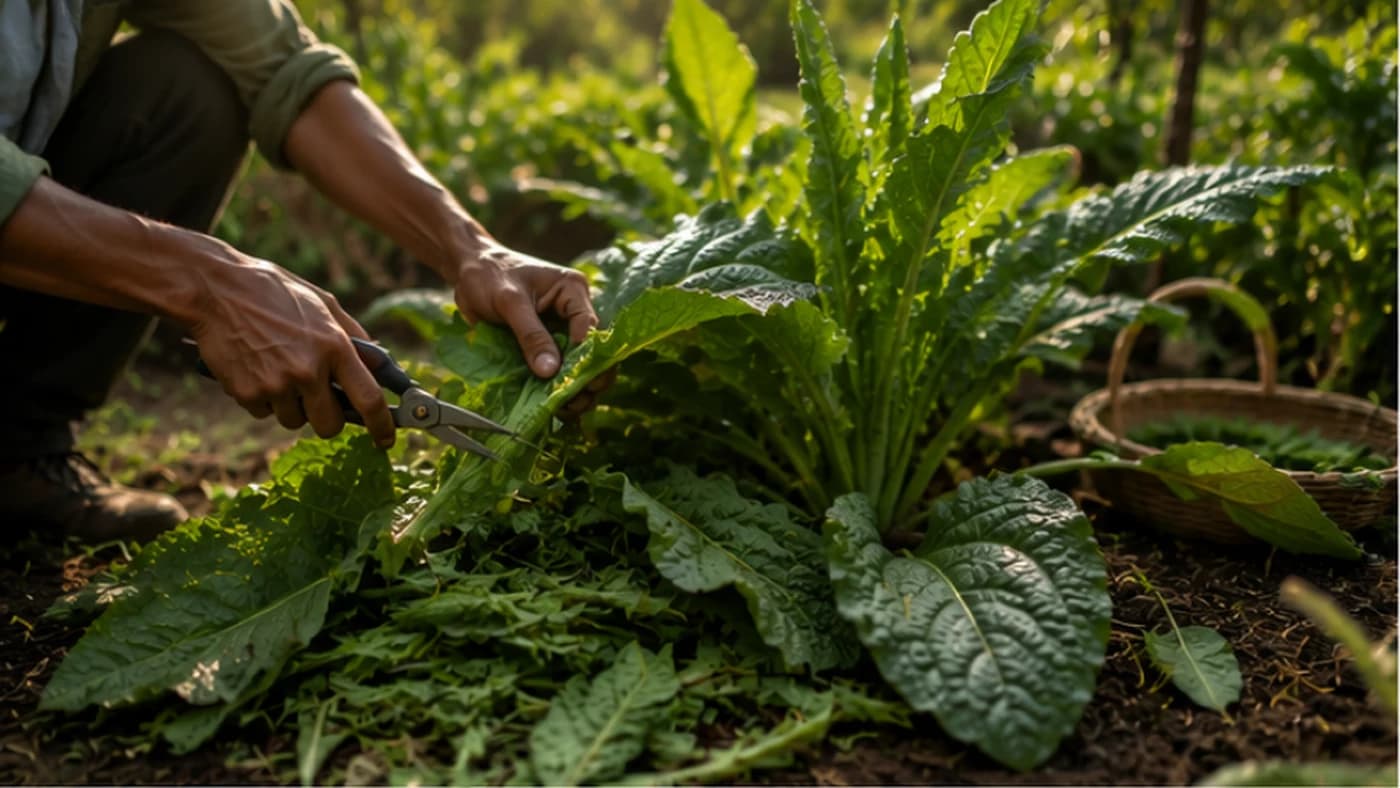
Dynamic Accumulator Plants: Free Fertiliser Mining From Deep Below Your Field
Most crop roots barely reach 30–45 cm down, while a store of potassium, calcium and other minerals often sits much deeper, out of reach. Deep-rooted 'accumulator' plants act as a biological elevator that brings those minerals up for free.
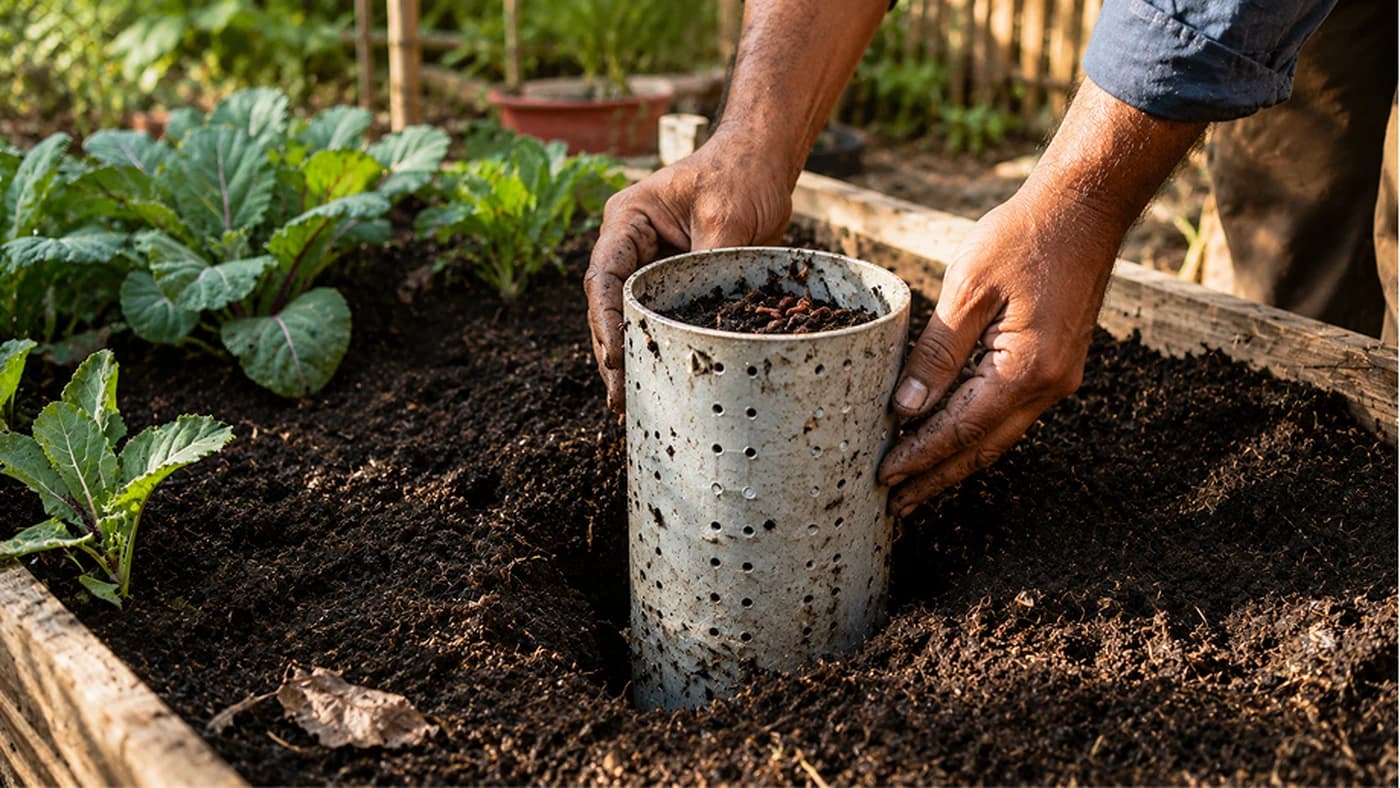
How to Build a Garden Worm Tower for Free, In-Bed Composting
Stop hauling kitchen scraps to a distant bin and hauling compost back months later. A buried worm tower lets worms process waste right where your plants are growing.