

Living Garden Paths: Groundcover Walkways That Feed Your Beds Instead of Baking Them
Bare dirt or concrete paths turn into heat islands that bake nearby roots. A living groundcover path — clover, dwarf peanut, or creeping herbs — stays far cooler, feeds the soil with nitrogen, and heals itself when you walk on it.
Quick answer
A living path — clover in cooler zones, dwarf peanut (Arachis pintoi) in hot plains, or shade-tolerant sedge under cover — turns dead walking space into an asset: it stays dramatically cooler than bare dirt or concrete, feeds nitrogen to nearby beds, resists erosion in heavy rain, and heals itself under foot traffic. It needs edging to stop it invading your crop rows and isn't meant for vehicle traffic, but for a home garden or homestead it replaces a maintenance headache with a small, self-renewing patch of living soil.
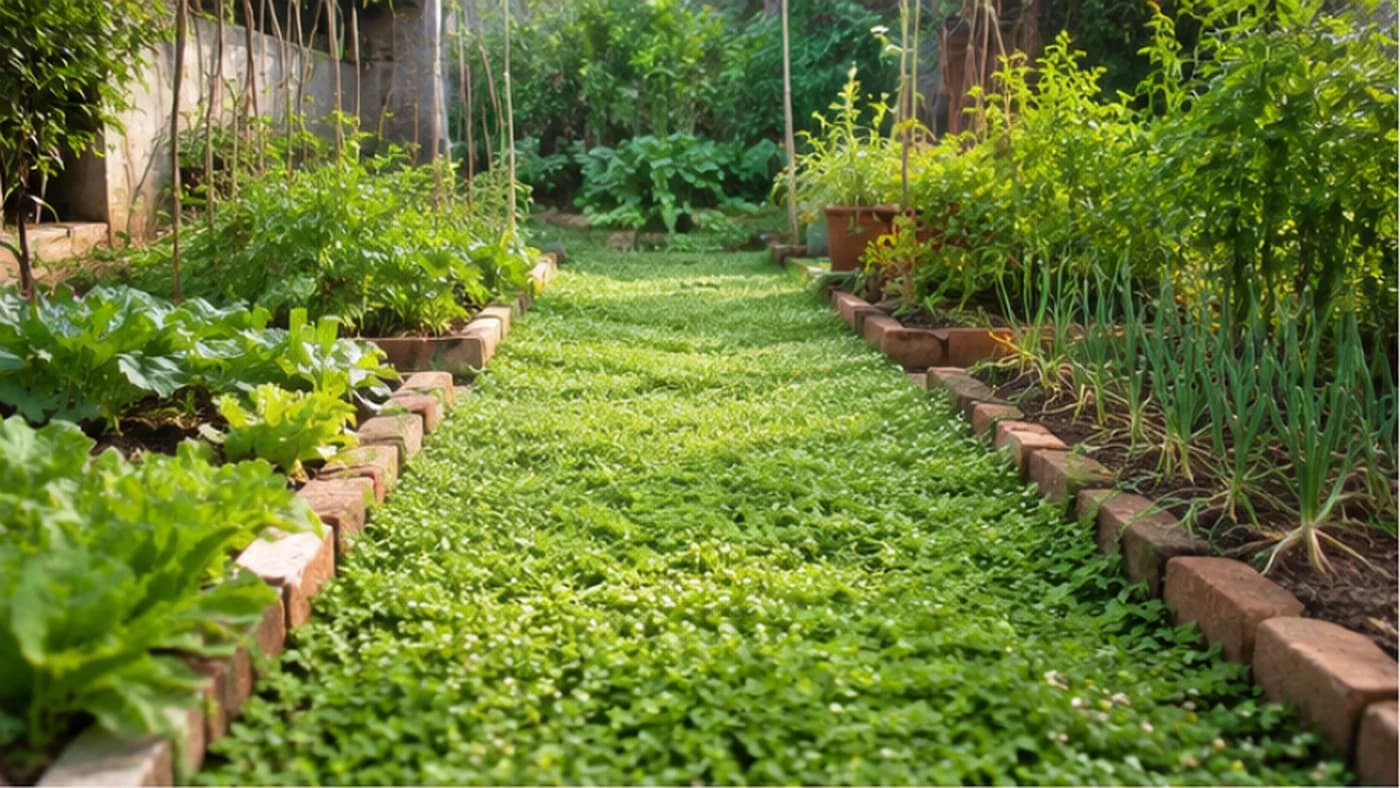
Most gardens treat paths as dead space — bare dirt, gravel, or concrete that gets hotter through the day and radiates that heat straight into the nearby beds. A living path takes the opposite approach: a low, foot-traffic-tolerant groundcover that stays cool, feeds nitrogen to the soil around it, and repairs itself as you walk on it. It's not a new idea — many traditional gardens allowed clover and creeping herbs to fill the gaps between stones for exactly this reason.
Why a living path stays so much cooler
Bare soil and concrete are thermal masses: they absorb heat all day and radiate it back out well into the evening, baking the roots of anything growing nearby. A living groundcover does the opposite — through transpiration, the plants release water vapour and cool the surrounding air, and measured trials show a living green surface can run as much as 32°C cooler than concrete in direct summer sun.
The plants that work best for paths spread by runners along or just under the surface, rather than growing from a single crown — that means a boot print doesn't kill the plant, it just gets repaired as the runner spreads back over the damaged patch.
Choosing the right groundcover for Indian conditions
White clover is the classic choice in cooler, temperate zones and works well in India's hill regions, but it can struggle through extreme plains heat. In hot plains conditions, dwarf peanut (Arachis pintoi) is a strong alternative — a low, spreading, nitrogen-fixing legume increasingly used in Indian gardens and orchards, tolerant of foot traffic and heat. For shaded paths, a low sedge or Corsican mint handles the low light better than clover or dwarf peanut. Whichever you choose, the same nitrogen-fixing principle applies: legume groundcovers host bacteria in their root nodules that pull nitrogen from the air and release it into the surrounding soil as the plant is trimmed or worn down by traffic.
How to install a living path, step by step
Clear the path of old plastic liners or thick mulch. If it's gravel, you don't need to remove it — just add a thin layer (about 2-5 cm) of compost as a seedbed. Choose your species based on sun exposure, then sow in early spring or shortly after monsoon when moisture is reliable, broadcasting seed at roughly 10 g per square metre and raking it into just the top few millimetres of soil — these seeds are tiny and germinate from light and surface warmth, so burying them any deeper is a common cause of failure.
Keep the soil consistently moist for the first three to six months while the groundcover establishes; after that it needs far less water than a lawn. For high-traffic sections, set flat stepping stones into the greenery so the heaviest footfall lands on stone rather than crushing the plant crowns underneath.
The real benefits beyond looking nice
A cooler microclimate reduces heat stress on nearby tomatoes, chillies and leafy greens, which can extend your harvest window in the hottest months. The nitrogen the legume groundcover fixes acts like a slow-release fertiliser feeding the beds on either side, cutting down how much bagged fertiliser you need. The dense root mat also holds soil in place during heavy monsoon rain, preventing the washouts that plague bare dirt or loose gravel paths, and flowering groundcovers give pollinators a steady food source that benefits nearby fruit and vegetable plants too.
Common mistakes and where living paths don't work
The most common problem is choosing an overly aggressive spreader — clover and mint in particular will happily creep into your vegetable rows, so plan to edge the path a couple of times a season or use a physical border of wood or stone to contain it. Living paths are built for foot and light pet traffic only — they won't survive a tractor or regular vehicle weight, so keep hardscaping for any route you drive over.
Deep, permanent shade under a dense canopy is a poor fit, since most nitrogen-fixing groundcovers need at least partial sun — use mulch or a shade-tolerant sedge there instead. And in regions under severe, sustained drought and water rationing, even a resilient groundcover may struggle to establish without a baseline of regular moisture.
Practical tips for a path that thrives
If you mow a clover or dwarf-peanut path, keep the blade height at 7-10 cm — cutting shorter scalps the plant and invites weeds in. Mix in a fragrant herb like Indian mint or a low thyme along part of the path so brushing past it releases a light scent. If you don't want to wait for seed to fill in, buy small established plugs and set them in a grid — they establish faster than broadcast seeding. Leave a 15 cm mulch buffer between the living path and your vegetable beds as a clear zone where you can spot and pull any runners trying to invade the crop rows.
Frequently asked
How much cooler is a living path than concrete or bare dirt?+
Measured trials show a living groundcover surface can run around 32°C cooler than concrete in direct summer sun, and noticeably cooler than baked bare soil too.
What groundcover works best for Indian garden paths?+
White clover suits cooler hill regions; in hot plains conditions, dwarf peanut (Arachis pintoi) is a heat-tolerant, nitrogen-fixing alternative, and shade-tolerant sedge works well under dense tree cover.
How deep should I sow groundcover seed for a path?+
Very shallow — just a few millimetres of soil cover. These seeds need light and surface warmth to germinate, so burying them any deeper is a common cause of failed establishment.
Can a living path handle vehicle or heavy traffic?+
No — living paths are designed for foot and light pet traffic only. Any route that sees a tractor or vehicle regularly still needs a hardscaped surface.
How do I stop clover or mint from spreading into my vegetable beds?+
Edge the path two or three times a season, or install a physical border of wood or stone, and leave a mulch buffer strip where you can easily spot and pull any runners before they establish in the crop rows.
Where to go next
Want this as daily tasks for your farm?
Khetiyaar turns guides like this into a day-by-day plan — in your language, free to start.

Related guides
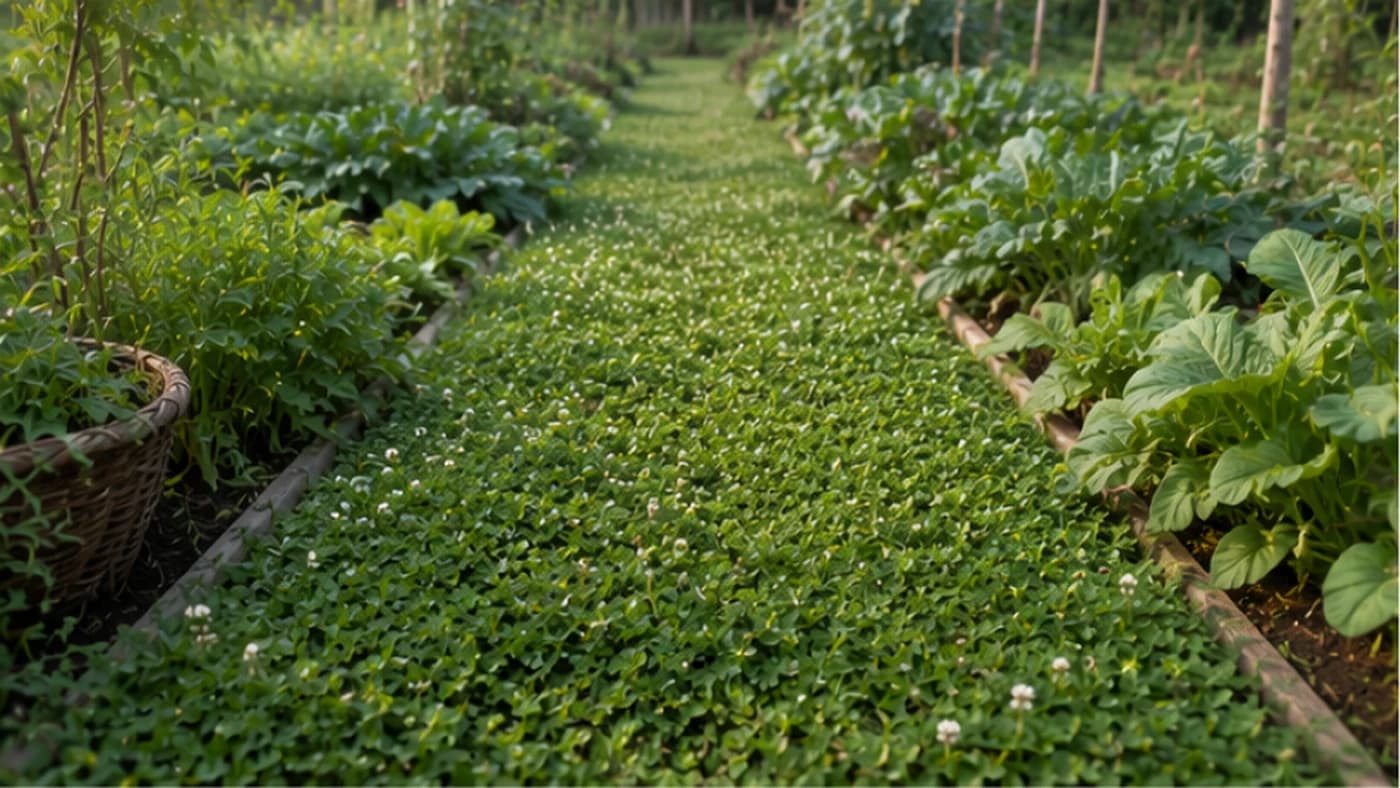
Living Mulch for Garden Paths: Grow Your Walkways Instead of Paving Them
Bare soil between your beds is an open invitation to weeds — you can spend 40 hours a year pulling them, or 30 minutes seeding a living mulch that builds soil and feeds pollinators while you watch from the porch.
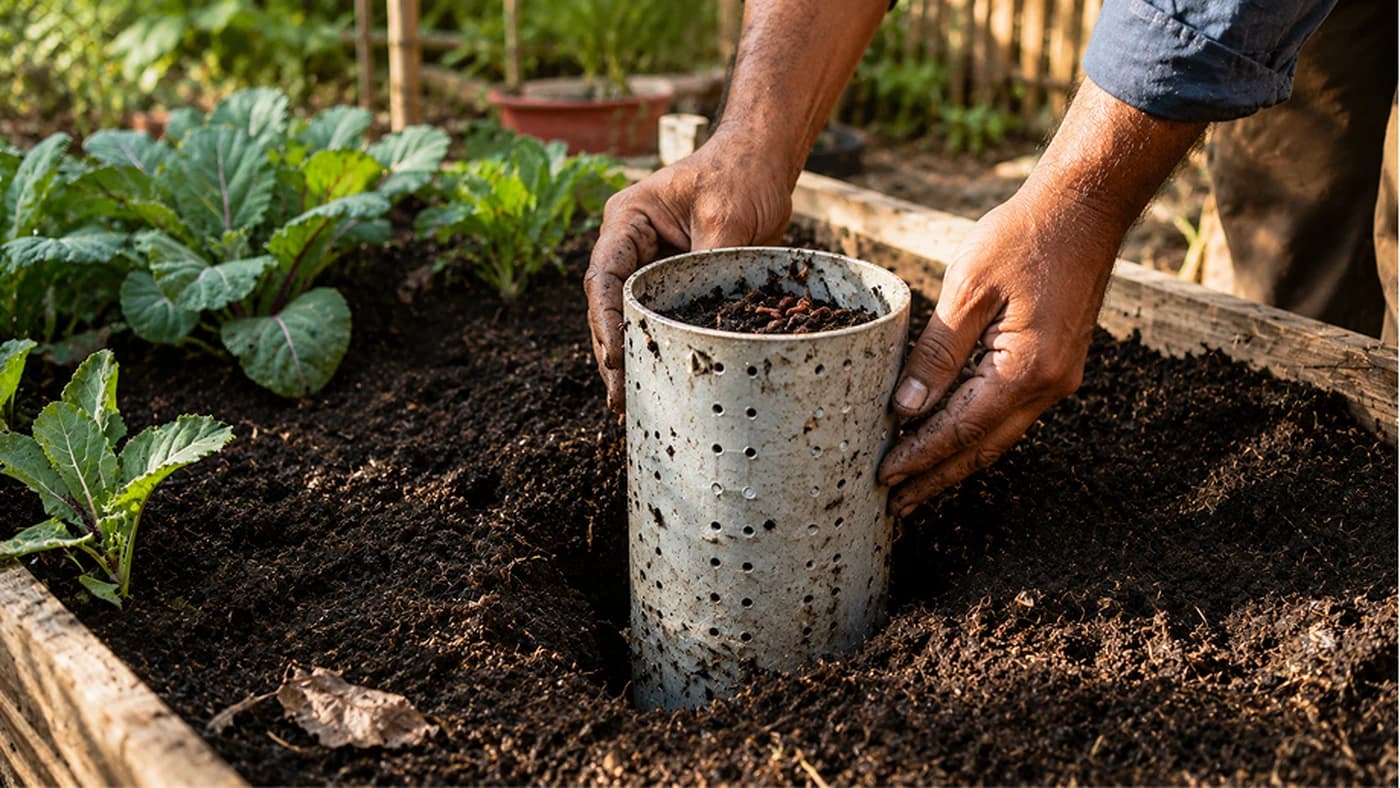
How to Build a Garden Worm Tower for Free, In-Bed Composting
Stop hauling kitchen scraps to a distant bin and hauling compost back months later. A buried worm tower lets worms process waste right where your plants are growing.
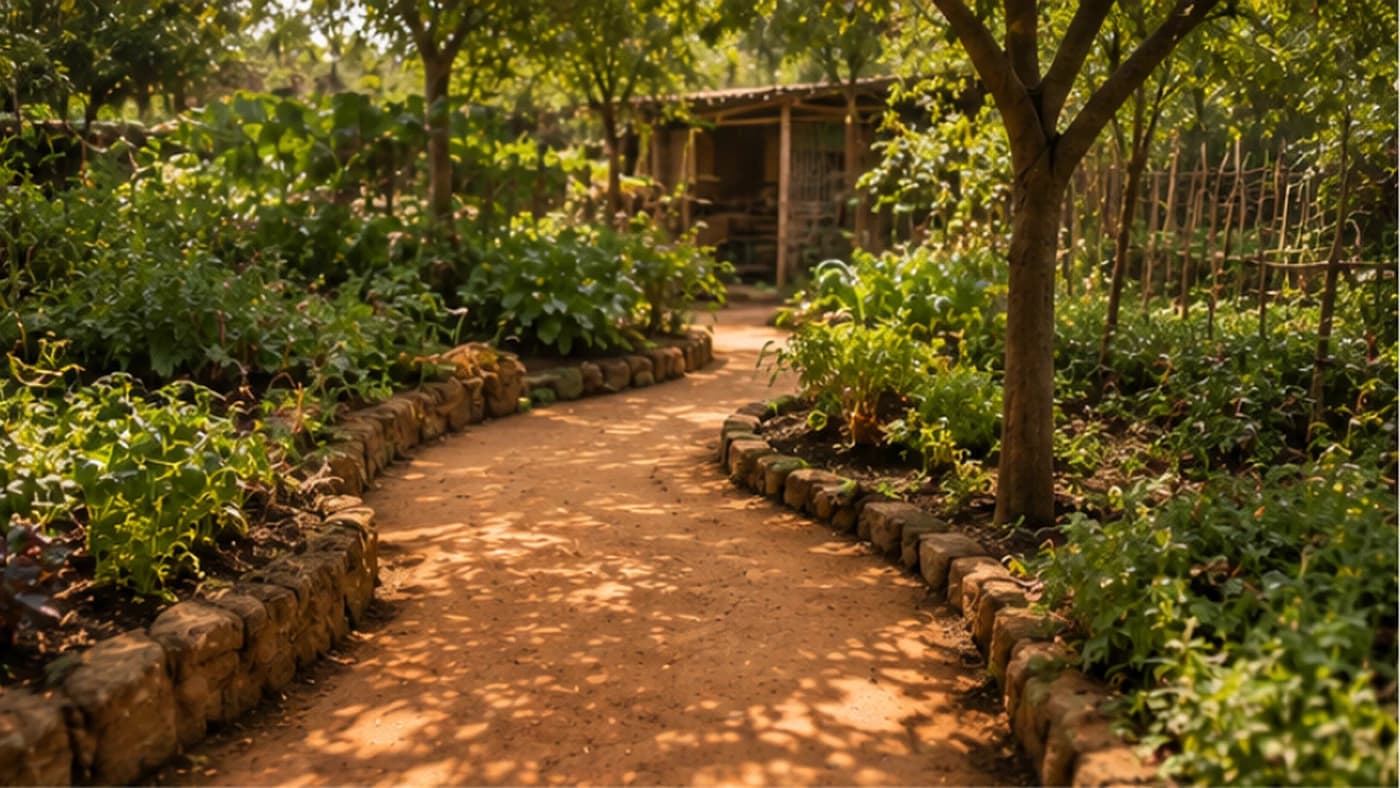
DIY Cob Garden Paths: Free Walkways From the Soil Under Your Feet
Concrete costs money and a huge carbon footprint. Cob — clay-rich subsoil, sand and straw — builds a durable, walkable garden path for almost nothing, using the very soil you dug out for a pond or pit.