

Dynamic Accumulator Plants: Free Fertiliser Mining From Deep Below Your Field
Most crop roots barely reach 30–45 cm down, while a store of potassium, calcium and other minerals often sits much deeper, out of reach. Deep-rooted 'accumulator' plants act as a biological elevator that brings those minerals up for free.
Quick answer
Dynamic accumulators turn a farm's biggest hidden asset — the mineral reserve sitting below normal root depth — into usable fertility, for the cost of planting once and cutting a few times a year. They are not a substitute for a soil test or a fix for contaminated land, but on ordinary soil they are one of the cheapest, most durable ways to build fertility that keeps compounding season after season. Start with a few comfrey plants or a patch of a locally suited accumulator in one corner, and watch how the soil around it changes over a year or two.
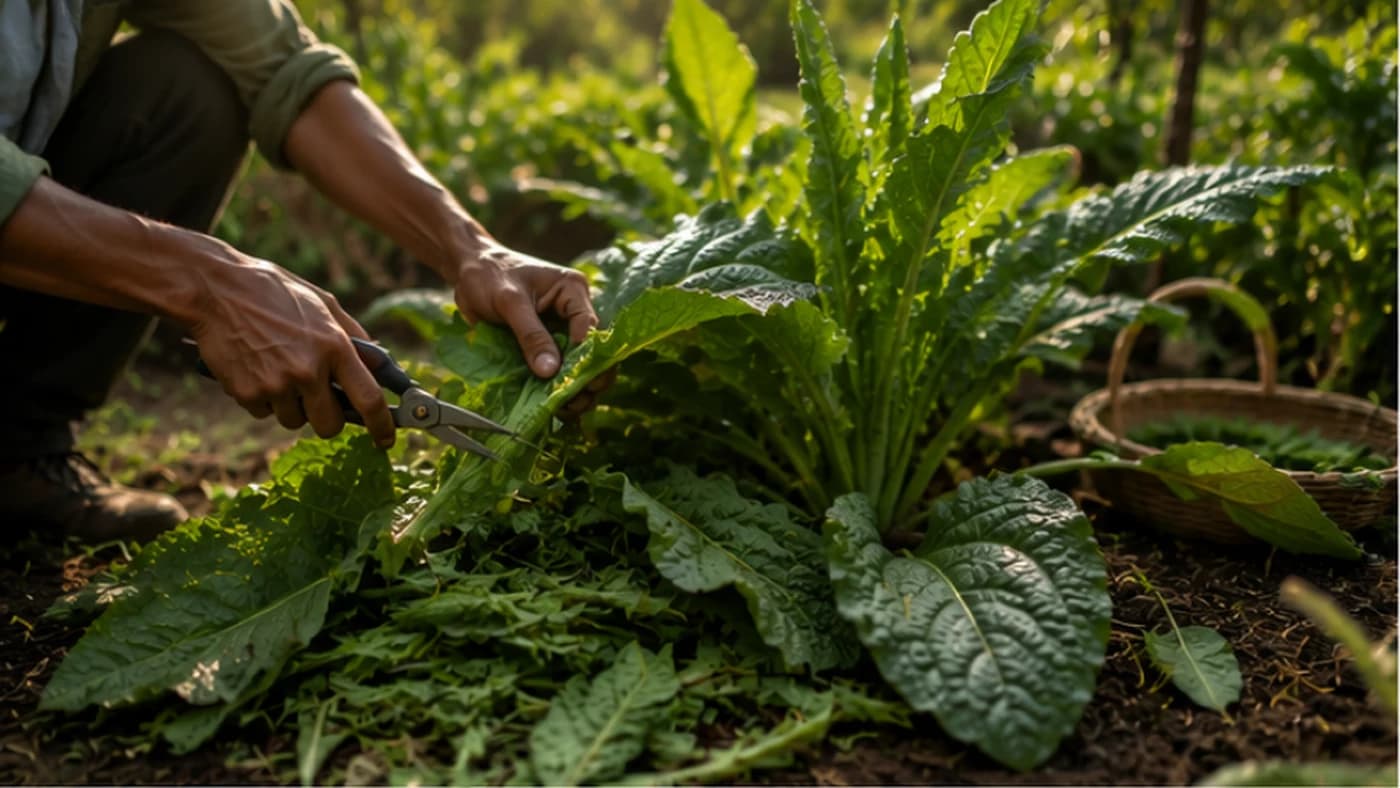
Most vegetable and field crop roots stay shallow, rarely reaching more than 30–45 cm down — the layer where nutrients get used up fastest. Below that sits a subsoil layer that often holds a real reserve of potassium, calcium, magnesium and other minerals that have leached downward over years or decades, completely out of reach of an ordinary crop. Dynamic accumulator plants are the exception: species with unusually deep taproots that reach several metres down, absorb these minerals, and concentrate them in their leaves — sometimes at ten times the level found in typical vegetation. Cut the plant, lay its leaves on the soil, and you have moved minerals from deep underground to your topsoil at essentially zero cost beyond the plant itself.
How the mining actually works
Ordinary vegetables root mainly in the upper soil layer, where biological activity and nutrient depletion are both highest. Dynamic accumulators send taproots down 3 metres or more, releasing root exudates — sugars and acids that feed specialised soil bacteria and fungi — which help dissolve minerals bound tightly to rock particles, making them available to the plant.
Once absorbed, these minerals are stored in the plant's foliage. As leaves die back naturally, or when you deliberately cut and drop them onto the soil surface, the accumulated minerals decompose and top-dress the ground with a concentrated dose of deep-earth nutrition — a slow, steady, and essentially free way to build fertility over time.
Key accumulator plants and what they specialise in
Comfrey is widely regarded as the strongest all-round accumulator — its taproot can penetrate tough clay to reach 3 metres deep, pulling up potassium and silicon, both important for fruiting and plant immunity. Sterile cultivars are preferred since they won't spread by seed, though they can still spread through root fragments.
Stinging nettle (where available locally) is exceptional at accumulating calcium, magnesium and iron and carries high nitrogen in its own leaves — harvest with gloves. Dandelion is an underrated soil builder, with roots that mine calcium and potassium while loosening compacted soil, and it is small enough to grow directly among vegetables. Yarrow accumulates potassium, phosphorus and copper, and its flower clusters draw in hoverflies, lacewings and parasitic wasps that prey on aphids.
Why mining beats buying fertiliser
The most direct benefit is reduced input cost — once established, these plants supply minerals every season without another purchase. Minerals released through decomposing leaves are bound in organic matter, giving a slow-release effect that mimics a natural forest floor, rather than the harsh, fast-hitting salts in many bagged fertilisers, which can be harder on soil microbes.
The deep roots themselves also improve soil structure, acting like biological drills that break up compacted layers and create channels for water and air, improving both drainage and water retention over time. And because nutrients that would otherwise leach downward and out of reach are captured and recycled, this closed loop keeps your land's inherent fertility on your land instead of losing it to groundwater.
Mistakes that undercut the benefit
Poor placement is the most common error — vigorous accumulators like comfrey can shade out and outcompete delicate vegetables if planted right in the middle of a bed; keep them at the edge or in a dedicated patch instead. Comfrey in particular can regrow from even a small root fragment, so plan for it as a long-term perennial, not something you can easily remove later.
Over-harvesting is another pitfall — chop and drop is the goal, but taking too much foliage too often exhausts the plant, so let it establish for a full season before the first major harvest, and avoid removing more than half its foliage at any one time. Remember too that an accumulator can only move minerals that already exist somewhere in your soil profile — it cannot create a nutrient out of thin air.
Where this method has real limits
Because these plants are efficient at pulling up whatever is in the ground, they will also draw up heavy metals such as lead, cadmium or arsenic if present — in land with a history of industrial use or heavy agrochemical contamination, using accumulators for soil remediation is valid, but you cannot then use those leaves as mulch around food crops.
In very arid conditions, deep roots may compete with your main crop for the same limited deep-water reserves. And the timeline is genuinely longer than synthetic fertiliser: this builds generational soil fertility, not a quick fix for an urgent nutrient deficiency this season.
Practical ways to use accumulators well
Set up dedicated accumulator patches near your compost pile or water source, rather than scattering plants randomly, so harvesting is convenient. Cut foliage just before flowering, when nutrient levels in the leaves peak, and lay it directly on the soil around your target crops.
You can also brew a liquid fertiliser: soak harvested leaves in a bucket of water for 2–4 weeks, then dilute the resulting (strong-smelling) liquid at roughly 1:10 with water and use it as a soil drench or foliar spray. Mulch heavily over decomposing accumulator leaves with straw or dry material to hold moisture and suppress weeds, and use high-nitrogen species like nettle or comfrey as an accelerant layered into a slow compost pile.
Getting more out of the system
Many accumulators form partnerships with mycorrhizal fungi that extend their root reach many times over — protecting this fungal network by avoiding tilling near these plants keeps the whole system working efficiently. A soil test is still worth doing, since an accumulator cannot correct a fundamentally wrong pH or a total absence of a nutrient; the test tells you which specific accumulator is worth prioritising — if your soil is chronically short on calcium, for instance, nettle and dandelion are the logical choice. On larger holdings, accumulators can be worked into hedgerows or alley-cropping strips to generate biomass at scale, and choosing regionally proven varieties matters, since a stressed plant is a poor miner.
A realistic example
Around a young fruit tree, a ring of comfrey at the base combined with scattered yarrow and dandelion further out is a proven combination: chop the comfrey back two to three times a year and lay the leaves under the canopy, and its roots will pull potassium from several metres down to help the tree fruit heavily, while the yarrow attracts predatory insects and the dandelion loosens soil at the drip line. On tired, long-farmed land, a season or two of a deep-rooted cover crop such as alfalfa — with roots recorded reaching remarkable depths — can visibly enrich soil with both nitrogen and deep minerals before you plant a demanding vegetable crop there.
Terms explained in this guide
Frequently asked
What exactly is a dynamic accumulator plant?+
A plant with an unusually deep root system that absorbs specific minerals from deep soil and concentrates them in its leaves at levels well above typical vegetation — cutting and dropping the leaves returns those minerals to the topsoil.
Which plants are the best all-round accumulators?+
Comfrey is considered the strongest all-rounder for potassium and silicon. Nettle is exceptional for calcium, magnesium and iron plus nitrogen. Dandelion mines calcium and potassium while loosening soil. Yarrow accumulates potassium, phosphorus and copper and attracts beneficial insects.
How often should I cut and drop accumulator leaves?+
Two to three times a year, ideally just before flowering when nutrient levels peak, and never more than half the foliage at once. Let a newly planted accumulator establish for a full season before the first major harvest.
Is it safe to use accumulator leaves as mulch on food crops?+
Only if your soil is free of heavy-metal contamination. If your land has a history of industrial use or heavy agrochemical residue, accumulators may pull up lead, cadmium or arsenic along with nutrients, and those leaves should not go on food-growing beds.
Do accumulators replace the need for a soil test?+
No. They cannot fix a fundamentally wrong pH or supply a nutrient that is genuinely absent from your soil profile. A soil test tells you which accumulator to prioritise for your specific deficiency.
Where to go next
Want this as daily tasks for your farm?
Khetiyaar turns guides like this into a day-by-day plan — in your language, free to start.

Related guides
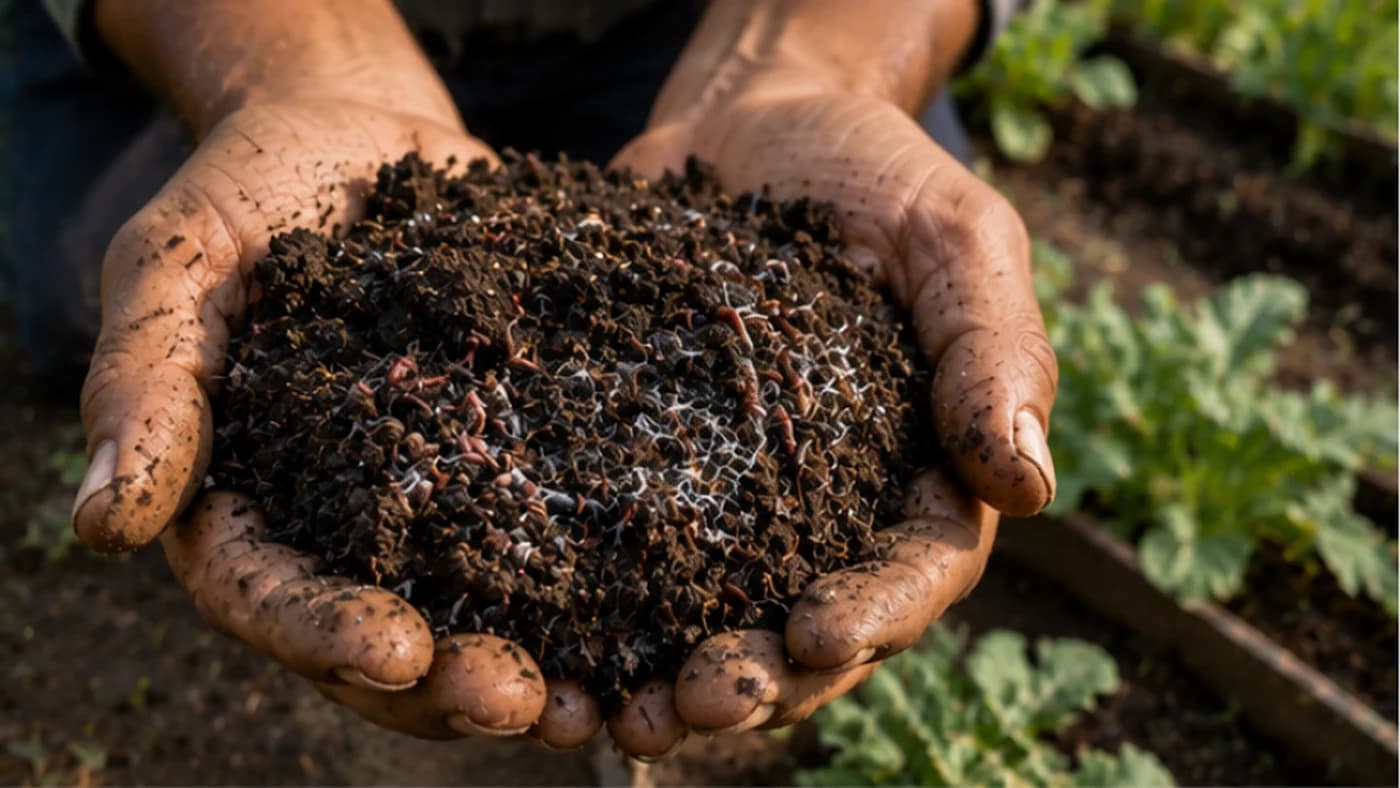
Soil Microbiome Benefits: Why Feeding Your Soil Beats Feeding Your Plants
A single teaspoon of healthy soil holds more living organisms than there are people on Earth. Learn how that hidden workforce feeds your plants, fights disease, and can cut your fertiliser bill for good.
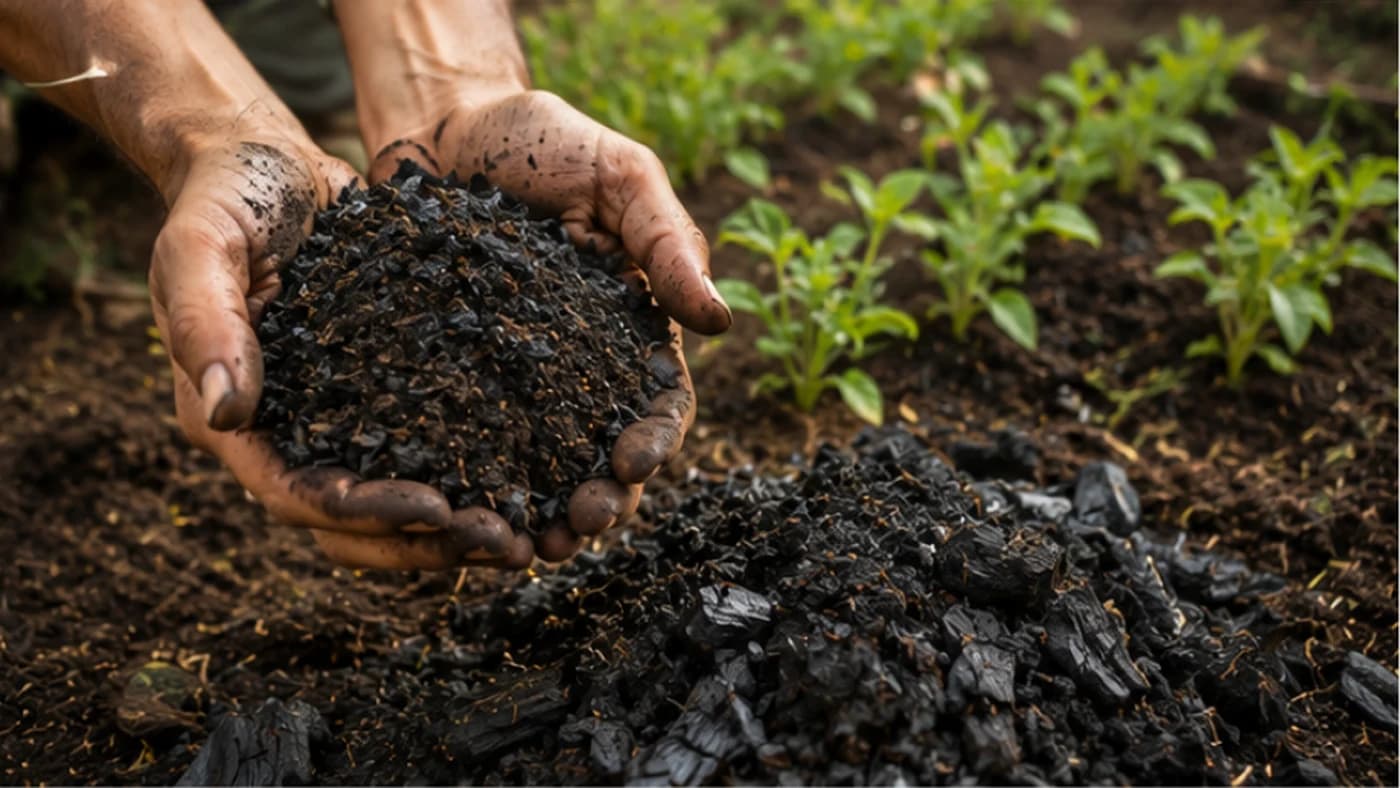
Terra Preta: The 2,000-Year-Old Soil That Gets More Fertile With Age
Ancient Amazonian farmers built soil that is still 10x more fertile than the surrounding land 2,000 years later — using biochar, organic waste and minerals. Here's how to build a modern version in your own field.
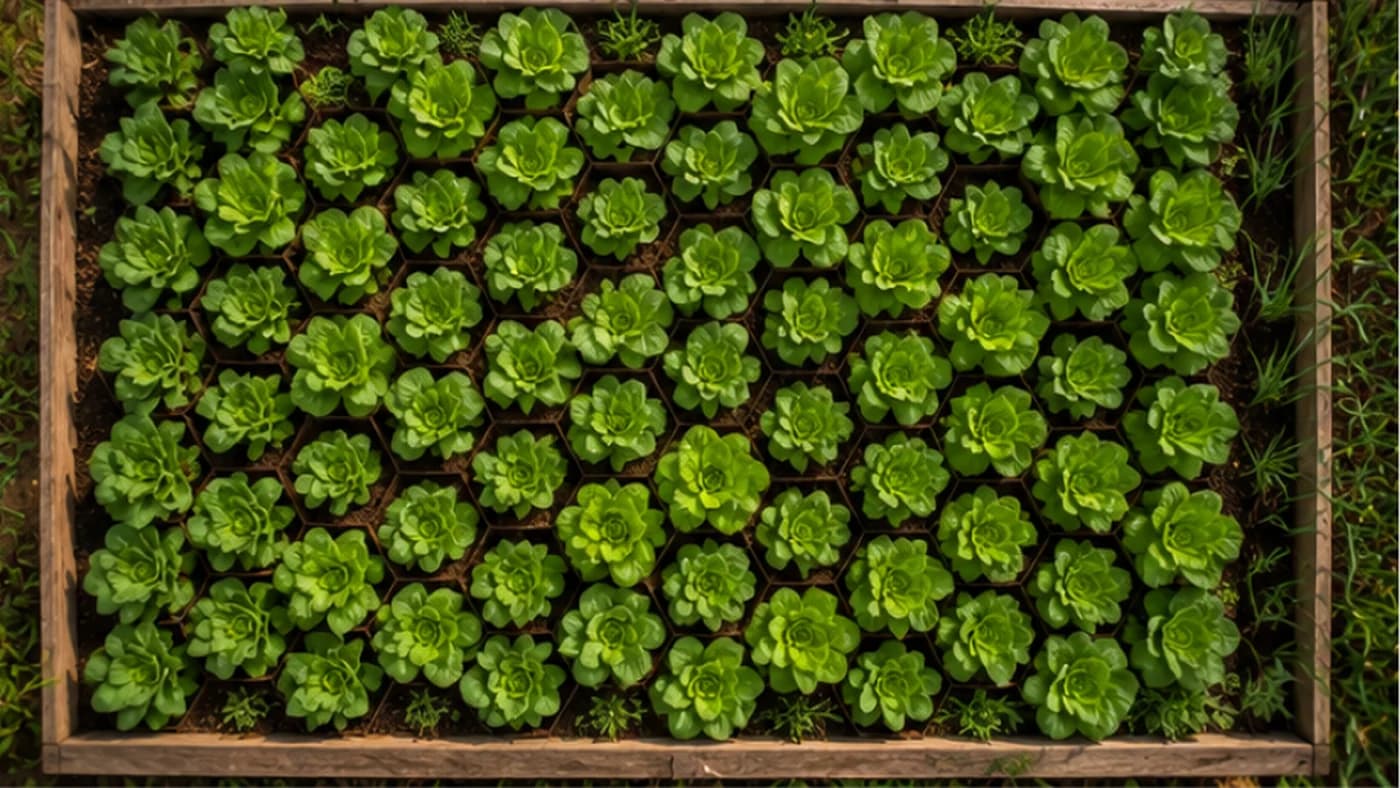
Hexagonal Spacing: Fit 15% More Plants in the Same Bed and Stop Weeding
Plant in a staggered triangle pattern instead of straight rows and the leaves close into a canopy that shades out weeds on its own — 10-15% more plants per bed, far less watering, and far less hoeing.