

Protecting Livestock From Heat Exhaustion: Build a 'Living Barn'
A tin shed in an Indian summer can be hotter than the open field — metal absorbs heat and radiates it straight back onto your animals. A living shade belt of fast-growing trees cools the air for real, and costs almost nothing to run.
Quick answer
A tin shed is a quick fix that can trap heat rather than remove it; a living shade belt of fast-growing trees like subabul, gliricidia, mulberry, moringa and neem, backed by a longer-lived tree like mango or banyan, cools the air by real evapotranspiration, protects milk yield and weight gain through the hottest months, and eventually gives you free fodder and fuelwood too. It takes two to three years to mature and needs real protection from your own animals while young, but once established it runs for decades at close to zero cost.
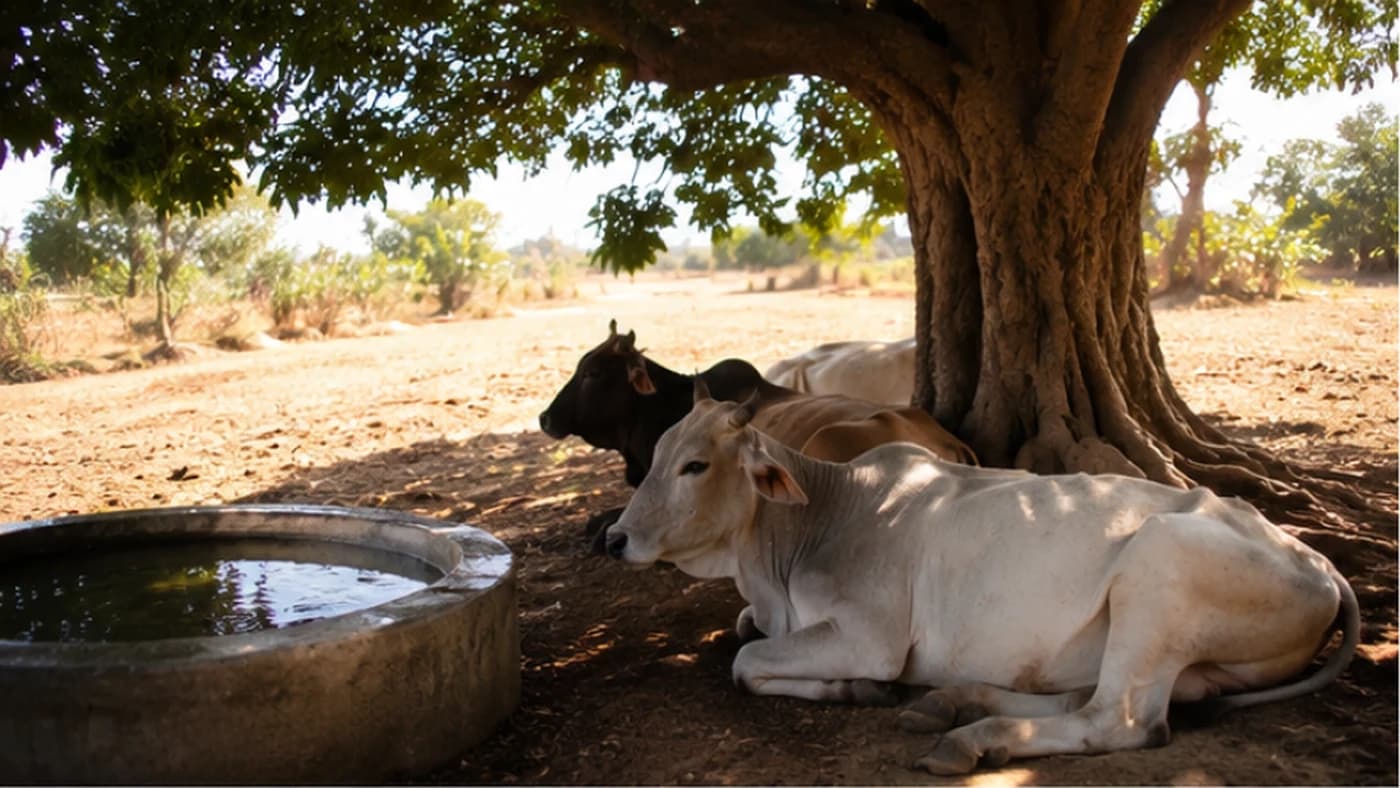
Every summer, Indian livestock keepers watch their animals stand with mouths open, breathing hard, refusing to move or eat through the worst of the afternoon heat — and many assume a tin roof is protection enough. In practice, a metal shed in peak summer often runs hotter than the open shade of a tree, because metal absorbs solar heat all day and radiates it straight back down. The alternative farmers have used for centuries is a living shade belt — rows of fast-growing trees that don't just block the sun but actively cool the air around your animals through evapotranspiration, at close to zero running cost.
Why heat exhaustion is so costly for livestock
Heat stress quietly costs weight, milk and fertility long before an animal collapses. Cattle in particular cool mainly by panting rather than sweating, so once heat and humidity combine past a certain point, their systems start to struggle — you'll see open-mouth breathing, heavy drooling, and animals refusing to graze or move.
The financial impact is direct: lactating animals prioritise survival over milk production, so daily yield drops sharply during a heatwave, and animals under heat stress eat less to avoid the extra internal heat that digestion produces, stalling weight gain. By the time an animal is visibly stumbling or trembling, the damage is often already affecting its reproductive health for months afterward — prevention matters far more than treatment here.
How a living shade belt actually cools the air
A metal roof only blocks direct sunlight. A tree does something more: through transpiration, it draws water from deep in the soil and releases it as vapour through its leaves, and that phase change from liquid to vapour pulls heat out of the surrounding air — real, measurable cooling, not just shade. A good tree canopy can bring the air temperature down by roughly 8-14°C compared to open sun.
To build one, think in rows rather than a single block of trees: plant shade belts along the path of the afternoon sun, with rows spaced roughly 12-18 metres apart so a tractor or mower can pass through and enough light still reaches the ground to keep pasture growing beneath the trees.
What to plant, and how to protect it while it grows
For fast results, fast-growing, hardy species suited to Indian conditions work well: subabul and gliricidia (both nitrogen-fixing and useful as fodder), mulberry, moringa, and neem, mixed with a longer-lived shade tree like a native mango, tamarind or banyan for the long term. Fast growers can put on well over a metre of growth in a season, giving real relief within two to three years, while the slower, sturdier trees take over the shade duty for decades after.
The single biggest risk to a young shade belt is your own livestock — goats, sheep and cattle will strip the bark off a young sapling in minutes. Fence off new plantings or use tree guards until the trees are tall enough that animals can no longer reach the leading shoots, usually one to two metres. Skipping this step is the most common reason living barns fail to establish.
Frequently asked
Why can a metal shed be hotter than open shade for livestock?+
Metal absorbs solar heat throughout the day and radiates it back onto the animals below, effectively trapping heat, whereas a tree canopy actively cools the air through evapotranspiration.
Which fast-growing trees work well for livestock shade in India?+
Subabul, gliricidia, mulberry, moringa and neem establish quickly and many also double as fodder, paired with a longer-lived tree like mango, tamarind or banyan for lasting shade.
How much cooler is it under a tree canopy than open sun?+
Roughly 8-14°C cooler, thanks to transpiration pulling heat out of the air as trees release water vapour through their leaves — a genuine cooling effect, not just shade.
How do I stop my animals from destroying young shade trees?+
Fence off new plantings or use tree guards until saplings are tall enough (usually one to two metres) that animals can't reach and strip the leading shoots — this is the most common point of failure.
How long before a living shade belt actually helps during summer?+
Fast-growing species can give real relief within two to three years; it isn't a fix for a heatwave happening right now, so plan it ahead of the season, not during one.
Where to go next
- AI farming chatbotAsk any farming question in Gujarati, Hindi or English and get an answer in seconds.
- Kheti app for Indian farmersCrop plans, disease diagnosis, weather and mandi rates in one app.
- Agri Bazar marketplaceBuy and sell animals, crops, equipment and dairy near you — and see what buyers want today.
Want this as daily tasks for your farm?
Khetiyaar turns guides like this into a day-by-day plan — in your language, free to start.

Related guides
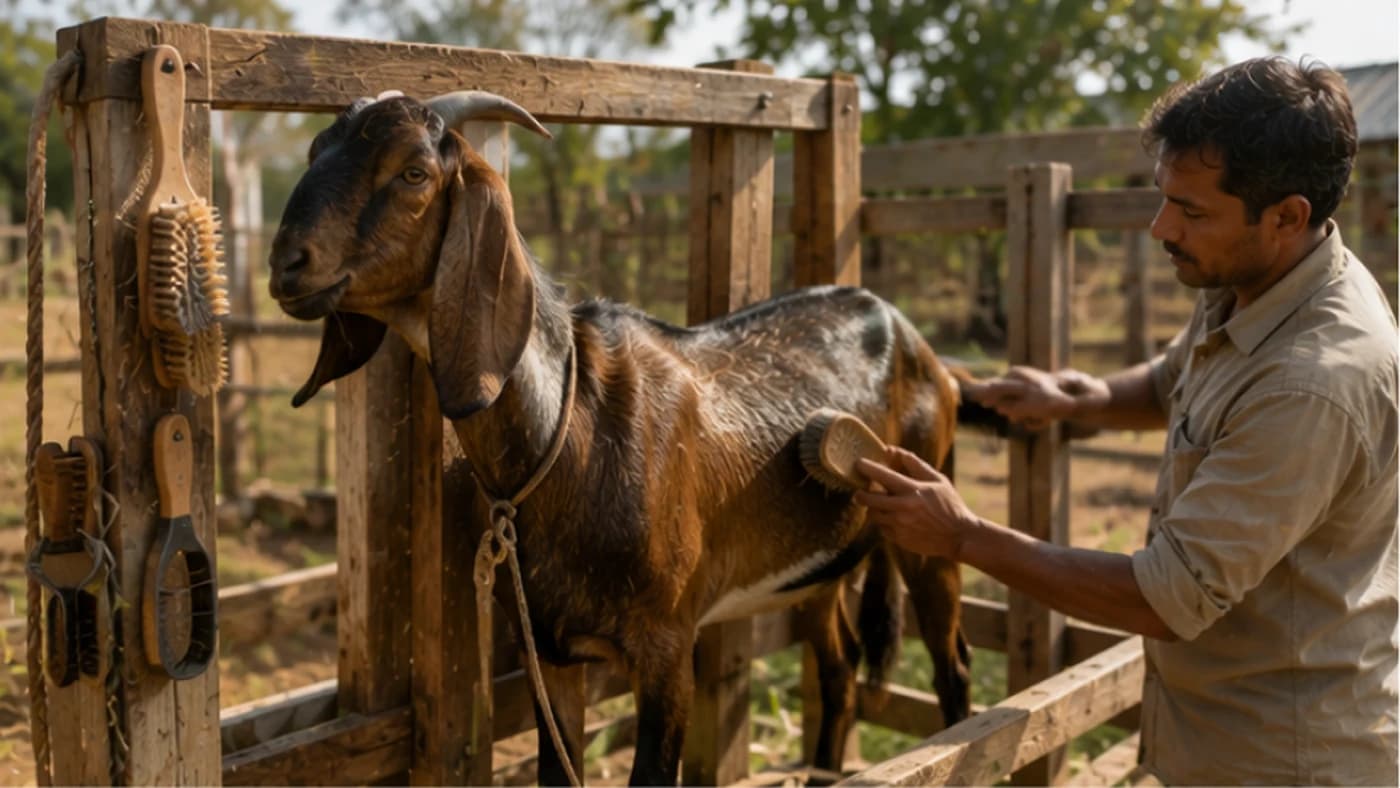
DIY Livestock Grooming Stations: Let Your Animals Scratch Themselves Instead of Your Fence
Cattle, goats and buffaloes will find something to scratch against — usually your fence or shed wall. Give them a sturdy, purpose-built scratching post instead, and you save your infrastructure while improving their skin health and even milk yield.
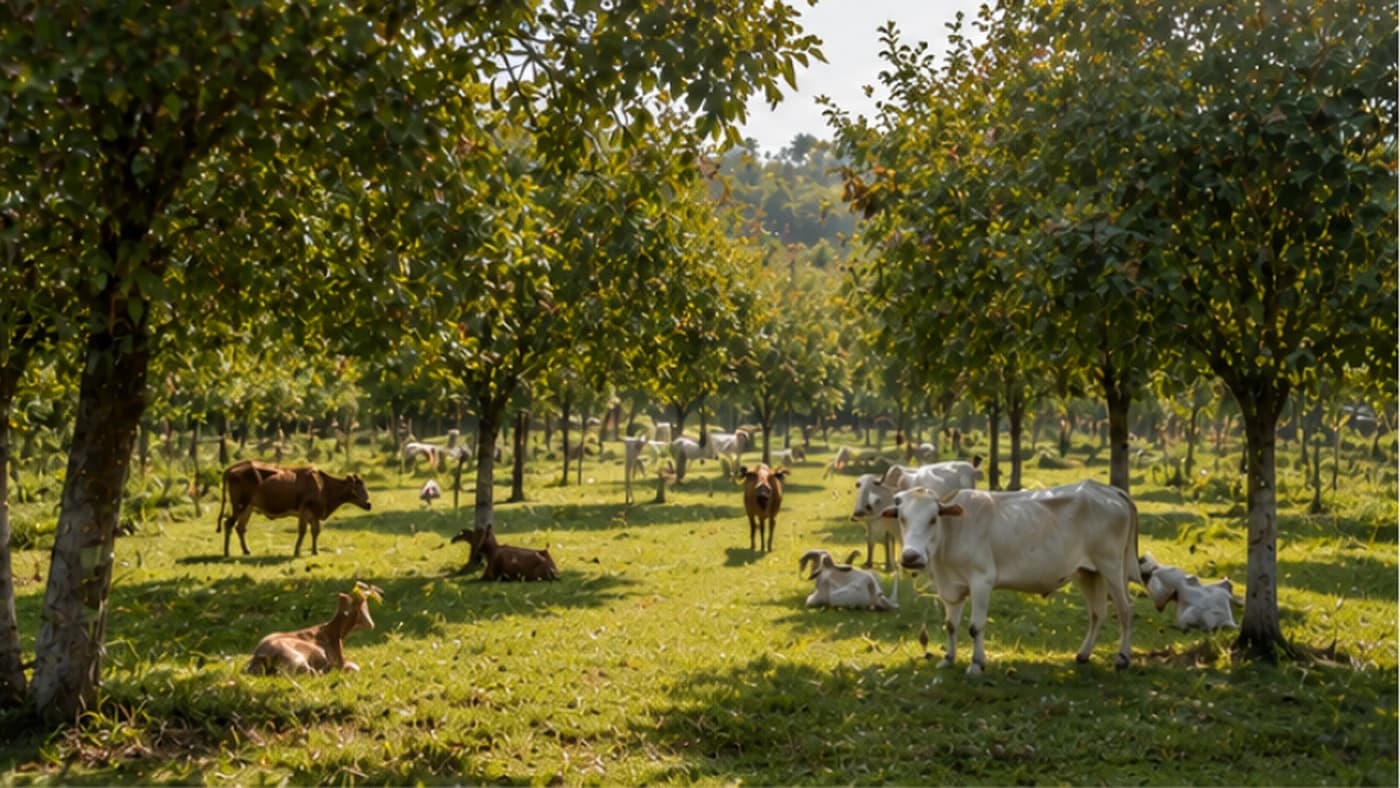
Silvopasture: Letting Livestock and Your Orchard Feed Each Other
Why manage a pasture and an orchard as two separate jobs when they can shade, feed and protect each other in one system? Silvopasture combines trees, forage and animals on the same land for more income per acre, not less.
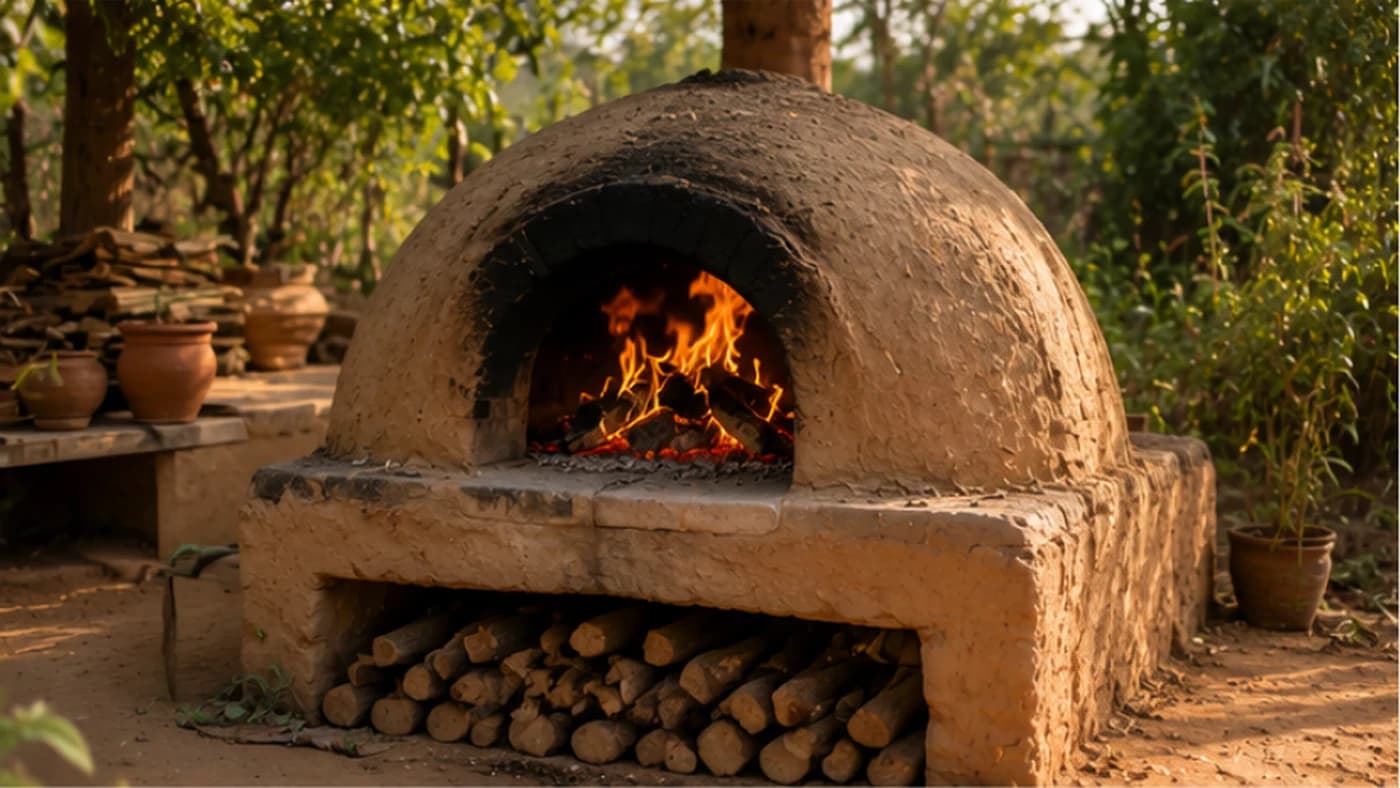
DIY Cob Oven: A Wood-Fired Oven That Also Warms Your Nursery
A cob oven doesn't just bake — its thick earthen walls store heat for up to 24 hours, doubling as a night-time heat source for nearby seedlings during a cold snap.