

DIY Cob Oven: A Wood-Fired Oven That Also Warms Your Nursery
A cob oven doesn't just bake — its thick earthen walls store heat for up to 24 hours, doubling as a night-time heat source for nearby seedlings during a cold snap.
Quick answer
A well-built cob oven costs a fraction of a manufactured masonry oven — mainly your labour, plus reclaimed bricks, bottles and sand — and it earns its keep twice: as an efficient wood-fired oven for baking, and as a slow-release heat source that can genuinely protect a nearby seedling bed on a frosty night. Get the clay-to-sand ratio and the door-to-dome ratio right, build in dry weather, and let it cure with small fires before a full bake.
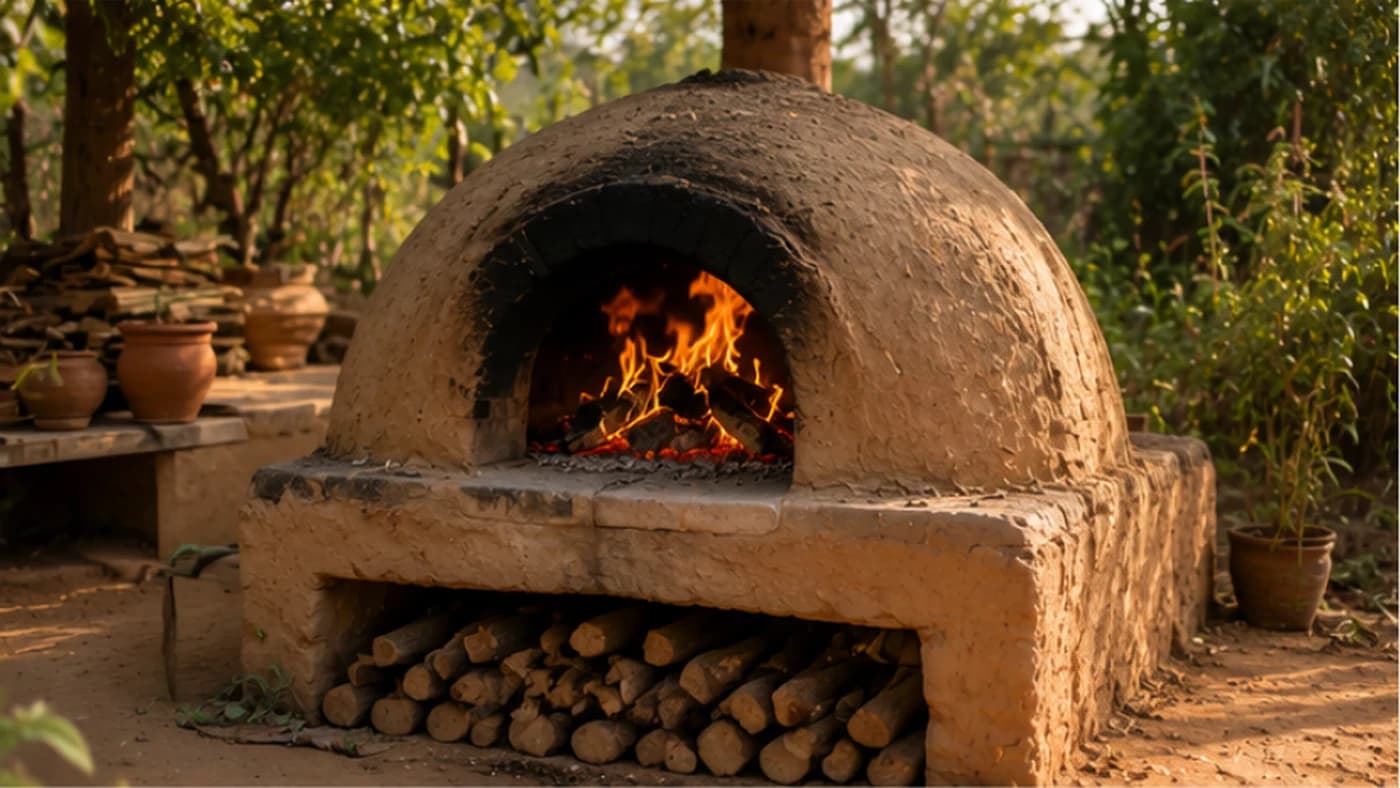
A metal barbecue or tandoor loses its heat within minutes of the fire dying. A cob oven — built from clay, sand and straw — works on the opposite principle: you fire it up, then let its thick earthen walls slowly release that stored heat for hours, even a full day. Farmers and homesteaders with a nursery bed or greenhouse nearby can put this to double use — bake with it during the day, and let its residual warmth protect tender seedlings on a cold night.
Why cob holds heat so well
Cob has a heat storage capacity many times higher than lighter materials like straw or wood — roughly 1,900 kJ/m³K compared to about 250 kJ/m³K for straw-bale insulation — meaning the dense clay walls absorb a huge amount of energy during firing and release it slowly afterward. During firing, heat from the wood flame soaks into 7.5–10 cm thick clay walls; once the fire is out, that heat moves both inward (for cooking) and outward. If the oven sits near a greenhouse or protected bed, that outward radiation can raise the local temperature by roughly 1.5–2.5°C during a cold night — useful protection during an unseasonal frost or a cold snap in hill farming areas.
Building it, layer by layer: foundation and insulation
Cob dissolves in standing water, so start with a solid, raised foundation of brick, stone, or broken concrete, built to a comfortable waist-height (around 90 cm), with a gravel layer at the base to stop rising damp.
Before laying the cooking floor, add an insulating layer beneath it so heat doesn't leak downward into the foundation — a simple method is laying empty glass bottles on their sides on a bed of sand, then filling the gaps with a clay-slip and perlite (or rice husk) mix. The trapped air in the bottles acts as a thermal break, keeping heat in the floor where it's needed.
The cooking floor and the dome
For the hearth (cooking floor), use dense firebricks laid tightly together dry (no mortar) on a thin bed of fine sand, so they can expand and contract with heat without cracking. Aim for a circular cooking surface roughly 55–70 cm across.
To form the oven's interior shape, build a sand dome the exact size of the chamber you want, cover it with wet paper or damp cloth (so cob won't stick to it), then apply your cob mix (roughly 1 part clay to 2 parts sharp sand) over the dome in 7.5–10 cm layers, tamping firmly to remove air pockets. Mix cob the traditional way — spread sand and clay on a tarp, add water sparingly, and tread it with bare feet until fully blended, then work in long-strand straw for strength.
The door — one ratio that matters a lot
For the oven to draw air and vent smoke properly without losing too much heat, the door opening's height should be about 63% of the interior dome's height — for example, a 40 cm dome needs roughly a 25 cm door. Cut the door out while the cob is leather-hard, before it fully dries. Once the dome is complete, dig out the sand form from inside through the door to reveal the hollow cooking chamber.
Frequently asked
Why does a cob oven stay warm so much longer than a metal one?+
Cob's dense clay walls store heat far more effectively than metal or straw — roughly 1,900 kJ/m³K versus 250 kJ/m³K for straw-bale insulation — so once fired, a cob oven can stay warm for 12–24 hours instead of cooling in 20–30 minutes like a metal barbecue.
Can a cob oven really protect seedlings from frost?+
Yes, if placed close to a greenhouse or protected bed. The residual heat radiating from its walls after firing can raise the local temperature by roughly 1.5–2.5°C during a cold night, which can be enough to save tender seedlings from a light frost.
What ratio of clay to sand should I use for the cob mix?+
A common starting mix is 1 part clay to 2 parts sharp (angular) sand, adjusted based on a ribbon test of your own soil — if it cracks badly on drying, add more sand; if it crumbles, add more clay.
How big should the door opening be?+
About 63% of the interior dome's height — for example, a 40 cm tall dome needs roughly a 25 cm tall door — so the oven draws air and vents smoke properly without losing excess heat.
Do I need special sand for this?+
Yes — use sharp, angular sand (builder's or concrete sand), not rounded river or beach sand, which doesn't lock together with clay and produces a weaker structure.
Where to go next
Want this as daily tasks for your farm?
Khetiyaar turns guides like this into a day-by-day plan — in your language, free to start.

Related guides
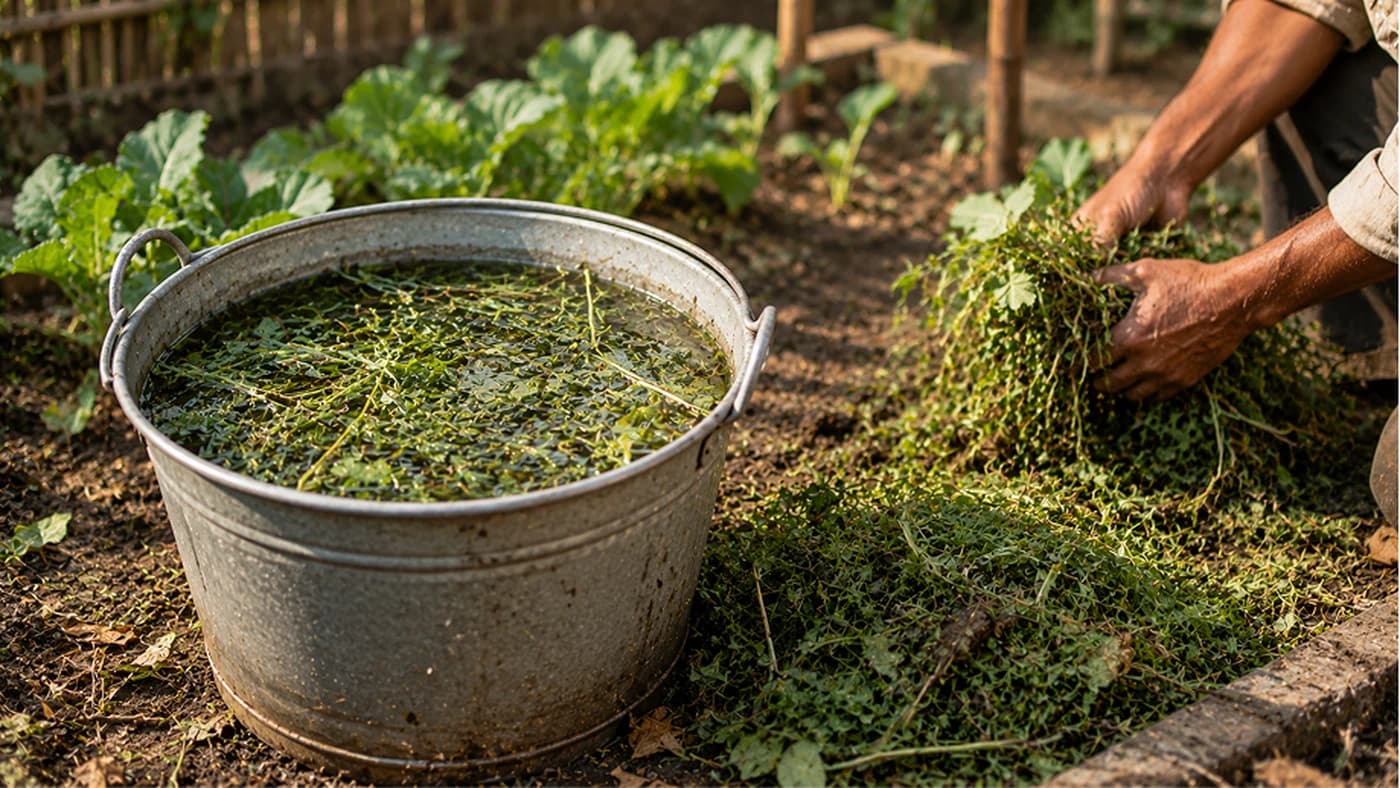
Free Garden Fertiliser From Backyard Weeds (Fermented Plant Juice)
The weeds growing wild along your bund or driveway are nutrient pumps. Korean Natural Farming's Fermented Plant Juice (FPJ) turns them — plus a handful of jaggery — into a potent, nearly free plant tonic.
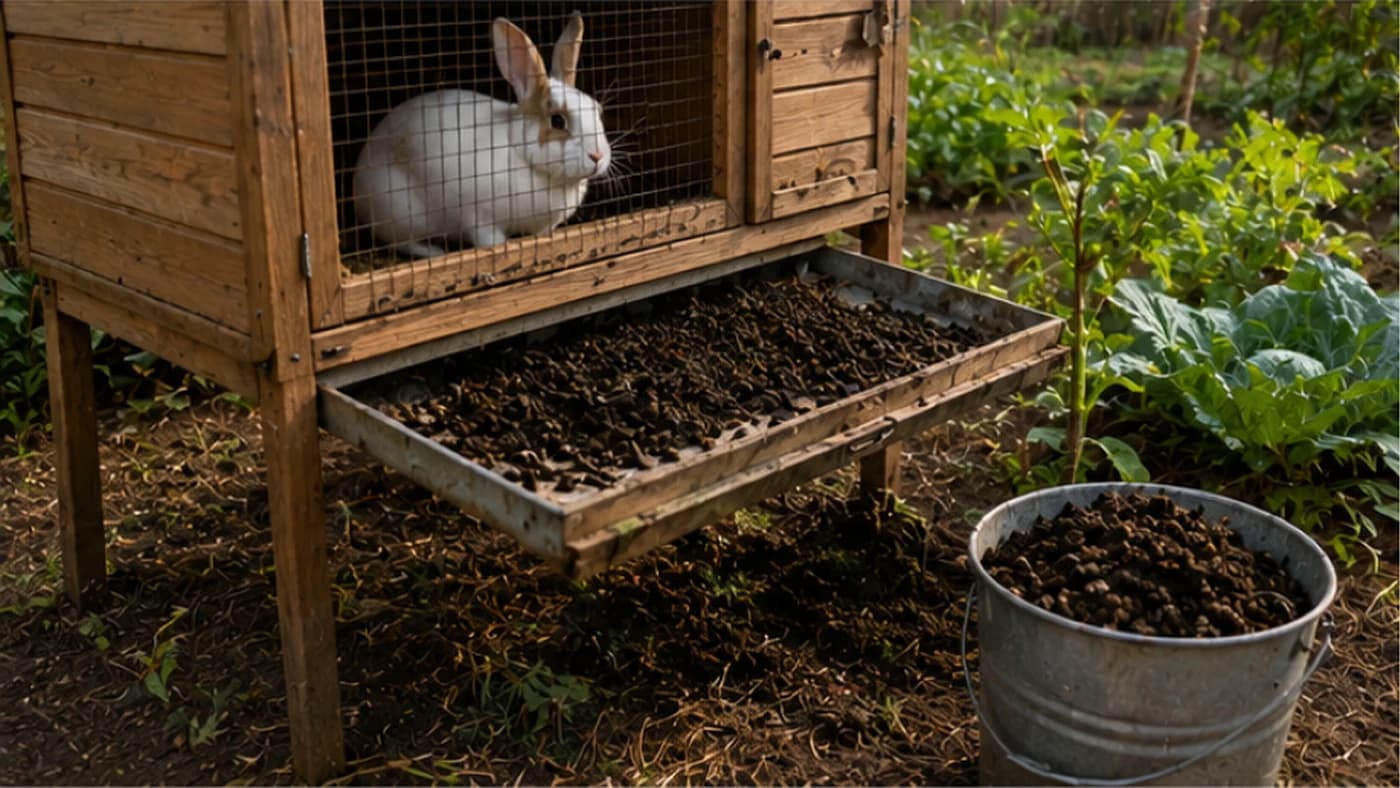
Turn Your Rabbit Hutch Into a Vermicompost Factory
Rabbit droppings are already one of the few manures safe to use fresh. Add a worm bed underneath the hutch, and you turn a daily cleaning chore into a steady supply of premium vermicompost — with far less smell and far fewer flies.
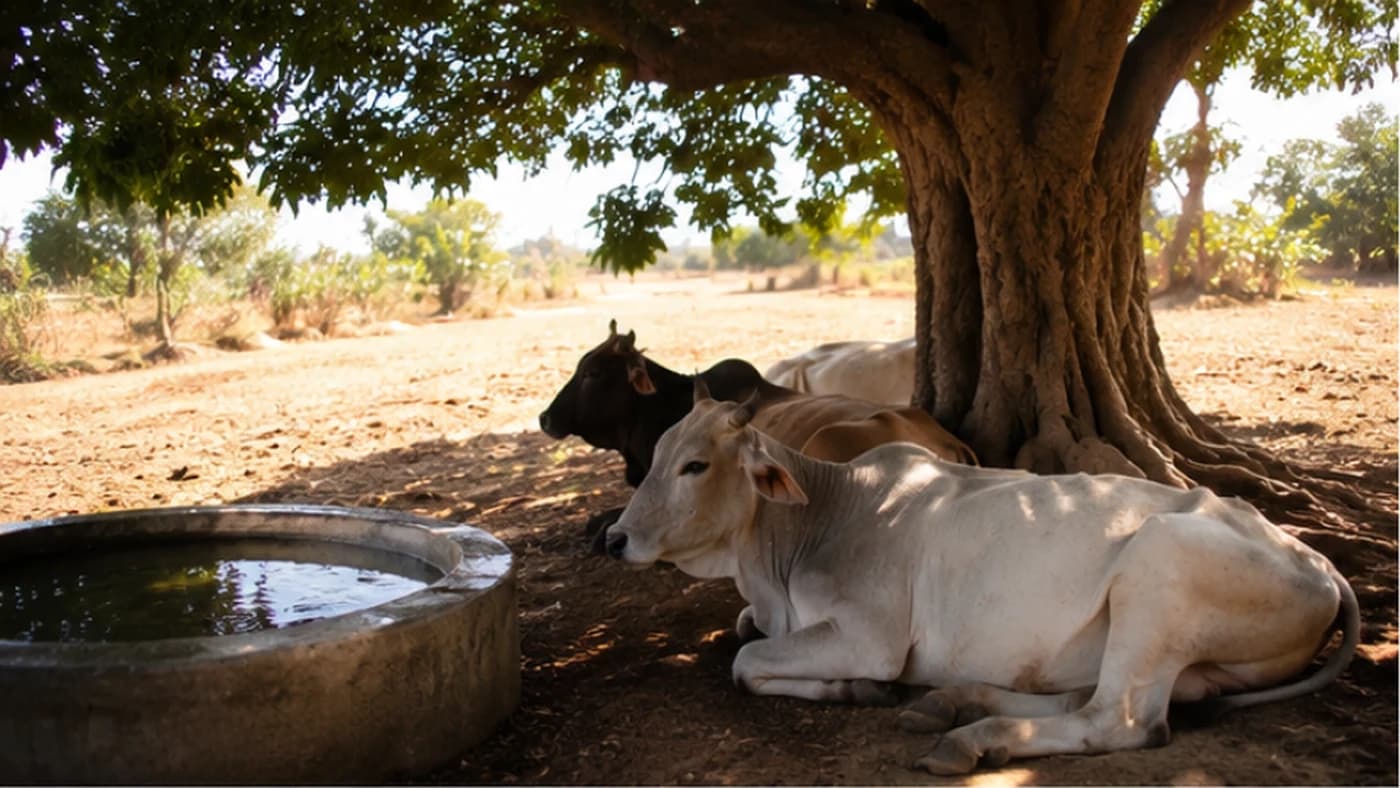
Protecting Livestock From Heat Exhaustion: Build a 'Living Barn'
A tin shed in an Indian summer can be hotter than the open field — metal absorbs heat and radiates it straight back onto your animals. A living shade belt of fast-growing trees cools the air for real, and costs almost nothing to run.