

Silvopasture: Letting Livestock and Your Orchard Feed Each Other
Why manage a pasture and an orchard as two separate jobs when they can shade, feed and protect each other in one system? Silvopasture combines trees, forage and animals on the same land for more income per acre, not less.
Quick answer
Silvopasture stops treating trees and animals as competitors for the same land and turns them into partners: shade and forage for the animals, pruning, pest control and fertiliser for the trees, and more total output from the same acre than either one grown alone. It needs real management — tree protection, rotational grazing, and patience while the trees mature — but for an orchard-keeper willing to also manage a few animals, it's one of the more resilient ways to farm the same ground twice.
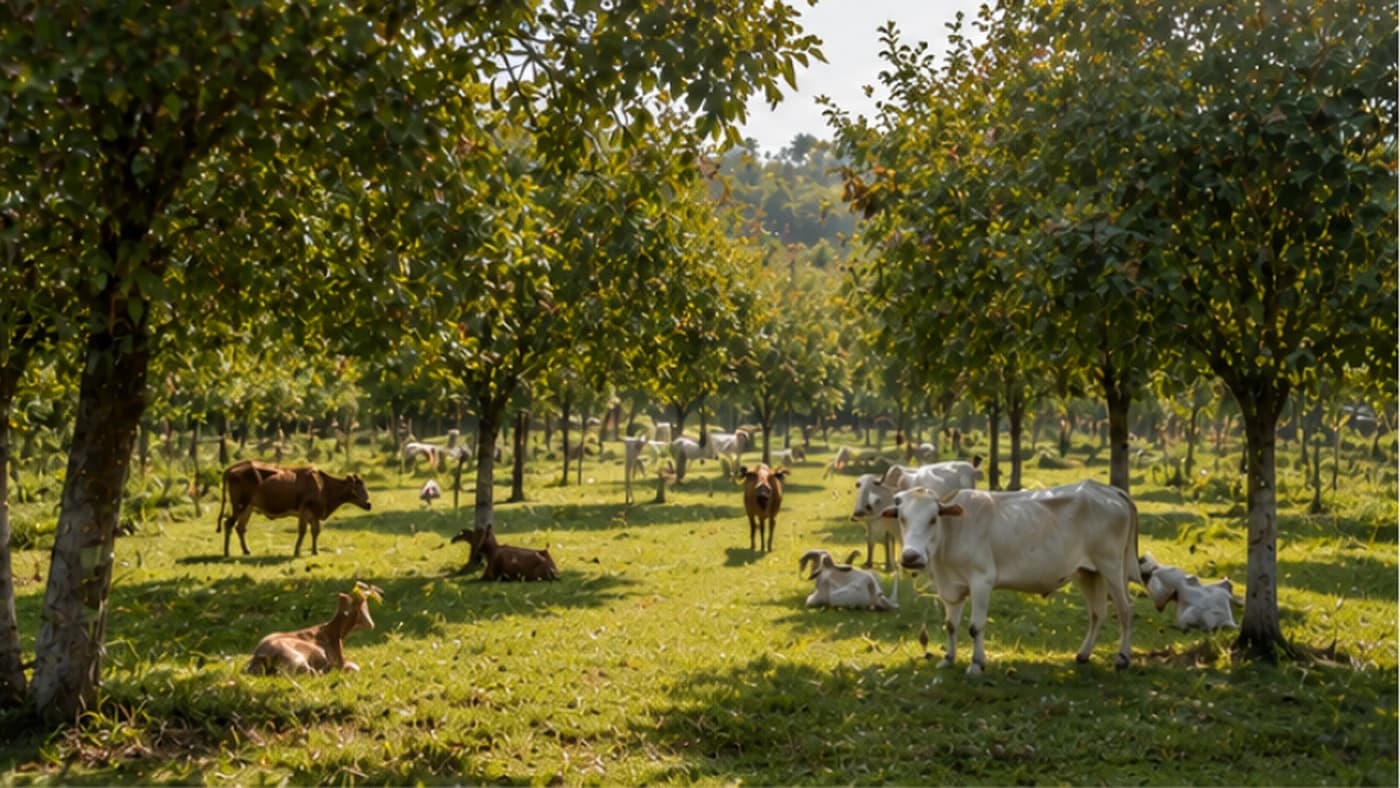
Most farms treat animals and trees as separate operations — a pasture here, an orchard there, double the fencing and double the work. Silvopasture puts livestock inside a fruit or nut orchard on purpose: the animals get shade and diverse forage, the trees get natural pruning, pest control and free fertiliser, and the same acre produces meat, milk or eggs alongside fruit or timber.
What silvopasture actually means
Silvopasture is the deliberate, managed combination of trees, forage and grazing animals on the same ground — not simply turning animals loose in a patch of woodland, but a designed system that balances the needs of all three. In practice this might look like cattle grazing between rows of fruit or nut trees, or sheep kept in a high-density orchard to graze the grass down and eat fallen fruit.
The goal is to harvest more than one thing from the same acre — fruit or nuts, plus meat, wool, milk or eggs — rather than harvesting only the tree crop and leaving the ground beneath it doing nothing.
What the animals and trees each get
On a hot day, the temperature under a leafy canopy can be 10–15°C cooler than in open ground — a real reduction in heat stress that means animals spend less energy staying cool and more energy gaining weight or producing milk. In winter, the same trees act as windbreaks, protecting animals from cold that would otherwise drain their reserves.
In return, the animals act as a biological workforce for the orchard: grazing keeps grass down without diesel-powered mowing or chemical herbicide, and manure recycles nutrients straight back into the soil in a form tree roots can use easily — a closed loop where nothing goes to waste.
Designing the system
The first design principle is light: forage needs sunlight to grow and trees need it to fruit, so most successful systems aim to let roughly 50–70% of sunlight reach the ground, usually by spacing tree rows 9–18 metres apart depending on species and the equipment you need to move through the rows.
Matching animal to tree matters as much as spacing. Sheep and poultry are usually the easiest to integrate since they're less likely to seriously damage trees; cattle work well in mature nut groves where branches are high, but their weight can compact soil around roots if they aren't moved often; pigs are excellent at cleaning up fallen fruit, but their rooting can wreck a pasture if left in one spot too long.
Rotational grazing is what holds the whole system together: moving animals through a series of paddocks gives forage and trees time to recover, mimics the natural movement of wild herds, and prevents the soil compaction and bark damage that happens when animals are simply left in one place indefinitely.
The measurable benefits
Diversified income is one of the biggest wins: while you wait several years for a fruit or nut tree to reach full production, livestock provide annual cash flow that keeps the farm solvent in the meantime. Total productivity per acre — the land equivalent ratio — is also often higher in silvopasture than in separate monocultures, because trees and grass use different layers of soil and sunlight rather than competing for the same ones.
Pest and disease cycles are often broken naturally: many orchard pests overwinter in fallen, rotting fruit left on the ground, so animals (particularly pigs and poultry) that scavenge windfall fruit effectively sanitise the orchard floor and reduce next season's pest pressure. Animal health can improve too — tree leaves and twigs (browse) are often richer in minerals than pasture grass alone, and some tree browse has natural anti-parasitic properties that can reduce reliance on chemical dewormers.
Common mistakes to avoid
The biggest mistake is treating silvopasture as low-maintenance — it's actually a higher-management system, and the number-one challenge is protecting young trees, since bark, buds and saplings are candy to livestock. Sturdy physical guards (tree tubes, wire cages, or dedicated electric fencing) for the first 3–5 years of a tree's life are non-negotiable.
Soil compaction from heavy hooves in wet weather is another silent problem — it squeezes air out of the soil that tree roots need to breathe, so animals should be pulled off saturated ground. And if you plan to sell fruit for human consumption, keep to a pre-harvest interval of roughly 90–120 days between removing livestock and harvest, to manage the same food-safety risk that applies to any manured orchard floor.
Where silvopasture doesn't work well
It isn't a universal fit. Very steep or erosion-prone land can suffer more than it gains from the constant traffic of grazing animals around tree roots. The system also demands a wide skill set — tree care, forage management and animal husbandry all at once — so it can be a recipe for burnout if you're already struggling with a simpler pasture or orchard alone. It's also a long-term investment: the tree component pays off over decades, not seasons, and certain species aren't compatible with certain animals (for example, black walnut produces a chemical that can be toxic to horses), so always check for toxicity before mixing species.
Separate pasture and orchard vs. integrated silvopasture
- Separate pasture only: a single revenue stream (meat/milk); moderate labour (fencing, haying); more heat stress in summer; relies on external fertiliser; lower drought resilience since grass alone stops growing in a dry spell.
- Integrated silvopasture: multiple revenue streams (meat, fruit, nuts, timber); higher labour (pruning, tree protection, rotation); less heat stress from shade; nutrient cycling through manure; higher drought resilience since trees buffer the microclimate.
How Indian farmers are already close to this
This isn't an unfamiliar idea in India — coconut and arecanut gardens with grazing cattle, mango orchards with goats or sheep managing the undergrowth, and agroforestry combining fruit trees with fodder and livestock are all long-standing traditional practices in different regions. Formalising the same principles — deliberate spacing for light, rotational grazing instead of continuous grazing, and physical protection for young trees — turns an informal habit into a system you can plan and improve year on year.
Terms explained in this guide
Frequently asked
What is silvopasture in simple terms?+
It's the deliberate combination of trees, pasture forage and grazing livestock on the same piece of land, designed so all three benefit — unlike simply letting animals wander loose in existing woodland.
Which animals work best in an orchard silvopasture system?+
Sheep and poultry are usually easiest since they rarely damage mature trees seriously. Cattle suit mature, tall-branched orchards if rotated often. Pigs are excellent at cleaning fallen fruit but need close monitoring since their rooting can damage soil and young trees.
How much sunlight do trees and forage need to share?+
Most successful systems aim to let roughly 50–70% of sunlight reach the ground, usually achieved through wide tree row spacing of around 9–18 metres, depending on the species.
How do I protect young trees from grazing animals?+
Use sturdy physical guards — tree tubes, wire cages, or dedicated fencing — for at least the first 3–5 years of a tree's life, since bark and young shoots are especially attractive to livestock.
Is silvopasture more work than a normal pasture or orchard?+
Yes — it requires understanding tree care, forage management and animal husbandry together, plus active rotational grazing. It pays off in diversified income and better land productivity, but it is not a low-maintenance shortcut.
Where to go next
- AI farming chatbotAsk any farming question in Gujarati, Hindi or English and get an answer in seconds.
- Kheti app for Indian farmersCrop plans, disease diagnosis, weather and mandi rates in one app.
- Agri Bazar marketplaceBuy and sell animals, crops, equipment and dairy near you — and see what buyers want today.
Want this as daily tasks for your farm?
Khetiyaar turns guides like this into a day-by-day plan — in your language, free to start.

Related guides
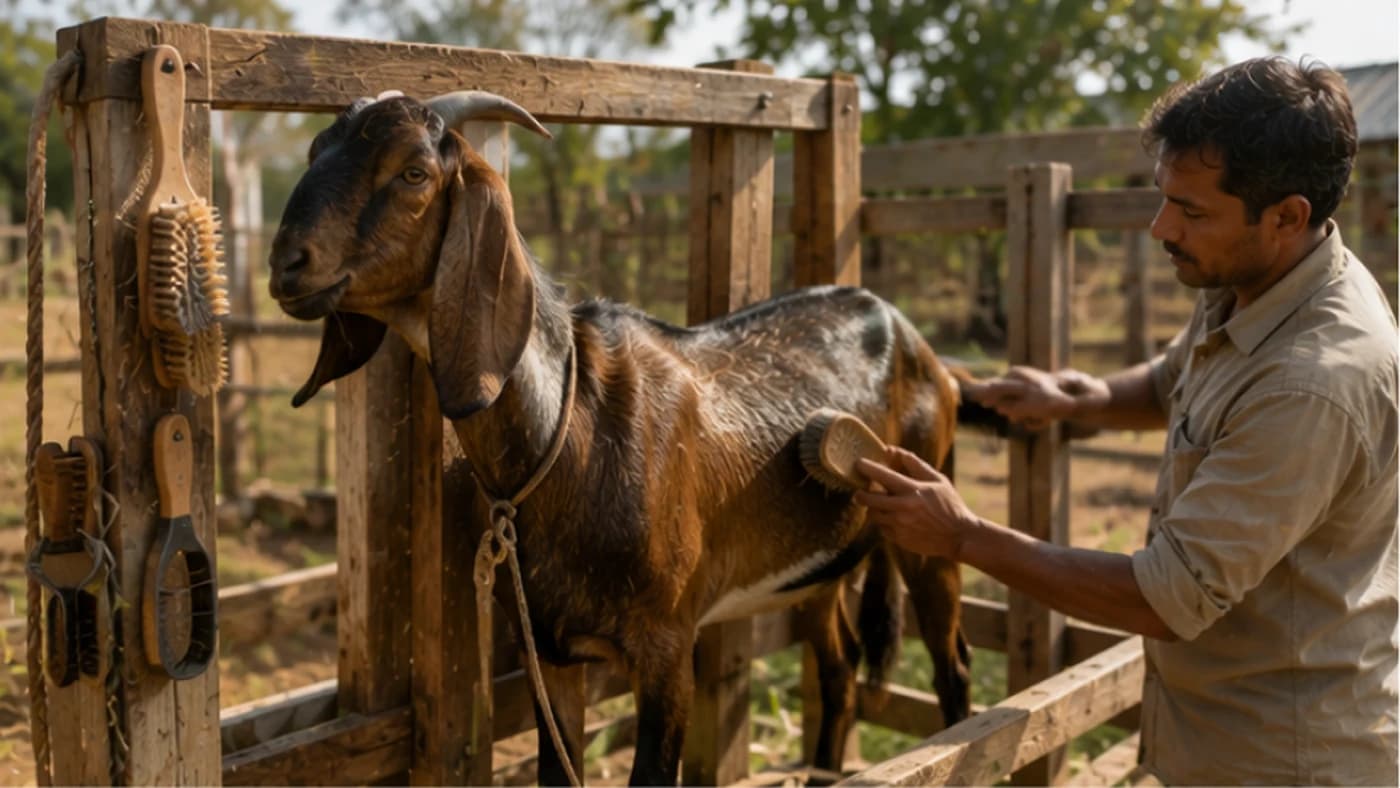
DIY Livestock Grooming Stations: Let Your Animals Scratch Themselves Instead of Your Fence
Cattle, goats and buffaloes will find something to scratch against — usually your fence or shed wall. Give them a sturdy, purpose-built scratching post instead, and you save your infrastructure while improving their skin health and even milk yield.
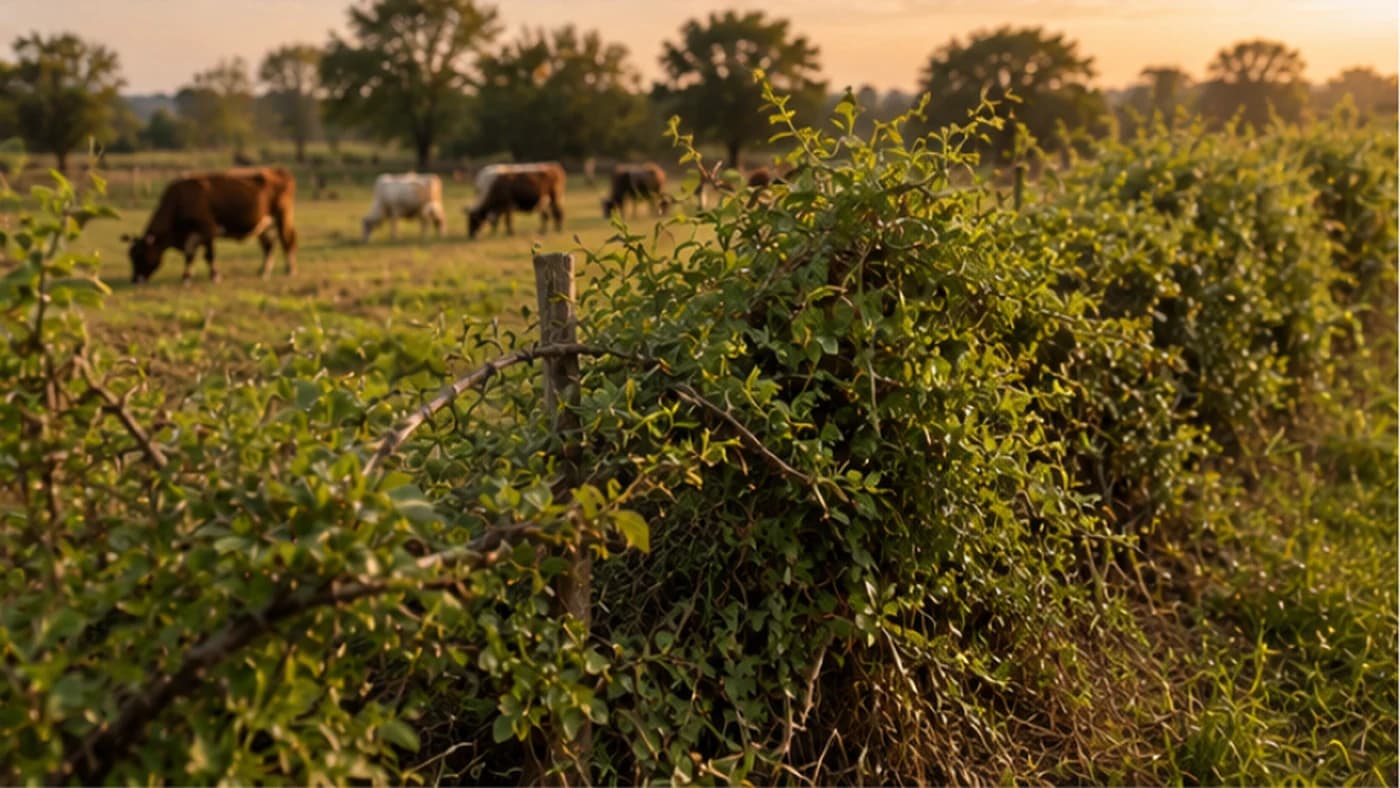
Living Fences for Livestock: Grow a Boundary That Never Needs Replacing
A wire fence rusts and sags within 20–30 years. A well-managed living fence of thorny trees and shrubs gets stronger every winter, blocks wind, feeds your animals, and can outlast the farm itself.
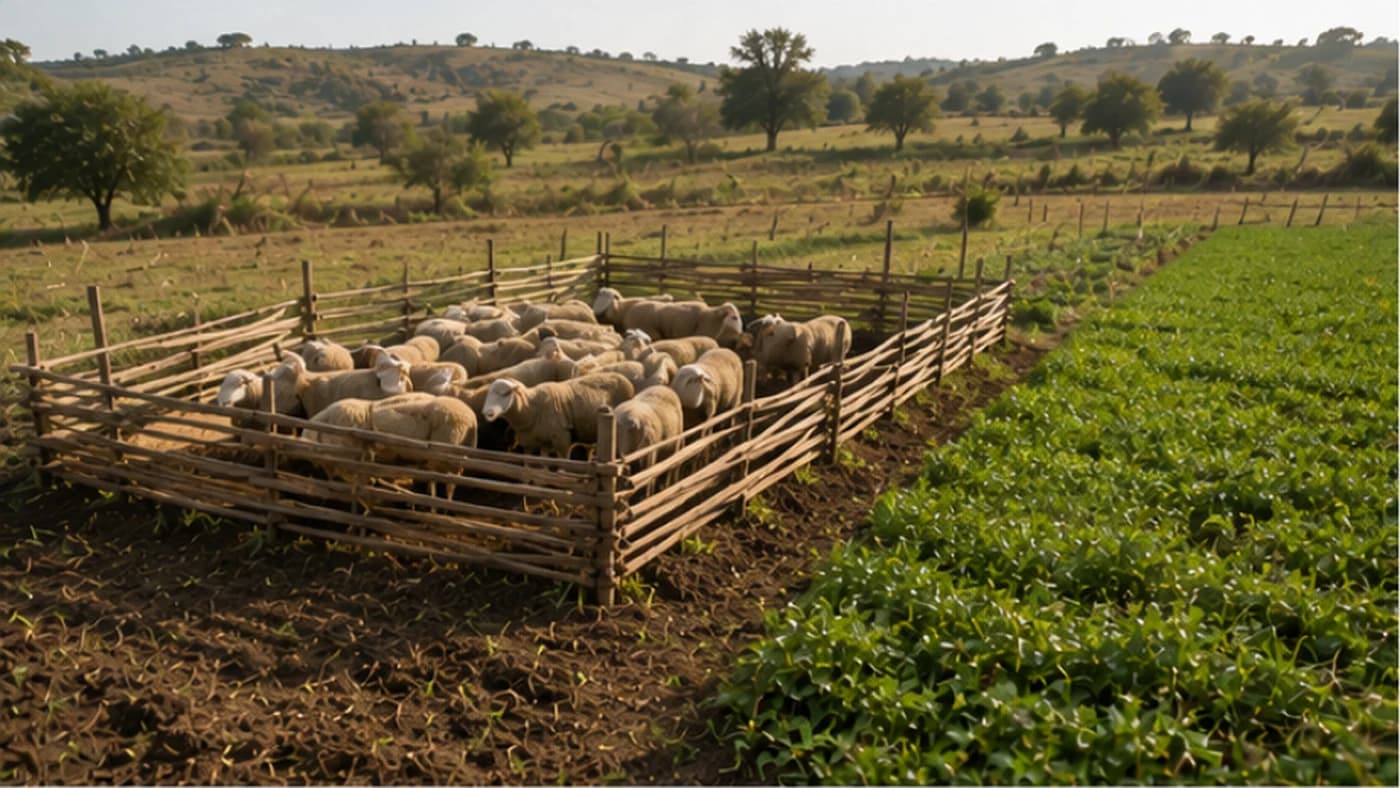
The Medieval Folding Technique: Using Sheep and Goats to Fertilise Your Field Overnight
One night of penned sheep on a patch of land delivers more usable nitrogen than months of hauled, stored manure. Here's how the old European folding system works — and why Indian farmers already know a version of it.