

Potato Storage and Cold Chain: A Complete Guide for Indian Farmers
Potatoes rot, sprout, and lose weight fast after harvest — but the right curing, temperature and simple storage choices can keep them sound for months, cold store or not.
Quick answer
Potato storage losses are rarely random bad luck — they trace back to a skipped curing period, the wrong temperature or humidity, a wound that let rot organisms in, or moisture that had nowhere to go. Cure your potatoes before storing them, hold them cool and humid but dry on the surface, handle them gently to avoid wounds, and check your stock weekly so a small problem never becomes a big one. You don't need a cold store to protect your harvest — you need the right habits, whether your storage is a mechanical cold room or a well-built pit in the ground.
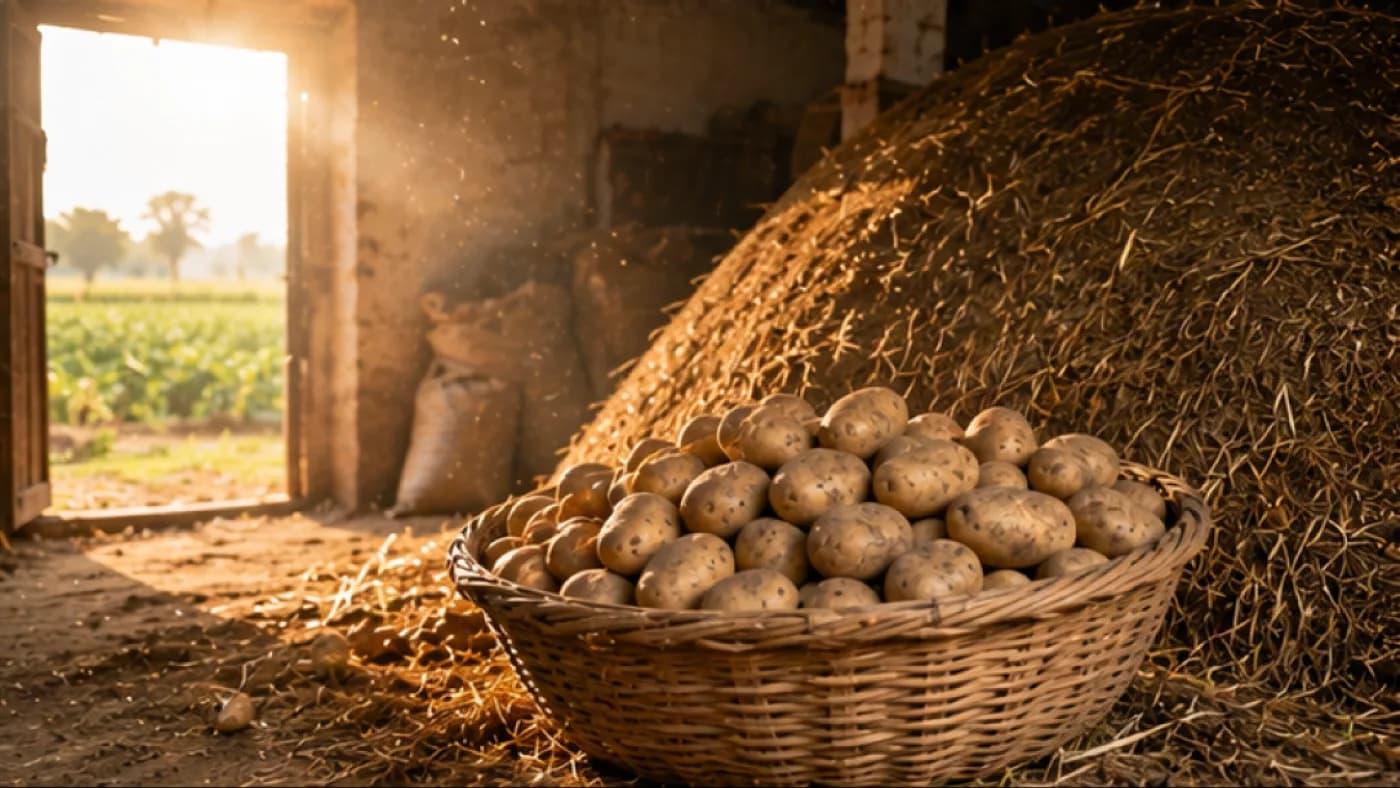
A good potato crop can still lose a farmer real money after harvest — to rot, sprouting, and simple weight loss from drying out. Storage isn't an afterthought; it's the stage that decides whether your hard-earned yield actually reaches a buyer in good shape, or turns into a discounted, half-spoiled lot. Whether you have access to a cold store or only a shaded corner of your farm, the same basic principles decide the outcome: cure the tubers properly, keep them cool and humid but not wet, and protect them from wounds and disease from day one.
Curing: the step most farmers skip and shouldn't
Freshly dug potatoes have thin, easily damaged skin, and every cut or bruise from harvesting is an open door for rot organisms. Curing is simply holding the tubers for about 7-10 days in a well-ventilated, shaded spot at moderate temperature (roughly 15-20°C) and high humidity before moving them into long-term storage. During this period, the skin thickens and toughens, and small wounds seal over with a corky layer that resists infection.
Skipping curing and moving tubers straight from the field into a sealed store is one of the most common causes of early storage rot. The short delay costs almost nothing and dramatically cuts losses later — treat it as a non-negotiable step, not an optional one.
Getting the temperature right
For general table-potato storage, the target is roughly 2-4°C with high relative humidity, around 90-95%. Cold, humid air slows both the potato's own respiration (which drives weight loss and shriveling) and the growth of most rot organisms, while the high humidity stops the tubers from losing moisture and going soft.
There's a real tradeoff to know about: storing potatoes for a long time below about 4°C can trigger 'cold-induced sweetening', where starches convert to sugars. This isn't a food-safety issue, but it matters a great deal if the potatoes are meant for chipping or frying, since high sugar content causes unwanted dark browning during frying. If your potatoes are headed for processing rather than direct table sale, ask your buyer or the cold store operator about their preferred temperature band — it may run slightly warmer than the general table-stock target for exactly this reason.
Preventing sprouting without harming quality
Potatoes are living tubers that want to sprout once dormancy ends, and sprouting draws down the tuber's own stored starch, softening it and making it unsellable. Cool, dark storage is the simplest and most effective sprout suppressant available to any farmer — both temperature and light exposure trigger sprouting, so a dark store (or covered heap) held at the target cold-storage temperature naturally extends dormancy for months.
Commercial cold stores and large-scale operations sometimes use chemical sprout inhibitors as an additional layer of control, applied according to the product's own label instructions. For most small and mid-sized farmers, correct temperature and complete darkness alone will carry potatoes through a normal marketing season without needing to go down that route.
The three most common causes of storage rot
Soft rot (bacterial): enters through cuts, bruises and skin breaks, especially where the tubers are wet or poorly ventilated. This is exactly why gentle handling at harvest and a proper curing period matter so much — every wound you avoid is one less entry point for this rot to start.
Late blight tuber rot: if the crop had late blight in the field, spores can be carried on the tuber surface into storage and cause rot weeks later, even if the tuber looked fine when it went in. Avoid storing tubers from a heavily blight-affected field alongside your clean stock, and sort out any tuber with dark, firm-to-slightly-sunken lesions before storage.
Excess moisture: condensation dripping onto stored tubers, or storing wet/unwashed tubers with soil clinging to them, creates exactly the damp conditions rot organisms need. Good airflow and keeping tubers dry before they go into store matters as much as the temperature setting itself.
No cold store? Traditional storage still works
Most smallholder farmers across India don't have access to mechanical cold storage, and traditional low-cost methods have kept potatoes edible for generations. A pit store — a shaded pit dug into the ground, lined with dry straw, filled with cured potatoes, and covered with more straw and a layer of soil leaving small ventilation gaps — uses the naturally cooler, more stable temperature underground to slow spoilage.
A straw or sand-covered heap storage, kept in a shaded spot with ventilation channels built into the pile so air can move through it, works on the same principle above ground: insulate the tubers from direct heat and sun, allow airflow to prevent condensation and heat buildup, and check periodically to remove any tuber that starts to rot before it spreads to its neighbours.
Neither method matches a proper cold store's shelf life, but both meaningfully extend how long potatoes stay sound compared with storing them exposed in the open, and they cost little beyond labour and basic materials.
A simple weekly storage routine
Whatever method you use, walk your stored potatoes at least once a week: check for soft spots, bad smells, or visible mould, and remove any affected tuber immediately — a single rotting potato in a pile or sack can spread rot to everything touching it. Check that ventilation gaps in a pit or heap store haven't been blocked, and confirm there's no standing water or condensation collecting anywhere near the stock.
Terms explained in this guide
Frequently asked
What is the ideal temperature for storing potatoes?+
Roughly 2-4°C with high humidity (around 90-95%) for general table storage. If your potatoes are meant for chipping or frying, ask your buyer about their preferred temperature, since very cold long-term storage can affect fry colour through cold-induced sweetening.
Why do potatoes need to be cured before storage?+
Curing (7-10 days in a shaded, ventilated spot at moderate temperature and high humidity) toughens the skin and heals small wounds from harvest, which sharply reduces rot once the potatoes go into longer-term storage.
How can I store potatoes without a cold store?+
A shaded pit lined with straw, or a straw/sand-covered heap with built-in ventilation gaps, both work by keeping tubers cool, dark and aired without mechanical refrigeration — check them weekly and remove any rotting tuber immediately.
How do I stop potatoes from sprouting in storage?+
Keep them cool and completely dark — both temperature and light trigger sprouting, and correct cold, dark storage alone extends dormancy for months without needing chemical sprout inhibitors for most small-farm situations.
What causes potatoes to rot in storage?+
The three most common causes are soft rot bacteria entering through cuts and bruises, late blight carried over from the field showing up weeks later, and excess moisture or condensation creating damp conditions that favour rot organisms.
Where to go next
Want this as daily tasks for your farm?
Khetiyaar turns guides like this into a day-by-day plan — in your language, free to start.

Related guides
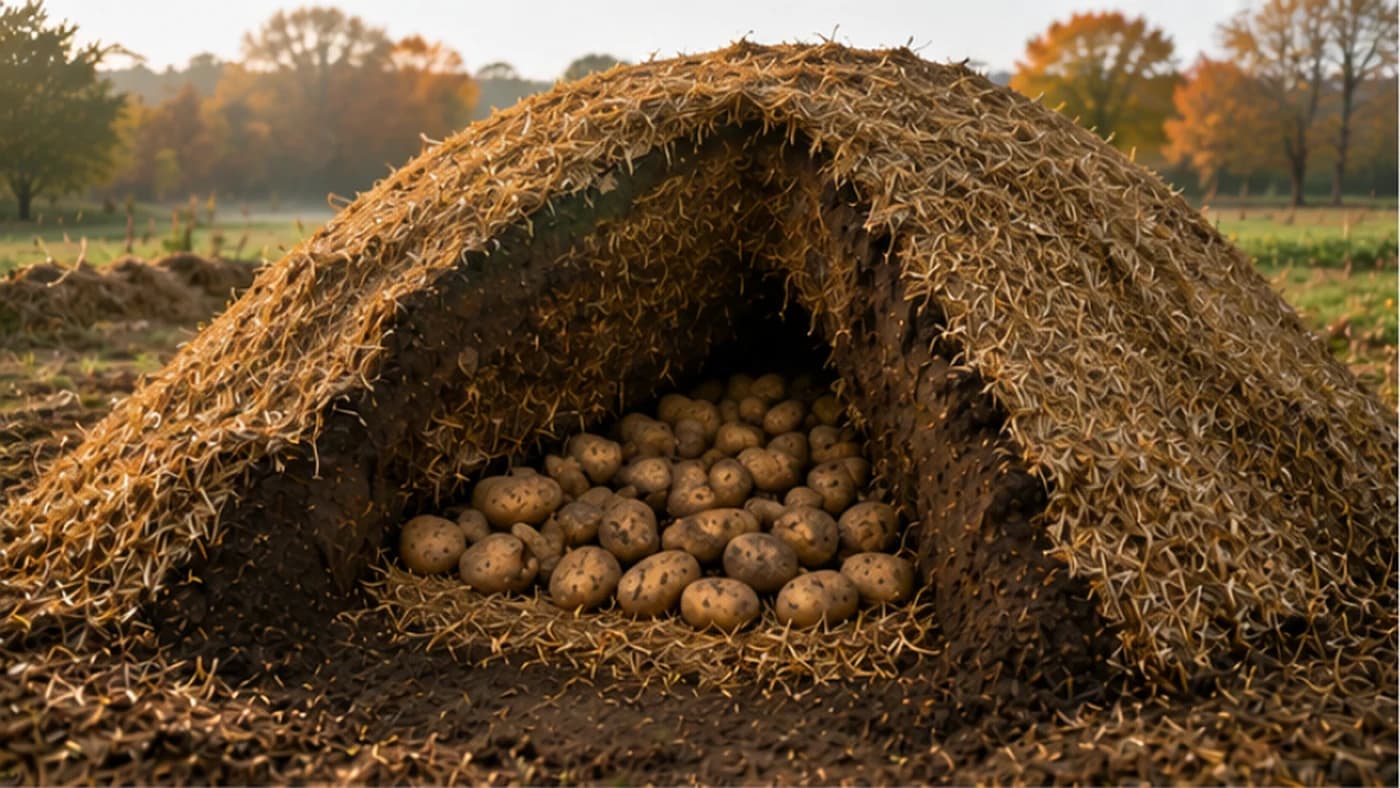
How to Store Potatoes Without Electricity: The Traditional Pit Clamp Method
You don't need a cold store to keep a potato surplus through the season. A simple mound of straw and earth — the same principle behind the pit storage many potato belts in India already use — keeps tubers fresh for months at zero running cost.

Monsoon Farming Tips: Protect Your Crops in the Rainy Season
The same rain that grows the Kharif crop also brings waterlogging, disease and losses. A little preparation protects your season and your income.
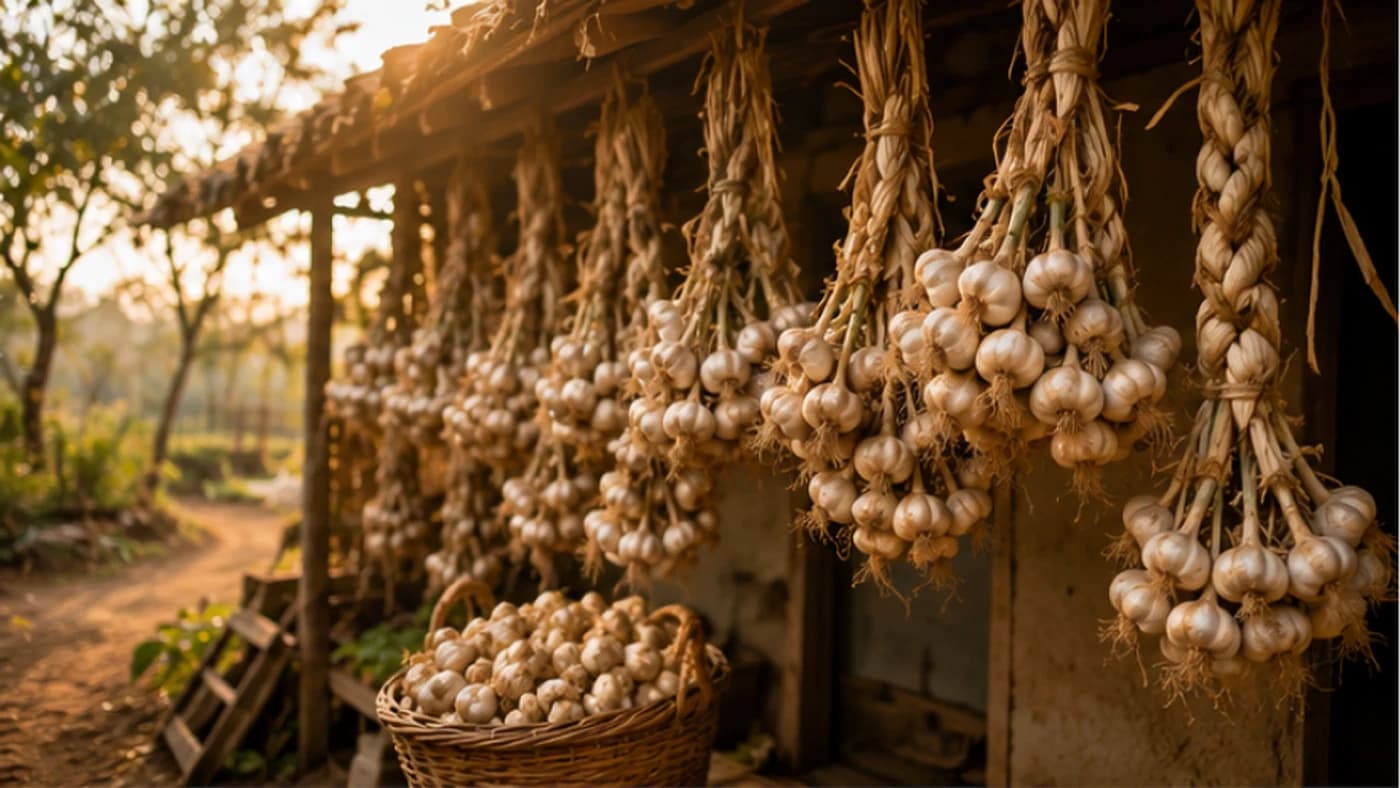
How to Cure Garlic Properly for 6–12 Month Storage
Braided and hung garlic looks great for photos, but it's one of the worst ways to cure it — trapped moisture in a tight bundle is exactly what causes rot. A single layer on an open rack, with real airflow, is what actually gets you a year of storage.