

How to Store Potatoes Without Electricity: The Traditional Pit Clamp Method
You don't need a cold store to keep a potato surplus through the season. A simple mound of straw and earth — the same principle behind the pit storage many potato belts in India already use — keeps tubers fresh for months at zero running cost.
Quick answer
A potato clamp is one of the oldest storage tricks in farming, and it still works because it uses physics, not electricity: straw insulates, earth stabilises temperature, and a small vent lets moisture escape. Cure and sort your potatoes properly, build on well-drained ground, never skip the ventilation chimney, and check on the pile partway through the season. Done right, it turns a harvest surplus into months of secure food storage at almost no cost.
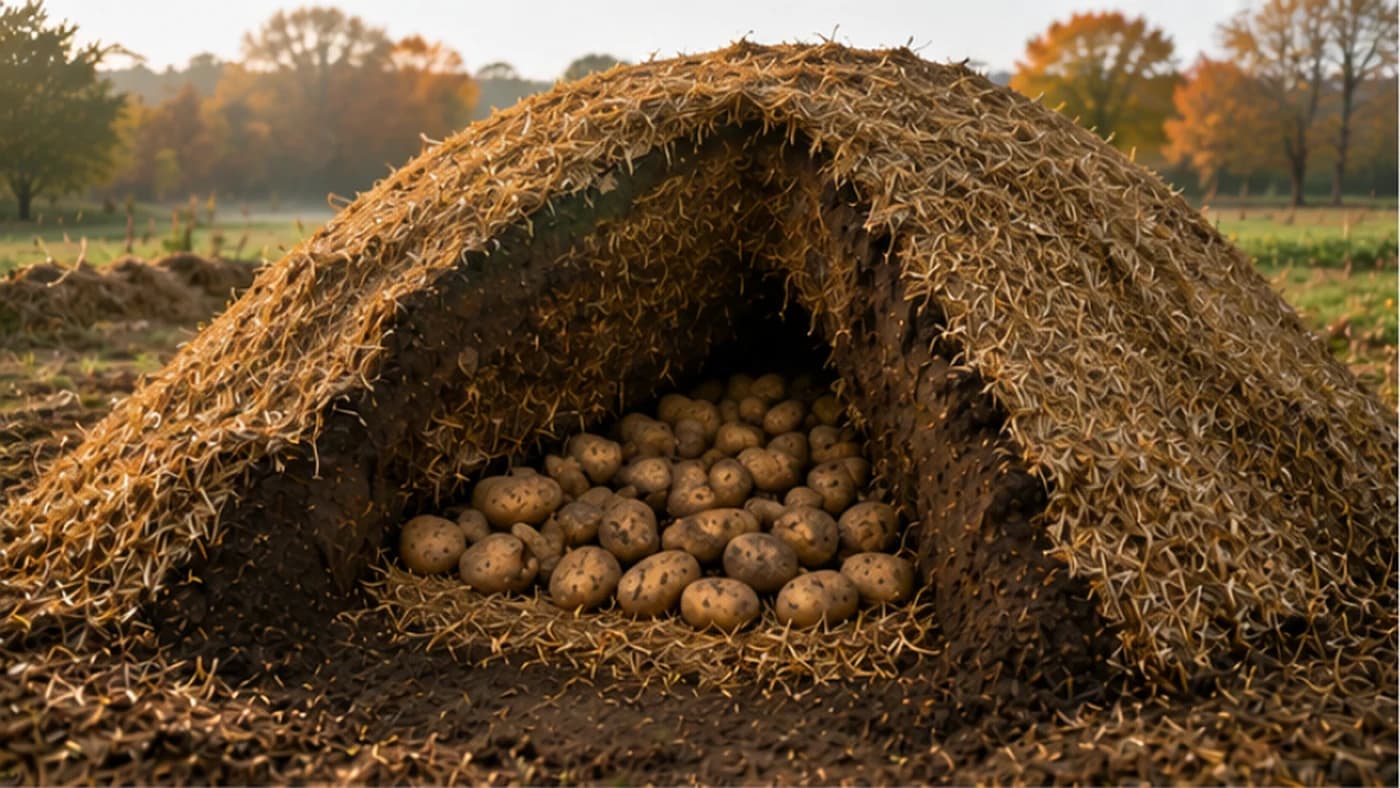
If your potato harvest is bigger than your storage room, you don't need to rent cold-store space or let the surplus rot in a corner. Long before mechanical cold storage existed, farmers kept potatoes fresh for months using nothing but straw, earth, and the steady temperature of the ground itself — a method usually called a clamp, or pit storage. It costs almost nothing to build, needs no electricity, and once you understand the logic of it, you can build one in an afternoon with material already lying around your farm.
What a potato clamp actually is
A potato clamp (also called a root clamp or pit storage) is a mound or pit of potatoes insulated by a thick layer of straw and capped with earth, built right in the open field or farmyard. It works because the earth a little below the surface holds a steady, moderate temperature all year, even when the air above swings from freezing cold to summer heat. By piling potatoes on a bed of straw and sealing them under an earthen cap, you trap that steady ground temperature around the tubers and create a stable microclimate — cool enough to stop sprouting, but protected from extremes.
This is not a new idea for Indian agriculture. In parts of Uttar Pradesh's potato belt, farmers already store seed potatoes in shaded pits or trench-like structures locally known as khatti, lined with straw to keep tubers cool through the off-season before the next planting. The clamp described here is the same core principle, refined: a bed of insulation, a protected pile, and a breathable seal.
Picking the site and preparing your potatoes
Choose the highest, driest spot you have. Water pooling at the base of a clamp is the single fastest way to lose the whole batch, so avoid any low point where rain collects, and pick ground that's naturally well-drained and sheltered from strong wind.
Never store potatoes straight out of the ground. Cure them first — leave them in a cool, dry, shaded place for 7 to 14 days so the skins toughen and small nicks heal over. This one step alone can double how long they keep. Then sort with a hard eye: a single bruised, cut, or diseased tuber can rot and spread decay through the whole pile, so only clean, unblemished potatoes earn a place in the clamp.
Building it, step by step
Mark out your footprint — a circular mound about 1.5 metres across suits a small harvest, while a long ridge shape (ideally running north–south for even sun exposure) suits larger quantities.
Dig a shallow base 10–15 cm deep to stabilise the pile, and line it with a 20 cm layer of clean, dry straw (not hay, which carries seed and attracts rodents — dry paddy straw, wheat straw, or dried grass all work).
Stack the potatoes into a pyramid or ridge, widest at the base, narrowest at the top, largest tubers at the bottom. Keep the pile under about 1 metre tall — any taller and the weight at the bottom can bruise the potatoes and choke off airflow.
Cover the entire pile with another 15–20 cm of straw, tucked in tightly at the base where cold or heat can otherwise creep in.
Dig a shallow drainage trench about 30 cm out from the straw, and use that soil to build an earthen cap over the straw — 15 cm thick in mild conditions, up to 30 cm where nights get genuinely cold (as in hill districts). Smooth and pat the cap into a gentle slope so rain runs off it like a roof.
Leave a small tuft of straw poking through the very top of the cap as a ventilation chimney. Potatoes are living tissue — they respire, releasing moisture and heat — and without this vent, that moisture has nowhere to go and the pile turns to rot within weeks.
Why it works
It costs nothing to run — no electricity, no diesel, no monthly bill, and it keeps working straight through a power cut. Potatoes actually prefer high humidity (90–95%), which a fridge or a hot, dry room rarely provides but the earth does naturally, so the tubers stay plump instead of shrivelling. You can scale it from a single bucket-sized clamp to a long field ridge holding a season's whole surplus, and moving storage outdoors frees up your shed or room for other things. The steady, moderate temperature also keeps potatoes dormant for longer than most farmers manage indoors, delaying sprouting well into the following season.
Where farmers go wrong
Moisture is the number one killer. If the straw gets soaked, it stops insulating and turns into a cold, wet sponge that rots everything inside — which is exactly why the smooth earthen cap and drainage trench are not optional extras.
Never wash potatoes before storing them (it adds moisture that invites rot), but do gently brush off large clumps of wet soil — clumped wet mud against the skin, sealed inside a warm, humid pile, is a perfect breeding ground for fungus.
Rodents are the other major threat, since rats and mice are drawn to the warmth and food inside a clamp. Lining the base with fine wire mesh helps, and a hard, smooth, well-patted earthen cap is naturally much harder for a rodent to dig through than loose, crumbly soil.
When a clamp isn't the right fit
This method depends on your local ground and climate. If your soil is heavy clay that stays waterlogged for months, or your water table is high, an in-ground clamp will likely fail — building it on a raised platform or over a wooden pallet base is the fix.
Climate also matters in the opposite direction: in warm plains regions with mild winters, an over-insulated clamp can stay too warm and trigger sprouting sooner than you'd like, so a thinner cap and a bit more ventilation works better there than the thick winter cap described for genuinely cold hill districts.
Finally, a sealed clamp isn't a walk-in pantry — every time you open it, you break the thermal seal, so it suits bulk storage that you open only once or twice in a season, not a spot you dip into daily.
Clamp versus a built cold store
A pit clamp has near-zero setup cost using materials you already have, but needs rebuilding each season and is harder to access once sealed — though its capacity is easy to expand simply by making the pile bigger. A built cold store or root cellar costs far more upfront, needs little annual rebuilding, and gives easy walk-in access, but its capacity is fixed by its four walls. If you're storing a one-off bumper crop, or farming land you don't own long-term, the clamp is usually the more sensible choice; if you store large volumes every single year, it's worth looking into a proper cold-storage facility or the state horticulture department's storage infrastructure schemes.
Practical tips that make the difference
Use a maincrop, good-keeping variety — early-harvest varieties don't store well, while varieties bred for longer dormancy and thicker skins (in India, several Kufri varieties released for storage are a good starting point — ask your local Krishi Vigyan Kendra which variety suits your district) hold up far better in a clamp.
If it's your first clamp and you're nervous, bury a simple thermometer probe (in a sealed plastic bag) at the centre of the pile so you can check the internal temperature without breaking the seal.
Plan an opening check partway through the storage period — traditionally done as the weather starts to turn — to remove any sprouting or soft tubers before they spoil the rest, which can add several more weeks of good storage to what remains.
In a harsh season, add an extra layer of tarp or loose dry leaves over the finished mound for insurance, just making sure you don't block the straw ventilation tuft at the top.
Mark the spot clearly with a tall stake — a flat field looks very different once crops around it have changed, and you don't want to be guessing where to dig.
Going further: sand layering and mixed storage
Some experienced growers layer the potatoes in slightly damp sand instead of piling them directly on straw — the sand wicks moisture away from individual tubers while still keeping overall humidity high, giving extra protection against rot.
Potatoes release ethylene gas as they sit, which can trigger sprouting in nearby produce — so if you're storing carrots, onions, or other roots, keep them in a separate, smaller clamp rather than mixing them with the potatoes.
For very large volumes, a long, narrow ridge is easier to ventilate evenly than one large round mound, which is why bigger clamps are usually built as ridges rather than piles.
A worked example
Say you've harvested 200 kg of potatoes and your storage room is already full. You choose a well-drained spot on slightly higher ground, dig a shallow trench about 2 metres long and 1 metre wide, and lay down 20 cm of dry straw. You pile the potatoes into a ridge about 80 cm high, cover them with another 20 cm of packed straw, dig a drainage channel around the base, use that soil to build a 15 cm earthen cap, and leave three tufts of straw along the ridge for ventilation. Weeks later the outside of the mound is baked hard by the sun (or frozen solid, in a hill district), but inside it stays at a steady, mild temperature — and when you open one end after a couple of months, the potatoes underneath are still as firm as the day you dug them, with only a little sprouting right at the very top.
Frequently asked
How long do potatoes actually keep in a clamp?+
Well-cured, disease-free potatoes of a good-keeping variety typically hold for several months in a properly built clamp — often through an entire off-season — provided moisture and rodents are kept under control.
Can I use this method in hot Indian plains, not just cold hill regions?+
Yes, though the goal flips: in cold regions the cap mainly keeps frost out, while in warm plains it mainly keeps the pile cool and slows sprouting. Use a slightly thinner cap and extra ventilation in warm regions so the pile doesn't overheat.
What potato varieties store best this way?+
Maincrop varieties bred for longer dormancy and thicker skins keep best. Ask your local Krishi Vigyan Kendra or state agriculture department which storage-friendly Kufri variety is recommended for your area.
Why did my clamp rot instead of keeping the potatoes fresh?+
Almost always excess moisture — either the site wasn't well-drained, the straw got soaked, or the earthen cap wasn't smooth and sloped enough to shed rain. Rebuild with better drainage and a firmer, smoother cap.
Do I need to check on the clamp all winter?+
No — that defeats the point. Seal it and leave it, opening only once or twice: a mid-season check to remove sprouting tubers, and the final opening when you need the stored potatoes.
Where to go next
Want this as daily tasks for your farm?
Khetiyaar turns guides like this into a day-by-day plan — in your language, free to start.

Related guides
Potato Storage and Cold Chain: A Complete Guide for Indian Farmers
Potatoes rot, sprout, and lose weight fast after harvest — but the right curing, temperature and simple storage choices can keep them sound for months, cold store or not.
How to Build a Sun Trap: Grow Warm-Season Crops Through a Cold Snap
A U-shaped wall of stone, brick or hedge can make a patch of ground 5-10°C warmer than the open field beside it — enough to grow chillies, tomatoes and marigolds weeks earlier in the hills, or push a crop safely past an unseasonal cold spell.
How to Build a Beetle Bank: A Permanent Home for Your Farm's Pest Hunters
A clean, closely-mown field edge looks tidy but offers no shelter for the predatory insects that eat aphids and slugs for you. A beetle bank — a raised, permanently unmown grass ridge — gives them a place to survive winter and hunt your pests all season.