

Monsoon Farming Tips: Protect Your Crops in the Rainy Season
The same rain that grows the Kharif crop also brings waterlogging, disease and losses. A little preparation protects your season and your income.
Quick answer
Monsoon farming is about managing too much water rather than too little. Prepare drainage, scout for disease more often, split your nitrogen, plan around the forecast, and dry your harvest well. These habits turn the risky monsoon into your most productive season.
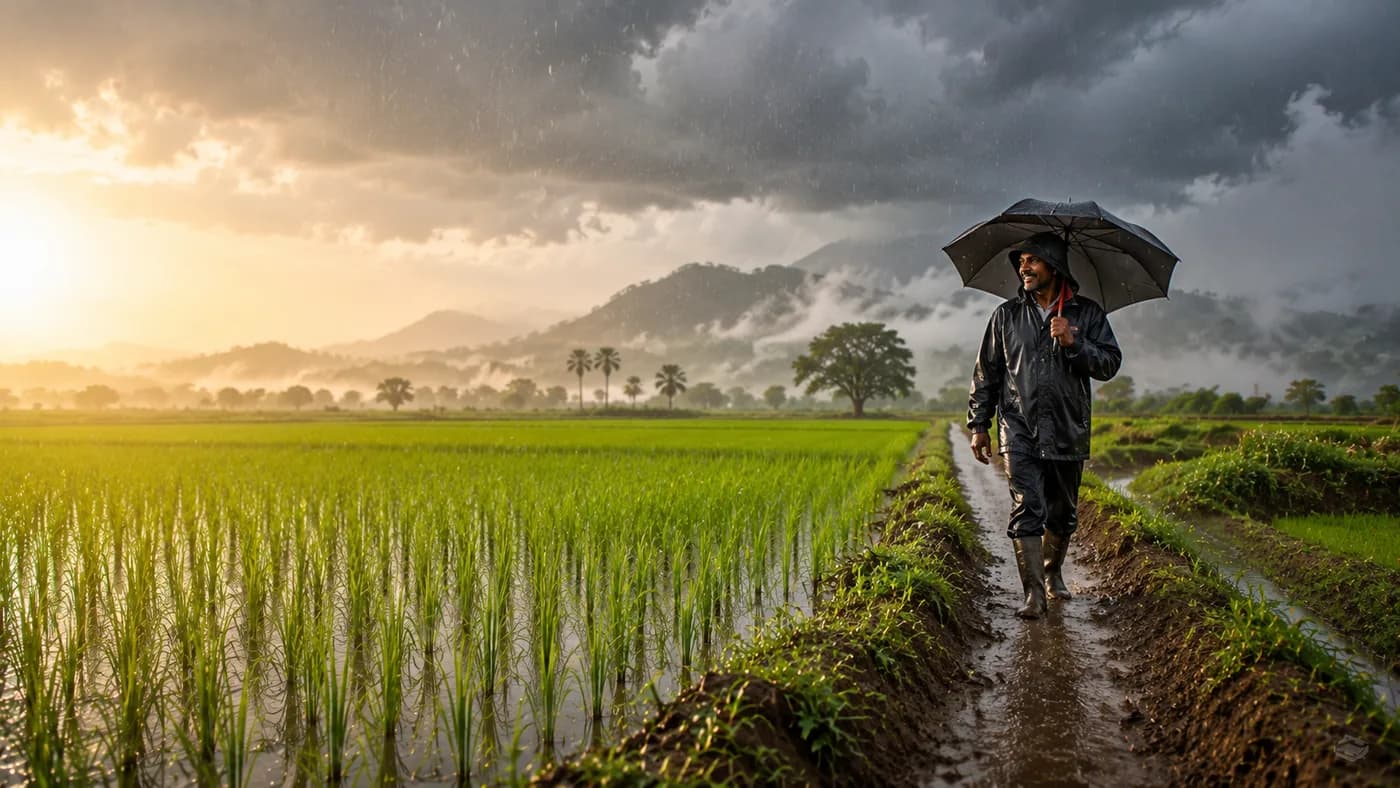
The monsoon brings life to the fields, feeding the entire Kharif season. But the same rain and humidity that grow the crop also bring waterlogging, disease and losses. A little preparation before and during the rains protects your season and your income.
Fix drainage before the rains arrive
Standing water is the enemy of most crops. It suffocates roots and rots seedlings within a day or two. Before the monsoon, prepare drainage channels, raise beds where needed, and make sure water can leave the field quickly. Never let water pool in low spots.
Expect more disease and scout more often
High humidity and constant leaf wetness are perfect for fungal and bacterial diseases. In the monsoon you must walk your fields more often, not less. Catching a disease on the first day it appears is cheap to fix; catching it a week later can mean a lost crop.
Protect nutrients from washing away
Heavy rain leaches nitrogen out of the soil. Instead of applying all your nitrogen at once, split it into smaller doses through the season so less is lost. Adding organic matter also helps the soil hold nutrients and improves its structure so it drains better.
Work with the weather, not against it
Use a reliable local forecast to plan your operations between rain spells. Spraying just before rain washes your money away. Sowing before a heavy downpour can wash out the seed. Timing your work around the forecast saves both inputs and effort.
Dry and store produce carefully
A damp harvest spoils fast in the humid monsoon air. Dry grain, pods and other produce thoroughly before storing, and keep storage areas dry and ventilated to avoid mould and losses.
Terms explained in this guide
Frequently asked
How do I protect crops from waterlogging in the monsoon?+
Prepare drainage channels, raise beds and avoid low spots; standing water for more than a day damages most crops.
Why do crops get more diseases in the rainy season?+
High humidity and leaf wetness favour fungal and bacterial growth, so scout more often and act early.
Should I spray before rain?+
No — rain washes the spray off and wastes it; spray in a dry window.
Where to go next
Want this as daily tasks for your farm?
Khetiyaar turns guides like this into a day-by-day plan — in your language, free to start.

Related guides
The Same Monsoon, Different Problems: Rainfall Risk by Region
Advice written for Punjab is close to useless in Marathwada. The monsoon is one system but it fails differently in each part of India, and the coping strategy has to match the failure.

The Nakshatra Sowing Calendar, Without the Astrology
The nakshatra system is a solar calendar, which is why it tracks the seasons well. It has also drifted about three weeks from the seasons it was calibrated against — and you can verify that yourself.
Bhadli Vakya: Gujarat's Monsoon Sayings, Examined Honestly
A thousand-year-old body of weather couplets that Gujarati farmers still use. Some of it is careful observation with a real mechanism. Some of it is not. Both deserve to be said out loud.