

Passive Dew Harvesting: Build a Stone Air Well for Free Garden Water
An air well is a stack of loose stones that pulls drinking water for your plants straight out of the night air — no electricity, no pump, no monthly bill. Here's how the physics works and how to build one.
Quick answer
An air well won't replace your borewell, but it is a genuinely free, zero-maintenance way to squeeze extra water out of humid night air for a prized tree or nursery bed. Build it loose, not solid; use dense stone like basalt or granite; site it somewhere open and breezy; and match your expectations to your climate — this is a supplemental sip system for humid regions, not a substitute for irrigation on dry land.
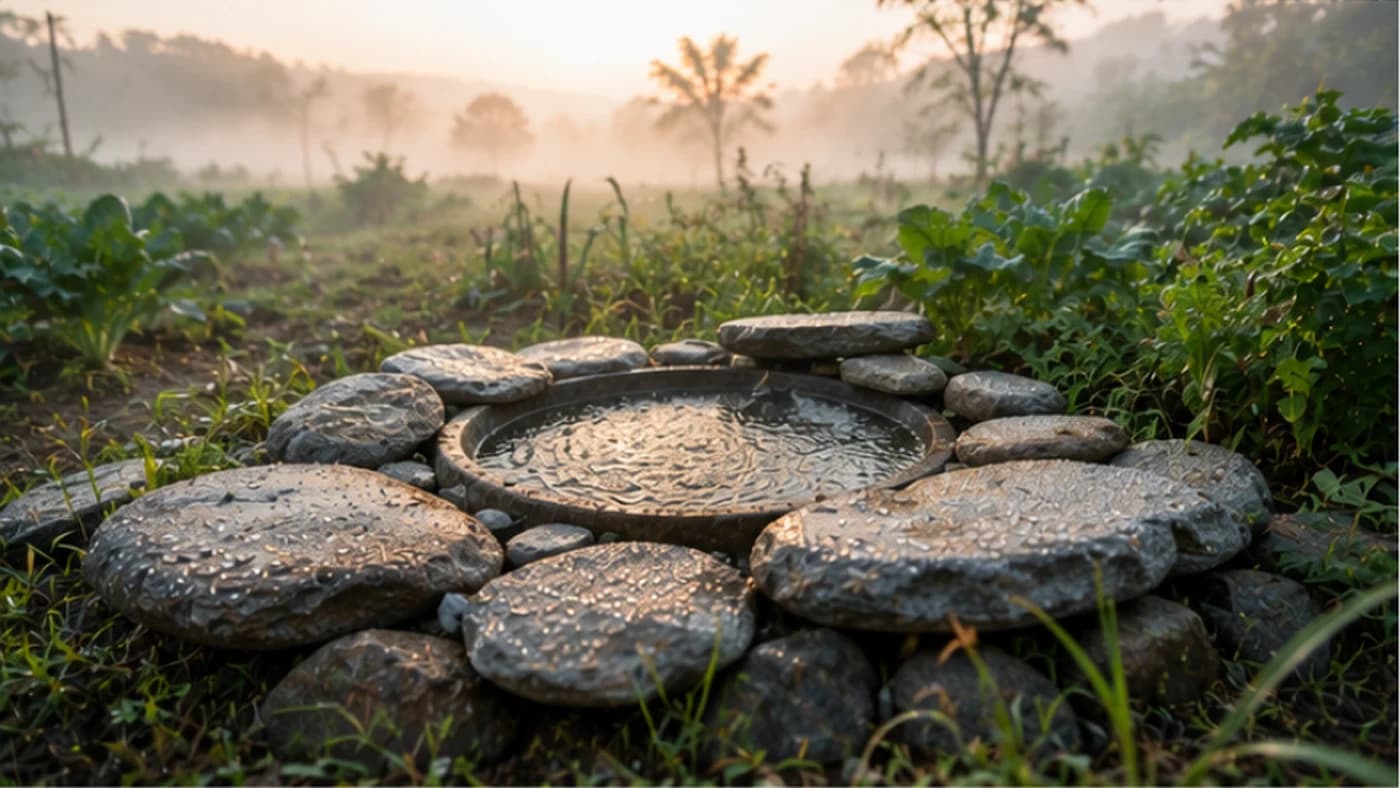
We spend a lot of money on borewells, pumps and pipes to pull water up from the ground, while a slower, freer source floats right over our fields every night: humid air. An air well is an old idea — a mound of loose stone that cools faster than the air around it, so that when warm, moist air touches it before dawn, the moisture condenses into liquid water, exactly like a cold steel glass 'sweats' on a humid day. It needs no fuel and almost no maintenance, and while it will never replace a borewell for irrigating a whole field, it can keep a young fruit tree or a cluster of high-value plants alive through a dry spell using nothing but stone and the cold night sky.
An old idea, proven in the field
In 1900, a Russian engineer named Friedrich Zibold found thirteen large stone mounds near the ancient city of Feodosia in Crimea — some over 10 metres tall, connected to old terracotta pipes leading into the city's fountains. He believed they were ancient air wells, and to test the idea he built his own stone-pile condenser nearby using sea stones roughly 10-40 cm across, piled into a cone shape. It worked: his structure produced up to 360 litres of water a day from condensation alone, proving that a well-built pile of stone really can pull meaningful water out of humid night air.
The physics: why stone 'sweats' at night
The whole system rests on three things: thermal mass, radiative cooling and surface area. As the sun sets, dense stones like basalt or granite lose their stored heat quickly by radiating it into the clear night sky, so they end up noticeably colder than the surrounding air by early morning. When warm, humid morning air moves through the gaps between these cold stones, it can no longer hold as much water vapour, so the extra moisture condenses onto the stone surface as droplets, which then run down under gravity into a collection basin or straight into the root zone. This is exactly why a cold glass of water sweats on a humid day — the same principle, just scaled up and built from stone instead of glass.
How to build one
Dig a shallow pit about a metre across, and line it with a heavy-duty, food-grade plastic sheet or a small concrete basin to act as your reservoir. Place a perforated pipe upright in the centre — this acts as a chimney that helps draw air through the stone pile as temperatures shift through the day. Stack your stones around this pipe, largest and densest at the base, keeping the pile loose rather than packed tight, since air needs open gaps to move through; a solid, mortared wall will simply trap daytime heat and never cool down enough. Aim for a rough cone or beehive shape between roughly 1 and 1.5 metres tall — tall enough to give good surface area, but not so massive that it holds onto the day's heat.
Choosing the right stone
You want dense, low-porosity stone. Basalt is the gold standard — heavy, cools quickly at night, and smooth enough that water runs off rather than soaking in. Granite is also excellent, holding its overnight coolness well into the morning. Avoid soft, porous stones like pumice, scoria or crumbly shale — their internal air pockets act as insulation, so they never cool down enough to trigger condensation, and porous surfaces trap dirt that can breed bacteria. Scrub any moss, soil or debris off your stones before stacking, so the air well is condensing onto clean mineral surfaces rather than being soaked up by organic grime.
Where an air well works — and where it won't
This technique depends entirely on your local humidity and the day-night temperature swing. In bone-dry regions where relative humidity stays under about 20%, an air well will barely produce anything. It works best in coastal belts, humid inland pockets, and any area with a sharp temperature drop after sunset — parts of coastal Gujarat, the Konkan belt, and hilly regions with cool nights are far better candidates than the driest stretches of Rajasthan or Kutch. Yield is also seasonal — expect the best output in the humid months after the monsoon and much less in the dry, cold winter. And treat this as a supplemental 'sip' system, not a 'gulp' system: it is built to keep a prized tree or a small nursery bed alive, not to irrigate an acre of field crop. If the water is meant for drinking, filter and treat it first, since an open structure will also collect dust and bird droppings — for garden use, that same dust often acts as a mild natural fertiliser.
Common mistakes
The most common failure is building too solid a structure. In 1930, Belgian engineer Achille Knapen built a 14-metre air well in France with walls nearly 3 metres thick — it never cooled down enough at night and produced almost nothing, because it behaved like a giant warm radiator instead of a cold stone pile. Poor airflow is the second failure: if wind can't move through the pile, condensation releases heat that warms the stones from the inside and stops the process, so always build somewhere that gets a steady breeze, in the open rather than in a shaded hollow, with a clear view of open sky overhead so the stones can radiate heat away efficiently at night.
Getting more out of it: practical and advanced tips
Plant a low shrub or hedge on the sun-facing side to give afternoon shade without blocking the breeze, so the pile starts cooling earlier in the evening. Use darker stones in the core and lighter ones on the outer face — the light stones reflect morning sun to keep the core cool longer, while the dark centre radiates heat efficiently overnight. Instead of collecting water in a basin to carry away later, run a cotton or jute wick from the base of the pile directly into the soil for a slow, constant drip. A thick mulch layer around the base stops the collected water from evaporating straight back into the air. For a real boost in low-humidity areas, drape a fine mesh or shade-net over the stone pile — lightweight material cools faster than heavy stone and catches early fog and dew almost instantly, a hybrid approach close to the Warka Water towers used in parts of Ethiopia; the mesh catches the first droplets while the stone pile beneath adds long-term thermal stability.
A realistic example
Picture a farmer in a dry coastal belt trying to keep a young pomegranate sapling alive through a three-month dry stretch. A stone air well built at the base of the tree's planting mound gives basalt stones that sit noticeably cooler than the air by early morning; as the first humid air moves through, the stones begin sweating, and by mid-morning a slow, steady drip has soaked into the mulch. It might only be a cupful of water a day — but for a young tree in a dry spell, that cupful, day after day, is the difference between a dead sapling and one that survives to fruit, with no diesel, no electricity bill, and no pump to maintain.
Terms explained in this guide
Frequently asked
How much water can a stone air well really produce?+
It depends heavily on local humidity and the day-night temperature swing. A well-built structure in a favourable climate can produce anywhere from a cupful to tens of litres a day; in very dry climates it may produce almost nothing.
What is the best stone to use for an air well?+
Dense, low-porosity stone such as basalt or granite. Avoid soft, porous stones like pumice or shale, which insulate rather than cool, and won't trigger condensation.
Does an air well work in dry regions like Rajasthan or Kutch?+
Poorly, if at all. Air wells need meaningful humidity in the air (generally above about 20% relative humidity) plus a sharp night-time temperature drop. Coastal or humid inland regions with cool nights are much better suited.
Is dew-harvested water safe to drink?+
Only after filtering and treating it, since an open stone structure can collect dust, pollen and bird droppings. For watering plants, these impurities are usually harmless and can even act as a mild fertiliser.
How tall should I build my air well?+
Roughly 1 to 1.5 metres is the sweet spot for a garden-scale structure — tall enough for good surface area, but not so massive that it retains daytime heat and fails to cool down at night.
Where to go next
Want this as daily tasks for your farm?
Khetiyaar turns guides like this into a day-by-day plan — in your language, free to start.

Related guides
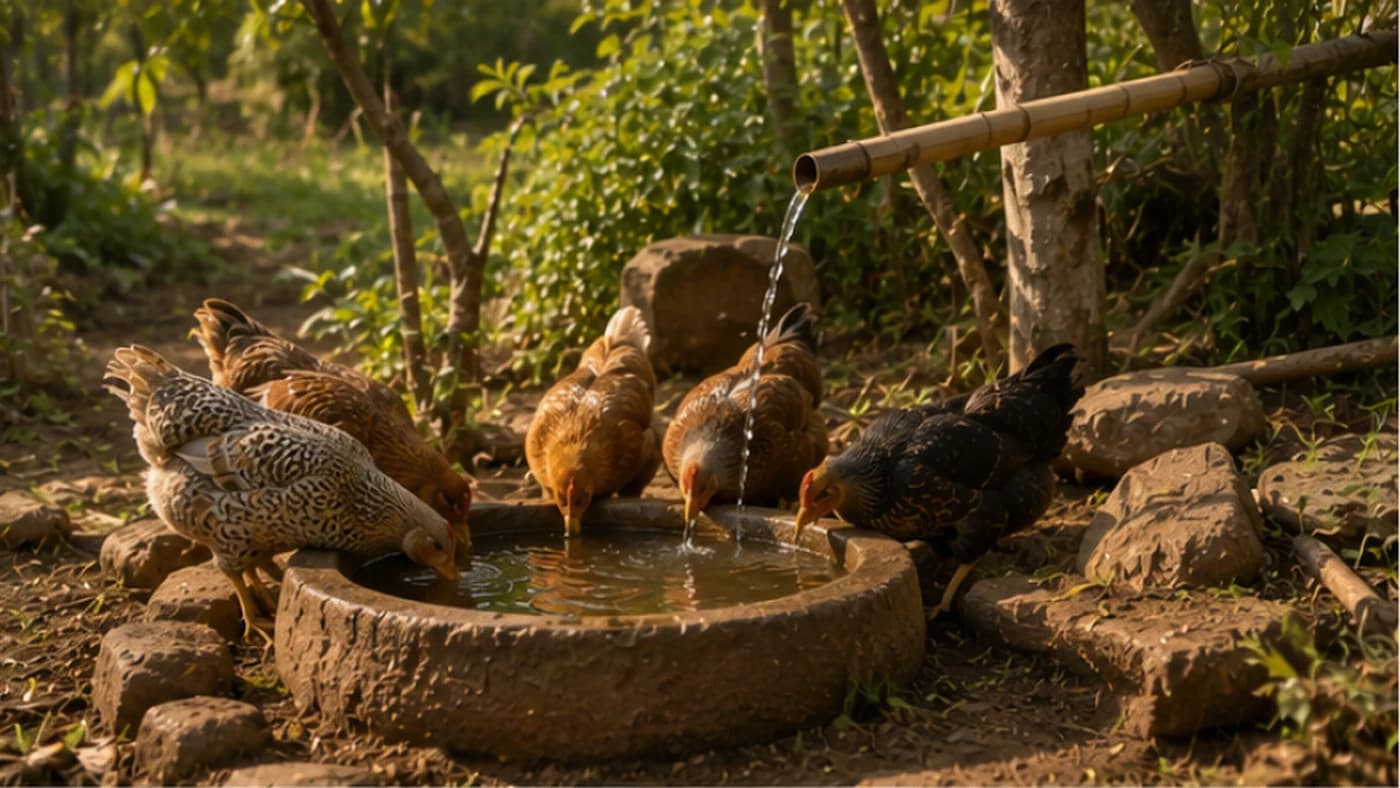
Stone Water Troughs for Poultry: The Ancestral Method That Still Beats Plastic
Plastic waterers crack under summer sun and can leach chemicals into drinking water. A carved stone trough — the same idea behind the village "naand" many Indian farmers already know — keeps water cooler, cleaner and lasts for generations.
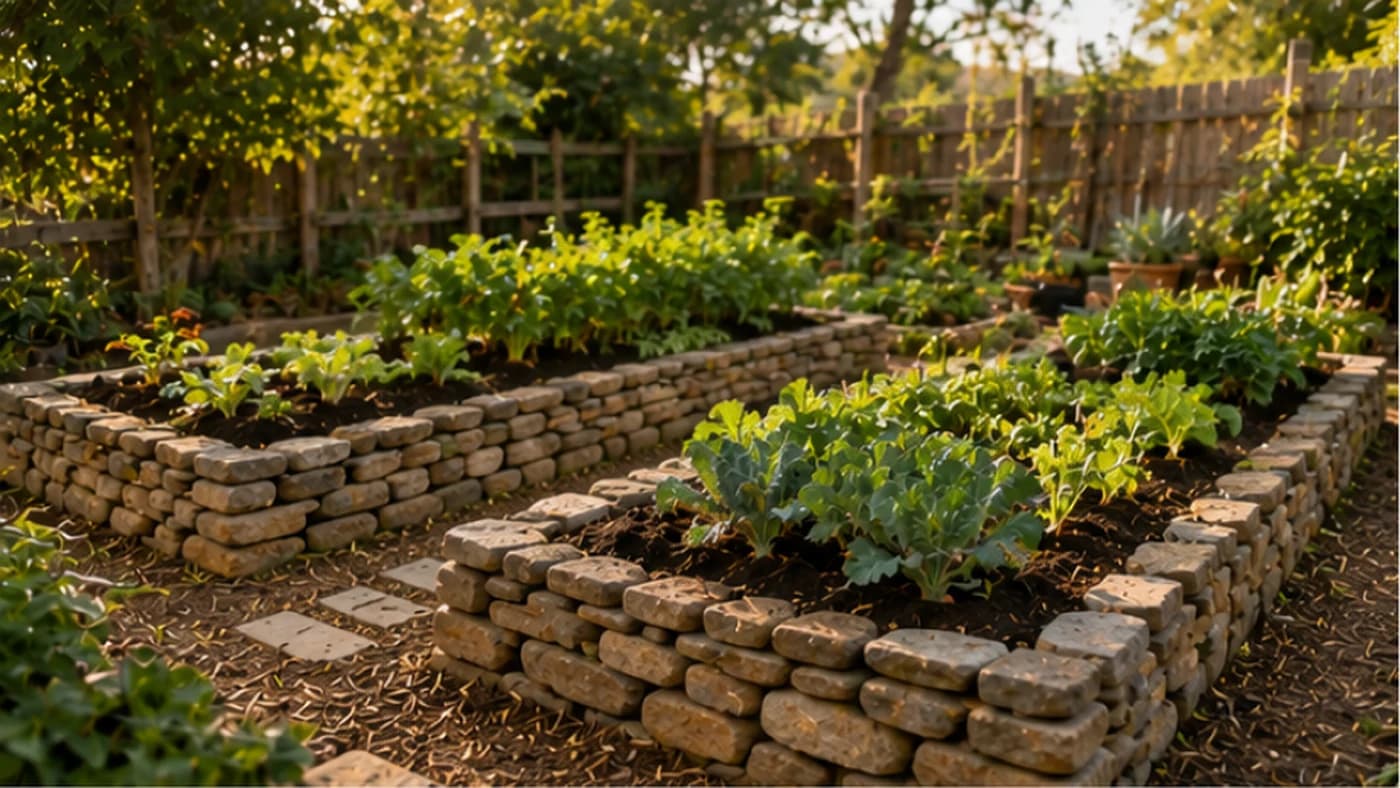
Permanent Stone Garden Beds: Building Raised Beds That Outlast Plastic and Wood
Plastic and wood garden borders crack, rot and end up as landfill within a few years. A dry-stacked stone bed, built once with local rubble, can last a lifetime — and it warms your soil for free.
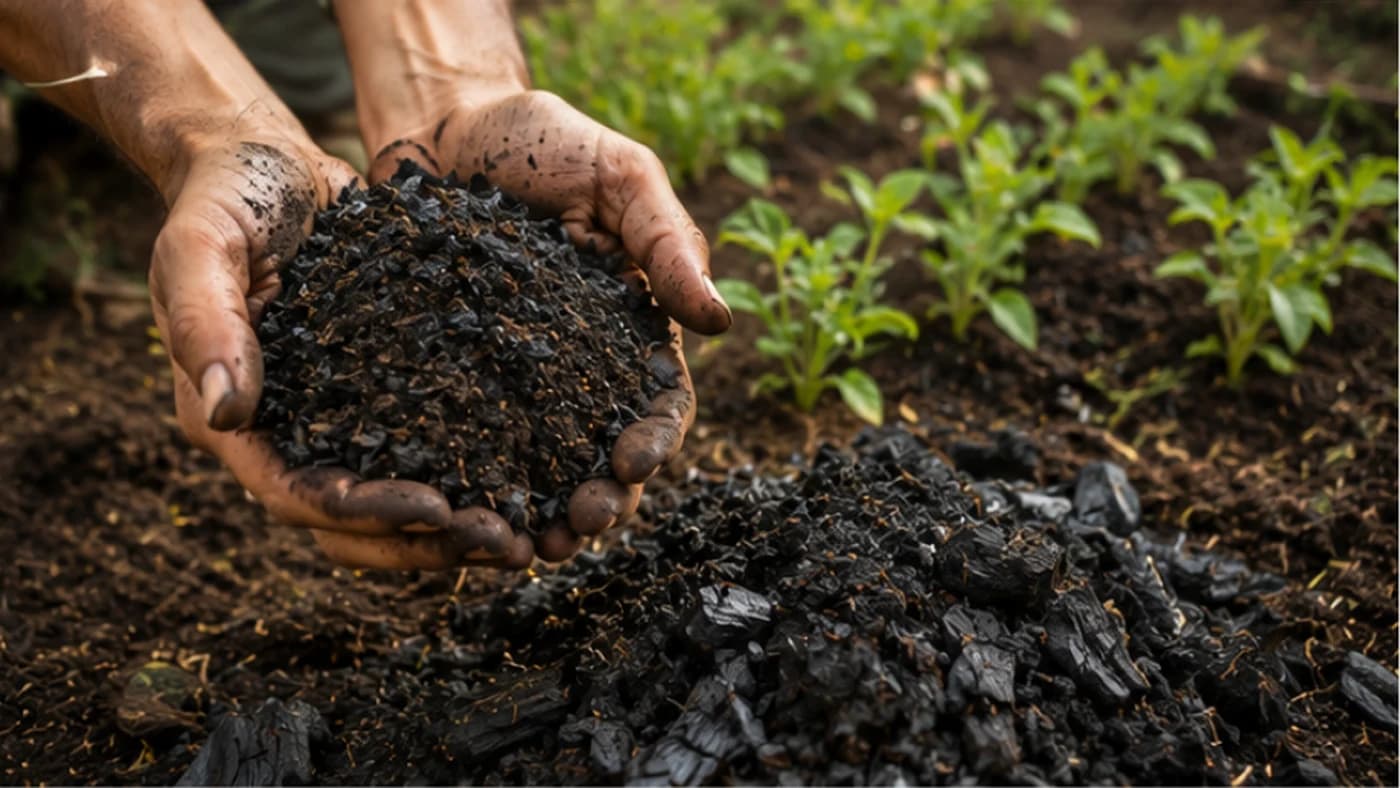
Terra Preta: The 2,000-Year-Old Soil That Gets More Fertile With Age
Ancient Amazonian farmers built soil that is still 10x more fertile than the surrounding land 2,000 years later — using biochar, organic waste and minerals. Here's how to build a modern version in your own field.