

Stone Water Troughs for Poultry: The Ancestral Method That Still Beats Plastic
Plastic waterers crack under summer sun and can leach chemicals into drinking water. A carved stone trough — the same idea behind the village "naand" many Indian farmers already know — keeps water cooler, cleaner and lasts for generations.
Quick answer
A stone trough is a one-time investment that keeps working for decades: cooler water on a hot afternoon, no leaching chemicals, and no annual replacement bill. It isn't right for a mobile flock that moves every few days, but for a fixed watering point — the same role the village "naand" has played on Indian farms for generations — it's hard to beat, and the maintenance is as simple as a stiff brush and a handful of salt every few days.
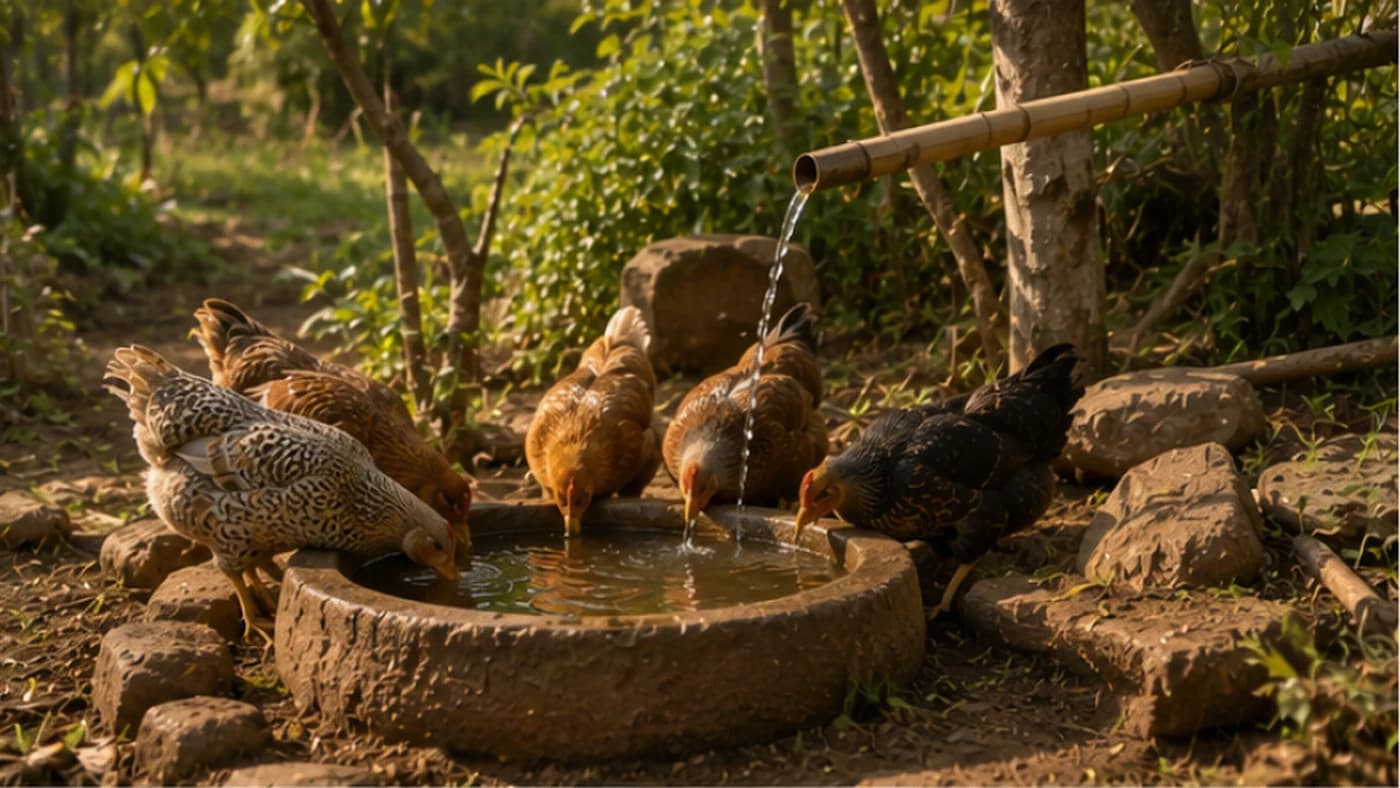
Plastic waterers are convenient — until the first heatwave makes the water inside them warm and stale, or the plastic itself turns brittle and cracks after a few summers in the sun. Long before plastic existed, farmers across the world solved this with stone: heavy, hand-carved basins that keep water cooler through the day, resist damage indefinitely, and never leach anything into what your birds drink. This isn't a foreign idea to India — the stone cattle trough or "naand," carved from local granite or sandstone and still seen at wells and cattle posts across Rajasthan, Gujarat and many other states, is exactly the same principle, just waiting to be applied to your poultry.
Why stone works: thermal mass
The core idea is thermal mass — a material's ability to absorb heat slowly and release it slowly. Dense stone like granite changes temperature far more gradually than thin plastic or metal, so a filled stone basin stays noticeably cooler through a hot afternoon and doesn't heat up in direct sun the way a plastic fount does. Poultry, like most livestock, drink more and stay healthier when water sits in a comfortable range rather than turning lukewarm by midday — which matters directly for egg production in hot weather.
Porosity is worth understanding when choosing stone: granite is dense and barely porous, making it the most durable and least likely to leak, while sandstone and limestone are more porous and can "sweat" slightly — a minor drawback that actually helps cool the water further through evaporation, though it means these softer stones benefit from a light seal if you want to slow water loss.
Sourcing or carving a trough
You don't need to start from a raw boulder — old stone sinks, disused village troughs, or naturally concave stones (sometimes called leaverites) can often be repurposed directly. If you do carve one, traditional stonemasonry tools work well: a point chisel to rough out the basin, a claw chisel to smooth it, and a bush hammer for a textured finish. For poultry, aim for a wall thickness of at least 7-8 cm and a basin depth of about 8-13 cm — shallow enough that birds can't drown, but wide enough for several birds to drink at once without crowding or pecking.
Because a solid granite trough can weigh 80-100 kg or more, it isn't something you move daily — site it where you want water to stay permanently: in shade for most of the day, ideally under an eave to catch some rainwater, with a bed of small stones or gravel around the base for drainage so birds' feet don't sit in mud.
Why stone beats plastic and metal for a fixed water point
Lifespan is the most obvious advantage: a plastic fount often lasts only 2-5 years before sun exposure makes it brittle enough to crack, while a stone trough can serve for generations with nothing more than periodic scrubbing. Plastic can also leach chemicals, including BPA, especially when warmed by direct sun — stone is inert and leaches nothing harmful; limestone in particular can add a trace of calcium to the water, a genuine benefit for egg-laying hens.
A heavy stone basin also can't be knocked over by wind or by larger, clumsier birds like turkeys or heavy dual-purpose breeds, unlike a light plastic fount. And because the water stays cooler and the stone blocks light penetration into deeper basins, algae growth is naturally slower than in a sun-warmed plastic or metal container.
Mistakes to avoid
A stone trough can't simply be picked up and dumped like a plastic jug, so plan for in-place cleaning from the start — a basin that's too deep risks stagnant water pooling at the bottom, which becomes a breeding ground for bacteria. If you're using a more porous stone like sandstone and it loses water faster than birds can drink it, a food-safe seal such as beeswax slows the loss, or simply choose denser granite from the outset.
For cleaning, avoid bleach or harsh chemicals — porous stone can absorb them and slowly release residue back into the water. Instead, scrub every few days with a stiff brush and a solution of white vinegar or diluted apple cider vinegar, which cleans effectively without leaving anything harmful behind.
Where stone isn't the right choice
Portability is the real limitation: if you run a mobile coop or move your flock regularly, hauling a heavy stone trough with you is impractical, and a lightweight, UV-resistant plastic or stainless-steel waterer is simply the better tool for that system. In regions with extended sub-zero winters, water will still freeze solid inside a stone trough even though the stone itself won't crack, so you'll need either a submersible heater or a secondary portable waterer through the coldest months. And sourcing or carving a large trough does take real time and, if bought rather than found, can cost meaningfully more upfront than a basic plastic waterer — a reasonable trade-off for a permanent setup, less so if you're just starting out on a tight budget.
Getting the placement and maintenance right
Choose a spot that's shaded for most of the day to make the most of stone's cooling properties, and if the ground is uneven, level it first with a few centimetres of sand or fine gravel so the heavy basin doesn't shift or crack over time. Raising the trough on a base of bricks or flat stones to roughly the height of the birds' backs keeps them from kicking bedding, feed and droppings into the water, which can cut how often you need to clean it from daily to once every three or four days.
For a deeper clean, empty the trough, sprinkle coarse salt onto the damp stone, and scrub it in with a stiff brush — a natural, chemical-free abrasive that lifts algae and biofilm — then rinse thoroughly before refilling.
A few advanced touches
A simple rain-barrel with an adjustable drip valve, positioned to slowly top up the trough, keeps water constantly refreshed and oxygenated with almost no daily effort. In genuinely large troughs, some keepers add a couple of small fish to graze on algae and mosquito larvae, though for most backyard setups regular scrubbing is the safer, simpler choice. And if your local water is very soft or slightly acidic, a limestone basin can naturally buffer its pH over time, which some keepers find benefits eggshell strength.
Frequently asked
Isn't a stone water trough just an old-fashioned idea?+
It's actually a well-proven design still in everyday use — the stone "naand" seen at village wells and cattle posts across India is the same principle, just applied here to poultry water needs.
Which stone is best for a poultry trough?+
Granite is the gold standard — dense, barely porous, and extremely durable. Sandstone and limestone work too and can help cool water further through slight evaporation, but benefit from a food-safe seal if you want to reduce water loss.
How do I clean a stone trough without harming my birds?+
Avoid bleach, since porous stone can absorb and later release it. Scrub every few days with a stiff brush and diluted white or apple cider vinegar, and for a deeper clean, use coarse salt as a natural abrasive.
Is a stone trough a good idea for a mobile coop?+
No — a solid stone trough can weigh 80-100 kg or more, making it impractical for any system where you move the flock regularly. A lightweight plastic or stainless-steel waterer is the better fit there.
Does stone really keep water cooler in Indian summers?+
Yes — dense stone changes temperature much more slowly than plastic or metal, so water in a shaded stone trough stays noticeably cooler through a hot day than in a sun-exposed plastic fount.
Where to go next
- AI farming chatbotAsk any farming question in Gujarati, Hindi or English and get an answer in seconds.
- Kheti app for Indian farmersCrop plans, disease diagnosis, weather and mandi rates in one app.
- Agri Bazar marketplaceBuy and sell animals, crops, equipment and dairy near you — and see what buyers want today.
Want this as daily tasks for your farm?
Khetiyaar turns guides like this into a day-by-day plan — in your language, free to start.

Related guides
Ancestral Smoke Methods for Pest Control: What's Real and What's Folklore
Long before chemical sprays, farmers used smoke from aromatic wood and herbs to drive pests off prize plants. The science behind it is genuine — the pest-control claims are more traditional practice than proven fact. Here's how to use it honestly and safely.
How to Stop Poultry Feed Waste (and Cut Your Feed Bill by 20-40%)
An open feeder loses feed to billing-out, rats and rain. A treadle feeder that only opens under a bird's weight can cut waste by 20-40% — here's how to set one up without starving your flock during training.
Growing Vegetables in Grow Bags and Pots
Grow bags make vegetable gardening possible almost anywhere. Match the bag size to the crop, use a light rich mix, and water daily in summer.