

Natural Air-Purifying Plants for Sealed, AC-Sealed Indian Homes
Sealed apartments trap formaldehyde from furniture and plywood, benzene from cleaners, and the CO2 we exhale. A handful of easy houseplants can quietly scrub the air for free — no electricity, no filter to replace.
Quick answer
A handful of well-placed, well-watered houseplants won't replace a HEPA filter for dust and allergens, but for the invisible chemical load that builds up in a sealed, AC-run home, they're a free system that improves every year instead of clogging. Start with a Snake Plant or Pothos, watch how it behaves, then add more room by room — you're not decorating, you're installing quiet life-support for your indoor air.
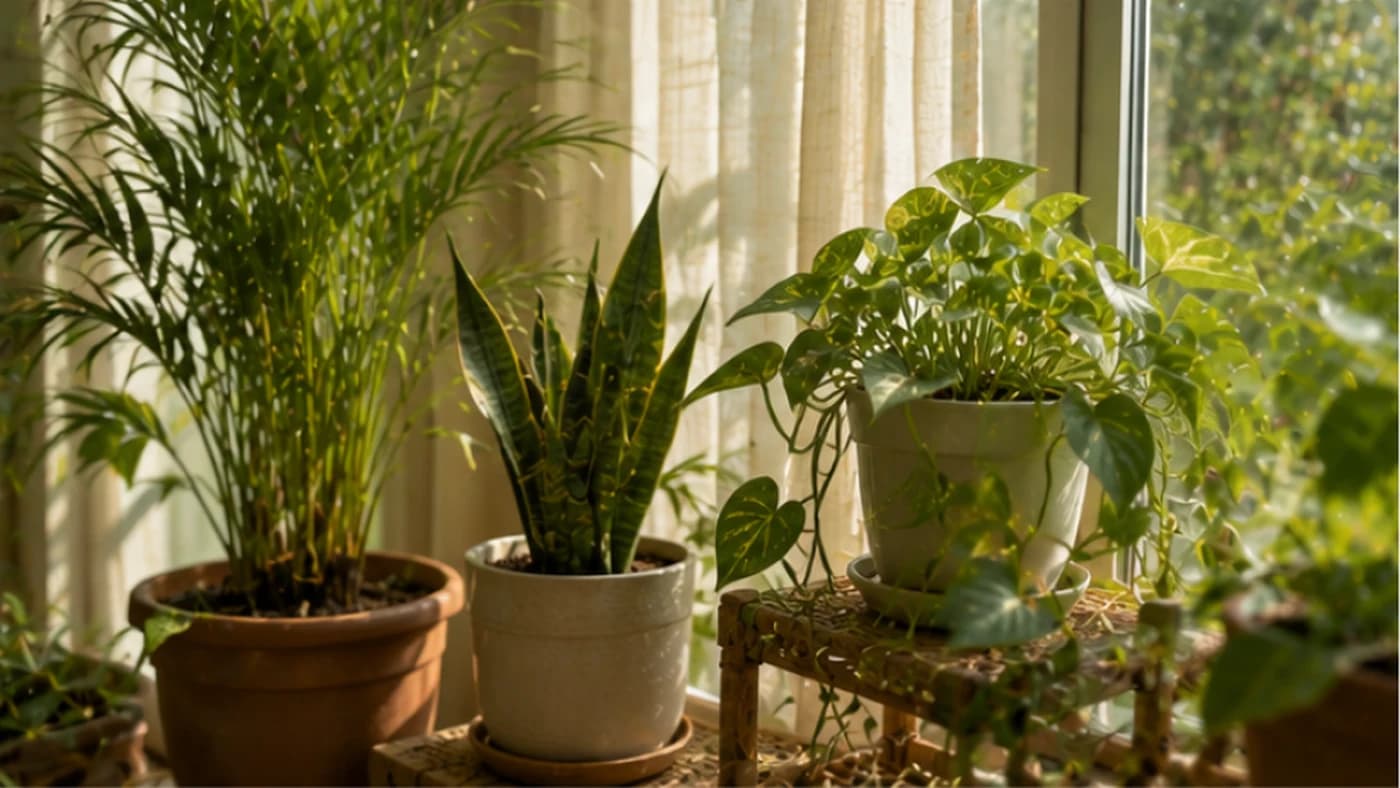
Modern homes are sealed tighter than ever, which keeps the heat or the AC in — but also traps whatever is off-gassing from new furniture, plywood, and cleaning products. A mechanical filter fights that trapped air with a fan and a cartridge. Certain houseplants do the same job quietly, using nothing but sunlight, and unlike a filter, a well-tended plant only gets better at the job over time.
What indoor air-purifying plants actually do
This isn't folk wisdom — it's the same phytoremediation research NASA ran in the late 1980s while looking for ways to keep space station air breathable without heavy machinery. These plants don't just sit there looking green; they and the microbes in their soil actively consume compounds we consider toxic, such as formaldehyde released by carpets and particleboard furniture.
Think of it as the ancestral counterpart to a HEPA filter: a mechanical filter traps dust by force, while a plant converts pollutants into food through a living partnership between its leaves, roots, and soil microbiome.
How the system actually works
The leaves do the first pass: through tiny pores called stomata, plants pull in gases while hunting for CO2, and volatile organic compounds like benzene and xylene come along for the ride, later broken down by enzymes or moved down to the roots.
The roots do the heavy lifting, in a zone called the rhizosphere. As a plant is repeatedly exposed to a specific pollutant, the microbes in its soil multiply and specialise in breaking that chemical down — meaning the system becomes more efficient the longer it runs, unlike a mechanical filter that clogs and loses efficiency over time.
Transpiration adds a third mechanism: as a plant releases water vapour, it creates a small vacuum effect that pulls air down into the soil, bringing more pollutants into contact with the root-zone microbes — one reason high-transpiration plants are especially useful.
Four reliable plants to start with
Snake Plant (Sansevieria, widely sold in Indian nurseries): nearly impossible to kill, and unusually it releases oxygen at night rather than during the day, making it the best choice for a bedroom — it quietly scrubs formaldehyde and nitrogen oxides while you sleep.
Spider Plant (Chlorophytum comosum): the specialist for a home office with a printer, or a room near a garage or generator, since it's especially effective at removing carbon monoxide and xylene. It also produces pups (offsets) rapidly, so you can propagate more plants for free.
Peace Lily (Spathiphyllum): the generalist, tackling all five of the major toxins NASA tested (formaldehyde, benzene, trichloroethylene, xylene and ammonia) while also regulating humidity — if its leaves droop, your room's air is likely too dry.
English Ivy (Hedera helix): the specialist for older or damp homes, since it's been shown to meaningfully reduce airborne mould spores, and its vigorous climbing habit gives you a lot of leaf surface area in a small footprint if trained vertically.
Why this beats a plug-in filter for daily comfort
Plants humidify the air as they clean it, keeping your mucous membranes moist — your body's first line of defence against airborne viruses and bacteria. There's no noise and no power draw; a botanical setup runs on whatever sunlight reaches your window. Living with greenery has also been linked to lower cortisol levels and better focus, and the system is self-regulating: as pollution levels rise, the soil microbes actually increase their metabolic rate to compensate.
Common mistakes that kill the effect
The most common mistake is treating a houseplant like furniture — a dead plant cleans nothing. Overwatering is the number-one killer, since it suffocates roots and encourages rot-causing microbes instead of pollutant-eating ones; use the finger test — if the top inch (2-3 cm) of soil is still wet, don't water.
Dusty leaves block the stomata a plant breathes through, so wipe them with a damp cloth every few weeks — the equivalent of changing a mechanical filter. And avoid synthetic fertilisers, which can salt the soil and kill the beneficial microbes doing the real cleaning; stick to organic compost or worm castings instead.
Where houseplants have real limits
A single potted plant in a large, drafty room is decoration, not a filter. To match the clean-air delivery rate of a good HEPA filter in a room with high air exchange (an AC or exhaust fan constantly swapping the air), you'd need roughly one large plant for every 9 square metres (about 100 sq ft) — a real density, not a token pot in the corner. Plants also don't filter dust, dander or pet hair the way a mechanical fan does, since they work on invisible gases and microscopic spores; if you have heavy allergies, you may still need a mechanical pre-filter for the large particulates.
Mechanical filter vs botanical setup
Mechanical filter (HEPA): targets dust, dander and pollen; needs monthly filter changes at real cost; draws constant power and makes noise; lasts 5-10 years.
Botanical setup (plants): targets VOCs, chemicals and CO2; needs only watering and pruning, essentially free; uses zero grid power; lasts indefinitely if propagated, and adds a calming, biophilic feel to the room instead of a sterile, industrial one.
Getting the most from a small setup
Cluster plants together rather than scattering them — grouped plants create a shared microclimate of higher humidity and more concentrated microbial activity. Place them near natural airflow paths (windows, doors, hallways) so more of the room's air actually passes by the leaves; a plant stuck in a stagnant corner only cleans the air immediately around it. Mix leafy types (like Pothos, easy to find in India) for surface area with succulent types (like Aloe or Snake Plant) for chemical resilience. And where you can, use porous terracotta or unglazed ceramic pots — they let some air reach the root zone directly, speeding up microbial breakdown.
Taking it further: active biofiltration
For those who want to go beyond a passive pot, active biofiltration uses a small, low-wattage fan to pull air directly through the soil and root zone. NASA-linked research found this can make a planter 10 to 100 times more effective than a passive pot of the same size — you can build a simple version with a planter that has a perforated base and a small fan underneath, forcing air through the rhizosphere instead of relying on natural transpiration alone.
A realistic room setup
Take a roughly 14-square-metre (150 sq ft) home office with new laminate flooring off-gassing formaldehyde, a laser printer releasing ozone and particulates, and a person exhaling CO2 all day. A workable setup would put one large Peace Lily in a corner for general humidity and VOC control, two Spider Plants near the printer for xylene and carbon monoxide, and one Snake Plant on the desk for steady oxygen and formaldehyde resistance overnight — a living barrier that reduces sick-building symptoms without a single extra appliance plugged in.
Frequently asked
Which houseplant is best for a bedroom?+
The Snake Plant (Sansevieria) is ideal for bedrooms because it releases oxygen at night rather than during the day, and it's very hard to kill through neglect.
How many plants do I actually need to clean a room's air?+
As a rough guide, one large plant per 9 square metres (about 100 sq ft) in a room with high air exchange (AC or exhaust fans running often). A single pot in a big room is mostly decorative.
What's the biggest mistake people make with air-purifying plants?+
Overwatering. It suffocates the roots and encourages rot-causing microbes instead of the ones that break down pollutants. Check that the top 2-3 cm of soil is dry before watering again.
Do these plants remove dust and pet dander?+
Not effectively — they target invisible gases and microscopic spores, not large particulates. If allergies are a concern, pair plants with a mechanical pre-filter for dust and dander.
Can I speed up how well a plant cleans the air?+
Yes — active biofiltration, using a small fan to pull air through the potting soil and roots, can make a planter 10-100 times more effective than a passive pot of the same size.
Where to go next
Want this as daily tasks for your farm?
Khetiyaar turns guides like this into a day-by-day plan — in your language, free to start.

Related guides

Dynamic Accumulator Plants: Free Fertiliser Mining From Deep Below Your Field
Most crop roots barely reach 30–45 cm down, while a store of potassium, calcium and other minerals often sits much deeper, out of reach. Deep-rooted 'accumulator' plants act as a biological elevator that brings those minerals up for free.

Let Chickens Till Your Garden: Free Weeding, Pest Control and Fertiliser
A rototiller shreds soil structure and kills fungal networks; a chicken's scratch clears weeds, eats overwintering pests, and leaves fertiliser exactly where it's needed. Here's how to put your flock to work.
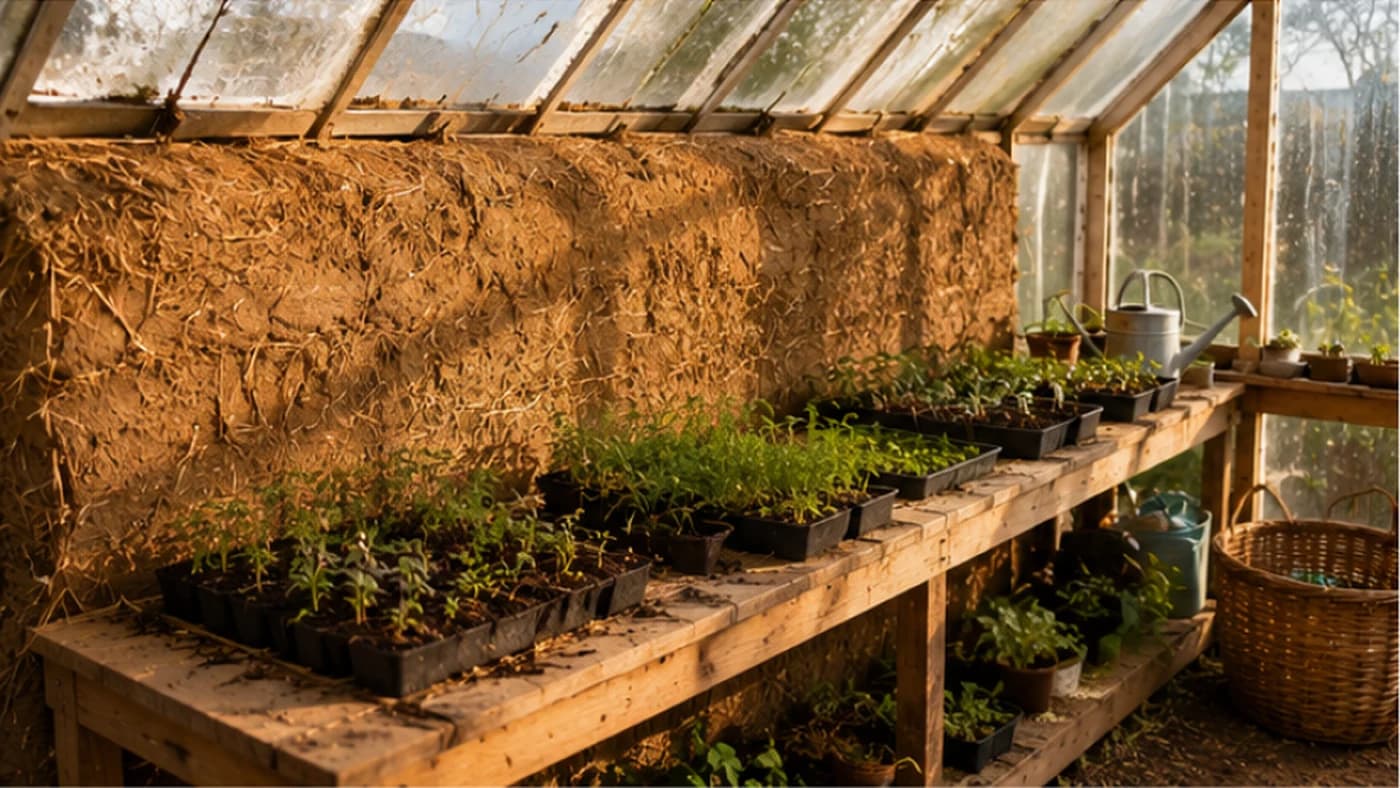
Heating a Greenhouse With Mud and Straw: The Free Thermal Mass Bench
No electricity, no diesel heater, no gas cylinder — just clay, sand, straw and the sun. A thermal mass bench keeps a polyhouse or low tunnel warm through winter nights for free.