

Let Chickens Till Your Garden: Free Weeding, Pest Control and Fertiliser
A rototiller shreds soil structure and kills fungal networks; a chicken's scratch clears weeds, eats overwintering pests, and leaves fertiliser exactly where it's needed. Here's how to put your flock to work.
Quick answer
Chickens can do a genuinely better job than a tiller for weed seeds, overwintering pests and soil biology — as long as you move them on a schedule instead of letting them strip a patch bare, give fresh manure a few weeks to mellow before planting, and pick active, hardy birds. Start with a simple mobile tractor on one bed and let the flock show you what it can do.
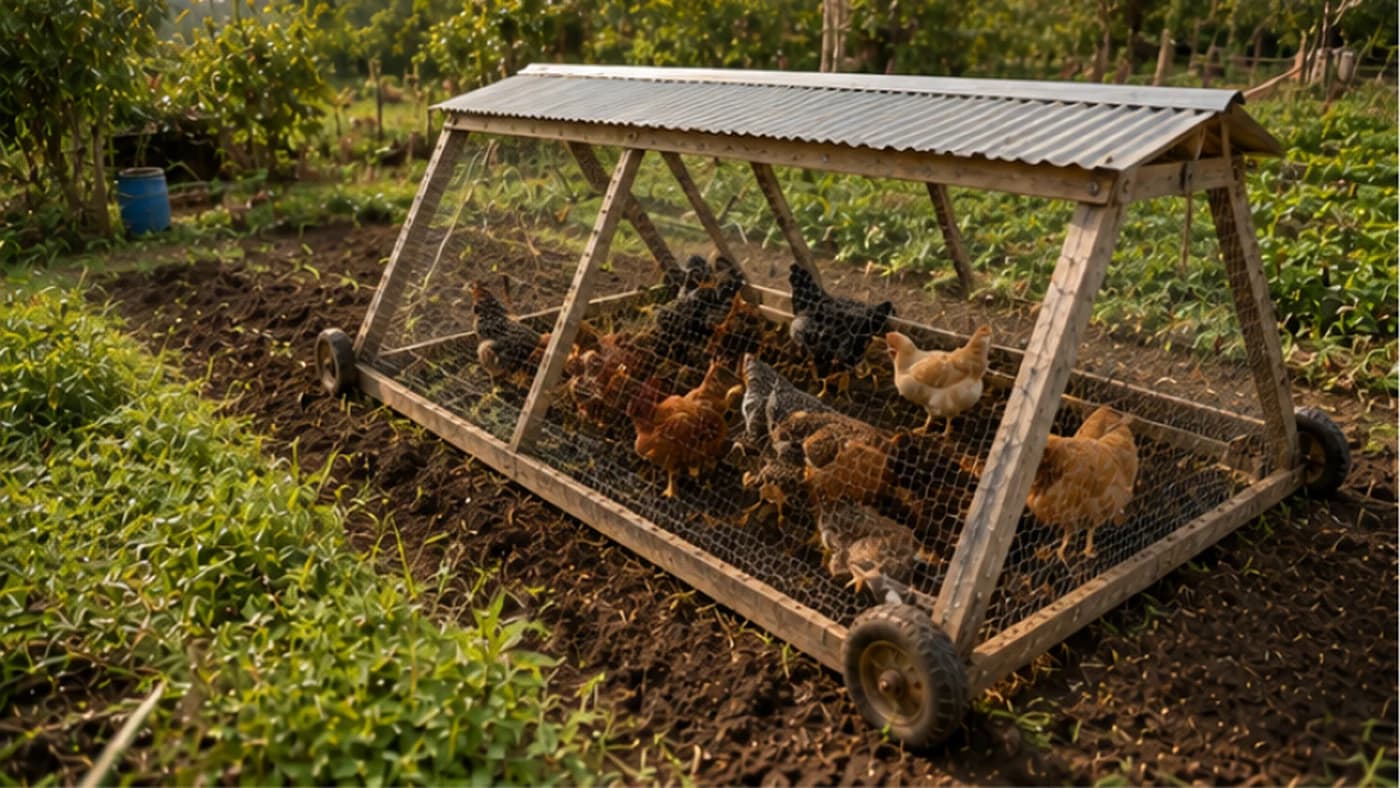
Turning over a bed by hand or with a noisy tiller is a fight against the earth, but chickens do the same basic job while enjoying it — and they do it better in one specific way: a steel blade slices through soil indiscriminately, while a chicken's beak and claws are precision tools that target exactly what a gardener wants gone (weed seeds, hibernating grubs, insect larvae) and leave behind exactly what a gardener wants more of (concentrated, ready-to-use fertiliser). Using poultry as your primary tilling force isn't a novelty trick — it's simply putting a bird's natural foraging instinct to work for your soil instead of fighting it.
Why a chicken's scratch beats a steel blade
When a chicken scratches, its strong legs pull soil backward — and this does two things a mechanical tiller cannot. First, it targets the weed seed bank directly: most weed seeds sit in the top couple of centimetres of soil waiting for light, and chickens find and eat a large share of them, meaningfully cutting next season's weed pressure. Second, it protects the soil's biology: a rototiller reaches deep and shears through the mycorrhizal fungal networks that help plant roots take up water and nutrients, while chickens rarely scratch deeper than 5 cm (aside from the odd dust bath), leaving that underground infrastructure largely intact.
Three ways to put birds to work
A chicken tractor — a small, bottomless, mobile coop sized to your beds — confines a few birds to one spot so their energy is focused; 4-6 chickens can typically clear weeds and light growth from a standard bed (roughly 1.2 x 2.4 m) in about a week, ideal for kitchen gardens. Electric poultry netting suits larger plots: fence off a few hundred square metres and move the flock through in stages, similar to how wild birds move across open ground. Fallow bed rotation splits your growing area in two, with one half in vegetables while the other spends the season under poultry, tilling in a cover crop like cowpea or dhaincha and building up fertility, then the two halves swap the following season.
What this is really worth
Chicken manure is genuinely one of the hottest, most nutrient-dense fertilisers available, rich in nitrogen, phosphorus and potassium — one bird can produce enough manure to fertilise roughly 4-5 sq. m of garden in a bit over a month. The pest control is just as real: chickens actively hunt overwintering pest eggs and larvae in the soil, so by planting time the pest population in a worked bed has been meaningfully reduced without any spray. Garden waste becomes chicken feed in return — spent plants, fallen fruit and pulled weeds convert into eggs and manure — and moving a mobile tractor takes minutes compared to an hour spent wrestling a machine.
Mistakes that ruin the bed
The most common failure is the 'moonscape effect' — leaving chickens on one patch too long strips it past weeds and pests into hard, lifeless bare ground, so move them on a schedule rather than waiting until there's nothing left to eat. Nitrogen burn is the second trap: fresh manure is concentrated enough to scorch tender seedling roots, so wait 2-3 weeks after removing the flock before planting, or scratch in some carbon-rich straw or leaves to balance it. And because fresh droppings can carry pathogens, treat root crops and leafy greens eaten raw with real caution — a gap of 90-120 days between fresh manure and harvest is the standard organic-farming rule of thumb, which makes running chickens through a bed after the rabi harvest, ahead of the kharif planting, the safest timing.
Where a tiller is still needed
Chickens cannot break hard, baked clay efficiently — moisten it or mulch it heavily first if that's your soil type. They'll strip the leaves off deep-rooted perennial weeds like nutgrass or dock, but won't touch the taproot itself, so those still need manual digging out. In a very small urban plot, keeping birds can raise odour and noise concerns, so a small, well-managed tractor or bantam-sized breeds work better than a full-size flock. And mobile setups are more exposed to dogs, birds of prey and other predators, so use sturdy netting or wire wherever the flock is out in the open.
Practical tips
Pick active, hardy foraging breeds — desi birds and other hardy local breeds tend to scratch and forage far more effectively than heavy commercial hybrids bred mainly for fast growth. Time it to the shoulder seasons: run the flock over spent beds after harvest to clean up crop residue and overwintering pests, then again a few weeks before the next sowing to wake up the soil and knock back the first flush of weeds. Always add a carbon source alongside the birds — scatter dry leaves or chopped straw onto bare soil so the chickens scratch it into the manure, preventing nitrogen loss and building organic matter as a byproduct of the same work.
Going further: deep bedding
For a more advanced setup, build a permanent deep-bedding run: layer 15-30 cm of carbon-rich material (wood chips, straw, chopped stalks) in the coop's run, and let the birds spend months scratching through it, gradually enriching it with manure. Over six months to a year this becomes a dark, crumbly compost you harvest and spread on your beds — a system that also keeps the birds sheltered from predators and keeps the nutrients from washing away in the rain, unlike an open field.
A realistic example
Picture a 90 sq. m plot overgrown with weeds after the rains — clearing it with a heavy tiller would mean a full day's hard labour and a tank of fuel. Instead, fence off the first third with electric poultry netting and move in a dozen hens. In week one they clear the greenery and scratch the surface of that section; in week two, the fence shifts to the next third while a handful of grain in the first section encourages the birds to finish up; by week four the whole plot is cleared, weeds and overwintering pests are gone, and a healthy dose of nitrogen-rich manure is spread evenly across it — leaving nothing to do but a light raking before planting.
Frequently asked
How many chickens do I need to till a garden bed?+
For a standard bed of roughly 1.2 x 2.4 m, 4-6 active chickens confined with a mobile tractor can typically clear weeds and light growth within about a week.
How long should I wait to plant after chickens have been on a bed?+
Wait 2-3 weeks after removing the flock so fresh manure has time to mellow, or scratch in some straw or dry leaves to balance the nitrogen sooner.
Is it safe to grow vegetables in soil chickens have manured?+
Yes, with the standard precaution used in organic farming: leave a gap of roughly 90-120 days between fresh manure application and harvesting root crops or leafy greens eaten raw.
Will chickens damage my soil if left too long in one spot?+
Yes — this is the 'moonscape effect'. Left too long, birds strip a patch past weeds and pests into hard, bare ground, so rotate them on a schedule using a mobile tractor or movable netting.
Can chickens till heavy clay soil?+
Not efficiently on their own — moisten hard clay or mulch it heavily first, since chickens work best on soil that isn't baked hard.
Where to go next
Want this as daily tasks for your farm?
Khetiyaar turns guides like this into a day-by-day plan — in your language, free to start.

Related guides

How Chinampas Work: The 700-Year-Old Floating Garden That Never Needed Fertiliser
The Aztecs grew up to seven harvests a year from raised beds built inside a lake, feeding themselves without synthetic fertiliser or piped irrigation. The same closed-loop principle can be scaled down to a pond edge or a wicking bed on an Indian farm.
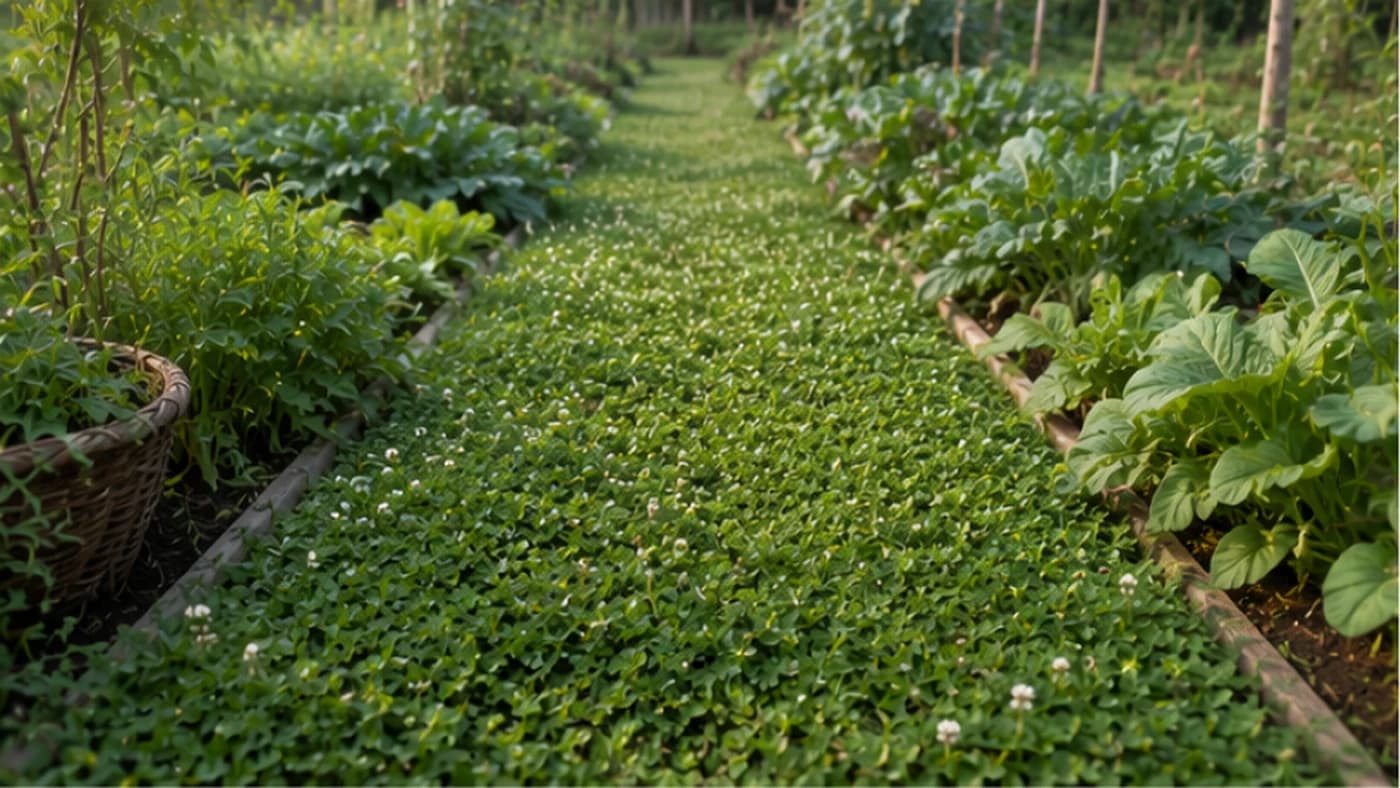
Living Mulch for Garden Paths: Grow Your Walkways Instead of Paving Them
Bare soil between your beds is an open invitation to weeds — you can spend 40 hours a year pulling them, or 30 minutes seeding a living mulch that builds soil and feeds pollinators while you watch from the porch.

DIY Kitchen Waste Fertiliser: Turn Peels and Scraps Into Plant Food
Banana peels, eggshells, tea leaves and vegetable trimmings are a free source of nitrogen, phosphorus and potassium. Here are three simple, low-cost ways to turn kitchen waste into fertiliser for your garden or fields.