

Natural Greywater Filtration: Turn Bathwater and Sink Water Into Irrigation
Instead of letting shower and sink water disappear into a drain, a simple mulch basin or reed bed can filter it naturally and keep your trees green through the dry months.
Quick answer
Natural greywater filtration turns water you'd otherwise lose to a drain into a steady, free irrigation source — a simple mulch basin around a tree, a small planted wetland, or a layered sand filter, sized to your actual water volume and built with a settling stage ahead of it. Use it fresh rather than stored, switch to a plant-safe soap, and check your local rules before making it permanent — and it will keep your trees growing through the months everyone else's water runs short.
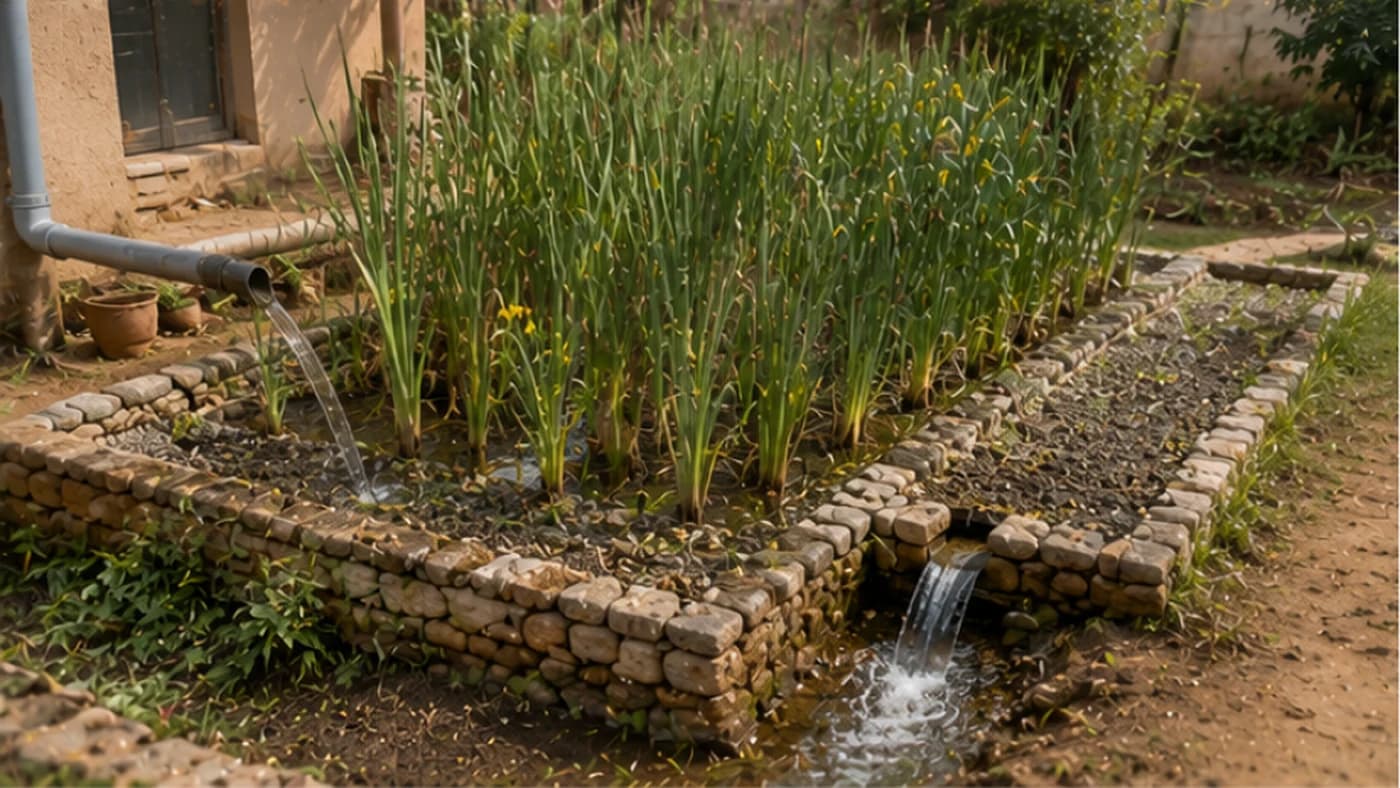
Every bucket of water that leaves your shower, sink or washing machine still carries real value. Sending it straight into a soak pit or municipal drain wastes that value completely, while a natural greywater filtration system mimics the way a riverbank or forest floor cleans water — using gravity, biology and simple mineral layers to turn used household water into a steady, free source of irrigation for trees, fodder grass or a kitchen garden.
What greywater is, and why it's different from sewage
Greywater is the relatively clean wastewater from showers, wash-basins and washing machines — distinct from blackwater (toilet waste), because it carries far fewer pathogens and breaks down much faster once it's back in the soil. That difference is exactly why it's worth treating separately rather than sending it all into one common drain or septic line: with a simple diversion, this water can do useful work in your garden instead of just disappearing.
In practice, natural greywater systems take one of three forms: a mulch basin around a tree, a small constructed wetland planted with reeds, or a layered sand-and-gravel filter tank. All three keep water in the top 30–45 cm of soil, right where plant roots can actually use it, instead of losing it to a deep leach pit or a sewer line.
How the water actually moves through the system
Setting this up starts at the source: most homes are plumbed with everything combined into one line, so you first need to separate the streams — typically with a simple three-way diverter valve fitted under a sink or behind a washing machine, letting you send water to the garden in the dry season or back to the normal drain when you're using a harsh chemical cleaner or during heavy monsoon days.
Water usually arrives in bursts rather than a steady trickle — a washing machine can release 60–150 litres at once, and a twenty-minute shower is a real slug of water too — so a small settling chamber or surge tank ahead of the filter lets lint and solids settle and releases water at a manageable pace, rather than overwhelming and drowning the beneficial bacteria in your filter bed. From there, gravity-fed pipes (sloped at roughly 1 cm drop per metre) carry the water to the filtration area, where it finally reaches the roots and microbes that do the real cleaning as it percolates into the soil.
Three ways to filter it naturally
A mulch basin is the simplest and cheapest option: dig a shallow trench or pit around the drip line of a tree (the area under its outer branches, where feeder roots are concentrated) and fill it with coarse wood chips, delivering the greywater just below the surface of the mulch. The wood chips act as a biological sponge — bacteria colonise the surface and break the water down before it even reaches the soil, and this also stops the soil surface from sealing over, which raw greywater poured directly on bare ground often causes.
A constructed wetland is the better option where you have more space and a higher volume of water: a lined basin filled with graded gravel and planted with water-loving species like cattails or reeds, where water moves slowly through the root zone and the plants pump oxygen down into it, supporting the microbes that digest contaminants. A vertical sand-and-gravel filter suits tight spaces or cold hill regions — a contained tank layered with roughly 20 cm of coarse gravel on top, 60 cm of fine sand in the middle, and another 20 cm of gravel at the bottom for drainage, giving fine mechanical filtration without needing open ground.
What you actually gain
The most direct benefit is water security: recycling indoor water for the garden can cut your total freshwater draw by roughly 30–50%, which matters most exactly when it matters most — during a dry spell or a water-restricted summer, when your trees can keep going while everything around them turns brown. Beyond conservation, greywater carries real nutrients (nitrogen, phosphorus and potassium — the same core ingredients in bought fertiliser), so a mulch basin effectively delivers a slow feed of fertiliser to your trees at the same time it waters them. And by treating this water on-site through soil and roots rather than sending it to be processed elsewhere, you reduce pressure on shared drains and groundwater — while a well-planted system also creates habitat for frogs, beneficial insects and birds.
Mistakes that cause the most problems
The single biggest mistake is storing greywater. Unlike rainwater, it's rich in organic matter, so if it sits in a tank for more than about a day, the oxygen is used up and it turns anaerobic — smelling foul and becoming a genuine breeding risk for harmful bacteria. The rule is simple: get it into the ground and under mulch within a day of it being produced, don't stockpile it.
Second, watch what soap you use — many ordinary detergents are heavy in salts and sodium-based whiteners, which build up in the soil over time and can become toxic to sensitive plants like citrus. Switch to a plant-safe, biodegradable soap where possible. Third, clogging from lint and hair will eventually choke a system that isn't designed to handle it — favour a coarse-to-fine mulch basin design (which tolerates a fair amount of lint) over fine drip emitters, which clog within weeks under greywater use.
When and where it doesn't work well
Heavy clay soil is a real limitation: if water can't drain into it, greywater will simply pool on the surface, creating a mosquito-breeding hazard rather than useful irrigation — in this case, build a raised mulch mound or amend the soil heavily with organic matter and gypsum to improve percolation first. In cold hill regions, pipes can freeze and biological activity in a wetland slows to almost nothing in deep winter, so bury pipes below the frost line and consider diverting water back to the normal drain during the coldest months.
Regulations also vary significantly across Indian states and municipalities, and rules for reusing household greywater are far from standardised, so check your local plumbing and panchayat or municipal norms before building a permanent system, particularly if you plan to discharge water near a shared water source.
Practical tips for a system that keeps working
Use a plant-safe, biodegradable soap free of heavy salts and whitening agents. Build in a way to open and clean your pipes — unions or simple clean-out fittings save you from having to cut pipe apart when lint eventually needs clearing. Size your mulch basin to your actual water volume: a front-loading washing machine uses roughly 60–70 litres a load, a top-loader nearly double that, so make sure the basin can absorb a full load without overflowing. Never deliver water directly against a tree trunk, which risks rot at the base — always aim for the drip line, where the active feeder roots are. And keep at least 5–10 cm of mulch over the delivery point at all times, which controls odour, keeps the area unattractive to pests, and maintains the moist, dark conditions the beneficial bacteria need.
Two examples of how this looks in practice
A small orchard setup: a home with ten fruit trees connects its washing machine outlet to a branched pipe system, splitting into ten lines, each ending in a small mulch basin at one tree's drip line — so every laundry load gives all ten trees a deep, real drink of nutrient-rich water, at zero extra cost per wash.
A higher-volume setup: a household producing 500–600 litres a day of shower and sink water digs a 10-square-metre lined basin, fills it with graded gravel, and plants it with reeds and canna lilies — water enters one end, moves slowly through the gravel over two to three days, and exits clear and odourless into a subsurface irrigation line for a windbreak of trees, with the wetland itself becoming an attractive garden feature rather than a hidden utility.
Terms explained in this guide
Frequently asked
What's the difference between greywater and blackwater?+
Greywater comes from showers, sinks and washing machines and carries far fewer pathogens; blackwater is toilet waste. This difference is why greywater can often be treated and reused on-site, while blackwater needs full sewage treatment.
How much water can I actually save by reusing greywater?+
Recycling indoor water for garden use can typically cut total freshwater demand by roughly 30–50%, which matters most during dry spells when it keeps your trees and garden going.
Why shouldn't I store greywater in a tank?+
Unlike rainwater, greywater is rich in organic matter and uses up its oxygen within about a day if stored, turning anaerobic — smelly and a breeding risk for harmful bacteria. Use it fresh, ideally within 24 hours.
What kind of soap should I use if I plan to reuse greywater?+
Choose a plant-safe, biodegradable soap that's low in salts and free of harsh whitening agents — ordinary detergents can build up sodium in the soil over time and harm sensitive plants like citrus.
Is it legal to build a greywater system in India?+
Rules vary significantly by state and municipality, and there is no single national standard, so check your local plumbing and panchayat or municipal norms before building a permanent system.
Where to go next
Want this as daily tasks for your farm?
Khetiyaar turns guides like this into a day-by-day plan — in your language, free to start.

Related guides
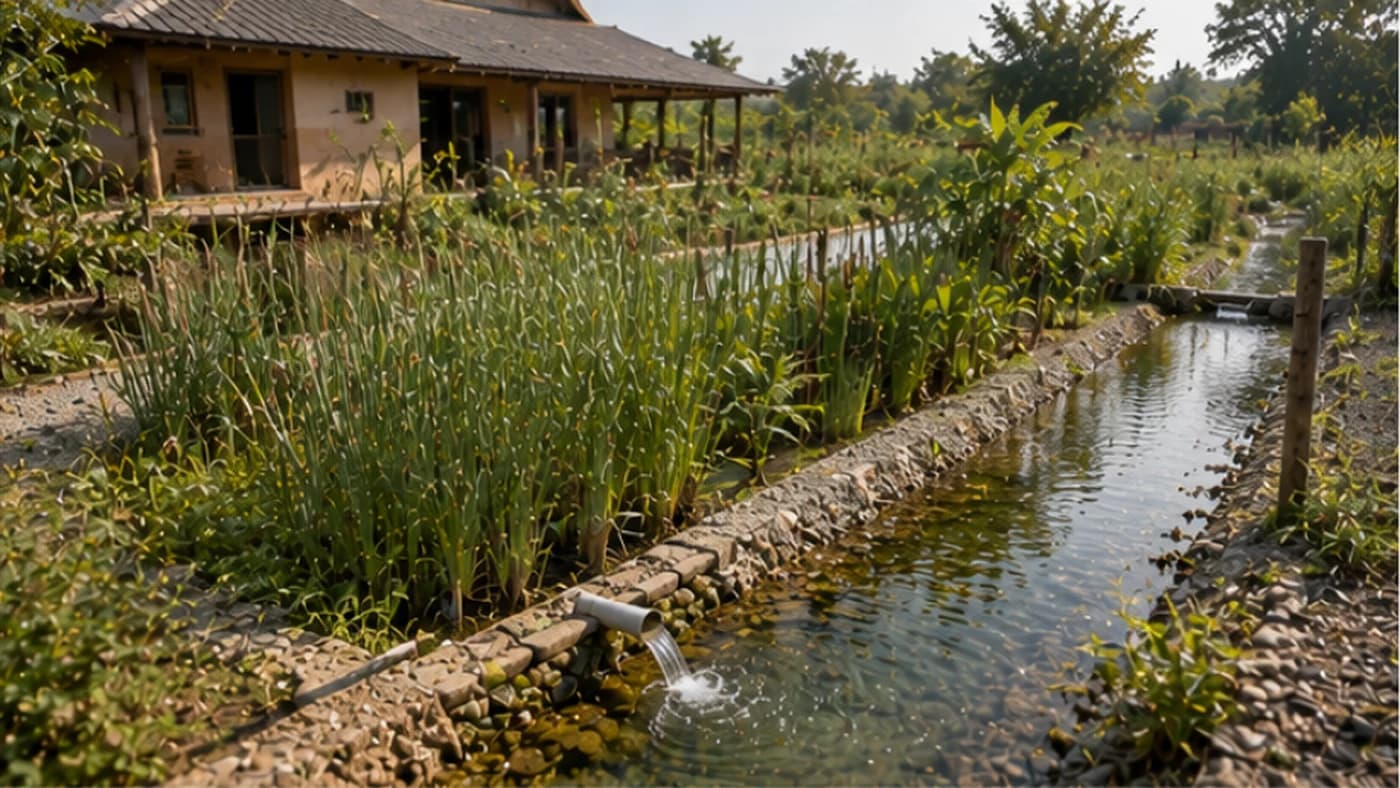
Building a Reed Bed: Natural Greywater Filtration for Your Home
A constructed reed bed cleans sink, shower and laundry water using nothing but gravel, plant roots and bacteria — and gets more effective every year instead of needing a new filter cartridge.
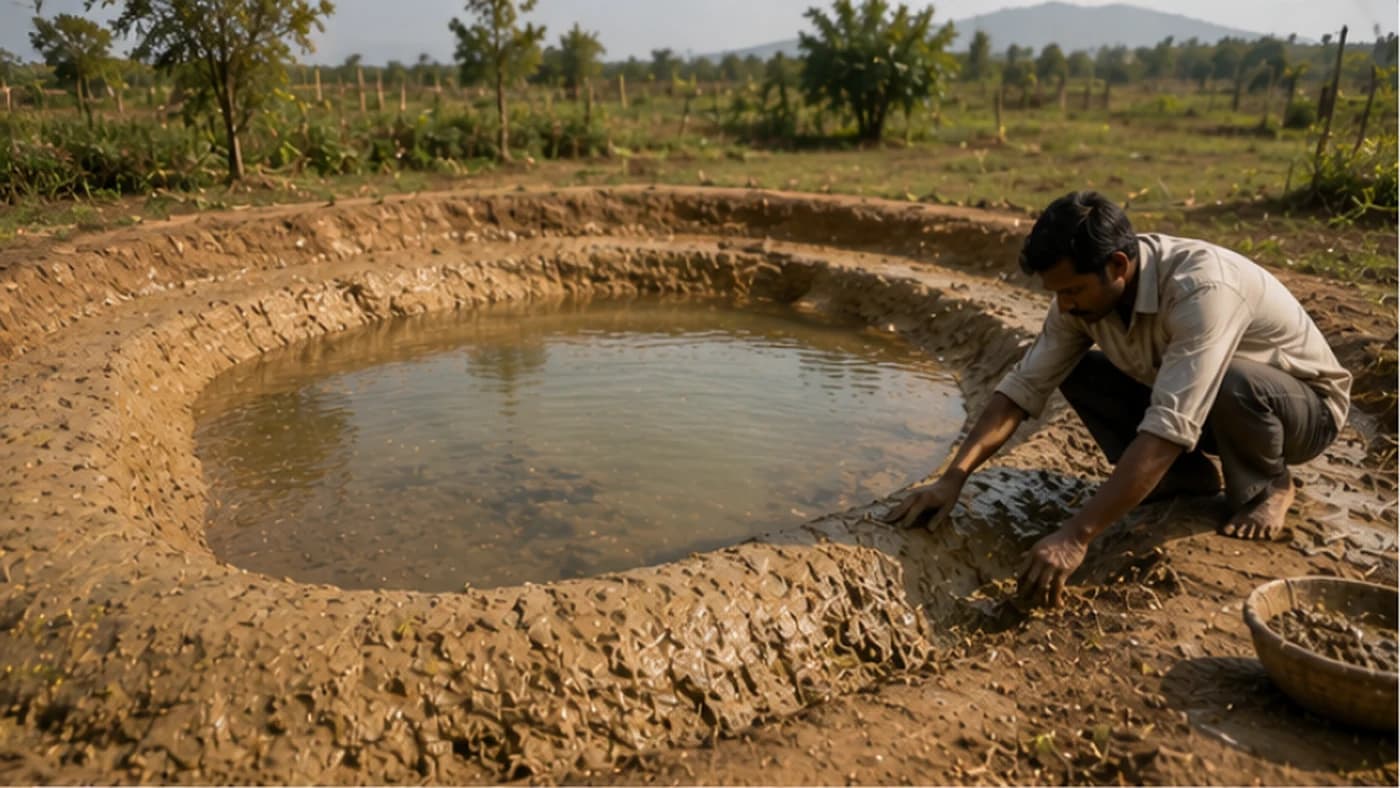
How to Build a Natural Clay Pond That Seals Itself for Decades
Plastic pond liners crack, leach and land in the bin within a couple of decades. A pond sealed with bentonite clay — mined right here in Gujarat and Rajasthan — heals its own cracks and lasts for generations.
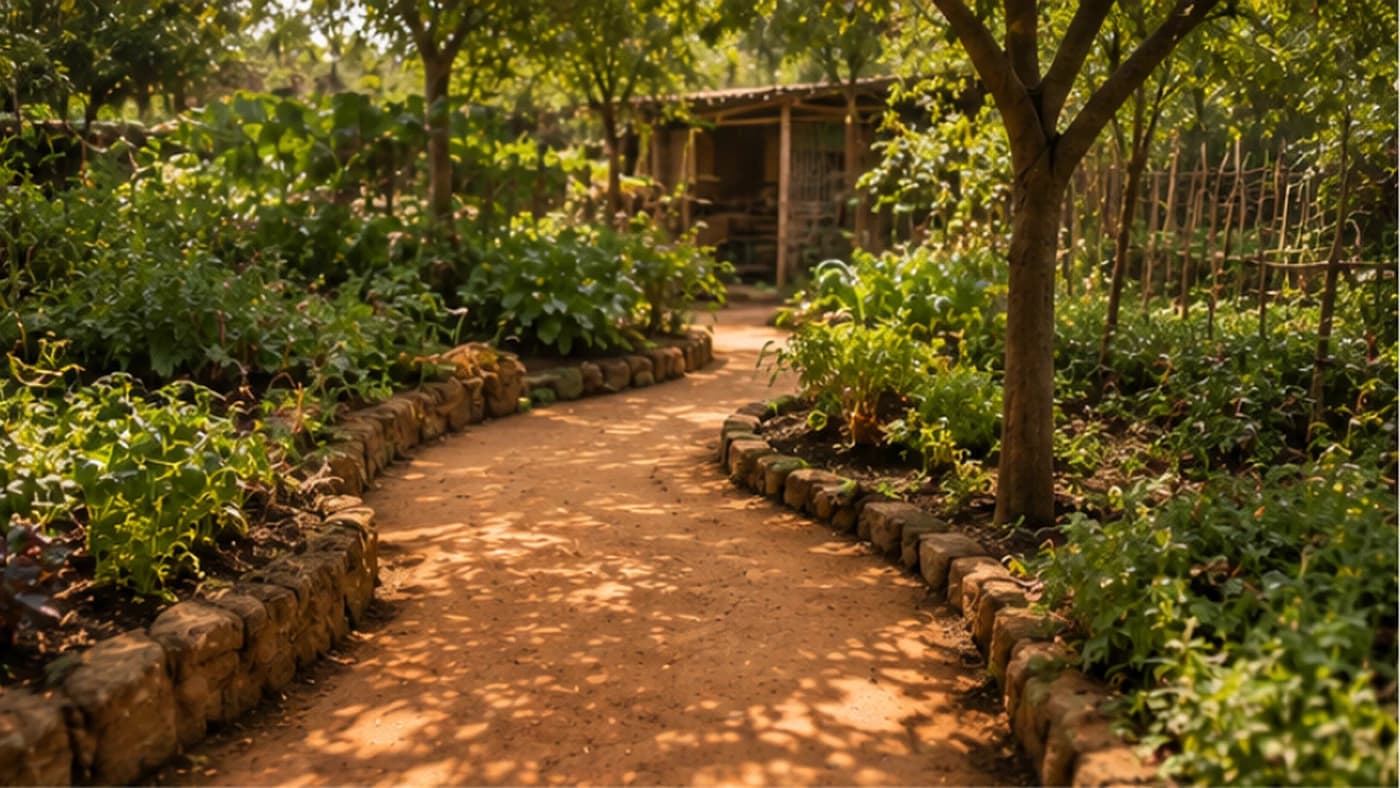
DIY Cob Garden Paths: Free Walkways From the Soil Under Your Feet
Concrete costs money and a huge carbon footprint. Cob — clay-rich subsoil, sand and straw — builds a durable, walkable garden path for almost nothing, using the very soil you dug out for a pond or pit.