

How to Build a Natural Clay Pond That Seals Itself for Decades
Plastic pond liners crack, leach and land in the bin within a couple of decades. A pond sealed with bentonite clay — mined right here in Gujarat and Rajasthan — heals its own cracks and lasts for generations.
Quick answer
A clay-sealed pond costs more effort up front than unrolling a plastic liner, but it repays that effort many times over: test your soil honestly, use the right bentonite in the right amount, compact it thoroughly, keep the banks gentle, and protect the seal from drying out or from heavy livestock traffic. What you get is a pond that heals its own small cracks, supports a real aquatic ecosystem, and can outlast the farmer who built it.
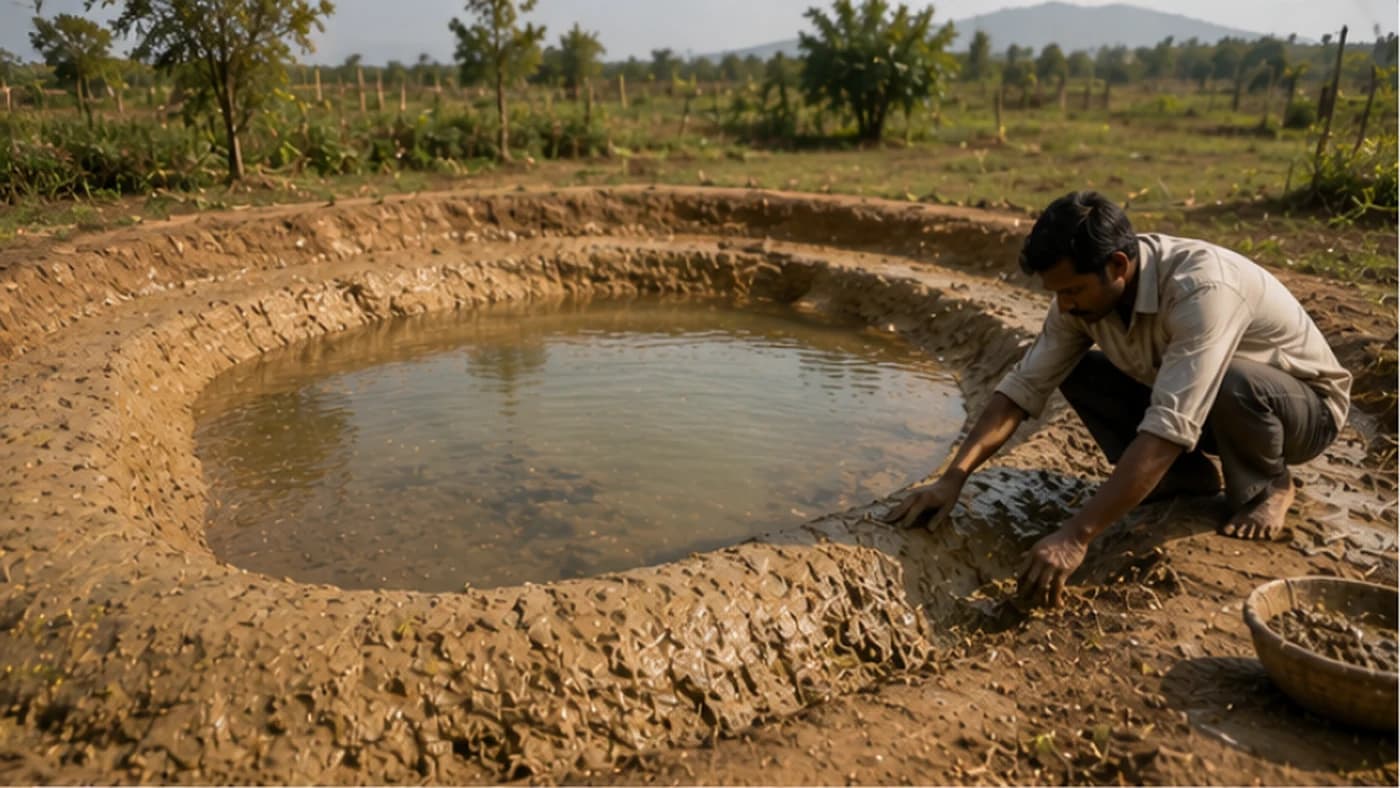
A plastic pond liner is, in a sense, a ticking clock — sunlight, shifting soil and even a determined animal will eventually crack it, and once it does, the water is gone. A pond sealed with clay works differently: it is a living, self-healing seal that lets plants root directly into the pond bed and simply gets more stable with age. Farmers and pastoralists have relied on this idea for centuries, long before plastic existed, and India happens to sit on some of the best clay deposits in the world for exactly this purpose — sodium bentonite is mined in large quantities in Gujarat (Kutch/Bhuj) and Rajasthan (Barmer), so for many Indian farms this is a genuinely local material, not an imported one.
Why clay outperforms a plastic liner
A synthetic liner is a dead barrier: it isolates the water from the surrounding soil, creates a stagnant environment with little biology, and starts degrading under UV light and heat from the day it's unrolled. A clay-sealed pond does the opposite — sodium bentonite is a natural volcanic clay that swells to many times its dry volume when wet, so if a small crack forms or a root pushes through, the surrounding clay hydrates and swells to fill the gap on its own. Because there's no plastic floor, aquatic plants can root directly into the pond bed, building the kind of living, self-filtering ecosystem that supports fish, frogs and useful insects — something a plastic liner actively prevents.
The science: why sodium bentonite seals so well
Sodium bentonite is made of microscopic, plate-like particles that pull in water molecules and push apart as they absorb them, forming a thick, gelatinous barrier that water physically cannot move through. When you mix this clay into your native soil and compact it firmly, the expanding particles are trapped by the surrounding earth, and the pressure this creates forces the clay into every tiny pore and crack in the soil — a far more durable seal than simply spreading loose mud.
Make sure you're using sodium bentonite specifically, not calcium bentonite (used for wine clarifying or cosmetics), since calcium bentonite has a much lower swelling rate and won't seal a pond reliably.
Testing your soil before you dig
Not every soil needs added clay — some sites already have enough native clay to seal well with compaction alone. Two simple field tests tell you where you stand. For the jar test, fill a clean glass jar about one-third with soil from the depth your pond bottom will reach, top it up with water and a pinch of salt, shake well, and let it settle for 24 hours: you'll see sand at the bottom, silt in the middle, and clay on top. If the clay layer is under about 20% of the total, you'll need to add bentonite.
For the ribbon test, take a handful of moist soil and squeeze it into a ball, then try to squeeze it out between your thumb and forefinger into a flat ribbon. If it crumbles, you have too much sand; if it holds a ribbon two inches or longer, you have good native clay content. Soil with roughly 30% or more native clay may only need heavy compaction, while sandy soil will need a proper bentonite application.
Two ways to apply the clay
The mixed-in method is the most reliable for new construction: after excavating the pond to shape, spread dry bentonite powder evenly over the surface, then till it into the top 10–15 cm of soil so the clay is fully trapped within the structure of the basin, lightly hydrate, and compact heavily. This uses less material because the clay reinforces the soil itself rather than sitting as a separate layer.
The blanket method suits rocky or very porous ground where mixing isn't practical: spread a pure layer of bentonite roughly 1–1.5 cm thick over the excavated surface, then cover it immediately with 10–15 cm of clean, rock-free soil to protect it from erosion and hoof traffic while it hydrates. It uses more material but gives more certainty on difficult ground. A sprinkle method — broadcasting granular bentonite directly onto standing water over a suspected leak — exists as a last-resort patch for an already-filled pond, but it's a temporary fix rather than a permanent one, since you can't compact clay applied this way.
Compaction is the real secret
You can use the best bentonite available, but if you don't compact it properly, water will still find a way through. Compaction removes air pockets and forces the clay to work as an actual seal rather than just loose mud. A sheepsfoot roller does this best; for a smaller farm pond, the tires of a heavy tractor or a vibratory plate compactor across the whole bottom and sides, four to six passes minimum, will do the job.
Moisture matters just as much as pressure. Use the ball test: squeeze a handful of the mixed soil — if it holds together without leaving mud on your hands, the moisture is right; if it crumbles, mist it lightly with water, and if it's sticky, let it dry out a little before compacting.
What you gain from a clay seal
A clay pond is an investment measured in decades, not seasons. Because it's self-healing, minor ground movement or a small puncture doesn't mean a failed pond — the surrounding clay simply hydrates and swells to close the gap. Because clay is a mineral rather than a chemical compound, it doesn't rot or break down under sunlight, so a well-built clay pond can hold water for a century or more, as many traditional agricultural ponds across India still do. Plants can root straight into the bed, supporting fish and a genuine aquatic ecosystem, and there's no risk of the chemical leaching that plastic liners are prone to over time — safe for livestock, wildlife and people alike. On larger ponds, bentonite is also simply cheaper in bulk than a good synthetic liner, since liner cost rises sharply with size while bentonite is a bulk commodity.
Common mistakes
The most frequent failure is skimping on material — using far less bentonite per square metre than your soil test calls for, which leaves you with a leaky basin rather than a sealed one. Always follow application rates based on your actual soil test, not a guess. Leaving roots, sticks or large stones in the pond bed is another common error, since decaying organic matter leaves hollow channels that water will exploit over time.
Banks that are too steep are a third mistake: wet, compacted clay is heavy and slippery, so banks steeper than roughly a 3:1 slope (three units of horizontal distance for every one unit of drop) tend to slump over time, exposing the seal above. Finally, once a clay pond is filled, keep it filled — letting a bentonite seal dry out completely can cause deep cracking, and while refilling often re-seals it, severe drying can damage the compacted layer permanently. Where cattle, buffalo or heavy livestock use the pond, protect the seal in high-traffic zones with a layer of gravel or crushed stone, since hooves can wear through a thin clay layer over time.
When a clay pond isn't the right choice
A high seasonal water table is a genuine limitation: upward pressure from groundwater can lift or bubble a clay seal, so in these conditions you need extra overburden soil or a different engineering approach. Bentonite also needs reasonably fresh water to hydrate and swell properly, so it performs poorly with highly saline water or water very high in dissolved calcium — a real constraint near coastal or heavily mineralised groundwater. And a clay pond of any real size is not a shovel-and-bucket project — it genuinely needs a tractor, a tiller and a heavy roller, so without access to that machinery, proper compaction over a large area is difficult to achieve by hand.
Practical tips for success
Order 10–15% more bentonite than your calculations suggest — you will almost always find a soft, sandy patch that needs extra attention. Protect the inlet point where water enters the pond with a flat stone or a bed of crushed rock, since fast-moving inflow water can erode the clay seal right where it enters. Get native water plants established early once the pond is filled — species with matted root systems help stabilise the banks and compete with algae for nutrients. Fill the pond slowly rather than blasting it with a high-pressure pump, which can wash away the loose soil protecting your bentonite before it has time to hydrate and lock in place. And keep a simple water-level marker for the first season: some initial drop is normal as the soil fully saturates, but a continued drop of more than an inch (2–3 cm) a day, beyond what evaporation explains, usually means a spot needs a bit more clay.
A worked example
Say you have flat land with silty-sandy soil and want to build a pond of about 1,000 square metres for irrigation and as a water reserve. After soil testing shows the native clay content is too low to seal on its own, you'd calculate the bentonite needed at the recommended rate, excavate the basin with gentle banks no steeper than 3:1, till the bentonite into the top layer using the mixed-in method, compact thoroughly with a tractor or roller at the right moisture, then fill slowly while protecting the inlet and establishing native marginal plants along the banks. The result is a self-healing, biologically alive reservoir that can serve your farm for generations, at a fraction of the ongoing cost of a synthetic liner of the same size.
Frequently asked
Where can Indian farmers source sodium bentonite for a pond?+
India has major sodium bentonite deposits in Gujarat (Kutch/Bhuj) and Rajasthan (Barmer), so for many farms it's a genuinely local, bulk-available material rather than an imported one — check with regional mineral suppliers.
How do I know if my soil needs added bentonite at all?+
Run a simple jar test: settle a soil sample in water for 24 hours and see how much of the settled layer is clay. If it's below about 20% of the total, or if a hand-rolled ribbon of moist soil crumbles rather than holding together, you'll need to add bentonite.
What's the single biggest reason clay ponds fail?+
Poor compaction. Even good-quality bentonite won't seal a pond if it isn't compacted heavily enough — aim for multiple passes with a roller or heavy tractor tyres across the entire bottom and sides.
How steep can the pond banks be?+
No steeper than roughly a 3:1 slope (three units of horizontal run for every one unit of drop). Steeper banks cause the wet, heavy clay to slump over time, exposing the seal.
Can livestock safely drink from and stand in a clay pond?+
Yes — a clay pond is chemical-free and safe for livestock and wildlife. In high-traffic areas where cattle or buffalo stand regularly, protect the seal with a layer of gravel or crushed stone so hooves don't wear through the clay over time.
Where to go next
Want this as daily tasks for your farm?
Khetiyaar turns guides like this into a day-by-day plan — in your language, free to start.

Related guides
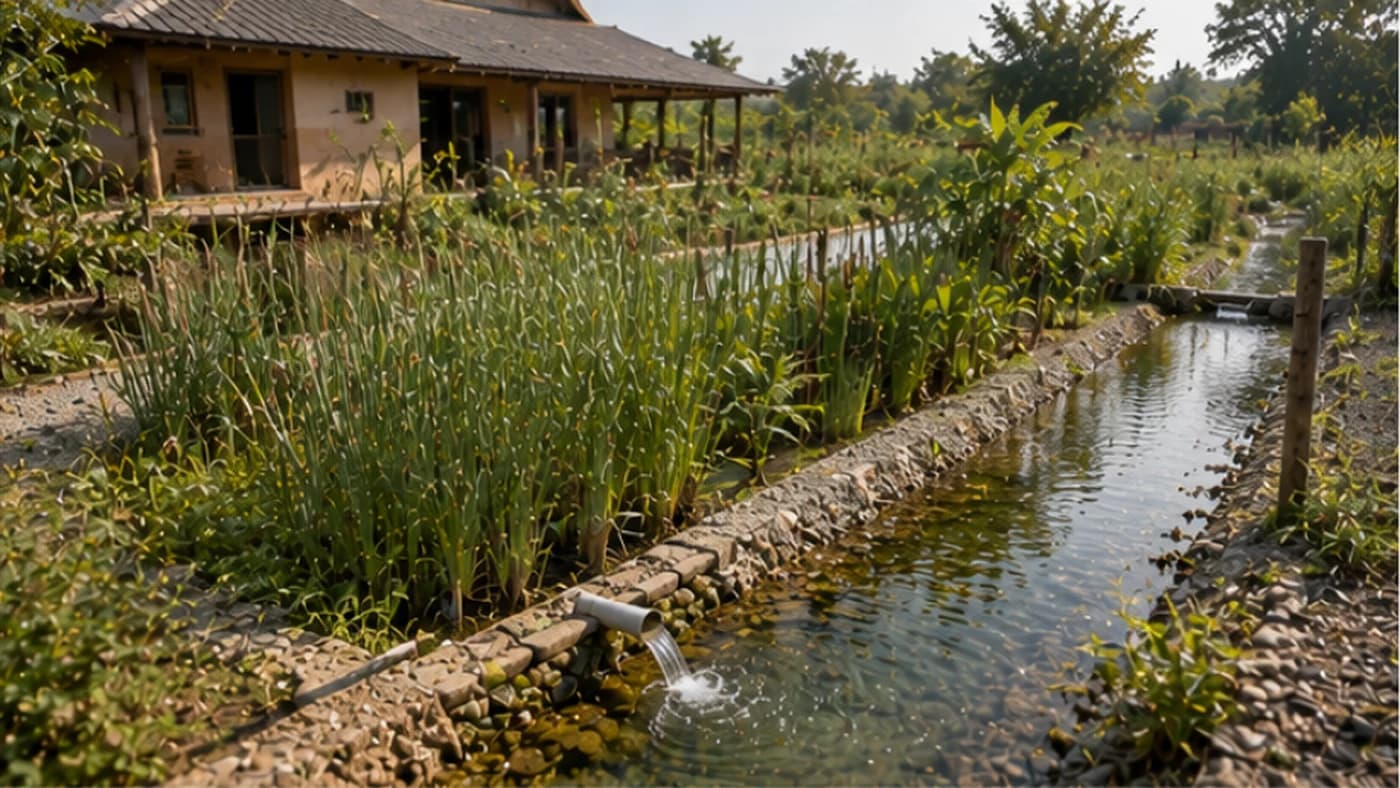
Building a Reed Bed: Natural Greywater Filtration for Your Home
A constructed reed bed cleans sink, shower and laundry water using nothing but gravel, plant roots and bacteria — and gets more effective every year instead of needing a new filter cartridge.
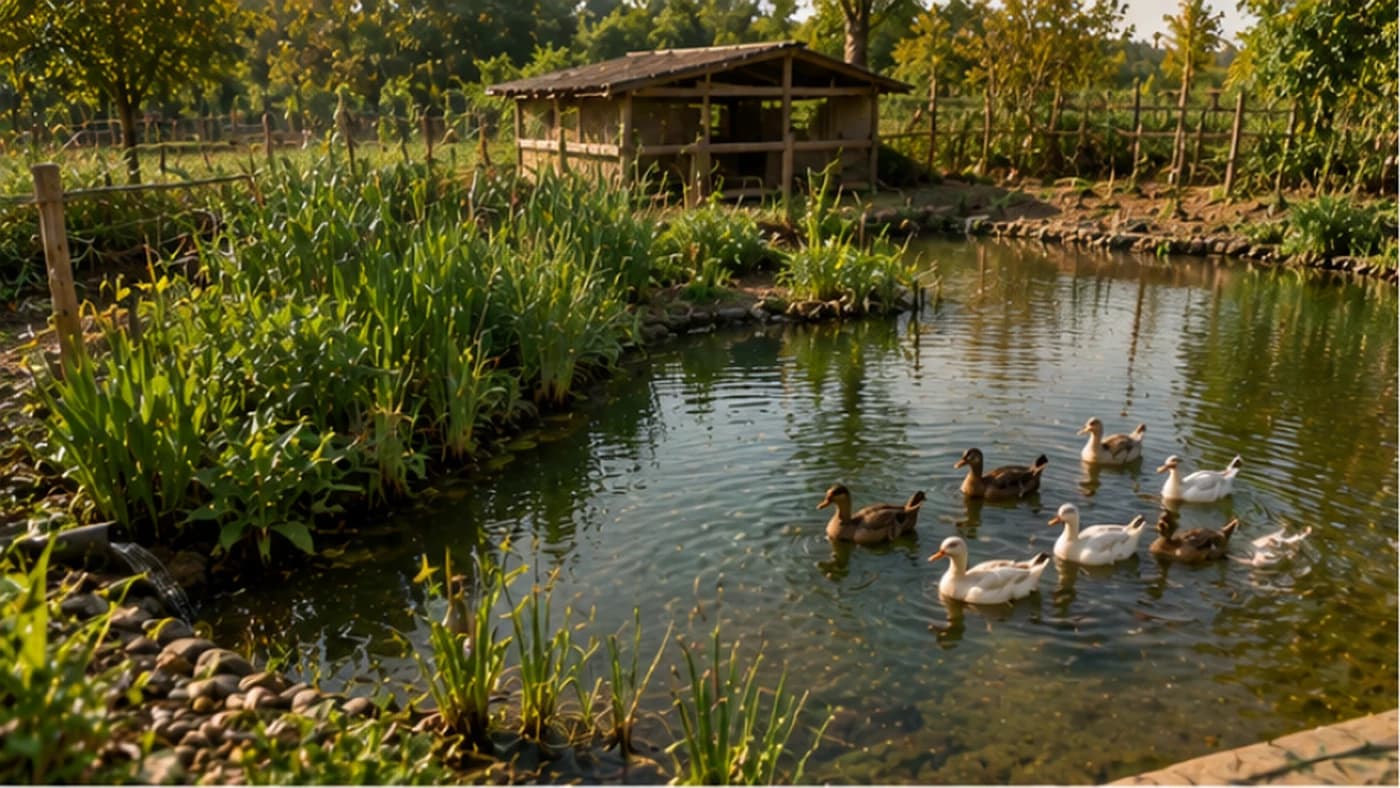
Building a Biofilter for Your Duck Pond
Ducks are messy by nature, but scrubbing a slimy tub every morning shouldn't be the price of keeping them. A gravel-and-plant biofilter turns duck waste into fertiliser and keeps the water clear on its own.
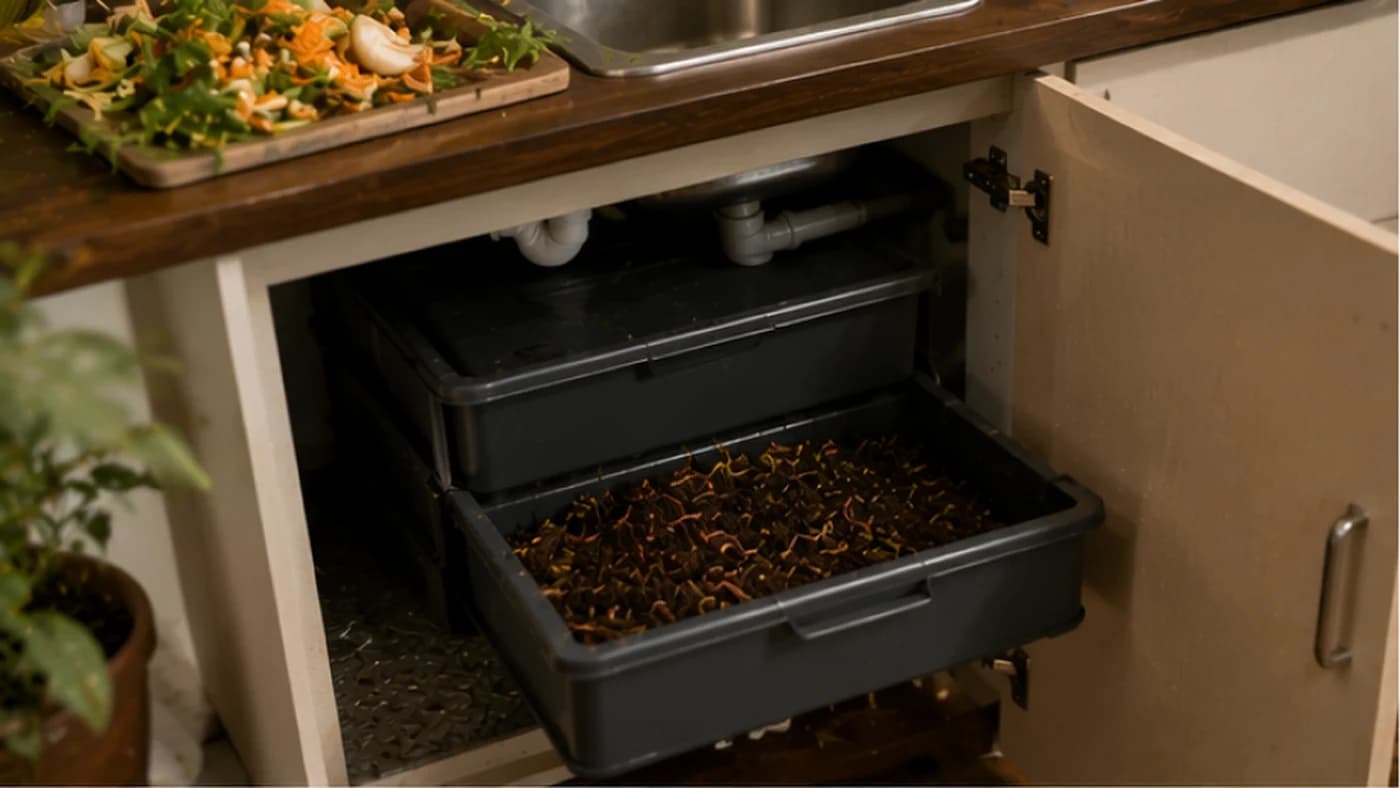
DIY Under-Sink Worm Composter: Turn Kitchen Wastewater Into Fertiliser
Instead of sending fats, food particles and nutrients straight to the drain, an under-sink worm filter turns your daily dishwater into a steady drip of liquid fertiliser for the garden.