

Building a Reed Bed: Natural Greywater Filtration for Your Home
A constructed reed bed cleans sink, shower and laundry water using nothing but gravel, plant roots and bacteria — and gets more effective every year instead of needing a new filter cartridge.
Quick answer
A reed bed trades a subscription to electricity and filter cartridges for a bit of gravel, the right plants, and a season's patience. Size it correctly for your household, pre-filter fats and solids before they reach the gravel, choose native wetland plants, and the system will keep improving for twenty years or more — turning water you'd otherwise lose down a drain into a steady, low-cost source for your trees and beds.
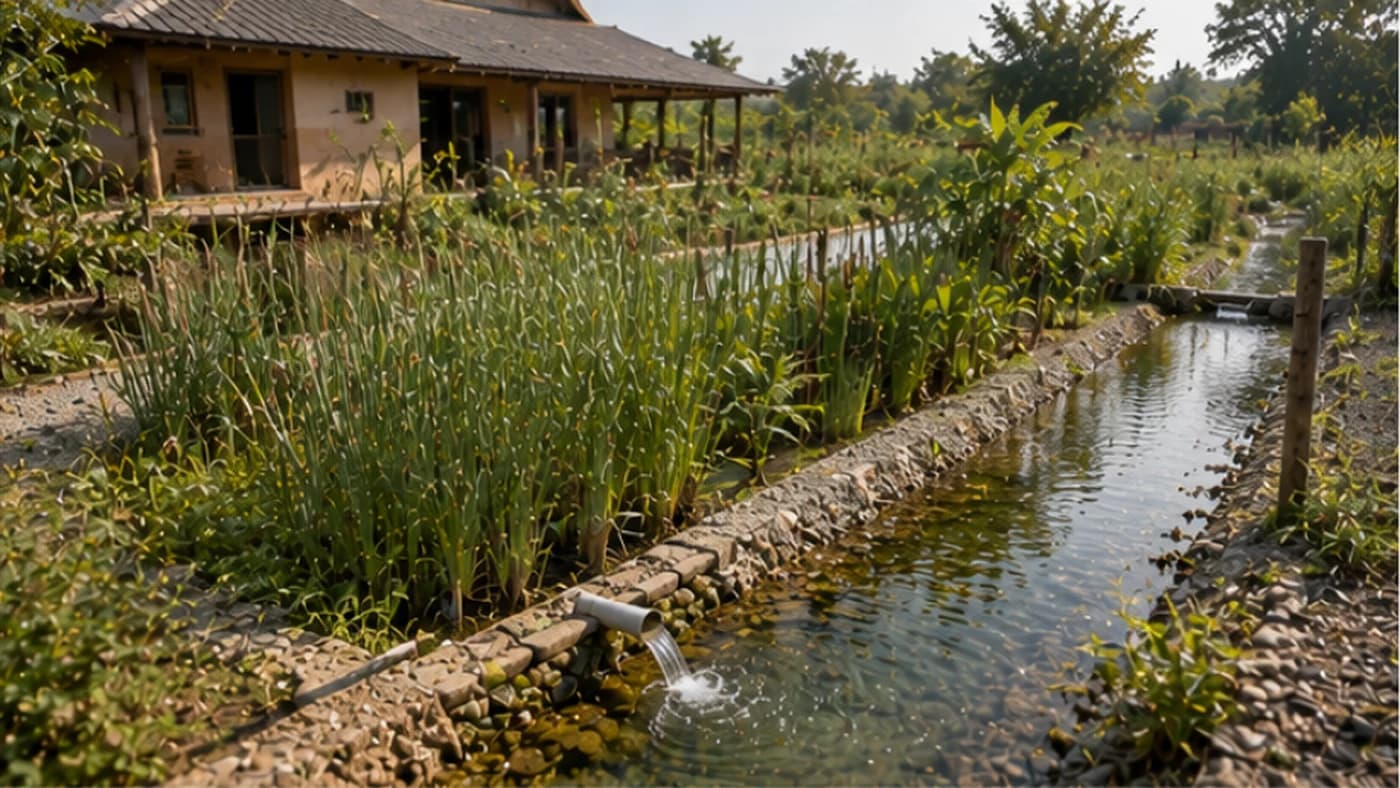
A mechanical filter is a static box that needs constant cleaning and electricity. A reed bed is a living ecosystem that gets more efficient with time, using specialised plants to consume the very nutrients that would otherwise cause pollution or algae. For water-stressed Indian homes and farms, this isn't a novelty — it's one of the most reliable ways to reuse sink, shower and laundry water instead of losing it to a drain or septic tank.
What a reed bed actually is
A reed bed (or constructed wetland) treats greywater — water from sinks, showers and laundry — by running it through a lined, gravel-filled basin planted with reeds and other wetland plants. Greywater carries organic matter, soap residue and nutrients that would pollute a stream if dumped directly, but those same 'pollutants' are food for the right plants and bacteria.
Instead of sending water once through the house and down a drain, a reed bed turns it into the lifeblood of a garden feature: water enters the basin, moves through a dense root zone full of microscopic organisms that digest the impurities, and exits clear and largely odourless — ready to feed fruit trees or ornamental ponds.
The biology that does the work
Filtration happens on two levels. Physically, gravel and sand act as a strainer, trapping larger particles. Biologically, the real work happens in the rhizosphere — the zone right around the plant roots. Reed and bulrush roots pump oxygen down into the waterlogged gravel, creating tiny oxygen-rich pockets inside an otherwise oxygen-poor bed.
Different bacteria thrive in each zone: aerobic bacteria in the oxygen pockets break down organic waste fast (measured as BOD, biochemical oxygen demand), while anaerobic bacteria in the oxygen-poor zones convert nitrates back into harmless nitrogen gas. The plants themselves also absorb nitrogen and phosphorus directly into their tissue, and their roots keep the gravel from clogging while giving the bacterial biofilm somewhere to grow.
Vertical flow vs horizontal flow
Vertical flow (VF) beds dose water onto the surface all at once (via a tipping bucket or pump), and it trickles down through sand and gravel before exiting at the bottom. This pulsing action pulls fresh air down with it, so VF beds handle ammonia well and need a smaller footprint — but they need either a pump or a real drop in elevation to work.
Horizontal flow (HF) beds keep water submerged at a constant level below the gravel surface, seeping slowly sideways to the outlet. They're mostly anaerobic, can run entirely on gravity if your land has a slight slope, and are excellent at removing suspended solids. Because the water stays hidden under dry gravel, there's no odour or mosquito risk, making HF beds a good choice close to the house.
Sizing and building the basin
For a family of four, a horizontal greywater-only bed typically needs about 20-25 square metres of surface area; a vertical bed can be smaller, around 10-15 square metres. Dig to a depth of roughly 600-700 mm with about a 1% fall toward the outlet.
Line the basin with a heavy-duty pond liner (1.0 mm EPDM or HDPE), laid over a sand or geotextile underlay so sharp stones in the soil don't puncture it. Fit an inlet pipe that spreads water evenly across the bed's width, and for horizontal beds, an adjustable outlet (a swiveling elbow pipe) so you can control the water level inside the gravel.
Fill with clean, washed gravel: for horizontal beds, use 20-40 mm stone at the inlet and outlet zones (to resist clogging) and 5-10 mm pea gravel through the main body; vertical beds need coarser stone at the bottom, pea gravel above, and a top layer of sharp sand. Plant reeds and other wetland species at roughly 3-4 plants per square metre, ideally in spring so roots establish before winter.
Why it's worth building
Resilience is the biggest benefit — a mechanical filter needs electricity and replacement cartridges; a reed bed runs on sunlight and biology, so it keeps working through a power cut. Running costs are close to zero once established: no UV bulbs, no chemical additives, just a few hours of gardening once or twice a year.
A well-designed bed also becomes a landscape feature that draws dragonflies, frogs and birds, and the nitrate-rich water coming out of a vertical-flow bed makes an excellent liquid fertiliser for non-edible crops, ornamental beds, or a woodlot.
Where reed beds go wrong
Clogging is the number-one killer. Sending fat, oil and grease (FOG) straight into the gravel will eventually seal it like a clogged artery — always install a grease trap or a simple settling tank before the reed bed so heavy solids sink and fats float where you can remove them. Skip this step and even a good bed may need its gravel replaced far sooner than the 20+ years a well pre-filtered bed can last.
Choosing invasive plant species can cause problems for neighbours and the local environment, so prioritise native wetland plants suited to your climate. And remember plants need water: if greywater stops flowing during a long absence or drought, the reeds and their bacterial colony can die off.
Where a reed bed has real limits
In cold climates, biological activity — and nutrient uptake by plants — slows sharply in winter; physical filtration keeps working, but you may need a deeper bed or accept lower treatment quality in cold months (less of a concern across most of India). Space is the other constraint: a tiny urban plot may not have room for a 20-square-metre horizontal bed, in which case a vertical flow system or a compact planter-box wetland is the better option. And heavy metals or harsh chemicals — solvents, oil-based paint, industrial cleaners — will poison the microbes you're relying on, so keep those out of any sink that feeds the system.
Pump filter vs reed bed, side by side
Pump filter: needs constant electricity; weekly or monthly cleaning; lasts 5-10 years before mechanical wear; moderate equipment cost; consistent quality only if well maintained; leaves plastic filter waste.
Reed bed: no power needed (or minimal, for pump dosing); annual harvesting only; lasts 20+ years as biology matures; low material cost, higher labour to build; quality varies a little by season; creates habitat instead of waste.
Practical tips for a healthy bed
Use greywater-safe detergents low in sodium and boron — high salt content builds up in the gravel and stunts plant growth. Fit a simple lint trap on your washing-machine outlet, since synthetic fibres don't break down and are hard to remove from gravel once trapped. In autumn (or your local dry/dormant season), cut reed stalks back to about 10 cm above the gravel and compost the trimmings elsewhere, so dead material doesn't build up and choke water flow.
Scaling up: advanced designs
For the highest water quality, a multi-stage wetland runs a vertical flow bed first (for roughing and nitrification), followed by a horizontal flow bed for denitrification and polishing — clean enough for a decorative pond. In arid regions, a small solar pump can recirculate water through the bed multiple times to boost treatment without needing more land. And a reed bed can feed into a larger design — for example, its outlet running into a dense willow or bamboo planting that turns the last of the nutrients into biomass, so nothing leaves the property as waste.
Frequently asked
How much space does a household reed bed need?+
For a family of four, a horizontal greywater-only bed typically needs about 20-25 square metres; a vertical flow bed can work in as little as 10-15 square metres.
Does a reed bed need electricity?+
A horizontal flow bed can run entirely on gravity if your land has a slight slope. Vertical flow beds usually need a pump (or enough elevation drop) to dose water onto the surface periodically.
What's the biggest mistake people make?+
Sending fat, oil and grease straight into the gravel without a pre-filter or settling tank. This clogs the bed far faster than normal use and shortens the gravel's working life significantly.
How long does a reed bed last?+
With good pre-filtration and maintenance, the gravel and biological system can keep working for 20 years or more — far longer than a mechanical filter's typical 5-10 year lifespan.
Can I use reed bed water on food crops?+
Treated greywater from a well-functioning bed is commonly used on fruit trees, ornamental plants and woodlots. Avoid direct contact with edible parts of vegetables unless your local guidelines specifically permit it, since treatment quality can vary by season and system design.
Where to go next
Want this as daily tasks for your farm?
Khetiyaar turns guides like this into a day-by-day plan — in your language, free to start.

Related guides
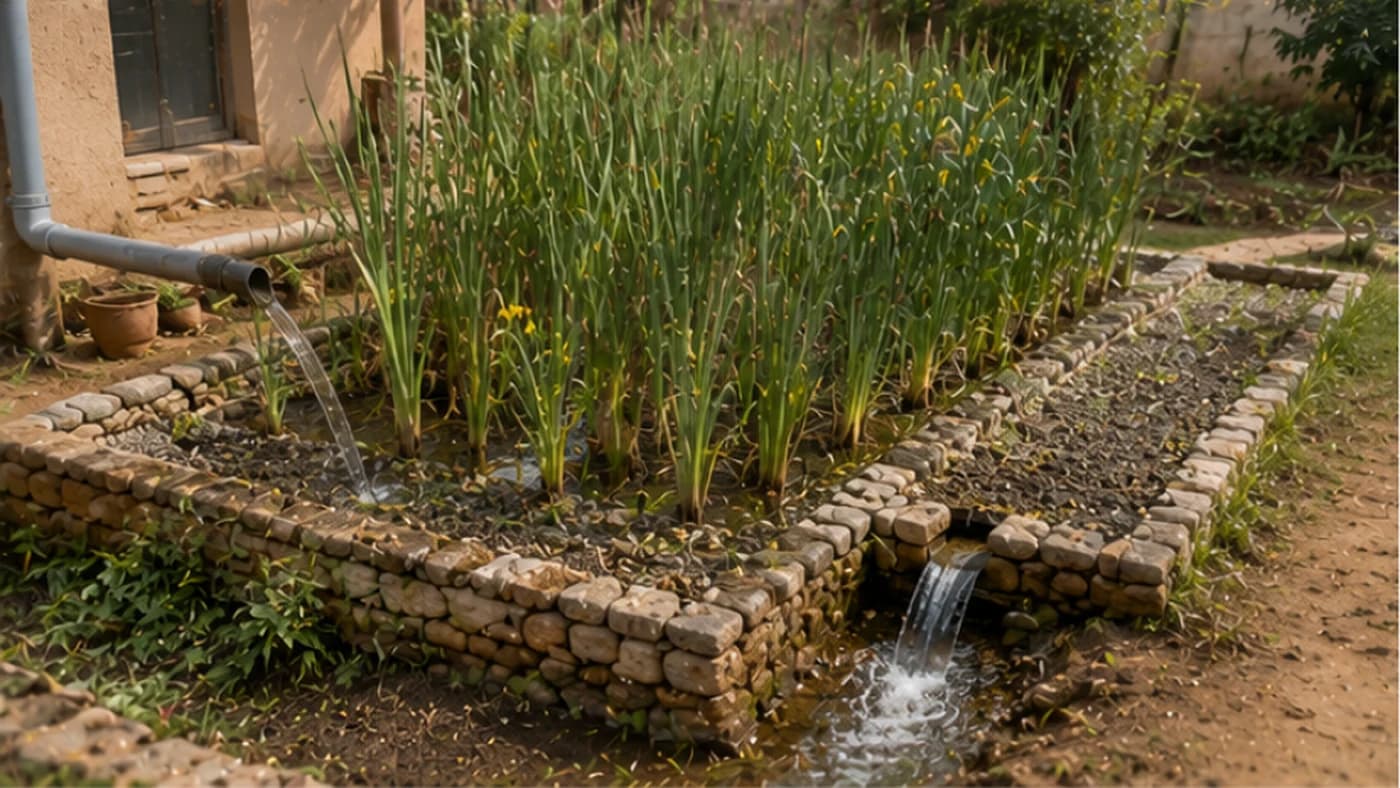
Natural Greywater Filtration: Turn Bathwater and Sink Water Into Irrigation
Instead of letting shower and sink water disappear into a drain, a simple mulch basin or reed bed can filter it naturally and keep your trees green through the dry months.
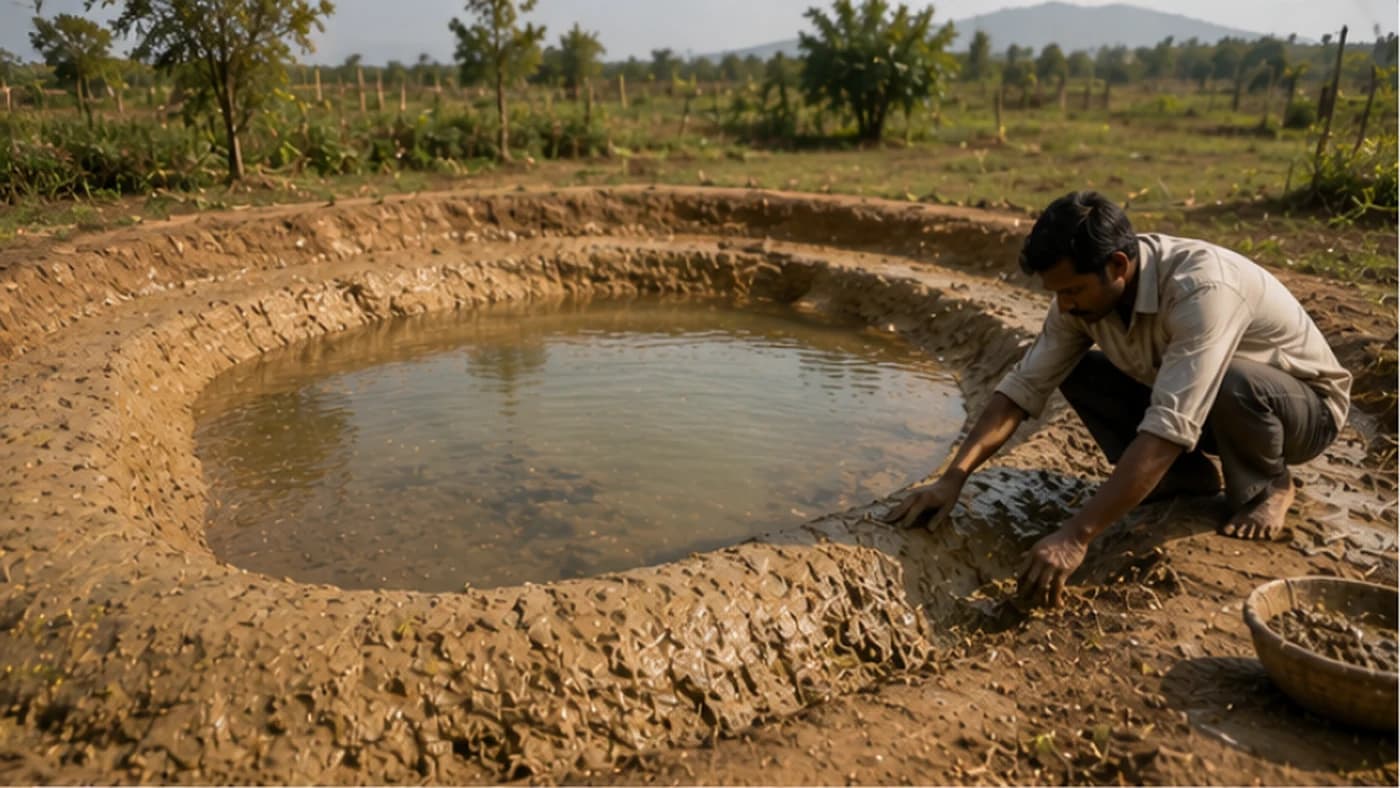
How to Build a Natural Clay Pond That Seals Itself for Decades
Plastic pond liners crack, leach and land in the bin within a couple of decades. A pond sealed with bentonite clay — mined right here in Gujarat and Rajasthan — heals its own cracks and lasts for generations.
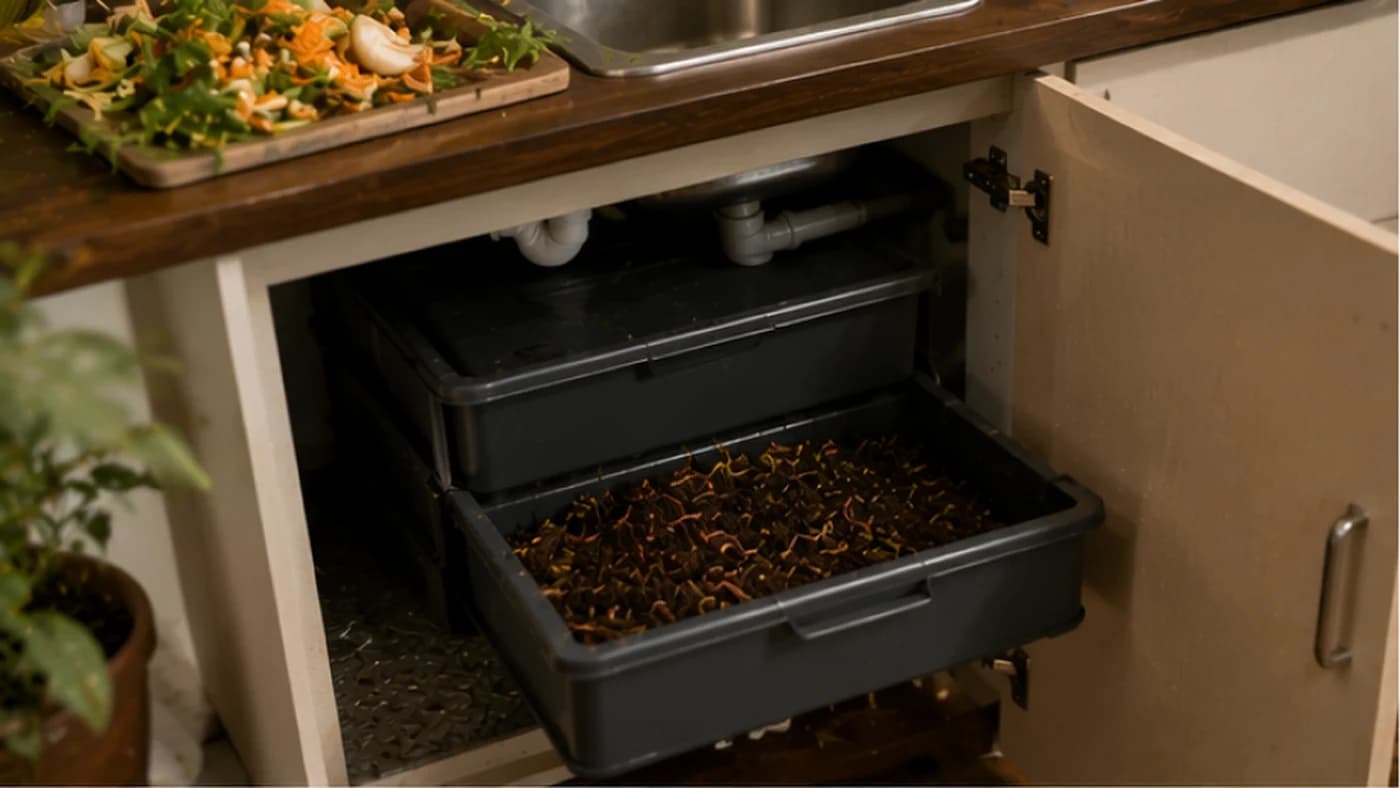
DIY Under-Sink Worm Composter: Turn Kitchen Wastewater Into Fertiliser
Instead of sending fats, food particles and nutrients straight to the drain, an under-sink worm filter turns your daily dishwater into a steady drip of liquid fertiliser for the garden.