

DIY Cob Garden Paths: Free Walkways From the Soil Under Your Feet
Concrete costs money and a huge carbon footprint. Cob — clay-rich subsoil, sand and straw — builds a durable, walkable garden path for almost nothing, using the very soil you dug out for a pond or pit.
Quick answer
A cob path costs a fraction of what poured concrete does, uses the subsoil most people throw away when digging a pond or pit, and can be built entirely by hand with no machinery. Get your clay-to-sand ratio right with a jar test, keep the path dry with a gravel base and a crowned surface, and seal it well — and it will hold up for years for foot traffic, wheelbarrows, and light farm use.
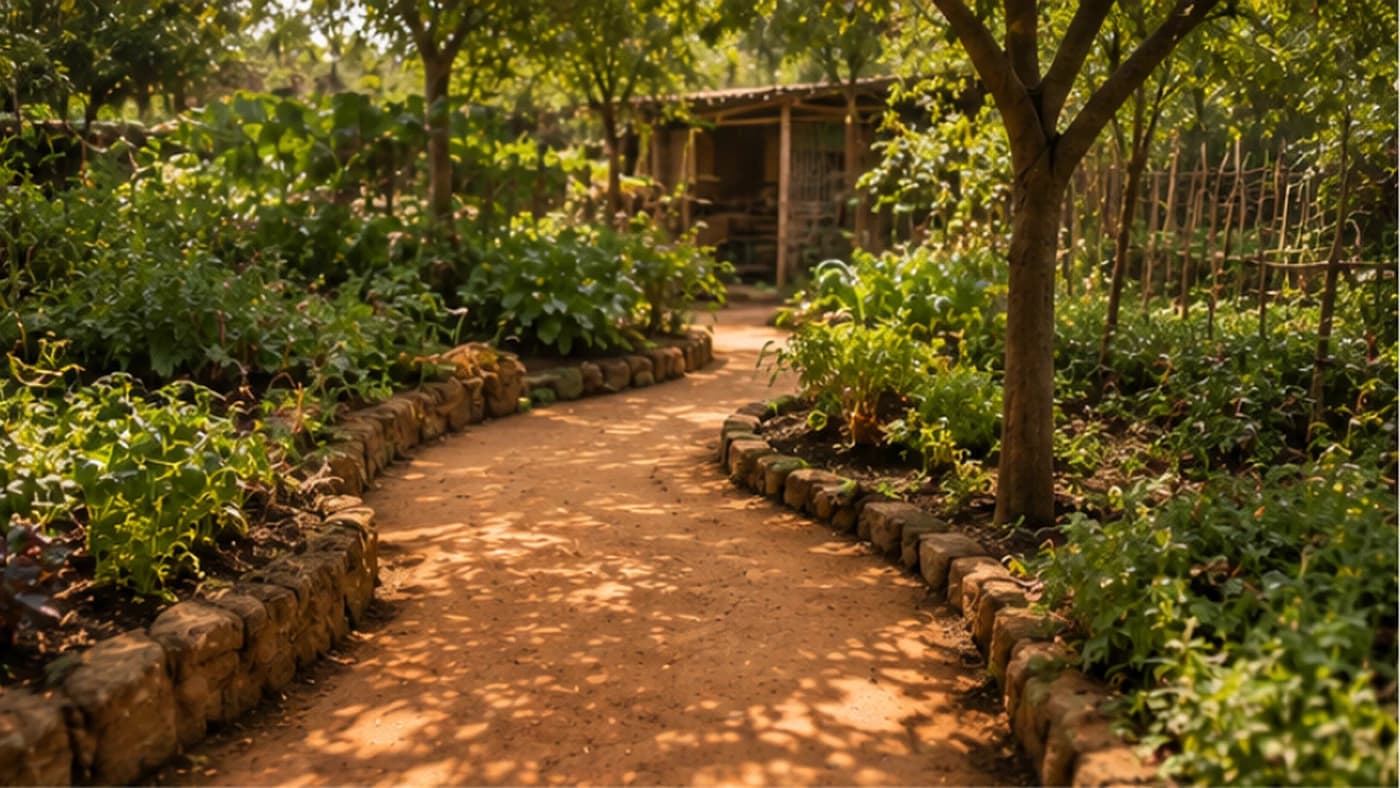
Every time you dig a farm pond, a soak pit, or a foundation trench, you pull up subsoil that most people simply cart away and dump. That same clay-rich soil, mixed with sand and straw, can become cob — an ancient building material used for walls and floors for thousands of years, and just as good for a simple, durable garden path linking your house, cattle shed, and field. It costs little more than your labour, and unlike concrete it has no import cost, no cement-plant carbon footprint, and no need for a mixer truck.
What cob actually is
Cob is a mix of three ingredients: a binder (clay), an aggregate (sand), and a fibre (straw), worked with water into a stiff, mouldable mud that dries into a hard, durable surface. Unlike bricks, it's applied wet and shaped directly by hand — which means you can curve a path around a tree, follow the natural contour of your yard, or set flat stones into it for a mosaic-like walkway.
Test your soil before you start
You want subsoil, not the dark, organic-rich topsoil where crops grow — topsoil will rot and leave air pockets. Do the jar test: fill a glass jar halfway with subsoil, top up with water and a pinch of salt, shake well, and let it settle. Sand and pebbles drop first within seconds, silt settles over the next hour, and clay — the lightest particle — takes the longest, sometimes days, to fully settle on top. A good cob mix is roughly 15–25% clay to 75–85% sand.
For a faster field check, squeeze a damp handful into a ball. If it won't hold together, it's too sandy. If it holds, roll it into a ribbon between your palms — high-clay soil will form a thin ribbon that hangs off your finger without breaking, and you can further test it by bending that ribbon into a ring: fewer cracks means more clay.
Mixing and laying the path
Mix on a tarp: pile your sand and subsoil together, blend the dry materials, then add water sparingly — you want stiff dough, not soup. Roll the tarp over the mix and tread it with bare feet until it's fully homogenous, then work in long-strand straw, which acts like reinforcement bar, giving the dried path tensile strength against cracking.
Excavate a trench 15–20 cm deep along your path line and fill the bottom 10 cm with coarse gravel or crushed stone — this capillary break stops ground moisture from wicking up into your cob. Lay the cob on top, and slightly crown the path (higher in the centre) so rainwater sheds to the sides instead of pooling on the surface.
Finishing for durability
Once the path has dried to a firm, leather-hard state, burnish the surface with a smooth stone to compress it and close the pores. For extra water resistance, apply a few coats of boiled linseed oil (with a little beeswax if you have it) — a natural, breathable sealant. Pressing flat stones into the wet cob in high-traffic spots gives you a harder-wearing surface where the stones take the impact and the cob acts as sculpted mortar around them.
Frequently asked
What is cob, and can I really build a path from my own soil?+
Cob is a mix of clay-rich subsoil, sand and straw. If your subsoil tests at roughly 15–25% clay, you can mix it with sand and straw to build a durable, walkable path at almost no material cost.
How do I know if my soil has enough clay for cob?+
Do a jar test: shake a subsoil sample with water in a glass jar and let it settle in layers — sand at the bottom, then silt, then clay on top. You want roughly 15–25% clay to 75–85% sand.
Will a cob path survive heavy monsoon rain?+
It needs proper drainage to survive prolonged wet seasons: dig a trench, lay a gravel base to prevent moisture wicking up, crown the path so water sheds to the sides, and seal the surface with linseed oil or lime plaster. In areas with very long, continuous heavy rainfall and little dry season, a stone-paved path may hold up better than cob alone.
Can heavy vehicles or tractors drive on a cob path?+
No — cob paths are built for foot traffic, wheelbarrows, and light use. Heavy vehicle traffic will rut and crack the surface; for a driveway, use stabilised gravel or a different base material.
How do I make the path more water-resistant?+
Add roughly 5–10% hydrated lime (not agricultural lime) to the cob mix for extra water resistance, and finish the cured surface with linseed oil or a lime-wash coat.
Where to go next
Want this as daily tasks for your farm?
Khetiyaar turns guides like this into a day-by-day plan — in your language, free to start.

Related guides
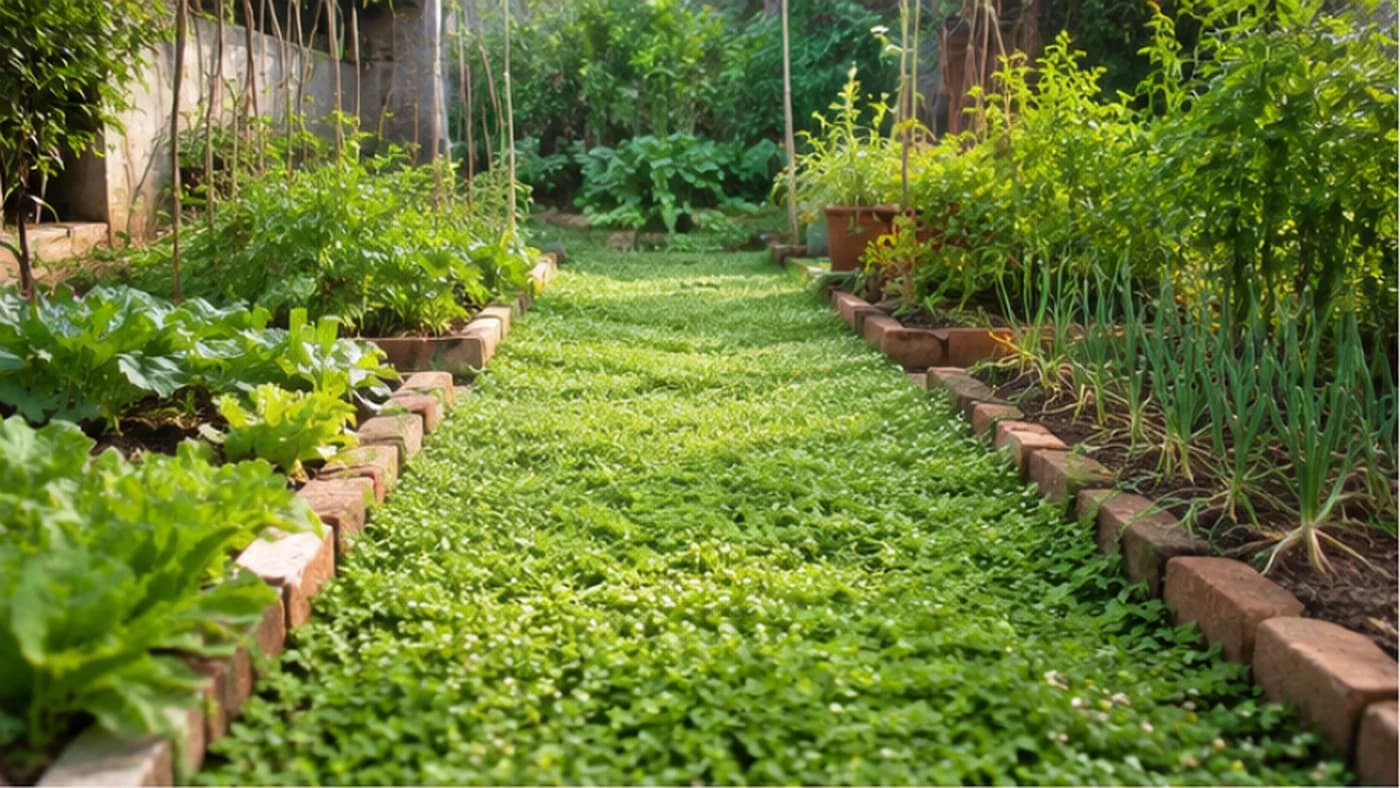
Living Garden Paths: Groundcover Walkways That Feed Your Beds Instead of Baking Them
Bare dirt or concrete paths turn into heat islands that bake nearby roots. A living groundcover path — clover, dwarf peanut, or creeping herbs — stays far cooler, feeds the soil with nitrogen, and heals itself when you walk on it.
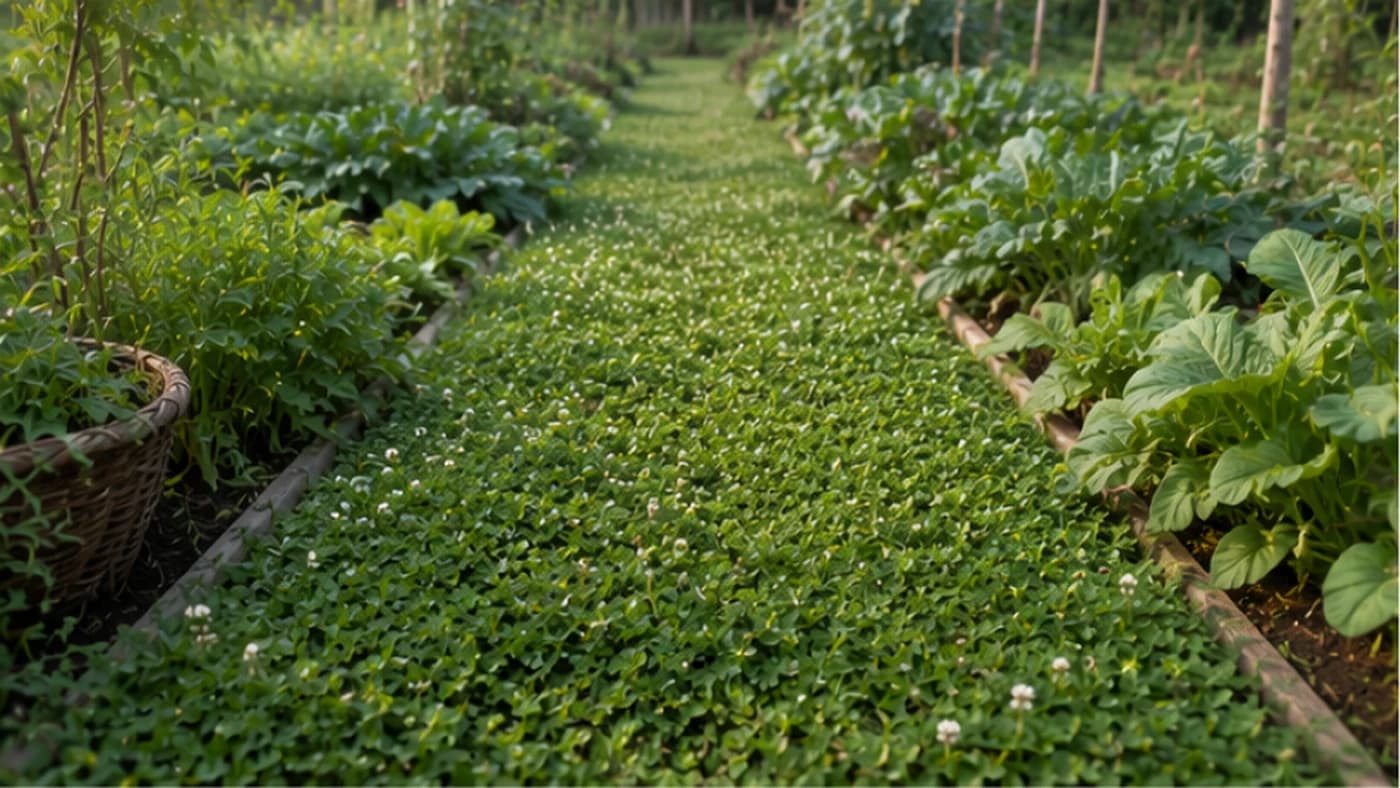
Living Mulch for Garden Paths: Grow Your Walkways Instead of Paving Them
Bare soil between your beds is an open invitation to weeds — you can spend 40 hours a year pulling them, or 30 minutes seeding a living mulch that builds soil and feeds pollinators while you watch from the porch.
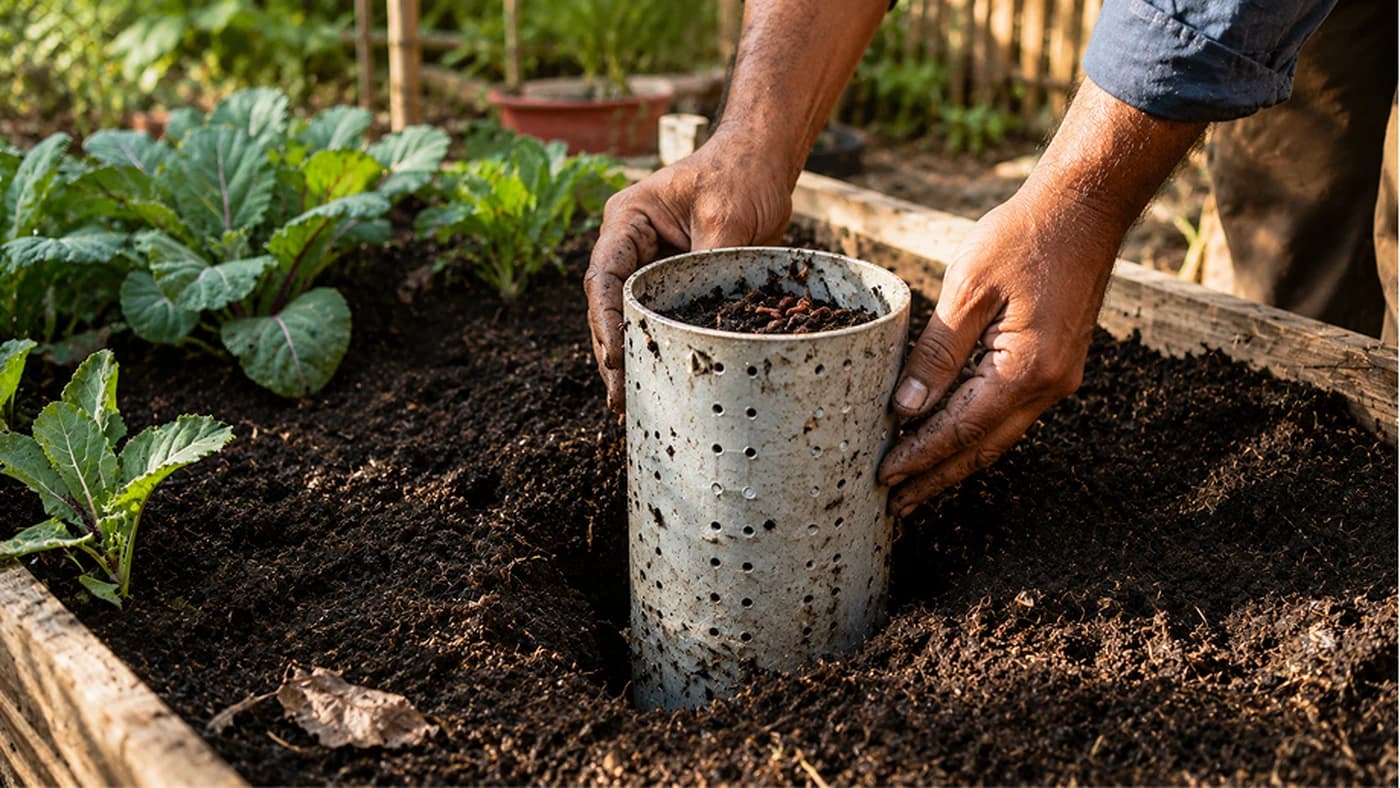
How to Build a Garden Worm Tower for Free, In-Bed Composting
Stop hauling kitchen scraps to a distant bin and hauling compost back months later. A buried worm tower lets worms process waste right where your plants are growing.