

The Nakshatra Sowing Calendar, Without the Astrology
The nakshatra system is a solar calendar, which is why it tracks the seasons well. It has also drifted about three weeks from the seasons it was calibrated against — and you can verify that yourself.
Quick answer
The nakshatra system divides the sky into 27 segments that the sun passes through over the year, about thirteen or fourteen days each. Because it follows the sun, it tracks the seasons genuinely well and works as an agricultural calendar. But it is sidereal, so precession has shifted it roughly three weeks later than the seasons it was originally calibrated against.
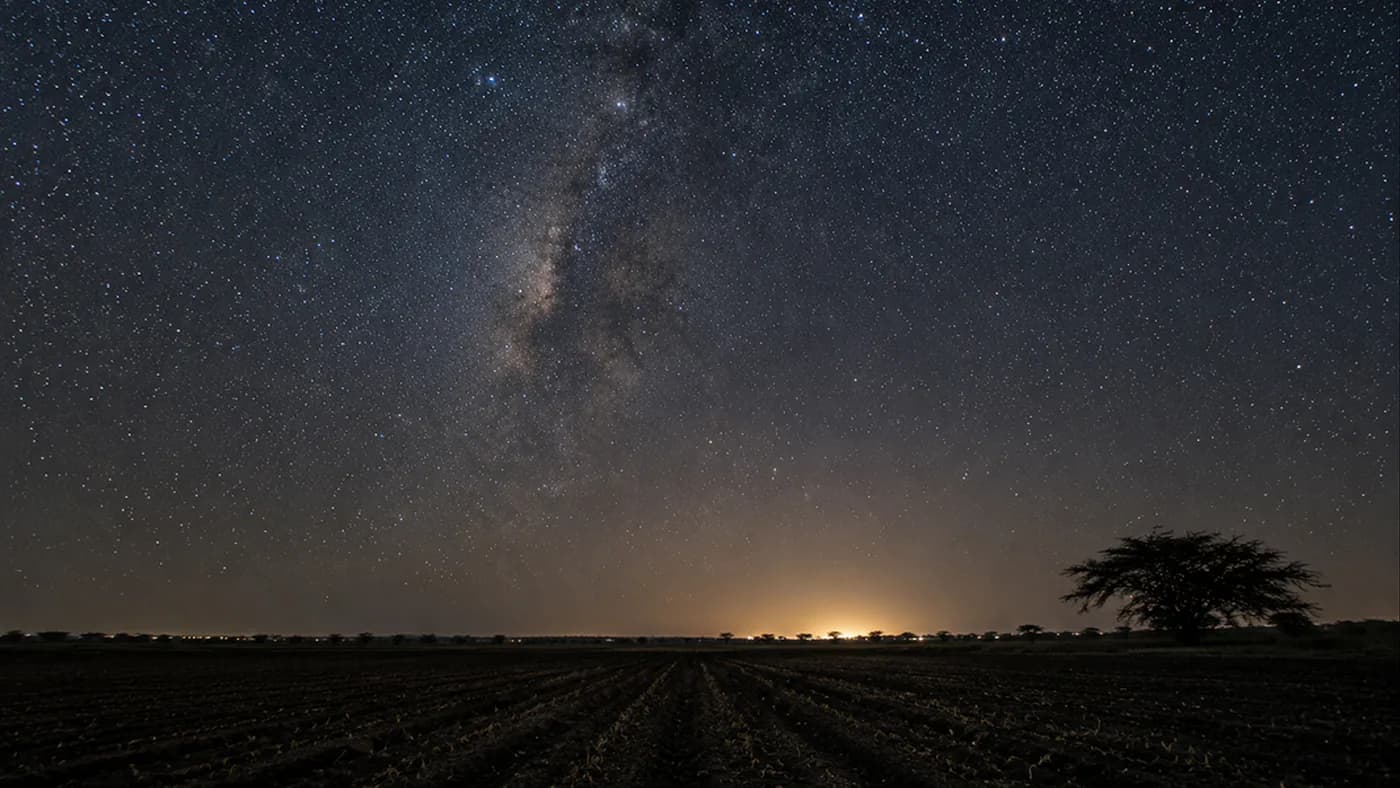
Across much of India, when to sow is answered by a nakshatra rather than a date. That practice gets treated as astrology and dismissed, or treated as astrology and defended, and both miss what it actually is. Strip away the predictive claims and what remains is a solar calendar — a genuinely sound way of dividing the agricultural year, built by people who needed to know where the season was without a printed almanac. It also has a specific, measurable problem that almost nobody mentions, and that problem is the most useful thing in this article.
What the system actually is
The ecliptic — the path the sun appears to travel through the sky over a year — is divided into twenty-seven segments, each named after the star group that occupies it. The sun crosses one segment in roughly thirteen or fourteen days, so the twenty-seven of them cover the year.
That is the whole mechanism, and it is worth stating plainly because it is much less mysterious than it is usually made to sound. Saying the sun is in a particular nakshatra is a way of saying which fortnight of the solar year it is. It is a calendar, expressed in stars instead of numbers.
This is why the agricultural use works. Seasons are driven by the Earth's position relative to the sun, and a calendar that tracks the sun therefore tracks the seasons. When a tradition says a certain operation belongs to a certain nakshatra, it is saying it belongs to a certain fortnight of the season — which is exactly the kind of knowledge a farming calendar should carry.
Why it was a good system
Before printed calendars, a farmer needed a way to know where in the year they were that did not depend on paper, literacy or a central authority. The sky provides one, it is visible to everyone, and it cannot be lost. Dividing it into named fortnights and attaching operations to each is a genuinely elegant solution.
It also carried more than dates. The nakshatras associated with the monsoon months — the ones farmers still refer to as the rain nakshatras — encode a rough expectation of when rain should arrive, when it should peak and when it should end. That is a seasonal climatology, learned by observation over a very long time and compressed into names people could remember.
None of that requires astrology to work, and this is the distinction worth holding onto. The calendar function rests on the sun's position, which is physics. The predictive and auspicious claims layered on top rest on nothing measurable. You can keep the first and set aside the second without losing anything useful.
The drift, and how to check it yourself
Here is the problem nobody mentions. The nakshatra system is sidereal — it is fixed to the stars. The seasons follow the tropical year, which is fixed to the equinoxes. Because the Earth's axis slowly wobbles, in a motion called precession, those two frames separate by roughly one day every seventy-one years.
Over centuries that adds up. And you can verify it without taking anyone's word for it. Makar Sankranti marks the sun entering Makar, and it was originally aligned with the winter solstice — the shortest day, when the sun turns north. The solstice falls on 21 or 22 December. Makar Sankranti now falls on 14 or 15 January. That gap of roughly three weeks is precisely the accumulated drift, sitting in plain sight in a festival everyone knows.
The same drift applies to every nakshatra-based agricultural date. A sowing window fixed to a nakshatra a thousand and a half years ago now arrives around three weeks later in the season than its authors intended. The observation behind it may have been excellent. The date has moved out from under it.
| Use | Verdict | Why |
|---|---|---|
| Dividing the farming year into workable fortnights | Works | It follows the sun, so it follows the season |
| A shared frame for comparing this year against last | Works | Consistent and locally understood, which a printed calendar often is not |
| Remembering the expected shape of the monsoon | Works as climatology | It encodes long observation of when rain usually arrives and ends |
| Using traditional dates unadjusted | Needs correction | Precession has moved them roughly three weeks later than the season they were set against |
| Predicting whether rain will fall in a given nakshatra this year | Does not work | A calendar cannot forecast; it says where the season is, not what the weather will do |
| Choosing an auspicious moment for its own sake | Outside what evidence can settle | No physical mechanism, so it is a matter of belief rather than agronomy |
How to use it now
- Keep it as a frame. Knowing which fortnight of the season you are in is genuinely useful, and a system everyone around you already shares is more useful than one only you understand.
- Apply the correction. When a traditional saying names a nakshatra or a festival date, remember it is pointing about three weeks later than the season it was built for.
- Verify against the soil, not the sky. Soil temperature and moisture at sowing decide germination. Those are measurable, they vary by field, and no calendar of any kind can tell you them.
- Do not expect it to forecast. The rain nakshatras describe what the monsoon usually does, not what it will do this year — and why the monsoon comes in bursts explains why no system predicted the breaks well.
- Keep your own record of sowing dates and outcomes. After several seasons your own data beats both the panchang and the district average, because it is about your field.
- Separate the calendar from the astrology deliberately. Which traditional signs hold up sets out the same test applied across the wider tradition.
Where Khetiyaar fits
The app does not use nakshatras and does not argue with them. What it does is the part the calendar cannot: measure. Soil temperature and moisture over your own plot are the two numbers that actually decide whether a sowing takes, and they are exactly what a fortnight-based calendar has no way to know.
The crop plan works from your sowing date rather than prescribing one, which is the honest division of labour — you decide when to sow, using whatever combination of calendar, forecast and judgement you trust, and the plan tells you what follows from that date. Recording it is what lets you compare seasons afterwards.
What we will not do is tell you a nakshatra is auspicious or inauspicious. That is not a farming question and we have no standing to answer it. What we can say is that the calendar underneath it is sound, and that it has drifted about three weeks — which is a fact you can check against the solstice yourself, without trusting us either.
Frequently asked
What is the nakshatra sowing calendar?+
A system dividing the sun's yearly path into twenty-seven named segments of about thirteen or fourteen days each, with farming operations traditionally assigned to particular segments. Because it follows the sun it tracks the seasons, which is why it works as an agricultural calendar.
Do rain nakshatras actually predict rainfall?+
No. They describe what the monsoon usually does — roughly when rain should arrive, peak and end — which is climatology built from long observation. That is useful as an expectation, but it cannot tell you what this particular year will do. A calendar records where the season is; it does not forecast.
Why have traditional sowing dates drifted?+
Because the nakshatra system is sidereal, fixed to the stars, while the seasons follow the tropical year fixed to the equinoxes. The Earth's axis precesses, so the two separate by about one day every seventy-one years. You can see the accumulated effect in Makar Sankranti, which marked the winter solstice originally and now falls around 14 January, about three weeks after the solstice.
Should I sow by nakshatra or by soil condition?+
By soil condition, using the nakshatra as a rough frame. Soil temperature and moisture at sowing are what decide germination, they vary from field to field, and no calendar can know them. Use the calendar to know roughly where the season is, then check the ground before you commit seed.
Where to go next
Want this as daily tasks for your farm?
Khetiyaar turns guides like this into a day-by-day plan — in your language, free to start.

Related guides
Bhadli Vakya: Gujarat's Monsoon Sayings, Examined Honestly
A thousand-year-old body of weather couplets that Gujarati farmers still use. Some of it is careful observation with a real mechanism. Some of it is not. Both deserve to be said out loud.
Reading the Weather the Old Way: Which Signs Actually Hold Up
Farmers read the sky, the wind, the birds and the trees long before there were forecasts. Some of those signs have a real physical mechanism behind them. Some do not. Here is the honest separation.
The Same Monsoon, Different Problems: Rainfall Risk by Region
Advice written for Punjab is close to useless in Marathwada. The monsoon is one system but it fails differently in each part of India, and the coping strategy has to match the failure.