

Why the Monsoon Comes in Bursts: Active Spells and Breaks
The monsoon is not four months of rain. It is a sequence of heavy spells and dry breaks, and the pattern matters more to your crop than the total. Here is what causes it.
Quick answer
The monsoon alternates between active spells of heavy rain and breaks of little or none, in cycles of roughly two to six weeks. During a break the monsoon trough shifts north towards the Himalayan foothills, so central and western India dry out while the foothills get heavy rain. This is why a season can deliver normal total rainfall and still fail a crop — the total is not the thing that matters.
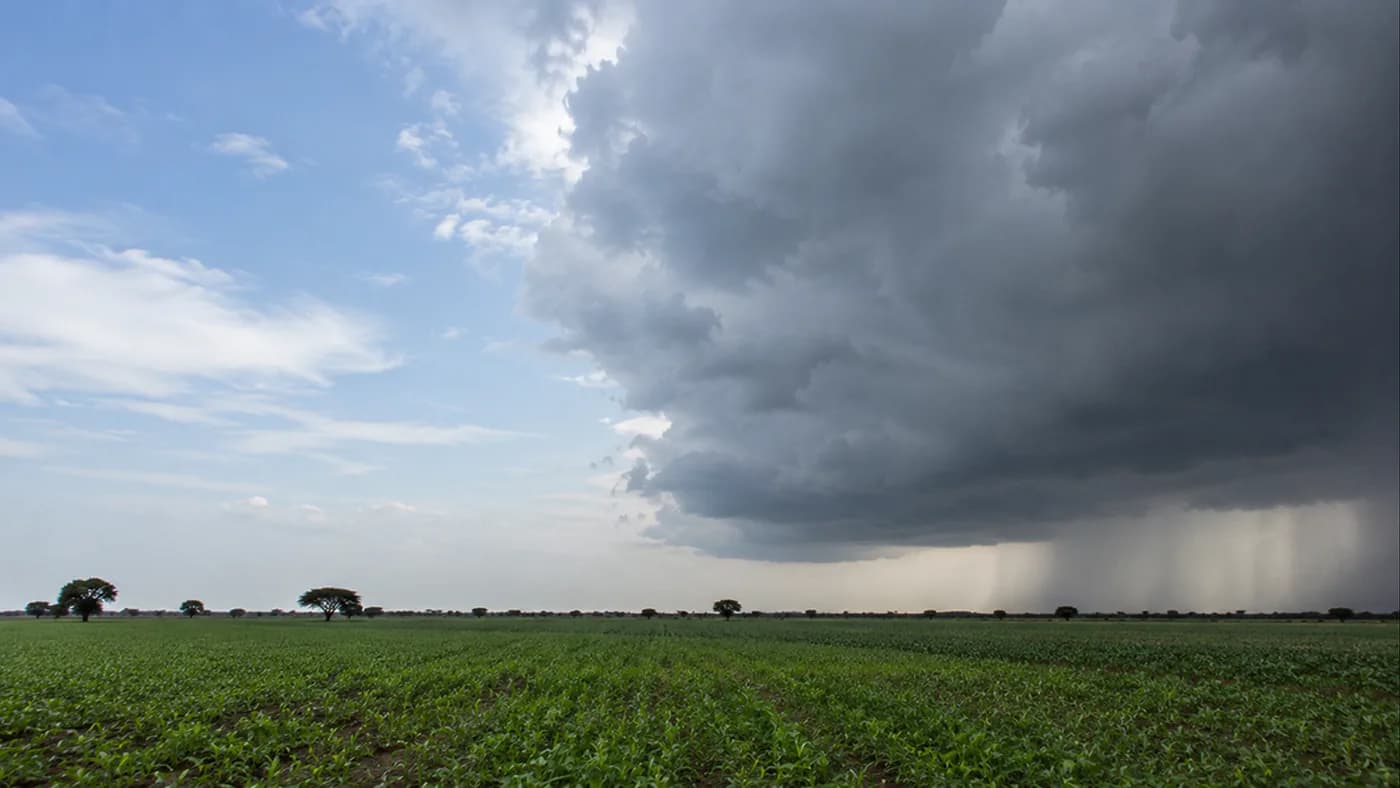
Farmers do not usually lose a crop because the monsoon failed. They lose it because the monsoon arrived, rained hard for ten days, and then stopped for a month at exactly the wrong stage. That pattern is not bad luck or a broken monsoon — it is how the monsoon has always worked, and it has a name and a mechanism. Understanding it will not make the rain come, but it changes how you plan, and it explains why the seasonal forecast you heard in April was not wrong even when your field dried out in August.
The monsoon is a sequence, not a season
It is easy to picture the monsoon as four months of rain that arrives in June and leaves in September. That is not what happens anywhere in India. What actually happens is a series of spells: a period of heavy, widespread rain lasting days to a couple of weeks, then a period with little or no rain lasting anything from a few days to three weeks, then another spell.
Meteorologists call these active and break phases, and the alternation is a permanent feature of the system rather than a fault in it. A normal monsoon season contains several of each. What varies from year to year is how many, how long, and — crucially for a farmer — when they fall relative to your crop's growth stages.
This is why two seasons can record almost the same seasonal rainfall total and produce completely different harvests. The total tells you how much water arrived. It tells you nothing about whether it arrived when the crop needed it, and the crop only cares about the second thing.
What a break actually is
The rain-bearing part of the monsoon sits along a band of low pressure called the monsoon trough, which normally lies across central India. When it is in that position, moist south-westerly air is lifted along it and central, western and peninsular India get widespread rain. That is an active spell.
During a break, the trough shifts north and sits close to the Himalayan foothills. The rain goes with it. So a break is not the monsoon switching off — it is the monsoon moving. The foothills, the north-east and parts of the Himalayan belt often receive very heavy rain during exactly the weeks that central India is dry, which is why you can hear about floods in one part of the country while your own field cracks.
The other half of the picture is low-pressure systems and depressions forming over the Bay of Bengal and tracking inland. These are what deliver the heaviest, most useful rain to central and western India. A season with few of them can feel dry even without a classic long break, and a season with several well-spaced ones feels generous even if the total is unremarkable.
| Phase | Where the monsoon trough sits | What your field gets |
|---|---|---|
| Active spell | Across central India, in its normal position | Widespread heavy rain; risk shifts to waterlogging and leaching |
| Break | Shifted north, near the Himalayan foothills | Little or no rain for days to weeks; moisture stress builds |
| Low-pressure system inland | A depression tracking in from the Bay of Bengal | The heaviest and most useful rain of the season |
| Withdrawal | Retreating south-eastward from late September | Rain ends; late-sown crops can be caught short |
Why the cycle exists
The alternation is driven largely by an oscillation in the monsoon system itself, moving on a timescale of roughly thirty to sixty days. Bands of cloud and rain form near the equator and propagate northwards across the subcontinent over a few weeks; as one band moves away, the next has not yet arrived, and that gap is the break. This is why breaks tend to have a rough rhythm rather than being purely random, and why they are more often two to three weeks than two to three days.
Sitting above that are the season-scale influences you hear about in the news — the state of the Pacific during an El Niño or La Niña, and the Indian Ocean Dipole. These shift the odds for the season's total, which is what the April and June long-range forecasts try to capture. They do not tell you when the breaks will fall.
That gap between what is forecastable and what actually decides your harvest is the honest heart of the problem. Seasonal totals can be forecast with some skill. The timing of a three-week break in August, at the precise stage your crop is flowering, currently cannot be — not by anyone, at any price.
What it means for how you plan
- Assume at least one long break will happen. Planning as though rain will be evenly spread is planning for a season that does not exist.
- Know which stages of your crop cannot tolerate stress. For most crops it is flowering and grain or pod filling; a break during vegetative growth costs far less than the same break three weeks later.
- The most damaging version of this pattern — a wet fortnight then a long break — is worked through in heavy rain early, then nothing. Stagger sowing across plots where you can. If everything flowers in the same fortnight, a single badly placed break hits your whole farm at once.
- Treat a seasonal forecast as a statement about totals and odds, not about timing. It was not wrong because your field dried out in August.
- Build the soil's capacity to carry you through a gap. Organic matter and residue cover buy days of moisture, and days are exactly what a break costs you — improving soil health naturally is the slow half of drought-proofing.
- Keep a written record of when spells and breaks fell each year. After a few seasons you will know your own field's pattern better than any regional summary can tell you.
Where Khetiyaar helps, and where it does not
Hyperlocal weather with soil moisture is genuinely useful here, because during a break the question is not whether it will rain but how much water is left in your root zone and how many days that buys you. A district forecast cannot answer that; a soil-level reading over your own plot gets much closer.
Recording sowing dates per plot is the other half. Knowing exactly which stage each plot is at when a break begins is what turns a general worry into a specific decision about which field to irrigate first, if you can irrigate at all.
What we cannot do — and nor can anyone — is tell you when the next break will start or how long it will last. That is beyond current forecasting skill, and any app or advisor implying otherwise is overselling. What we can do is help you see where your crop and your soil stand when it happens.
Frequently asked
What is a break in the monsoon?+
A period of days to weeks during the monsoon season with little or no rain over central, western and peninsular India. It happens because the monsoon trough — the band of low pressure that organises the rain — shifts north towards the Himalayan foothills, taking the rain with it. The monsoon has not stopped; it has moved.
Why does it rain heavily and then stop for weeks?+
Because the monsoon moves in an oscillation of roughly thirty to sixty days. Bands of rain form near the equator and travel north across India over a few weeks. When one band has passed and the next has not arrived, you get a break. It is a permanent feature of the system, not a failure of it.
Can a season have normal rainfall and still ruin the crop?+
Yes, and it is common. The total says how much water arrived, not whether it arrived when the crop needed it. A season delivering normal rainfall as two heavy spells with a four-week break at flowering can do far more damage than a season with less total rain spread evenly.
Can breaks be forecast in advance?+
Not reliably, and not at the range that would let you plan a season around them. Seasonal totals can be forecast with some skill using signals like El Niño and the Indian Ocean Dipole. The timing of a specific three-week break in August cannot be forecast by anyone at present, which is why planning should assume one will happen.
Where to go next
Want this as daily tasks for your farm?
Khetiyaar turns guides like this into a day-by-day plan — in your language, free to start.

Related guides
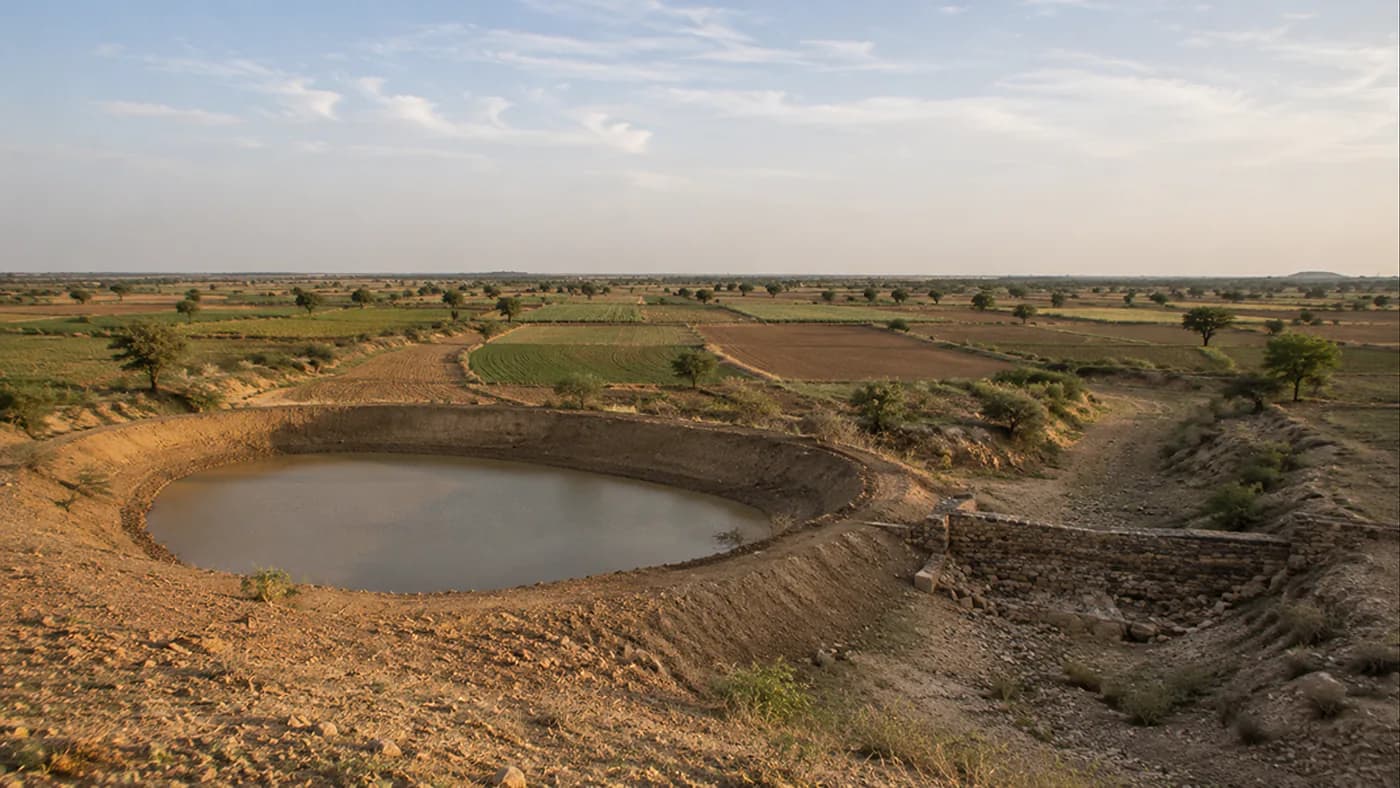
The Same Monsoon, Different Problems: Rainfall Risk by Region
Advice written for Punjab is close to useless in Marathwada. The monsoon is one system but it fails differently in each part of India, and the coping strategy has to match the failure.
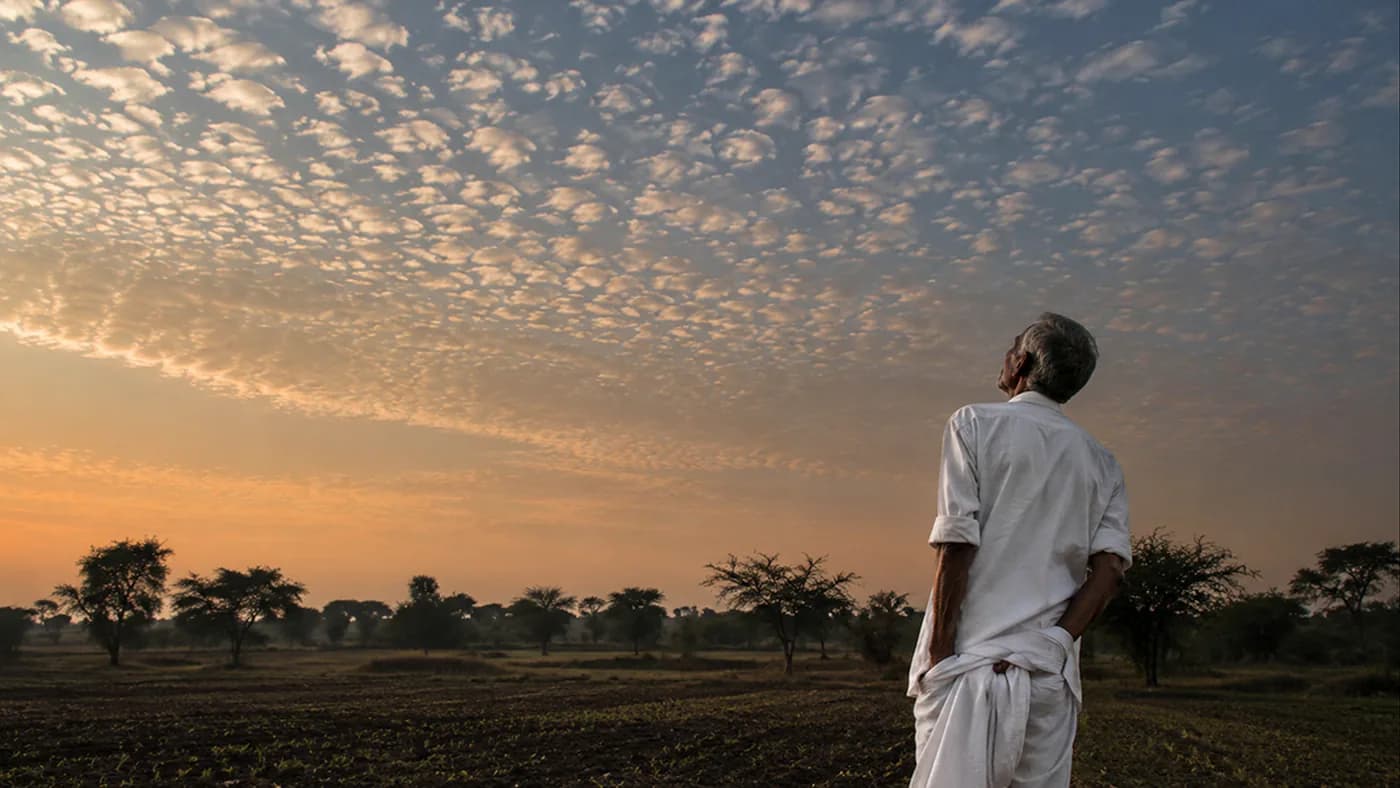
Reading the Weather the Old Way: Which Signs Actually Hold Up
Farmers read the sky, the wind, the birds and the trees long before there were forecasts. Some of those signs have a real physical mechanism behind them. Some do not. Here is the honest separation.

How to Actually Read a Weather Forecast for Your Farm
A seasonal forecast and a three-hour warning are different products with different reliability. Knowing which to trust for which decision is most of the skill — and it is rarely explained.